
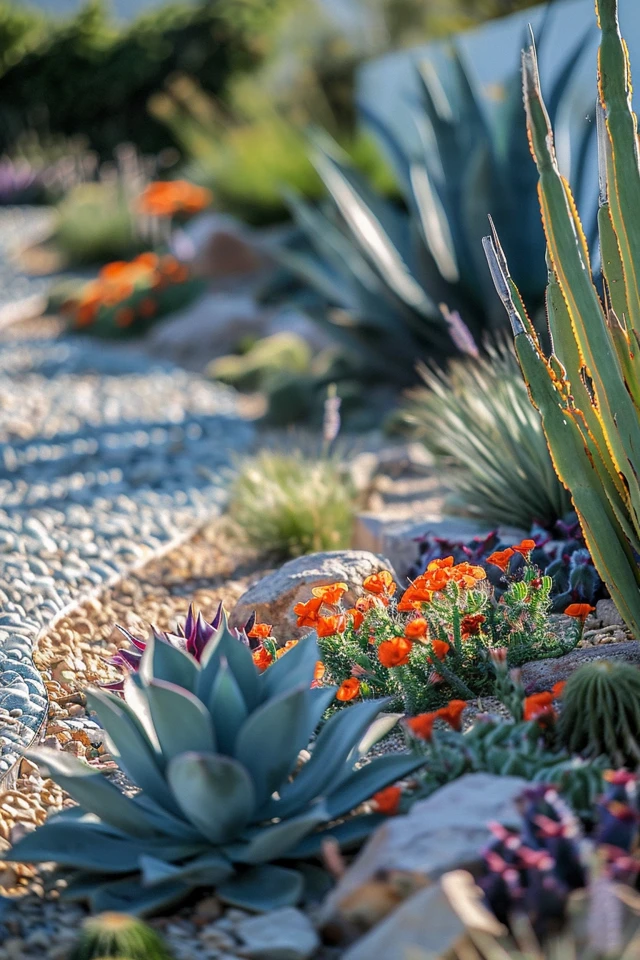
Budget-Friendly Desert Landscaping Ideas
Living in a desert climate offers a unique opportunity to embrace natural beauty that is both rugged and serene. Many homeowners assume that creating a stunning desert oasis requires expensive imported palms, endless concrete pours, or high-maintenance synthetic turf. However, the most successful desert designs often rely on restraint and smart material choices.
You can achieve a high-end look by working with the environment rather than fighting against it. For a dose of visual inspiration, keep reading because I have curated a stunning Picture Gallery at the end of the blog post. By focusing on native textures, strategic hardscaping, and proper scale, you can transform your yard without breaking the bank.
This guide will walk you through the practical steps of designing a desert landscape that respects your budget. We will cover everything from selecting the right gravel to choosing plants that thrive on neglect. Let’s turn that patch of dirt into a retreat you’ll love year-round.
1. Master the Ground Plane: Gravel and Decomposed Granite
The biggest expense in any landscaping project is usually the “floor” covering. In lush climates, this is grass; in the desert, it is rock. To keep costs low, skip the wall-to-wall pavers or concrete slabs.
Instead, utilize Decomposed Granite (DG) or crushed gravel. DG provides a rustic, natural look that compacts down to a hard surface, making it perfect for walkways and patio areas. It costs a fraction of the price of pavers and comes in various earth tones like gold, tan, and gray.
For areas that won’t see foot traffic, use 3/4-inch crushed gravel. It provides excellent drainage and suppresses dust. When choosing gravel, always ask for “angular” rather than “rounded” rock if you want it to stay in place; rounded pea gravel tends to roll and shift underfoot like marbles.
Designer’s Note:
One thing I learned the hard way in my early projects is that cheap weed barrier fabric is a waste of money. In the desert, weeds grow right on top of dust that settles on the fabric. Instead, invest in a “pre-emergent” herbicide treatment twice a year, or use a high-quality, non-woven geotextile fabric only under heavy gravel areas to prevent sinking.
Pro-Tip on Gravel Sizing
- 3/8-inch Minus: Contains dust and small rocks. Best for walkways as it packs down tight.
- 1/2-inch to 3/4-inch Crushed: Best for general ground cover around plants. It’s heavy enough not to blow away in high winds.
- Rip Rap (3-inch plus): purely decorative. Use this sparingly near drainage swales or to accent the base of a large boulder.
2. Strategic Planting: Go Native and Start Small
The most common budget mistake I see is buying fully grown plants. In the nursery world, you pay a massive premium for time. A 15-gallon cactus might cost $150, while a 1-gallon version of the same plant might cost $15.
Native desert plants grow incredibly fast once established because they are adapted to the heat and soil. Buy the 1-gallon or 5-gallon sizes. Within two growing seasons, they will often catch up to the larger, more expensive specimens because they suffer less transplant shock.
Focus on “structural” plants that look good year-round. Agaves, Yuccas, and Prickly Pears provide architectural shapes that act like living sculptures. Because they are evergreen (or ever-gray), your yard won’t look dead in the winter.
Common Mistakes + Fixes
- Mistake: Planting too close to walkways. That small agave will eventually span 4 feet.
- Fix: plant for the mature size. If a plant tag says “4-foot spread,” place the center of the plant at least 2.5 feet away from the edge of your path.
- Mistake: Impulse buying colorful annuals. They die in a month and waste money.
- Fix: Stick to perennials like Penstemon, Sage, or Lantana. They come back every year and add pops of color for a fraction of the long-term cost.
3. Zoning and Flow: Define Rooms with Hardscape Borders
You don’t need walls to create separate “rooms” in your garden. You can achieve this visually by changing the ground material or using edging. This is a classic interior design trick applied outdoors.
Create a designated dining area using a stabilizer-bound Decomposed Granite pad. Then, border it with steel edging or simple pressure-treated lumber. Switch to a larger, looser gravel for the surrounding ornamental areas. This visual shift tells the brain, “This is the lounge area,” and “That is the garden.”
Use concrete pavers strictly as stepping stones rather than a solid patio. A “stepper” path surrounded by gravel uses 70% less material than a solid sidewalk.
Layout Rules of Thumb
- Path Width: Main walkways should be 48 inches wide so two people can walk side-by-side. Secondary paths can be 30–36 inches.
- Step Spacing: When placing pavers, the center of one paver should be about 24–26 inches from the center of the next. This matches the average human stride.
- Seating Clearance: Allow at least 30 inches of clearance behind dining chairs so guests can slide out without hitting a cactus or stepping off the patio.
4. Affordable Features: Lighting and Focal Points
Budget landscaping often falls flat because it lacks a focal point. You need one or two “hero” moments to draw the eye. In the desert, boulders are your best friend.
Visit a local landscape supply yard (not a big box store) and pick out three large boulders. Group them together in an odd number. Bury the bottom third of the rock in the ground. This makes them look like they have been there for centuries, rather than just dropped on the surface.
Lighting is the second game-changer. Low-voltage landscape lighting used to be expensive, but DIY kits are now very accessible. Skip the solar stake lights from the dollar store; they rarely last a season and cast a sickly blue light.
Instead, buy a simple plug-in transformer and a set of warm-white LED spotlights. Aim them at the base of your trees or large cacti. Uplighting creates drama and shadows that make a $20 plant look like a million bucks.
What I’d Do in a Real Project
- The “Campfire” Vibe: Build a simple fire pit circle. You don’t need a built-in gas line. A simple steel fire ring or a portable solo stove surrounded by Adirondack chairs creates an instant gathering spot.
- String Lights: Hang commercial-grade string lights overhead. They define the ceiling of your outdoor room. Ensure they are hung at least 8 feet high so tall guests don’t bump their heads.
- Color Temperature: Always check the Kelvin rating on bulbs. Buy 2700K or 3000K. Anything higher (4000K+) looks like a hospital operating room.
5. Water Wisdom: Save Money on Utility Bills
A budget-friendly landscape isn’t just about installation costs; it’s about monthly maintenance. Water is a precious and expensive commodity in desert regions. If you don’t plan for irrigation, you will either kill your plants or drown your wallet.
Drip irrigation is mandatory. It delivers water directly to the root zone, minimizing evaporation. You can install a simple drip system yourself using poly tubing and emitters.
Group your plants by water needs. This is called “hydro-zoning.” Put thirsty plants (like roses or citrus) near the house on one valve. Put native cacti and succulents on a separate valve that runs less frequently.
Mulch Matters
In the desert, rock is your mulch. A 2-inch layer of gravel over the soil keeps the roots cool and prevents water from evaporating. While organic wood mulch is cheap, it breaks down quickly in the intense sun and can blow away. Rock is a one-time purchase that pays for itself in water savings.
Final Checklist: Your Desert Renovation Roadmap
Before you buy a single shovel, run through this checklist to ensure your plan is solid and budget-conscious.
Planning Phase:
- Measure your yard and draw a rough sketch to scale (1/4 inch = 1 foot).
- Identify sun patterns. Where is the shade at 4 PM? That is where your patio should go.
- Check local HOA rules regarding tree heights and approved plant lists.
Purchasing Phase:
- Calculate square footage for gravel. (Length x Width / 160 = approx tons needed for 2″ depth).
- Source rocks and gravel from a landscape yard, not a home improvement store (bulk is cheaper).
- Select native plants in 1-gallon or 5-gallon sizes.
Installation Phase:
- Clear weeds and debris first.
- Install hardscaping and edging before planting.
- Run irrigation lines before laying down gravel.
- Plant trees and shrubs.
- Spread gravel.
- Adjust lighting at night.
Frequently Asked Questions
Q: Can I landscape a desert yard if I have dogs?
Yes, but you must be selective. Avoid Chollas and other cacti with barbed spines that detach easily. Stick to “soft” succulents like smooth Agaves, Elephant Food (Portulacaria afra), or spineless Prickly Pear. Also, choose 3/8-inch rounded gravel for dog runs; sharp crushed rock can hurt paws.
Q: How do I add color without using high-water flowers?
Use the hardscape and accessories for color. A terracotta-colored wall, bright turquoise patio chairs, or patterned outdoor rugs add vibrancy that doesn’t require watering. For plants, Red Yucca and Yellow Bells provide long-blooming seasons with very little water.
Q: Is artificial turf a good budget option?
Generally, no. Quality artificial turf is expensive to install correctly (often $10–$15 per sq. ft.). Cheap turf looks fake and degrades quickly in UV light. It also gets dangerously hot—often reaching 160°F in direct sun. If you are on a tight budget, decomposed granite or a small area of native buffalo grass is a better choice.
Q: How deep should the gravel be?
For decorative areas, 2 inches is the standard depth. If you go deeper than 3 inches, it becomes difficult to walk through (like walking in deep sand). If it’s too shallow, the soil will show through after a rainstorm.
Conclusion
Creating a beautiful desert landscape on a budget is entirely about making smart trade-offs. You trade the instant gratification of large plants for the savings of smaller ones that will grow in over time. You trade the expense of concrete for the rustic charm of gravel and decomposed granite.
By focusing on functional zones, proper scale, and native materials, you increase the value of your home and extend your living space outdoors. Remember that a garden is a process, not a product. It’s okay to do the hardscaping this year and add the lighting next year.
Start with a clear plan, respect the local climate, and enjoy the unique tranquility that only a desert garden can provide.
Picture Gallery


