
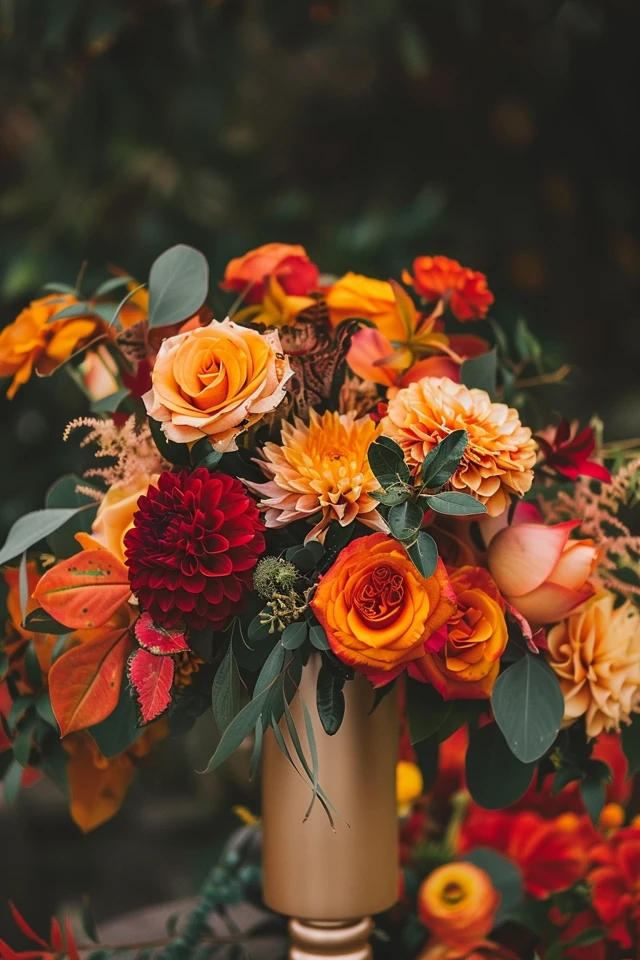
Budget-Friendly Fall Wedding Decoration Ideas
Fall weddings offer some of the most stunning natural backdrops, but relying solely on the season’s beauty often isn’t enough to pull a cohesive event together. As an interior designer, I approach wedding decor the same way I approach a home renovation: we need to balance budget constraints with high-impact design choices. You want your guests to feel the warmth and texture of the season without spending a fortune on imported flowers that die the next day.
I once worked with a couple who had a modest budget but a massive, empty barn venue that felt cold and cavernous. By focusing on lighting temperature, locally sourced foliage, and strategic textile placement, we created an intimate, high-end look for a fraction of the standard cost. To spark your creativity, I have curated a beautiful Picture Gallery at the end of the blog post.
This guide goes beyond simple Pinterest tips. I will break down the spatial planning, lighting rules, and material selections that professional designers use to stretch a budget while maximizing style.
1. Harnessing Architectural and Natural Features
The most effective way to save money is to stop fighting the existing space. In landscape design, we call this “borrowed scenery.” If you are getting married outdoors or in a venue with large windows, the turning leaves and golden light are your primary decor elements.
Rather than building a flower wall from scratch, locate the most visually interesting tree or architectural element on the property. Use this as your ceremony backdrop. This anchors the space and requires zero construction costs.
If you are indoors, identify the focal point of the room, such as a fireplace or a grand staircase. Concentrate 50% of your decor budget on this single area. Spreading a small budget across a whole room dilutes the impact, but creating one massive, lush moment creates a lasting visual memory.
Designer’s Note: The Rule of Visual Anchors
In interior design, we never try to highlight everything. Pick one “hero” moment for the ceremony and one for the reception. If you put all your effort into a stunning fireplace mantle display, no one will notice if the aisle markers are minimal.
Common Mistakes + Fixes
Mistake: Placing the ceremony altar in front of a bright window without supplemental lighting.
Fix: This causes silhouetting in photos. If you love the view, position the altar at a diagonal to the window or add strong uplighting to the couple so they aren’t lost in the shadows.
2. Mastering the Lighting: The 2700K Rule
Lighting is the single most cost-effective tool in a designer’s kit. It changes the mood more effectively than thousands of dollars in flowers. For a fall wedding, you want to mimic the warmth of a hearth or a sunset.
You must be strict about “color temperature.” When buying string lights, LED candles, or bulbs, check the packaging for the Kelvin rating. You want 2700K (Warm White). Anything higher (3000K-5000K) will look blue, clinical, and cheap, especially against fall colors like rust and ochre.
Use uplighting to make a room feel fuller. Place battery-operated can lights at the base of trees or architectural columns. Aim them upward to highlight the texture of bark or brick. This draws the eye up and makes the space feel grander without buying tall centerpieces.
What I’d do in a real project:
- Avoid overhead fluorescent lighting entirely; ask the venue to turn it off.
- Use taper candles in varying heights on tables to create a “cityscape” effect.
- Cluster lanterns in groups of three (odd numbers are more pleasing to the eye) at the base of the welcome sign and bar area.
- Ensure all LED candles are “wax-dipped” for a realistic look. Plastic-finish candles reflect light artificially and ruin the illusion.
3. Tablescapes: Texture Over Flowers
Fresh floral centerpieces are the quickest way to blow a budget. As a designer, I prefer using texture and “hard goods” to fill the table. This is more sustainable and often looks more sophisticated.
Consider a “harvest” approach using produce. Pomegranates, pears, artichokes, and dark grapes have incredible sculptural shapes and deep colors. You can arrange these loosely down the center of a table interspersed with greenery.
Another high-impact, low-cost option is amber glass. Renting or thrifting amber bottles creates a warm glow that clear glass lacks. When light hits amber glass, it radiates a golden hue that enhances the fall atmosphere.
Measurement & Scale Guidelines
When designing a centerpiece, you must respect the “conversation zone.” Decor should either be lower than 12 inches or higher than 24 inches. Anything in between blocks eye contact and frustrates guests.
For rectangular tables, ensure your runner or garland is narrow enough to leave room for place settings. You need a minimum of 15 inches of depth for a place setting (plate + glass + silverware). If your table is standard 30-inches wide, your decor cannot be wider than 6 to 8 inches, or plates will hang off the edge.
Designer’s Note: The “High-Low” Mix
If you have 20 tables, do not try to put a huge arrangement on every single one. Do tall, dramatic arrangements on 30% of the tables and low, candle-heavy arrangements on the remaining 70%. This creates visual rhythm across the room and saves roughly 40% on floral costs.
4. Foraged Foliage and Dried Elements
In landscape design, we value structure. Branches provide volume and drama that soft flowers cannot. For a fall wedding, structural branches with turning leaves (like Oak, Maple, or Beech) are incredibly effective.
Dried elements like pampas grass, bunny tails, and dried ruscus are excellent investments because they can be resold after the wedding. Fresh flowers are a sunk cost; dried florals are an asset.
You can buy large branches from local flower markets for a fraction of the cost of blooms. Three large branches in a heavy vase can fill a 4-foot visual space. To get that same volume with roses would cost hundreds of dollars.
Common Mistakes + Fixes
Mistake: Foraging without conditioning the branches.
Fix: If you cut branches from a private property (with permission), you must smash the bottom 2 inches of the woody stem with a hammer and place them in warm water immediately. This helps them drink. Without this, they will wilt within hours.
Mistake: Ignoring bugs.
Fix: Foraged items bring nature indoors. Shake everything vigorously outside and spray with a gentle organic pesticide or a diluted soap solution 24 hours before bringing them into the venue.
5. Textiles and Rugs: Creating “Zones”
One aspect often overlooked in DIY weddings is the floor. In interior design, rugs are used to define zones. You can use this same principle for an outdoor or barn wedding.
Layering vintage rugs at the altar creates a focal point and keeps the bride’s dress off the dirt or grass. You don’t need expensive Persian rugs; many rental companies specialize in vintage rug piles, or you can source worn rugs from thrift stores. The wear and tear adds to the rustic fall aesthetic.
Consider the comfort of your guests. Fall evenings get chilly. Instead of expensive decor, spend that money on a “warmth station.” A basket of rolled blankets (fleece or wool blends in plaid patterns) doubles as decor and a functional amenity.
Textile Drapery Rules
Fabric softens a room and absorbs sound. If you are draping fabric on an arch or ceiling:
- Always use at least 200% fullness. If an arch is 5 feet wide, you need at least 10 feet of fabric width to create nice swags. Flat fabric looks cheap.
- Choose materials with weight, like velvet or heavy cheesecloth. Tulle often looks too stiff and synthetic for a rustic fall theme.
- Velvet ribbons on bouquets or napkins add a luxurious tactile element that costs pennies but feels expensive.
Final Checklist: The Designer’s Review
Before you finalize your decor purchases, run through this “What I’d Do” checklist. I use a similar list for my interior projects to ensure we haven’t missed any functional details.
The “Real Project” Checklist:
Lighting Check:
- Are all bulbs 2700K warm white?
- Do I have spare batteries for every single LED candle?
- Are the walkways to the restrooms lit? (Crucial for outdoor venues).
Spatial Planning:
- Is there 60 inches of clearance between table backs for waiters to pass?
- Is the centerpiece low enough (under 12″) to see over?
- Is the ceremony backdrop secured against wind gusts? (Use sandbags hidden by foliage).
Budget Logic:
- Have I concentrated the budget on the top 2 focal points?
- Did I choose local, seasonal foliage to avoid import fees?
- Am I renting items that I will never use again (vases, large props)?
FAQs
What colors work for a fall wedding besides orange?
Deep plum, mustard yellow, sage green, and charcoal grey are sophisticated alternatives. Even a palette of neutrals—creams, taupes, and browns—can feel very “fall” if you use heavy textures like dried grasses and wood.
Is it cheaper to buy or rent decor?
For small items like votives and table runners, buying is often cheaper if you plan to resell them. For large items like furniture, arches, and large vases, renting is better. You save on transport, storage, and cleaning labor.
How do I make a large venue feel cozy on a budget?
Lower the lighting. Darkness hides the empty corners and expansive ceilings. Focus light only on the tables and the dance floor. This artificially lowers the ceiling and brings people together.
Can I use fake flowers?
High-quality silk flowers are often more expensive than real ones. Cheap silk flowers look obvious, especially in daylight. A better budget strategy is to use real greenery and branches, then mix in a very small amount of high-quality silk blooms only where they won’t be touched or inspected closely.
Conclusion
Creating a budget-friendly fall wedding doesn’t mean sacrificing beauty. It requires a shift in perspective from “filling space” to “curating moments.” By thinking like a designer—prioritizing lighting, playing with scale, and using textures over expensive blooms—you can craft an event that feels warm, intentional, and uniquely yours.
Remember that the most memorable weddings are not the ones with the most expensive flowers, but the ones that make guests feel comfortable and welcomed. Use the season’s natural abundance to your advantage, trust your measurements, and keep your lighting warm.
Picture Gallery


