
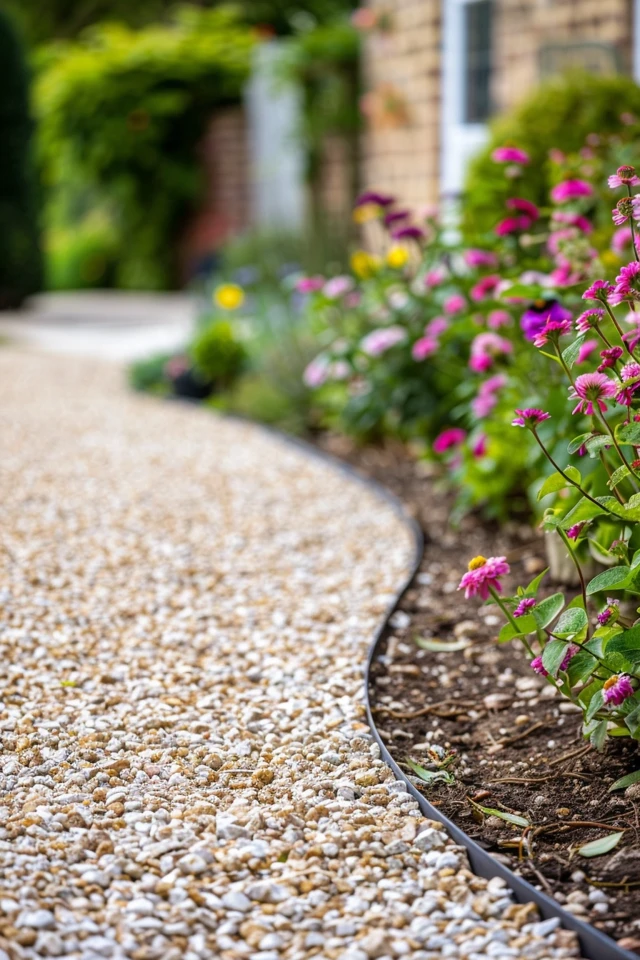
Budget-Friendly Gravel Driveway Edging Ideas
Nothing ruins the curb appeal of a well-designed exterior faster than loose gravel migrating into your lawn or flower beds. A crisp, defined edge is the difference between a messy pile of rocks and a high-end, structured entrance. For plenty of visual inspiration to help you choose the right material, keep reading until you reach our curated Picture Gallery at the end of the blog post.
As a designer, I often see homeowners spend their entire budget on the gravel itself, leaving the edging as an afterthought. This is a mistake. The edging is the “frame” for your driveway; it provides the structural integrity that keeps your investment in place. Fortunately, achieving a polished look does not require a luxury budget if you understand materials and proper installation.
At-a-Glance: Key Takeaways
- Containment is key: Edging is functional first; it stops gravel migration and reduces maintenance.
- Depth matters: Effective edging must be buried at least 50% below grade to resist frost heave and tire pressure.
- Material hierarchy: Match the edging style to your home’s architecture (e.g., timber for rustic, steel for modern).
- DIY potential: Most budget-friendly options, like pressure-treated lumber or repurposed brick, are beginner-friendly projects.
- Scale correctly: Ensure your edging is substantial enough to visually hold the weight of the driveway.
What This Style Means (and Who It’s For)
Gravel driveway edging is about creating a deliberate separation between hardscape (the driveway) and softscape (the lawn or garden). In design terms, we call this a “transition line.” Without it, the visual boundary blurs, making the property look unkempt.
This concept is specifically for homeowners who want the high-end look of a designated estate entrance without the cost of poured concrete curbs or Belgian block. It is for the practical DIYer who understands that a weekend of labor can save thousands of dollars in contractor fees.
It is also for those dealing with specific climate challenges. If you live in an area with heavy rain, edging prevents washout. If you live in a freeze-thaw zone, flexible edging options prevent the cracking often seen in rigid concrete. This approach prioritizes longevity and tidiness over ornamentation.
The Signature Look: Ingredients That Make It Work
To get that “designer” look on a budget, you need to select materials that feel permanent. We want to avoid flimsy plastic strips that wave and buckle after one season.
The Structured Border
The most critical ingredient is a straight (or perfectly curved) line. Whether you use wood, metal, or stone, the line must be unwavering. This creates visual order. In my projects, I use string lines and stakes to ensure precision before a single shovel hits the dirt.
Material Contrast
The edging should provide a slight contrast to the gravel. If you have grey crushed stone, a warm pressure-treated timber offers a nice organic counterpoint. If you have warm pea gravel, a dark steel edge or charcoal brick creates a sophisticated, modern boundary.
The “Flush” Finish
Ideally, the top of your edging should sit just slightly proud of the gravel surface—about half an inch to one inch. This allows it to contain the stones without creating a tripping hazard or a barrier that catches car bumpers. It should look integrated, not like a fence for your rocks.
Layout & Proportions (Designer Rules of Thumb)
When I plan a driveway renovation, I don’t just guess at the widths. There are specific measurements that ensure the driveway functions well and looks proportional to the house.
The 10-Foot Rule
For a single-car driveway, the minimum width is 10 feet. If you are edging a narrower path, it will feel cramped, and tires will constantly ride over your edging, damaging it. If you have the space, 12 feet is the luxury standard.
The “Tire Zone” Buffer
Never place your edging exactly where the tires track. You want at least 12 to 18 inches of gravel between the typical tire path and the edging material. This prevents the weight of the vehicle from pushing the edging outward over time.
Vertical Scale
The edging needs to be deep enough to hold.
- Timber: Use at least a 4×4 or 6×6 timber. A 2×4 is too flimsy and will warp.
- Stone/Brick: Should be buried roughly flush with the lawn grade on the outside, and provide a 2-3 inch lip on the inside against the gravel.
Designer’s Note
The “Frost Heave” Factor: In my early projects, I made the mistake of not anchoring timber edging deep enough. After one winter, the frost pushed the timber up, spilling gravel everywhere. Now, I always insist on using 18-inch rebar spikes driven through timber edging into the ground. It locks the border in place regardless of the weather.
Step-by-Step: How to Recreate This Look
Here is the general workflow I use for installing budget-friendly edging. We will assume you are using pressure-treated timber or repurposed brick, as these are the most common budget choices.
1. Define Your Line
Use a garden hose to lay out curves or a string line and stakes for straight runs. Do not eyeball this. The human eye is very good at spotting a wavy line, and it will ruin the professional effect.
2. Trench the Perimeter
Dig a trench along your defined line.
- Width: The trench should be 2 inches wider than your edging material.
- Depth: Dig deep enough so that the top of your edging will sit about 1 inch above the final gravel level. For a 4×4 timber, this means digging about 3 inches down.
3. Prepare the Base
Compact the soil at the bottom of the trench. If the soil is soft, add an inch of sand or stone dust to create a stable, level base. This prevents your edging from sinking unevenly over time.
4. Install the Material
Place your timber or stones into the trench.
- For Timber: Drill half-inch holes every 4 feet. Drive 12-18 inch rebar spikes through the wood into the earth.
- For Brick/Stone: Set them tightly against one another. Use a rubber mallet to level them.
5. Backfill and Secure
Backfill the outside of the edging (lawn side) with topsoil and the inside (driveway side) with gravel. Pack the soil tightly to lock the material in place.
Budget Breakdown: Low / Mid / Splurge
You can achieve a high-end look at various price points. Here is how I categorize the options for clients.
Low Budget: Pressure-Treated Lumber ($)
This is the most cost-effective way to get a clean, rigid edge.
- Material: 4×4 or 4×6 pressure-treated pine.
- Pros: Very cheap, easy to cut, easy to install with basic tools.
- Cons: Will eventually rot (10-15 years), curves are difficult to execute.
- Designer Tip: Stain the wood a dark charcoal or black before installing. It hides the green tint of the treatment and makes it look like expensive steel or stone from a distance.
Mid Budget: Metal or Repurposed Brick ($$)
This category offers better longevity and a slightly more refined aesthetic.
- Material: Heavy-gauge aluminum/steel strips or reclaimed masonry.
- Pros: Metal is invisible and modern; brick adds historic charm. Metal handles curves beautifully.
- Cons: Metal can be pricey if the driveway is long. Brick is labor-intensive to level.
- Designer Tip: If using brick, install them vertically (a “soldier course”) rather than flat. It creates a stronger visual border and holds the gravel better.
Splurge: Cobblestone or Poured Concrete ($$$)
While this article focuses on budget ideas, sometimes a small splurge on the apron (the entrance) makes the whole driveway look expensive.
- Material: Granite cobblestones (Belgian block) set in concrete.
- Pros: Indestructible, timeless, increases property value.
- Cons: Requires masonry skills and concrete mixing.
- Designer Tip: Use cobblestones only for the first 10 feet of the driveway to create a “grand entrance,” then switch to affordable timber for the rest of the length.
Common Mistakes (and How to Fix Them)
Even with good intentions, I see DIYers make these errors constantly.
Mistake 1: Using “Landscape” Plastic Edging
The thin, black plastic coils sold at big-box stores are meant for flower beds, not driveways. They cannot withstand the lateral pressure of a vehicle.
Fix: Upgrade to “commercial grade” heavy-duty composite edging or stick to timber.
Mistake 2: Ignoring Drainage
If you create a solid border on a slope, you essentially create a dam. Water will pool on your driveway and wash out the gravel.
Mistake 3: Setting Edging Too High
Placing edging 3 or 4 inches above the gravel creates a tripping hazard and looks like a miniature retaining wall.
Fix: Keep the profile low. The edging should be subtle structure, not a feature wall.
Common Mistakes + Fixes Checklist
- Wobbly Lines: Use a string line during installation.
- Rotting Wood: Ensure the timber is rated for “ground contact.”
- Weeds in Edging: lay landscape fabric underneath the edging material before setting it.
Room-by-Room Variations
Since we are dealing with a driveway, we don’t have “rooms” in the traditional sense. However, the driveway connects different exterior zones. Here is how to adapt the edging based on where it is.
The Street Connection (The Apron)
This is the most visible part of the driveway.
Strategy: This is where you should use your best materials. Even if the rest of the driveway is edged in wood, try to use stone or brick for the flared section that meets the road. It withstands turning tires better and looks premium.
The Garage Approach
This area sees the most foot traffic as you unload groceries or walk to the car.
Strategy: Ensure the edging here is perfectly flush with any adjacent walkways. You do not want a trip hazard near the car doors. A flat row of bricks works well here as a transition.
The Garden Path Transition
Where the driveway meets a walkway or flower bed.
Strategy: Soften the look. If you are using rigid timber for the main run, consider switching to a flexible metal edge here to create a gentle curve that guides the eye toward the front door.
Finish & Styling Checklist
Once the edging is installed, a few styling touches bring the look together.
1. Top-Dress the Gravel
After the edging is in, add a fresh layer of gravel (about 1 inch). Rake it smooth so it sits perfectly against your new border. This hides any dig marks or soil disruption.
2. Add Solar Lighting
Place low-profile solar path lights just outside the edging (in the grass/garden). This highlights the crisp line you just created and improves safety at night.
3. Soften with Plants
Plant low-growing ground cover (like creeping thyme or mondo grass) along the outside of the edging. This softens the transition from hard edging to the lawn and covers any gaps.
“What I’d Do” Mini Checklist
If this were my own home on a tight budget, here is exactly what I would buy:
- Material: 4×6 Pressure Treated Timbers (Ground Contact rated).
- Fasteners: 18-inch Rebar (3 per timber).
- Finish: Semi-transparent black exterior wood stain.
- Tool: A heavy sledgehammer for the rebar.
FAQs
What is the cheapest driveway edging?
Pressure-treated lumber (landscape timbers) is generally the cheapest option. However, finding large rocks on your own property and trenching them in is free, though very labor-intensive.
Can I use bricks without concrete?
Yes, but they will move over time. To minimize this, dig a trench, put down a layer of stone dust, compact it, and pack the bricks tightly with soil on one side and gravel on the other.
How high should edging be above gravel?
Ideally, about 1 inch. Enough to stop the stones from rolling over, but low enough that it doesn’t look like a barrier.
Does metal edging rust?
Steel edging will develop a rust patina, which many people desire for a rustic look. If you want it to stay silver or black, you must buy powder-coated aluminum or galvanized steel.
How do I stop grass growing into the gravel?
The edging helps, but grass spreads via runners. You must use a weed trimmer vertically against the edging regularly, or install a physical root barrier 6 inches deep alongside your edging.
Conclusion
Updating your driveway edging is one of the highest-impact, low-cost projects you can undertake for your home’s exterior. It changes the visual narrative from “unfinished” to “estate-like.” Whether you choose the rustic warmth of timber, the industrial chic of steel, or the classic charm of brick, the principles remain the same: straight lines, deep anchoring, and proper scale.
By following the rules of proportion and taking the time to prepare your trench properly, you can achieve a professional result that lasts for years. Remember, the beauty is in the structure. A contained driveway is a beautiful driveway.
Picture Gallery


