
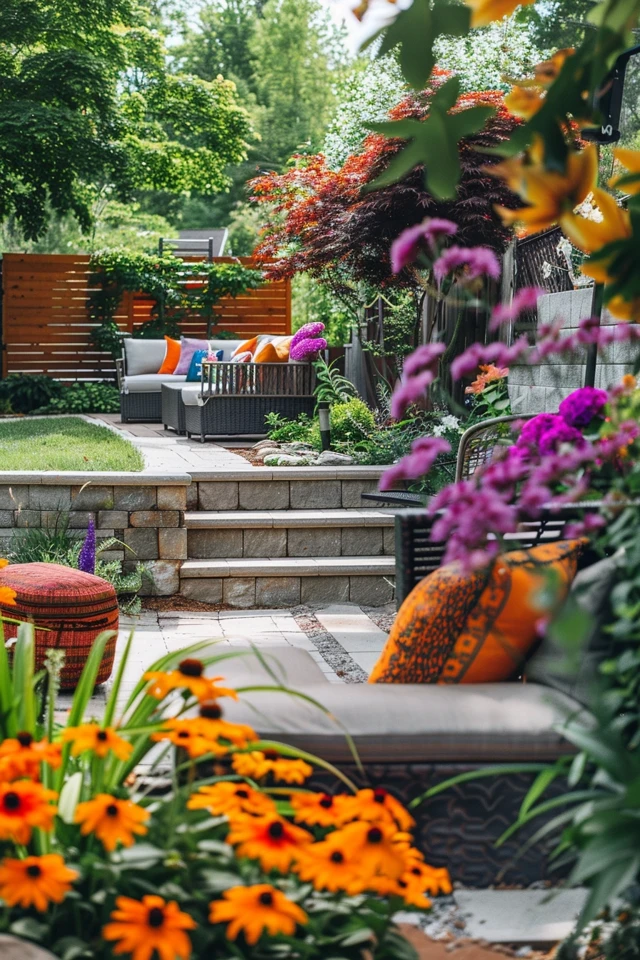
Budget-Friendly Sloped Backyard Ideas
A sloped backyard often feels like a design dilemma that only a massive budget can solve. I remember walking into a client’s property last year—a young couple with a steep, unusable hill of weeds right off their back patio.
They assumed they needed $50,000 for concrete retaining walls and heavy machinery to flatten the land. Instead, we used a mix of strategic planting, timber terracing, and floating structures to turn that “wasted” space into their favorite part of the home for a fraction of the cost.
You do not need to fight the topography to create a functional outdoor living space. To see some incredible transformations that prove this point, be sure to check out the Picture Gallery at the end of the blog post.
1. Strategic Terracing with Affordable Materials
The most effective way to tame a slope is terracing, which essentially turns a steep incline into a series of flat steps. While poured concrete or natural stone masonry is expensive, treated lumber is a fantastic budget-friendly alternative.
Pressure-treated 6×6 timbers or landscape ties can create sturdy, low-profile retaining walls. This method allows you to create designated “zones” for gardening or seating without the high cost of masonry labor.
For a modern look, you can also use Corten steel edging. It is thin, easy to install yourself, and weathers to a beautiful rust patina that disappears into the landscape.
Designer’s Note: When building timber walls, deadmen anchors are non-negotiable. These are perpendicular timbers buried into the hillside to anchor the wall. I never design a wall higher than 2 feet without them.
The Rule of Thirds for Slopes
Visually, a massive slope can feel overwhelming. I like to apply the “Rule of Thirds” to break it up:
- The Bottom Third: Keep this hardscaped and functional (patio or deck).
- The Middle Third: Use this for transition planting or a secondary destination like a fire pit.
- The Top Third: Leave this wilder with low-maintenance ground cover or trees to frame the view.
2. Erosion Control Through Native Planting
If you cannot afford to build walls, you must plant. Bare soil on a slope is a disaster waiting to happen due to runoff and erosion.
The cheapest retaining wall is a massive root system. I recommend using dense ground covers that knit the soil together. Plants like Creeping Phlox, Vinca Minor, or localized ornamental grasses are excellent choices.
You want to buy these in “flats” or “plugs” rather than large gallon pots. It saves an immense amount of money, and smaller plants actually adapt to slopes faster than mature ones.
Mulching Mistakes to Avoid
Common Mistake: Using wood nuggets or chips on a steep grade. The first time it rains, they will float right down to your patio.
The Fix: Use shredded hardwood mulch or “gorilla hair” mulch. The shredded fibers lock together and stay put, even on inclines up to 45 degrees.
3. The Floating Deck Solution
Excavation is often the most expensive line item in a landscape quote. Moving dirt requires heavy equipment, hauling fees, and dump charges.
A floating deck effectively ignores the ground underneath. By setting posts into concrete footings, you can build a flat surface right over a steep drop-off without moving a shovel of dirt (other than for the post holes).
This creates a dramatic overlook and creates usable square footage out of thin air. For rentals or strict budgets, this is often cheaper than trying to level the yard.
Designer’s Tip: If the deck is more than 30 inches off the ground, you legally need a railing. To save money but keep the view, use hog wire panels framed in cedar. It’s significantly cheaper than glass or cable railing but still offers visibility.
4. Creating Switchback Pathways
Walking straight up a hill is exhausting and visually boring. Creating a winding path, or “switchback,” softens the grade and makes the journey part of the experience.
Instead of expensive paver stairs, use crushed granite or pea gravel framed by simple metal edging. Gravel is permeable, meaning water drains through it rather than running off it, which helps with erosion.
For steeper sections, install timber steps filled with gravel. This provides traction and stability for a fraction of the cost of stone slabs.
Lighting the Way
Sloped pathways can be dangerous at night. You don’t need an electrician to wire up expensive line-voltage path lights.
I frequently use high-quality solar stake lights for budget projects. Place them at every turn of the switchback or every other step. This creates a rhythmic “landing strip” effect that looks high-end.
5. The Dug-Out Fire Pit
If you have a slope that rises away from the house, you have a unique opportunity to create a sunken lounge effect.
By carving a semi-circle into the hillside, you can create a flat spot for a fire pit. Use the dirt you excavated to level out the front side of the circle.
You can then build a simple retaining wall on the back curve. This wall can double as built-in seating if you cap it with smooth stone or wood, saving you the cost of buying outdoor furniture.
Common Mistake: Forgetting drainage in a sunken area. If you dig a hole, it will become a pond.
The Fix: You must install a French drain or a thick layer of crushed gravel beneath the fire pit area to allow water to escape.
Real Project Checklist: What I’d Do
If I were consulting on your budget sloped yard today, here is the exact mental checklist I would run through to maximize your dollars:
- Check the Drainage First: I look for where the water goes during a storm. If it pools against the house, the budget must go to grading and swales first. Pretty patios don’t matter if the basement floods.
- Identify the Views: I stand at the top of the slope and the bottom. Is the view better looking up or down? This decides where the primary seating area goes.
- Calculate “Rise and Run”: For stairs, I stick to a 6-inch rise (height) and a 12 to 14-inch run (depth). Outdoor steps should be deeper and shorter than indoor stairs to feel safe.
- Pick One Splurge Material: I might use cheap gravel for the path, but I will put a beautiful flagstone slab at the landing. Mixing high and low materials tricks the eye into thinking the whole project is expensive.
- Assess Sun Exposure: Slopes often create microclimates. A south-facing slope will bake and dry out quickly. A north-facing slope might stay damp and mossy. I choose plants specifically for these conditions to avoid replacing dead ones next year.
Frequently Asked Questions
Is it expensive to maintain a sloped backyard?
It can be if you try to maintain a manicured lawn. Mowing a steep slope is dangerous and difficult. By converting the slope to ground cover or terraced garden beds, you reduce maintenance costs and labor significantly over time.
Can I DIY a retaining wall?
Yes, but with limits. Generally, walls under 3 feet tall are safe for DIYers. Anything over 3 to 4 feet usually requires an engineer’s stamp and professional installation due to the immense pressure of the soil and water behind it.
How do I stop my dog from tearing up the slope?
Dogs running up and down the same path will cause ruts and erosion. Create a designated “dog run” using durable mulch or rounded river rock (easy on paws) along the fence line. Dense shrubbery can deter them from cutting across delicate planting areas.
What is the cheapest material for slope stairs?
Railroad ties or pressure-treated timbers backfilled with gravel are consistently the most affordable option. They require minimal cutting and provide excellent drainage.
Conclusion
A sloped backyard does not have to be a burden. In fact, many designers prefer them because they naturally create visual interest and distinct zones that flat yards lack.
The key to sticking to a budget is to work with gravity, not against it. Use permeability to your advantage, choose materials that are easy to haul, and plant aggressively to stabilize the soil.
Whether you choose to build a floating deck or carve out a cozy fire pit, your hillside has the potential to be a stunning retreat. Start small, tackle drainage first, and build your way up.
Picture Gallery


