
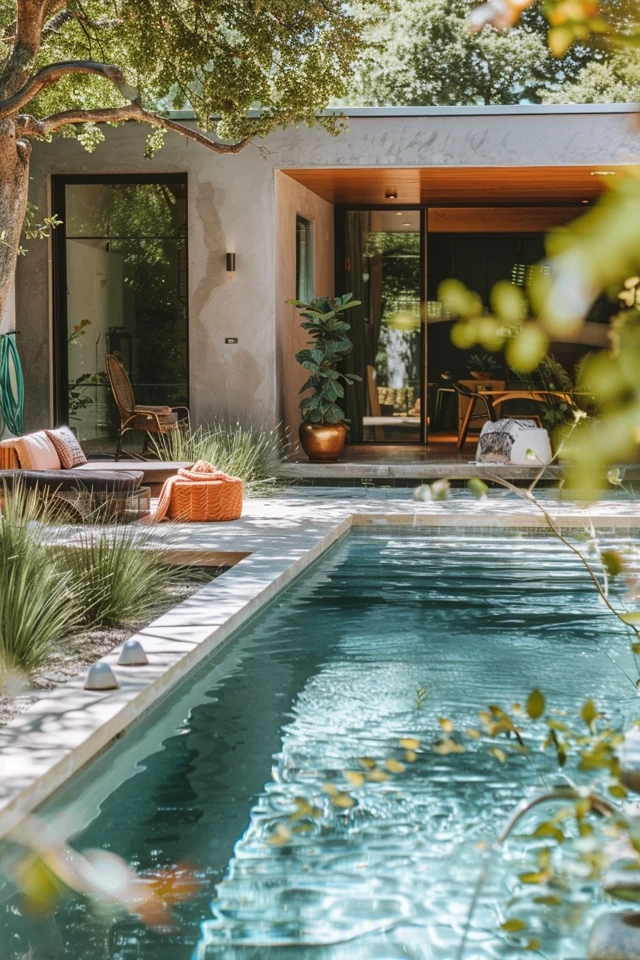
Budget-Friendly Small Inground Pool Ideas
For many homeowners, the dream of a backyard pool often hits a wall when the contractor sends over the first quote. However, the trend toward smaller footprint living has extended to our backyards, and the “spool” (small pool) or plunge pool is having a major moment in landscape design.
You do not need a massive estate or a six-figure budget to create a refreshing, luxurious outdoor retreat. By prioritizing function and choosing materials wisely, we can design a water feature that fits both a tight footprint and a modest budget without sacrificing style.
In this guide, I will walk you through the design decisions that save the most money while maximizing value. For plenty of visual inspiration to help you visualize these concepts, be sure to check out the Picture Gallery at the end of the blog post.
1. Choosing the Right Material for Your Budget
The biggest line item on your estimate is the pool shell itself. Understanding the three main construction methods is crucial because they dictate both upfront costs and long-term maintenance.
Vinyl Liner Pools
Vinyl is generally the most affordable inground option upfront. It involves a steel or polymer frame with a custom vinyl sheet inserted over it. Modern vinyl patterns can mimic expensive tile or stone, looking surprisingly high-end.
The drawback is durability. You will likely need to replace the liner every 7 to 10 years, which can cost several thousand dollars. However, the initial savings are often enough to justify the future maintenance cost for budget-conscious families.
Fiberglass Shells
Fiberglass pools are pre-molded in a factory and lowered into the hole by a crane. Because they are manufactured off-site, labor costs are lower, and installation is much faster than concrete.
For small yards, fiberglass is often my top recommendation. Manufacturers have many “plunge” models specifically designed for tight spaces. The surface is non-porous, meaning it uses fewer chemicals and prohibits algae growth, saving you money on monthly maintenance.
Concrete (Gunite/Shotcrete)
This is the most expensive option but offers unlimited customization. You dig a hole, install a rebar cage, and spray concrete.
While usually the priciest, a small concrete pool (around 10×15 feet) can sometimes be cost-competitive if access to the yard is difficult for a fiberglass crane. Concrete allows for precise shaping around existing landscaping or structures.
2. Size and Depth: The “Cocktail Pool” Concept
In design, we often say that volume equals cost. Excavation, soil removal, water, chemicals, and heating all scale up with the size of the vessel. Shrinking the dimensions is the fastest way to slash the budget.
The Plunge Pool Strategy
A standard family pool might be 16×32 feet, but a plunge pool is often 8×16 or 10×20 feet. By cutting the footprint in half, you reduce material costs significantly.
These sizes are perfect for cooling off, lounging with a drink, or playing with small children. They are rarely intended for swimming laps, but you can install a swim jet system later if exercise is a priority.
Flat Bottom vs. Deep End
Grading a pool from shallow to deep requires more digging and complex engineering. It also reduces the usable standing area in a small pool.
I almost always recommend a flat bottom design for small pools. A uniform depth of 4 to 5 feet is perfect for standing with a beverage or playing volleyball. It simplifies the excavation process and makes the entire pool usable for socializing.
3. Smart Hardscaping and Decking Choices
The “pool environment” usually costs as much as the pool itself. If you blow your budget on the water, you might be left with a mud pit surrounding it. Here is how we manage decking costs without it looking cheap.
Limit the Paved Perimeter
You do not need a 10-foot concrete apron on all sides. I recommend doing a standard 3-foot walkway on three sides and expanding to a 10-foot lounging area on just one side.
Concrete Pavers with Gravel
Large-format concrete pavers separated by ribbons of pea gravel or artificial turf are very trendy. This allows for drainage (reducing the need for expensive trench drains) and uses less concrete material.
Stamped Concrete
If you want the look of stone without the price tag, stamped concrete is the industry standard. We can texture and color the concrete to look like slate, flagstone, or even wood planks.
Designer’s Note: The Drainage Trap
A common disaster I see is homeowners paving every inch of their small backyard to minimize lawn care. This creates a massive runoff issue.
In a small yard, water displacement from the pool and rain needs somewhere to go. Always maintain at least 15-20% of permeable surface (planting beds or gravel) to prevent flooding your home’s foundation.
4. Affordable Features That Feel Luxurious
You do not need rock grottos or massive waterfalls to make a pool feel high-end. In fact, clean lines often look more expensive than complicated rock work.
The Baja Shelf (Tanning Ledge)
This is a shallow area (usually 9-12 inches deep) for lounge chairs. It is incredibly popular and adds high function for adults and toddlers. While it adds a bit of surface area cost, it replaces water volume with structure, which can balance out the price.
Proper Lighting
Lighting is the highest ROI (Return on Investment) feature. Two well-placed color-changing LED lights can transform a concrete hole into a glowing resort feature at night.
Water Scuppers
Instead of a massive waterfall, use small copper or stainless steel scuppers pouring from a raised bond beam. The sound of falling water masks neighborhood noise, creating a private oasis effect for a few hundred dollars in hardware.
5. Navigating Hidden Costs and Logistics
When planning your budget, you must account for the “unseen” elements. These are the boring but mandatory costs that often blindside homeowners.
Fencing Requirements
Almost every municipality requires a barrier that is at least 48 to 54 inches high with self-closing, self-latching gates. If your current fence is old or too short, you have to replace it.
Electrical Upgrades
Pool pumps and heaters require dedicated circuits. If your main electrical panel is full or old, you might need a “heavy up” (panel upgrade), which can cost between $2,000 and $4,000.
Dirt Haul-Away
When you dig a hole, the dirt “fluffs” up (expands) by about 30%. You will have dump trucks full of soil to remove. Unless you can grade this dirt into your yard (rare in small spaces), you have to pay haul-away fees.
Common Mistakes + Fixes
Mistake: Forgetting Equipment Space
Homeowners often visualize the water but forget the pump, filter, and heater. These are noisy and ugly industrial machines.
The Fix: Plan a 4×6 foot equipment pad around the side of the house or behind a shed. Use landscaping or a privacy screen to hide it and buffer the sound.
Mistake: Ignoring Sun Patterns
Placing a pool in the deep shade of a neighbor’s tree means the water will always be cold, and you will constantly be skimming leaves.
The Fix: Track the sun in your yard for a full day before breaking ground. You want the pool in the area that gets the most direct sunlight between 11:00 AM and 3:00 PM.
Mistake: Skimping on Coping
Coping is the 12-18 inch cap on the edge of the pool shell. Using cheap material here ruins the aesthetic because it is the most visible transition point.
The Fix: Even if you use basic concrete for the deck, splurge on a natural stone or safety-grip coping. It frames the water and elevates the entire look.
What I’d Do in a Real Project: The Mini-Checklist
If I were designing a budget-conscious pool for a client with a small yard today, here is the exact roadmap I would follow:
- Get a Survey: I would locate all utility easements and setback lines immediately. In small yards, inches matter.
- Select a Rectangle: I would choose a 10×20 foot rectangular shape. It is easiest to fit an automatic cover on (safety + heat retention) and maximizes swim space.
- Choose a Liner or Fiberglass: I would bid out a dark blue vinyl liner (hides dirt, absorbs heat) or a white fiberglass shell (makes water look Caribbean blue).
- Simplify the Bottom: I would specify a flat bottom depth of 4.5 feet. No deep end diving, just maximum social space.
- Mix Materials: I would use bluestone for the coping and poured concrete with a “salt finish” (texture) for the deck to save money without slipping.
- Add Heater Provisions: Even if the budget is tight, I would plumb for a heater now so it can be added later without ripping up pipes.
FAQs
Does a small pool add value to my home?
Generally, yes, especially in warmer climates. A “spool” is often viewed more favorably than a massive pool because it implies lower maintenance and leaves some yard space for pets or gardening.
How much space do I need for a small pool?
You need the water surface area plus setbacks. If the pool is 10 feet wide, and you need 5-foot setbacks from property lines, you need a yard width of at least 20 feet. Always check local zoning codes first.
Can I use a stock tank as an inground pool?
Technically, yes, but I advise against burying stock tanks completely. They are not designed to withstand the inward pressure of soil. If you want that look, keep it semi-inground or above ground.
Is saltwater cheaper than chlorine?
Saltwater pools essentially are chlorine pools (the generator turns salt into chlorine). The system costs more upfront (approx. $1,500–$2,500) but saves money on chemicals annually and is much gentler on skin and swimwear.
Conclusion
Building a pool on a budget requires discipline. The temptation to add “just one more foot” or upgrade to premium tile is strong. However, a well-executed small pool is infinitely better than a large, unfinished project.
Focus on the user experience: clear water, comfortable depths, and a nice place to sit. By choosing a simple shape, durable materials, and smart landscaping, you can create a backyard sanctuary that looks expensive but respects your financial boundaries.
Picture Gallery


