
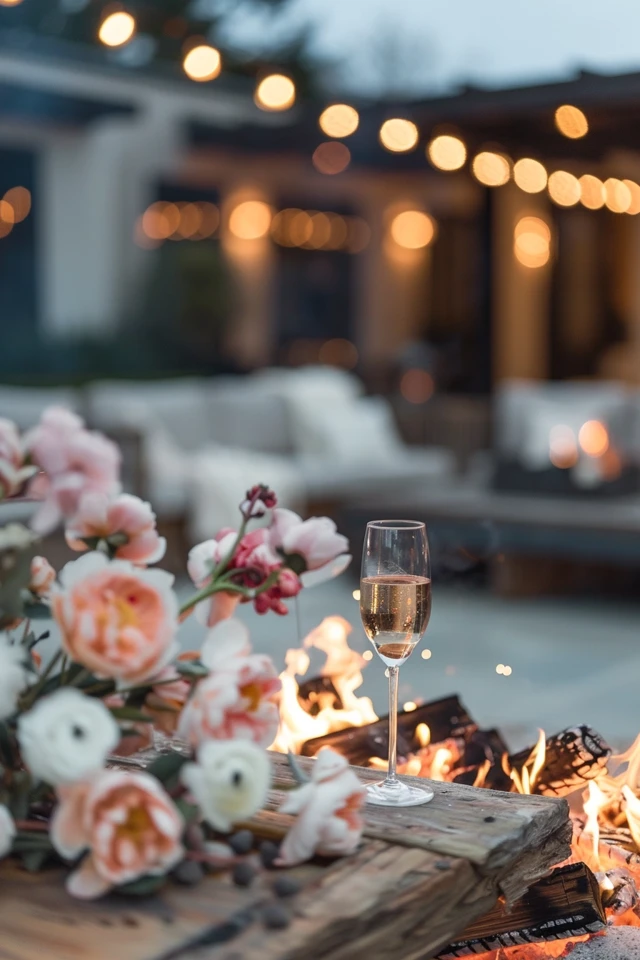
Campfire Furniture – Birthday Party Ideas for Cozy Celebrations
There is something inherently magical about gathering around a fire. Whether it is the nostalgia of childhood camping trips or the primal comfort of warmth on a cool evening, a fire pit naturally becomes the heart of any party. For a birthday celebration, moving the festivities outdoors around a campfire creates an intimate, relaxed atmosphere that formal dining simply cannot replicate.
However, hosting a successful campfire party requires more than just lighting a few logs and dragging out some plastic lawn chairs. As a designer, I approach these spaces by focusing on “zones” of interaction, ensuring that guests can move freely, stay warm, and balance a drink and a s’more without struggle. The furniture you choose—and how you arrange it—dictates the flow and energy of the entire evening.
In this guide, I will walk you through professional layout strategies, material selections, and styling tips to turn a backyard fire pit into a luxury lounge experience. For a visual feast of specific setups to inspire your own planning, don’t miss our curated Picture Gallery at the very end of this post.
1. Establishing the Layout: Safety and Social Flow
The most critical aspect of designing a campfire setting is the layout. Before you buy a single cushion or side table, you need to understand the spatial relationship between the heat source and the seating. In interior design, we talk about “conversation circles,” and nowhere is this more important than around a fire.
A common issue in DIY backyard setups is placing furniture too close to the flames or too far away. If seats are too close, guests overheat and cannot escape the smoke; if they are too far, the intimacy is lost, and the warmth dissipates.
Here are the golden rules of measurement for fire pit layouts:
- The Heat Zone: Place the front edge of your seating 36 to 48 inches (3 to 4 feet) from the edge of the fire pit. This allows enough room to stretch out legs without melting shoe soles, while keeping guests within the warmth radius.
- Circulation Paths: You must leave 30 to 36 inches of walking space behind the chairs. Guests will constantly be getting up for drinks or food, and you do not want them tripping over the back of an Adirondack chair in the dark.
- The Circle Diameter: For a standard circular layout, you typically need a total diameter of 14 to 18 feet of clear space to accommodate the pit, the legroom, the chairs, and the walkway behind them.
Designer’s Note: The “Escape Route”
One lesson I learned early in my career involved a heavy, semi-permanent stone bench installation that encircled a fire pit completely. It looked beautiful in photos, but in practice, it was a disaster.
If the wind shifted, guests trapped on the downwind side had no way to push back from the smoke. Always prioritize movable furniture over fixed, heavy masonry seating for at least 50% of the arrangement. This allows guests to shift their chairs a few inches to dodge smoke or heat without disrupting the party flow.
2. Selecting the Right Seating Mix
For a birthday party, you want the vibe to feel curated and purposeful, not like a random assortment of garage leftovers. However, uniformity can also feel stiff. The best cozy celebrations use a “collected” look that mixes different furniture styles while maintaining a cohesive color palette.
I recommend a 60/40 mix of “primary” and “secondary” seating. Primary seating includes substantial pieces like deep armchairs or sofas where people will camp out for an hour. Secondary seating includes lighter, movable options like poufs, stumps, or ottomans.
The Primary Seating Options
Adirondack Chairs:
These are the gold standard for fire pits for a reason. Their deep slant encourages relaxation. However, they have a large footprint. Ensure you measure the width of the arms. Some modern Adirondacks are upwards of 30 inches wide. If you have a small patio, four of these might fill the entire space.
Outdoor Sofas (The Deep Seat):
If you have the space, a curved outdoor sofa mimics the shape of a round fire pit perfectly. If using a straight sofa, place it perpendicular to the wind direction so smoke does not blow directly into the “trap” of the sofa frame.
Renters and Small Spaces:
If you are renting or working with a small urban balcony, look for “campaign chairs” or butterfly chairs. They offer the hammock-like comfort of a lounge chair but can be folded and stored away when the party ends.
The Secondary Seating (The Flex Options)
This is where you add personality and accommodate extra guests.
- Upholstered Poufs: These are excellent for closing the circle. They act as footrests when it’s just family, but become seats when the party grows. Look for outdoor-rated fabrics that resist moisture.
- Garden Stools: Ceramic or concrete drum stools are dual-purpose. They can serve as a seat for a quick chat or a side table for a drink.
- Floor Cushions: For a younger crowd or a very casual boho vibe, large outdoor floor cushions (minimum 24×24 inches) allow people to sit almost right next to the fire safely.
Common Mistakes + Fixes
Mistake: Using dining chairs around a fire pit.
The Issue: Dining chairs put guests in an upright, attentive posture (usually 18-inch seat height), while fire pits are about lounging. It feels awkward and stiff.
The Fix: Stick to “lounge height” furniture, where the seat is typically 14 to 16 inches off the ground. This lowers the center of gravity and encourages leaning back.
3. Layering for Warmth: Textiles and Rugs
Furniture provides the structure, but textiles provide the “cozy.” For a birthday celebration, especially one extending into the evening, thermal comfort is just as important as visual style. Hard materials like wood, metal, and stone get cold at night. You need to create a barrier.
The Outdoor Rug
Defining the zone with a rug is a pro move that instantly elevates a backyard party. It acts as an anchor.
Sizing Logic:
Do not use a rug that is too small. If you are placing a rug under the fire pit (assuming it is a gas pit safe for rugs, or you are using a fire-resistant mat), the rug needs to be large enough that the front legs of all your chairs sit on it. This physically connects the furniture pieces.
Material Safety:
Only use rugs labeled explicitly for outdoor use (polypropylene or recycled plastic). If you have a wood-burning fire pit, I generally advise against a rug directly under the fire due to flying sparks. Instead, layer smaller rugs or sheepskins on the chairs themselves.
The Blanket Strategy
You cannot have a cozy campfire party without blankets. However, piling them on the ground is messy and damp.
What I’d do in a real project:
I always set up a “blanket station.” Use a large wicker basket or a vintage wooden crate placed just outside the smoke zone. Roll the blankets rather than folding them—it looks more inviting and makes them easier to grab.
Fabric Choice:
Avoid loose knits. They snag on twigs and debris. Heavy wool is classic and fire-resistant (wool does not melt like synthetics), making it the safest choice near an open flame. If you use synthetic fleece, be extremely careful, as a wayward spark can melt the fabric instantly.
4. Functional Surfaces: The Drink Drop Zone
Nothing kills the relaxation vibe faster than having to hold a cold drink for three hours because there is nowhere to put it down. In interior design, the rule is that every seat needs a surface within arm’s reach. This is doubly true outdoors where the ground might be uneven or damp.
The Side Table Ratio
You do not need a table for every single chair, but you should aim for one table shared between every two chairs.
Height Matters:
The side table should be roughly the same height as the arm of the chair, or slightly lower. If it is too high, guests risk knocking their drinks over with their elbows. Aim for tables that are 18 to 22 inches high for standard lounge seating.
The S’mores Station
Since this is a birthday party, food logistics are key. Do not try to balance the marshmallows and chocolate on the edge of the fire pit coping—it gets too hot and melts the chocolate prematurely.
The Setup:
Use a dedicated low coffee table or a rolling bar cart positioned about 5 feet away from the fire. This is the “reload zone.”
- Use Trays: Corral the ingredients on a high-walled tray. This prevents round marshmallows from rolling off into the grass.
- Skewer Storage: Place a heavy ceramic vase or tall galvanized bucket on the table to hold the roasting sticks. This keeps the sharp tips pointing up and prevents them from getting dirty on the ground.
5. Lighting and Ambiance Beyond the Flames
While the fire provides light, it creates high-contrast shadows. If the fire is the only light source, guests effectively stare into a bright light and see nothing but blackness around them. This can feel disorienting and makes it hard to see who is talking.
To create a warm, inclusive atmosphere, you need ambient lighting to balance the brightness of the flames.
String Lights
Overhead string lights are the best way to define the “ceiling” of an outdoor room.
Installation Tip:
Do not just string them around the perimeter. Zig-zag them across the space. If you do not have trees, install temporary poles in planters filled with concrete or gravel. The lights should be hung at least 8 to 9 feet high so tall guests do not feel the heat from the bulbs or worry about snagging them.
Low-Level Lighting
To help guests navigate safely, place solar lanterns or battery-operated LED candles on the ground near the walkway entrance.
Color Temperature:
This is a non-negotiable for me. Ensure all your bulbs are “Warm White” (2700K to 3000K). Do not use “Daylight” (5000K) bulbs. Cool blue light clashes with the warm orange glow of the fire and creates a clinical, uninviting atmosphere.
Designer’s Final Checklist
If I were styling your backyard for a client reveal this weekend, this is the mental checklist I would run through 30 minutes before guests arrive.
- Check Wind Direction: Light a match. If the wind is blowing strongly one way, shift the seating circle so no one is in the direct line of smoke.
- Dry Run the Seating: Sit in every chair. Is it stable? Does it wobble on a tree root? Shim it or move it.
- Surface Check: Can I reach a table from this chair without getting up? If not, add a garden stool.
- Safety Perimeter: Is there any dry brush or low-hanging branch near the fire? clear it away.
- Lighting Balance: Turn on the string lights. Are they overpowering the fire? Dim them if possible.
- Music Volume: Can I hear the crackle of the fire over the playlist? The fire sounds are part of the sensory experience.
Frequently Asked Questions
What if it rains the day before the party and the ground is soaked?
This is common. If you have a grass yard, buy a roll of temporary pathway mesh or lay down outdoor rugs to create a barrier between shoes and the mud. For furniture, if you are using cushions, bring them inside until the very last minute. Wet pants will ruin a party faster than anything else.
How do I handle smoke if I don’t have a smokeless fire pit?
Use very dry, seasoned hardwoods like oak or hickory. Avoid softwoods like pine, which contain sap that creates excessive smoke and popping sparks. Also, ensure your fire has good airflow at the base; a fire that is “choked” for air will smoke heavily.
Can I use indoor furniture outside just for one night?
Yes, but with caveats. Wooden indoor chairs are generally fine for a few hours if the ground is dry. However, never bring indoor upholstered sofas or heavy armchairs outside. They are difficult to move, and they will absorb ambient moisture from the air, which can lead to mold inside the foam later. Stick to hard-framed indoor furniture and add cushions.
What is the best way to add extra seating for a large crowd cheaply?
Hay bales are a classic, festive option for large groups. To make them comfortable and protect clothing from scratching, drape them heavily with thick moving blankets or Mexican Falsa blankets. Arrange them in a semi-circle behind the primary chairs for a “stadium seating” effect.
Conclusion
Creating a cozy campfire setup for a birthday celebration is about more than just combustion; it is about architecture on a micro-scale. It involves managing the elements—heat, light, and wind—while prioritizing the human need for connection and comfort.
By respecting the rules of spacing, mixing your seating types, and layering in warm textiles, you transform a backyard patch of grass into a destination. The goal is to build a space where, once the cake is cut and the gifts are opened, nobody wants to leave. They simply pull the blanket tighter, lean back, and watch the embers fade.
Picture Gallery


