
Title: Cash-In on Fun: Money Theme Party Ideas
Introduction
Planning a party centered around wealth and abundance is a fantastic way to celebrate a promotion, a fundraiser, or simply the richness of life. It allows you to play with luxurious textures, metallic finishes, and bold colors that might feel too heavy for everyday decor but work perfectly for an event. For a comprehensive look at how these concepts come together, be sure to scroll down to the Picture Gallery at the end of the blog post.
However, there is a fine line between “sophisticated wealth” and “tacky costume party.” As a designer, I always approach theme parties with the same principles I use for a permanent room design: balance, scale, and lighting. You want your guests to feel like they have walked into a high-end lounge or a VIP casino room, not a children’s playroom.
In this guide, I will walk you through how to execute a money-themed event using interior design rules. We will cover layout strategies to keep traffic flowing, lighting techniques that make everything look expensive, and styling tips that elevate simple props into decor statements.
1. Establishing the Palette: The “Old Money” Aesthetic
The first step in any design project is defining the color story. For a money theme, the obvious choice is green and gold, but the specific shades you choose matter immensely. Avoid standard “grass green” or neon shades, as these instantly cheapen the look.
Instead, opt for deep Hunter Green, Emerald, or a rich Olive. These colors mimic the ink on currency but also recall the velvet of vintage bank interiors and library lamps. When selecting your gold accents, mix your finishes. Use a combination of brushed brass (which looks more modern and high-end) and antique gold.
If you are renting a space or styling your own living room, look at your existing “hard finishes” like floors and wall colors. If your room is painted a cool gray, lean heavily into silver and platinum “coins” rather than gold to maintain visual harmony. If you have warm wood floors, gold and brass are your best friends.
Designer’s Note: The 60-30-10 Rule
In interior design, we use the 60-30-10 rule to balance color. For this party theme, apply it as follows:
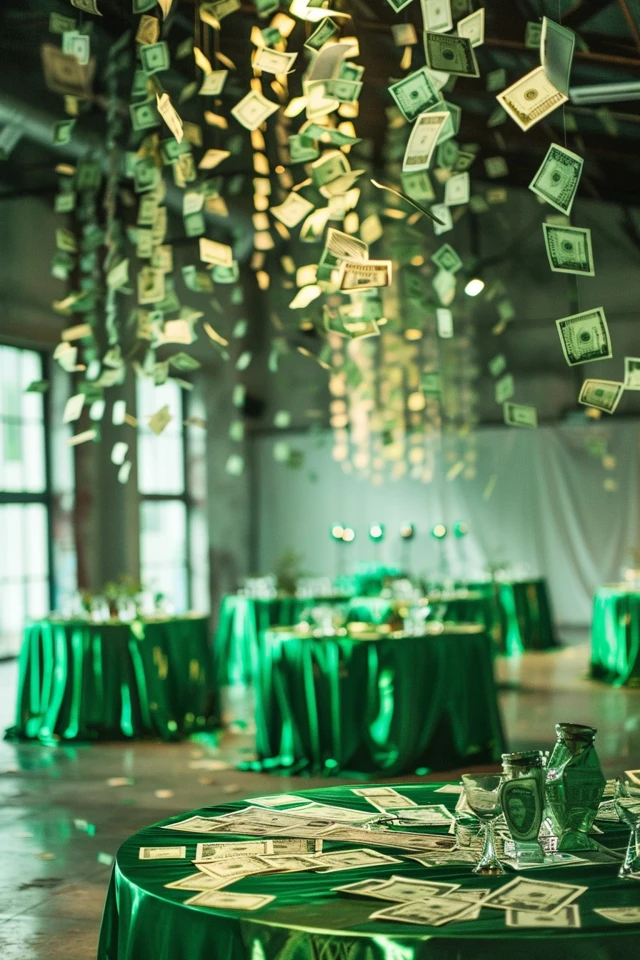
- 60% Main Color: Deep Emerald Green (tablecloths, large backdrops, rug overlays).
- 30% Secondary Color: Black or Charcoal (creates depth and makes the metals pop).
- 10% Accent Color: Gold or Silver (cutlery, vases, currency props).
This prevents the gold from becoming overwhelming and tacky.
2. The Layout: Designing High-Roller Traffic Flow
One of the biggest mistakes in party planning is ignoring the “circulation path.” In a home, we need clear walkways; at a party, these needs double because people are standing and holding drinks. You want to create zones that encourage movement without creating bottlenecks.
I recommend pulling furniture away from the walls. This might seem counterintuitive in a small space, but “floating” your seating creates a more intimate, lounge-like vibe. Aim for a circular flow where guests can enter, grab a drink, get food, and find a seat without retracing their steps.
Specific Measurements for Party Layouts
- Walkways: Maintain a minimum of 30 to 36 inches of clear walking space between furniture pieces.
- Bar Placement: Never place the bar immediately inside the entrance. Place it in the furthest corner to draw guests into the room.
- Conversation Circles: Group seats in clusters of 2 to 4. Ensure the distance between seats is no more than 8 feet to allow for conversation without shouting.
Common Mistakes + Fixes
Mistake: Pushing all furniture against the walls to “make a dance floor.”
Fix: Unless you actually hired a DJ, this just makes the room feel like a middle school gym. Keep the furniture grouped to encourage mingling.
3. The Million-Dollar Tablescape
Your dining or buffet table is the focal point of the event. This is where you can have the most fun with the theme. Instead of scattering fake bills haphazardly, treat the currency as a texture. I love using clear glass vases filled with rolled-up “bills” (faux currency) to hold floral arrangements.
Layering is the secret to a professional-looking table. Start with a base cloth, add a runner in a contrasting texture (like satin or faux leather), and use chargers under the plates. Height variation is also critical. If everything is flat on the table, the design looks one-dimensional.
Rules of Thumb for Centerpieces
- The Sightline Rule: Centerpieces should be either shorter than 12 inches or taller than 20 inches. Anything in between creates a visual wall that blocks guests from seeing each other across the table.
- Odd Numbers: Always group décor items in odd numbers (1, 3, or 5). It is more pleasing to the human eye than even pairings.
- Lighting the Table: If possible, aim a dedicated pin-spot light or a directional recessed light onto the center of the buffet. This highlights the food and decor.
DIY Money Texture
If you are on a budget, buy chocolate coins wrapped in gold foil. Fill apothecary jars with them. The repetition of the gold circles creates a very luxe, architectural look for a fraction of the cost of real metal decor.
4. Lighting: Creating the “Vault” Atmosphere
Lighting is the single most important element in interior design, and it makes or breaks a party atmosphere. You want to avoid the “overhead interrogation light” effect. Turn off your main ceiling fixtures (unless they are dimmable chandeliers) and rely on eye-level and accent lighting.
For a money-themed party, you want a moody, speakeasy vibe. Use warm white bulbs (2700K color temperature). Cool white or daylight bulbs (5000K) will make your gold decor look blue and harsh.
Lighting Checklist for Events
- Uplighting: Place small canister lights (you can buy battery-operated LED ones cheaply) behind large potted plants or in room corners. This casts dramatic shadows on the ceiling.
- Table Lamps: Bring lamps from other rooms into the party space. The shade diffuses light flatteringly.
- Candlelight: Real or battery-operated candles add movement to the light, which makes gold and glass sparkle.
What I’d Do in a Real Project: Lighting
If I were styling this for a client, I would run LED strip lights along the underside of the buffet table or the bar. I would choose a warm amber or a soft green setting. This creates a “floating” effect and adds a layer of indirect light that looks incredibly high-end.
5. Interactive Decor: The Money Booth Concept
In residential design, we talk about “moments”—areas specifically designed to catch the eye or serve a distinct purpose. For a party, this is your photo op or interactive zone. A “Money Booth” doesn’t have to be a rented machine blowing paper around; it can be a styled vignette.
Create a backdrop using gold fringe curtains, but layer them. Don’t just use one thin layer; use two or three to ensure the wall behind doesn’t show through. Frame this backdrop with black velvet drapes to ground the space.
Styling Props with Scale in Mind
When using props like fake money bags, gold bars, or safes, scale is vital. A tiny piggy bank on a large table looks cluttery. You want large, substantial items.
- Oversized Props: Look for large canvas laundry bags and stencil a dollar sign on them. Stuff them with pillows to give them volume.
- Verticality: Stack “gold bars” (spray-painted bricks or boxes) in a pyramid. The height draws the eye up.
- Renter-Friendly Hanging: Use Command hooks or tension rods to hang backdrops. Never use tape on painted drywall, as it often peels the paint when removed.
Designer’s Note: Real-World Lesson
I once designed a launch party where we filled a bathtub with fake money for photos. It looked great, but we didn’t account for the mess. As people got in and out, the paper bills tracked everywhere, including near open flames and wet bar areas.
The Fix: If you use loose confetti or paper money, contain it in a specific area (like a rug) or a vessel (like a clear acrylic box) that guests can stand behind rather than in.
Final Checklist: The Designer’s Review
Before guests arrive, do a final walkthrough using this designer’s punch list. This ensures both aesthetics and function are on point.
- The Entry Test: Walk through your front door. Is the first thing you see impactful? If not, move a focal point (like a large floral arrangement or sign) to the direct line of sight.
- Lighting Level: Dim the lights to the party level. Take a photo with your phone. If it looks grainy, add one more lamp. If it looks sterile, dim it further.
- Traffic Clearance: Walk the path from the entrance to the bar to the bathroom. Are there tripping hazards like rug corners or cords? Tape down all cords with gaffer tape.
- Scent Scaping: Scent is invisible design. For a wealth theme, avoid fruity smells. Go for Sandalwood, Cedar, Leather, or Fig. It adds a subconscious layer of luxury.
- Bathroom Check: The bathroom should be styled too. fresh towels, a nice soap dispenser (hide the plastic bottle), and perhaps a small vase with a single green flower.
Frequently Asked Questions
How can I make fake money look real in decor?
Don’t try to make it look real; lean into the stylized look. However, if you are printing your own, use a heavy bond paper or linen paper rather than standard printer paper. The texture makes a huge difference in how it sits in vases or on tables.
What is the best way to hang decorations without damaging walls?
I rely heavily on 3M Command Hooks (the wire toggle kind are great for hanging banners) and tension rods inside door frames. For lightweight items on windows, suction cups with hooks work well.
Can I do this theme outdoors?
Absolutely. Use the landscape to your advantage. Uplight trees with green LED floodlights. Use gold chargers on patio tables. Just be wary of paper money decor outdoors—one gust of wind creates a litter problem. Weigh everything down.
What if my furniture doesn’t match the theme?
Cover it. Inexpensive fabric by the yard is a designer’s secret weapon. You can drape a sofa in a black sheet and tuck it tightly for a slipcover effect, or simply remove the piece from the room entirely if space permits.
Conclusion
Hosting a money-themed party is an exercise in abundance and bold choices. By adhering to interior design principles—sticking to a strict 60-30-10 color palette, ensuring proper traffic flow, and layering your lighting—you can create an event that feels genuinely luxurious rather than gimmicky.
Remember, the goal isn’t just to display symbols of cash, but to make your guests feel like a million bucks through comfort, atmosphere, and thoughtful details. Enjoy the process of transforming your space!
Picture Gallery


