
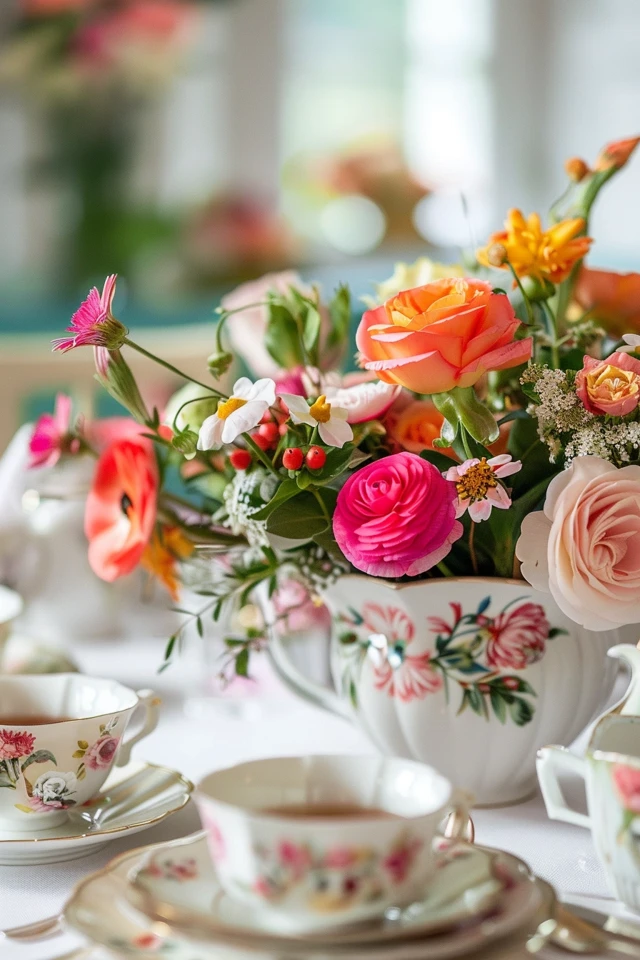
Title: Charming Centerpiece Ideas for Tea Party Elegance
Introduction
There is something inherently magical about a tea party that separates it from a standard dinner or brunch. It requires a softer approach to hosting, where the pacing is slower and the aesthetics are more delicate. When I design dining spaces for clients, I always emphasize that the table setting is the landscape of the room, and the centerpiece is the focal point that anchors the entire experience.
I once attended a high tea where the host placed a stunning, massive floral arrangement right in the middle of a small round table. While beautiful, it completely blocked our view of one another, forcing us to lean awkwardly to the side just to have a conversation. If you are looking for visual inspiration, you can visit the Picture Gallery at the end of this blog post.
That experience taught me that elegance must always marry function. In this guide, I will walk you through how to create charming tea party centerpieces that honor the rules of scale, utilize professional mechanics, and bring a touch of garden magic to your table without sacrificing conversation.
Understanding Scale and Sightlines
The most critical rule in dining table design is respecting the sightline. As a designer, I abide by a strict measurement zone: centerpieces should either be low enough to see over or tall enough to see under. For an intimate tea party, the “low” zone is usually the best choice to encourage intimacy.
Aim to keep your arrangements below 14 inches in total height. This measurement includes the vessel and the highest tip of your flowers or candles. If you go taller, you risk creating a visual wall that isolates your guests.
You must also consider the footprint of the centerpiece relative to the table width. A tea party table is often crowded with cups, saucers, tiered cake stands, and sugar bowls. Your centerpiece should occupy no more than one-third of the table’s width to leave ample room for place settings and service items.
Designer’s Note: The Elbow Test
Before guests arrive, I always sit in a chair and lean in as if telling a secret. If I feel like I might knock the centerpiece over with my elbow, or if I have to crane my neck to see the imaginary person across from me, the arrangement is too big. Always edit down for comfort; a smaller, denser arrangement is often more chic than a sprawling one.
Selecting the Right Vessel
The vessel sets the tone for the entire vignette. For tea parties, I love to move away from standard glass florist vases and utilize items that feel more collected and curated. Using a teapot as a vase is a classic choice, but the key to making it look professional is in the prep work.
Ceramic pitchers, silver sugar bowls, and vintage soup tureens make excellent vessels because they are opaque. This hides the messy stems and murky water, giving you a cleaner look. If you are using a wide-mouthed vessel like a tureen or a compote bowl, you cannot just drop flowers in and expect them to stand up.
You need internal mechanics to hold the structure. For wide vessels, I use a “frog” (a heavy metal spiked disk) at the bottom or create a grid across the top using clear floral tape. This grid acts as a support system, allowing you to place stems at angles that defy gravity without them flopping against the rim.
Common Mistakes + Fixes
- Mistake: Using a vessel that isn’t watertight. Vintage silver and porous ceramics often leak, which can ruin a wood table runner or tablecloth.
- Fix: Always test vintage vessels with water on a baking sheet overnight before the party. If they leak, place a smaller plastic cup or glass jar inside the vessel to hold the water and flowers.
- Mistake: The vessel is too light for the flowers. Top-heavy flowers like peonies can tip a lightweight vase over.
- Fix: Add clean marbles, river rocks, or glass gems to the bottom of the vessel before adding water to create a weighted ballast.
Floral and Botanical Mechanics
When selecting flowers for a tea party, texture is often more important than color. I prefer to mix three distinct types of botanical shapes: a focal flower, a gesture flower, and a textural filler. This creates a composition that feels organic and high-end rather than stiff and supermarket-bought.
For your focal flower, choose something round and face-forward, like a garden rose or a ranunculus. These are the stars of the show and should be placed low and deep in the arrangement. Gesture flowers, like tulips or sweet peas, have naturally curving stems that should extend outward to break the rigid shape.
Textural filler is where you can bridge the gap between interior and landscape design. I often forage from the client’s garden for this layer. Sprigs of mint, rosemary, or even lady’s mantle add a scent and texture that feels grounded and seasonal.
What I’d Do in a Real Project: The Recipe
If I were styling a tea party for a client tomorrow, here is the exact formula I would use for a foolproof arrangement:
- The Vessel: A white ironstone pitcher (approx. 6 inches tall).
- The Mechanics: A ball of chicken wire placed inside for stem support.
- The Flowers: 5 stems of white Hydrangea (base), 7 stems of pale pink Garden Roses (focal), and 5 stems of Queen Anne’s Lace (airiness).
- The Method: Start with the hydrangeas to create a nest. Insert roses in a triangle pattern. Finish with Queen Anne’s Lace floating slightly above the rest.
Non-Floral Elements for Texture and Whimsy
Not every centerpiece needs to be strictly floral. In fact, some of the most charming tea party tablescapes rely on non-floral elements to tell a story. Using fruit is one of my favorite ways to add color and durability, especially in hot weather where flowers might wilt.
Citrus fruits, pomegranates, or pears can be styled down the center of a rectangular table. To make this look designed rather than accidental, vary the grouping sizes. Cluster three lemons, then a gap, then five limes, creating a rhythm that guides the eye down the table.
Books are another fantastic prop for a tea party, specifically vintage hardcovers with fabric spines. You can stack two or three books to create a plinth for a small bowl of sugar or a candle. This adds height variation to the table without blocking sightlines.
Safety Check: Candle Placement
Candles add unparalleled ambiance, even during the daytime. However, safety is paramount.
- Avoid scented candles at the dining table; they compete with the aroma of the tea and pastries.
- Use tapers in secure holders for height, or votives for low light.
- Ensure the flame is nowhere near overhanging floral elements or the reach of a guest reaching for a scone.
Bringing the Garden Indoors (or Outdoors)
If your tea party is hosted outdoors, your centerpiece needs to contend with the elements. The biggest challenge in outdoor entertaining is wind. A tall, top-heavy vase will almost certainly blow over with a sudden gust.
For outdoor settings, I prefer low, heavy troughs or a series of small, weighted bud vases. Potted plants are also a fantastic solution because the soil adds natural weight. Small terracotta pots with blooming violas or herbs can double as party favors for guests to take home.
When bringing garden cuttings indoors, you must be mindful of pests. Nothing ruins a tea party faster than an ant crawling out of a centerpiece and onto a tea sandwich. Always shake branches vigorously outside and rinse hearty greens in cool water before bringing them to the table.
Common Mistakes + Fixes
- Mistake: Foraging toxic plants. Some common garden plants like oleander or foxglove are highly toxic if ingested or even touched before eating finger foods.
- Fix: Stick to culinary herbs and known safe flowers like roses, zinnias, and sunflowers. If you aren’t 100% sure what it is, do not put it on a food table.
- Mistake: Not stripping the leaves. Leaves left on the stem below the waterline will rot within hours, creating bacteria that kills the flowers and smells terrible.
- Fix: Strip every single leaf off the stem that will sit below the water level. This is non-negotiable for floral longevity.
Final Checklist
Before your guests arrive, run through this quick designer checklist to ensure your centerpiece is perfect.
- Height Check: Sit in the chair. Can you see the person opposite you without moving your head?
- Stability Check: Nudge the table slightly. Does the water slosh, or does the vase wobble? Secure it with museum wax if needed.
- Scent Check: Is the floral scent overpowering? If so, move the arrangement to the entryway and swap for something more neutral.
- Space Check: Place all serving platters on the table. Is there still room for guests to rest their teacups comfortably?
- Visual Check: Look for “holes” in the arrangement where you can see the floral foam or tape. Cover these spots with extra greenery or moss.
FAQs
How far in advance can I make the centerpieces?
I recommend arranging flowers the day before the event. This gives the blooms time to open up and settle into their shape. Keep the arrangement in a cool, dark room overnight and top off the water level about an hour before the party starts.
What is the best table shape for a tea party?
Round tables are generally best for conversation and tea service because everyone is equidistant from the center. A 48-inch round table comfortably seats four to five people. If you have a rectangular table, consider using two smaller centerpieces rather than one large one to spread the visual interest.
How can I save money on flowers?
Focus on “grocery store hacks.” Buy three bundles of the same cheap flower (like carnations or alstroemeria) in the same color. When massed together tightly in a low bowl, they look incredibly chic and expensive. Avoid mixed bouquets, which often look messy and cheap.
Can I use artificial flowers?
High-quality silk florals can be used, but mix them with fresh greenery. The live greenery tricks the eye into thinking the entire arrangement is real. However, for an intimate setting like a tea party where guests are very close to the centerpiece, fresh is always preferred.
Conclusion
Creating a charming centerpiece for your tea party is about more than just putting flowers in water. It is about creating an atmosphere of care and intention. By respecting the scale of the room, choosing the right vessel, and ensuring your guests can connect without visual obstruction, you set the stage for a memorable gathering.
Remember that perfection is not the goal; hospitality is. A simple bowl of floating gardenias or a thoughtfully arranged cluster of vintage teapots can be just as impactful as a professional floral installation. Trust your eye, follow the rules of scale, and enjoy the process of bringing beauty to your table.
Picture Gallery


