
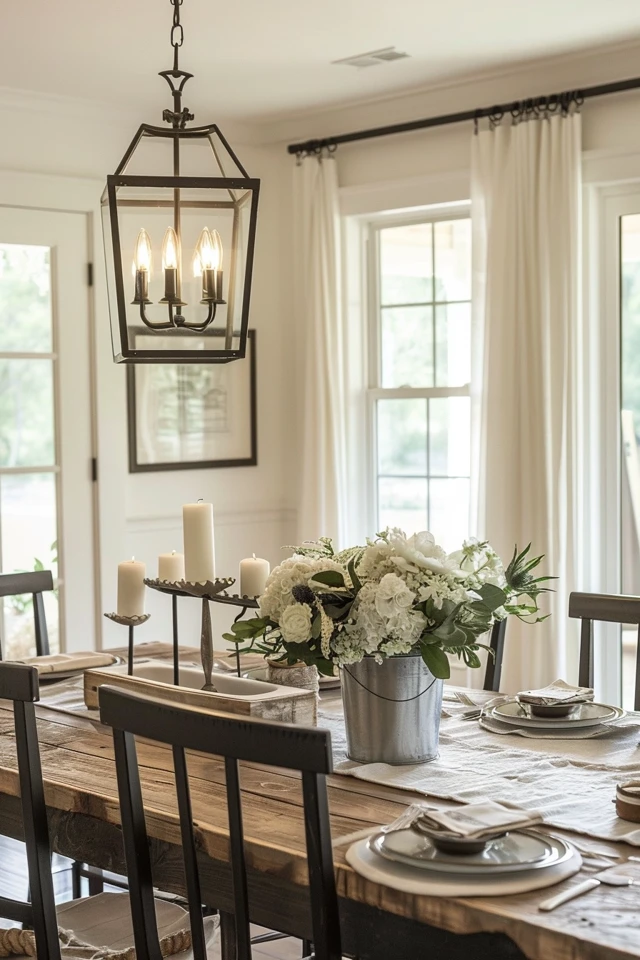
Charming Farmhouse Dining Room Decor Ideas
1. Introduction
The dining room often serves as the heartbeat of a home. It is where holidays are hosted, homework is finished, and the day’s stories are shared over a hot meal. When I first started designing interiors, I realized that clients gravitated toward farmhouse style not just for the aesthetic, but for the feeling of unpretentious comfort it provides. It strikes a balance between rugged history and modern livability that few other styles can replicate.
Creating that perfect balance requires more than just buying a rustic table. It involves layering textures, understanding architectural scale, and selecting pieces that tell a story. To help visualize these concepts, I have curated a collection of real-world examples in the Picture Gallery at the end of this blog post.
In this guide, I will walk you through the structural and decorative elements that define a charming farmhouse dining room. We will move past the kitschy trends and focus on timeless design principles. My goal is to help you create a space that feels curated and collected, rather than purchased from a single catalog page.
2. The Foundation: Selecting the Right Table and Seating
The dining table is the anchor of the room. In farmhouse design, we prioritize materials that age gracefully and can withstand heavy use. You want a table that looks better with a few scratches and dents, rather than one that looks ruined.
Choosing the Table Style
I always recommend a trestle table for farmhouse aesthetics. Functionally, trestle bases allow for more legroom and flexibility with chair placement compared to tables with four corner legs. Look for reclaimed wood, solid white oak, or pine with a matte, wax-style finish. High-gloss finishes often clash with the rustic vibe we are aiming for.
Mixing, Not Matching
One of the biggest mistakes homeowners make is buying a matching dining set. To achieve that designer look, you need to mix your seating. Here is a formula I use frequently:
- Side Chairs: Use wooden spindle-back chairs or metal bistro chairs for the long sides of the table.
- Host Chairs: Place fully upholstered armchairs at the heads of the table to add softness and weight.
- The Bench Option: If you have children, a bench on one side is practical and visually opens up the room.
Space Planning Rules of Thumb
Before you buy, you must measure. You need a minimum of 36 inches of clearance between the edge of your table and the nearest wall or piece of furniture. This allows a person to scoot their chair back and stand up comfortably. If you have a high-traffic walkway behind the chairs, try to increase that clearance to 48 inches.
Designer’s Note: The Rug Dilemma
Many people buy rugs that are too small for the dining room. A rug must extend at least 24 inches past the table on all sides. This ensures that when a guest pulls their chair out to sit, the back legs of the chair stay on the rug. If the chair legs catch on the edge of the rug, it creates a tripping hazard and ruins the flow of the room.
3. Lighting: The Jewelry of the Room
Lighting in a farmhouse dining room should feel substantial. Wimpy fixtures get lost against heavy wood furniture. We often use oversized lanterns, linear chandeliers with exposed bulbs, or mixed-material fixtures incorporating wood and iron.
Getting the Scale Right
A common error is hanging a fixture that is too small for the table. A good rule is that the chandelier’s width should be one-half to two-thirds the width of the dining table. For example, if your table is 40 inches wide, your chandelier should be between 20 and 26 inches in diameter.
Proper Hanging Height
The bottom of your light fixture should hang 30 to 36 inches above the tabletop. If your ceilings are higher than eight feet, add three inches of suspension length for every additional foot of ceiling height. This keeps the light connected to the dining zone rather than floating aimlessly near the ceiling.
Layering Your Light Sources
Do not rely solely on an overhead fixture. A charming room needs ambient lighting.
- Sconces: Install sconces on the wall flanking a buffet or mirror.
- Lamps: Place a small buffet lamp on a sideboard to add a warm glow in the evening.
- Dimmers: Every light fixture in a dining room must be on a dimmer switch. Farmhouse style relies on atmosphere, and bright, clinical lighting kills the mood immediately.
Common Mistake: Cool Color Temperatures
Avoid using daylight or cool white bulbs (4000K-5000K) in a dining space. They make wood tones look gray and unappetizing. Always choose bulbs with a color temperature between 2700K (warm white) and 3000K (soft white). This spectrum enhances the warmth of wood grain and brass finishes.
4. Texture and Textiles: Softening the Edges
Farmhouse design features a lot of hard surfaces: wood, metal, and glass. To prevent the room from feeling cold or echoing, you must introduce soft textiles. This is where you bring in comfort and sound absorption.
Window Treatments
Skip the heavy, formal drapes. Instead, opt for light-filtering linen or cotton curtain panels. Keep them neutral—creams, oatmeals, or soft grays work best. Hang your curtain rod 4 to 6 inches above the window frame (or all the way to the ceiling molding) to make the room feel taller. Ensure the rod extends 8 to 12 inches past the window casing on each side so the curtains don’t block natural light when open.
Rug Materials
For a farmhouse look, natural fiber rugs are a staple. Jute and sisal add incredible texture but can be rough on bare feet. If comfort is a priority, look for a wool-jute blend. If you have messy eaters or young kids, consider a high-quality polypropylene rug that mimics the look of natural fiber but can be hosed down or spot-cleaned aggressively.
Upholstery Choices
If you are using upholstered host chairs, performance fabrics are your friend. A “greige” linen look is classic, but real linen stains easily. Look for Crypton or high-performance polyester blends that repel liquid. Slipcovered chairs are also a hallmark of farmhouse style; they offer a relaxed look and the cover can be thrown in the wash.
5. Architectural Details and Wall Treatments
Authentic farmhouse charm often comes from the walls themselves. If you live in a standard drywall box, adding architectural interest is the highest-impact change you can make. It adds history and character instantly.
Shiplap and Wainscoting
Horizontal shiplap is the most recognizable element of this style. However, you do not need to cover every wall. A single feature wall behind the buffet can be enough. Alternatively, vertical board and batten or beadboard wainscoting creates a more traditional, vintage farmhouse feel.
- Height Guide: If installing wainscoting, I prefer it to be higher than standard chair rail height. Try taking it up to 60 or 64 inches from the floor. This draws the eye up and feels more custom.
Paint Colors
The farmhouse palette is largely neutral but relies on undertones.
- Warm Whites: Benjamin Moore’s “White Dove” or Sherwin Williams’ “Alabaster” are go-to choices. They are not stark white; they have creamy undertones that work well with wood.
- Moody Accents: Don’t be afraid of dark colors. A charcoal gray or deep navy on wainscoting creates a stunning contrast against a wood table.
- Matte Finishes: Use an eggshell or matte finish on walls. High shine looks too modern.
Real Project Constraints: Rentals
If you are renting and cannot install wood paneling, use a large, oversized mirror with a distressed wood frame. It acts as an architectural feature and bounces light around the room. Alternatively, there are high-quality peel-and-stick wallpapers in subtle ticking stripe patterns that mimic the texture of fabric on the walls.
6. Storage and Styling: The Art of the Hutch
Storage in a farmhouse dining room should be visible and beautiful. A large china cabinet or hutch is a quintessential piece. This is where you display the “collected” aspect of the design.
Styling the Shelves
The key to styling a hutch is restraint. Do not jam it full of every dish you own. Stick to a cohesive color palette—usually white ironstone, clear glass, and wood tones. Stack plates, lean platters against the back, and group glassware in clusters.
The Sideboard
If you don’t have vertical space for a hutch, a long sideboard is essential for serving food. Look for pieces with drawers to hide napkins and silverware. Style the top of the sideboard with the “Rule of Three”:
- Tall Element: A lamp or a tall vase with branches.
- Wide Element: A large bowl or a tray.
- Connecting Element: A stack of books or a small sculpture to bridge the gap.
Greenery and Life
No farmhouse room is complete without organic elements. A large glass demijohn vase filled with olive branches or eucalyptus stems is a classic centerpiece. It adds height and greenery without blocking the view across the table. Avoid fake-looking silk flowers; dried naturals or fresh clippings are always superior.
Common Mistake: The “Word Art” Trap
Please avoid large wooden signs that say “EAT,” “GATHER,” or “FARMHOUSE.” This trend has passed and tends to cheapen the look of a room. Instead, hang a landscape oil painting, a series of botanical prints, or a large, simple wall clock. Let the furniture and textures speak for the style, rather than literally spelling it out.
7. Final Checklist: What I’d Do in a Real Project
If I were designing your dining room today, this is the cheat sheet I would use to ensure success.
- Check the Clearance: Walk around the table. Do I have 36 inches of space?
- Anchor the Room: Is the rug 24 inches wider than the table on all sides?
- Layer the Lighting: Do I have a dimmer switch installed? Is the chandelier 30-36 inches above the table?
- Mix the Seating: Did I avoid buying a matching set? Do I have upholstered chairs at the heads?
- Texture Check: Do I have wood, metal, glass, and fabric represented?
- Avoid Clutter: Have I removed generic word art and replaced it with art or mirrors?
- Bring in Life: Is there something green/organic on the table or buffet?
8. FAQs
How do I make a new dining room look old and charming?
Focus on matte finishes and texture. High-gloss items look new; matte items look aged. Buy a table with distressed wood or a reclaimed top. Use vintage accessories like old brass candlesticks or an antique dough bowl for the centerpiece.
Can I mix modern chairs with a farmhouse table?
Absolutely. This is often called “Modern Farmhouse.” A rustic trestle table looks fantastic paired with sleek black Wishbone chairs or modern matte black Windsor chairs. The contrast keeps the room from looking like a period set piece.
What is the best durability tip for families with kids?
Avoid grooves in the tabletop where crumbs get stuck. While we love rustic wood, deep cracks are a nightmare to clean. Look for a “sealed” rustic finish. Also, choose benches for kids—they are easier to wipe down and can squeeze in more people.
How do I choose the right size chandelier?
Add the length and width of the room in feet. The sum in inches is a good starting diameter for a fixture. However, in a dining room, prioritize the table width. The fixture should be roughly half the width of the table.
9. Conclusion
Designing a charming farmhouse dining room is about prioritizing warmth and connection. It is less about perfection and more about creating a backdrop for memories. By mixing wood tones, layering soft textiles, and ensuring your lighting is warm and inviting, you create a space that feels established and loved.
Remember that the most beautiful farmhouse rooms evolve over time. Start with the foundational pieces like a solid table and the right rug, and then slowly layer in your accessories and art. Do not rush the process.
I hope these tips give you the confidence to tackle your dining room project. Below, you will find the picture gallery I mentioned earlier, filled with specific examples of these principles in action.
10. Picture Gallery


