
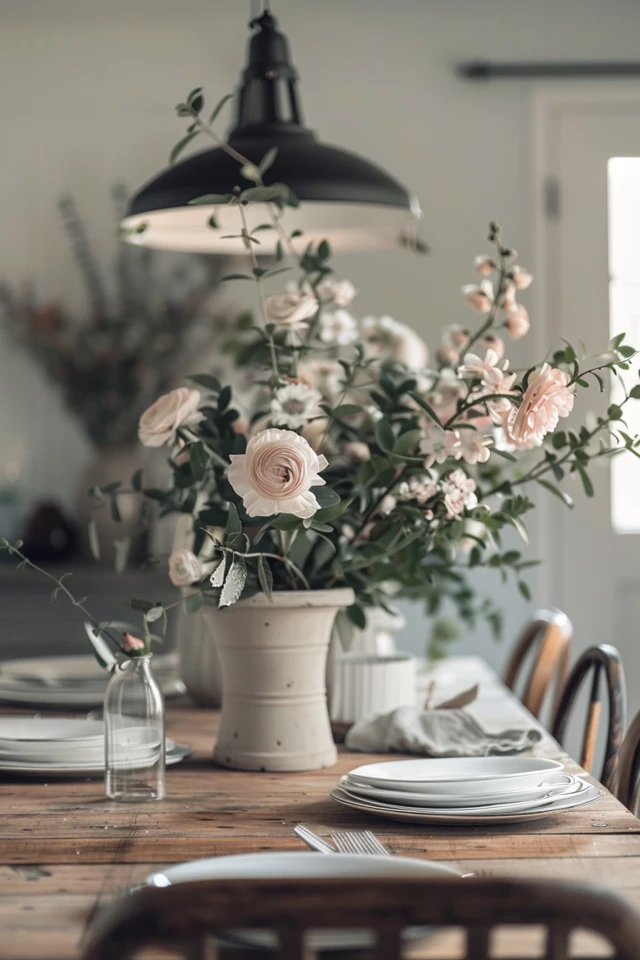
Farmhouse Dining Room Decor – Charming Design Ideas
Introduction
There is a distinct warmth to a farmhouse dining room that other styles struggle to replicate. It is the architectural equivalent of a hug. I remember one of my very first projects involved a young family moving into a builder-grade home. They felt the space was sterile and disconnected, but they possessed a beautiful, battered oak table passed down from a grandmother. That single table became the anchor for the entire design, proving that farmhouse style is less about buying new things and more about celebrating history and utility.
Modern farmhouse design has evolved significantly over the last decade. It has moved away from kitschy signage and distressed-on-purpose finishes toward clean lines, authentic textures, and a blend of eras. We now focus on “collected” looks rather than “decorated” looks. It requires balancing the rustic nature of wood beams or shiplap with the refinement of modern lighting and comfortable upholstery.
If you are looking for visual inspiration to guide your renovation, be sure to check out the curated Picture Gallery at the end of this blog post.
The Foundation: Selecting the Right Table and Rug
The dining table is the undisputed hero of this design style. In a farmhouse aesthetic, you generally want to avoid glass tops or high-gloss lacquers. Look for solid wood tables with a matte or satin finish. Trestle tables are the gold standard here because they offer visual weight and allow for more flexible seating arrangements without table legs getting in the way of knees.
When selecting wood tones, imperfection is actually a benefit. I often recommend reclaimed wood or white oak with a natural seal to my clients with children or pets. These finishes hide scratches and water rings much better than dark espresso stains. If you are working with a smaller room, a round pedestal table can provide that classic farmhouse look while saving precious square footage.
Rug sizing is the most common technical error I see in dining rooms. A farmhouse rug, usually a natural fiber like jute or a vintage-inspired wool flatweave, needs to be large enough to accommodate the chairs even when people are seated.
Designer’s Note: The 24-Inch Rule
You need a minimum of 24 inches of rug extending beyond every side of your table. If your table is 40 inches wide, your rug needs to be at least 88 inches wide (40 + 24 + 24). If the rug is too small, the back legs of the chairs will catch on the edge of the rug every time a guest tries to stand up. It creates a tripping hazard and ruins the flow of the meal.
Seating: The Art of Mixing and Matching
One of the hallmarks of farmhouse design is the “collected” look, and seating is the best place to execute this. Gone are the days of buying a 7-piece matching set from a big-box store. I prefer to mix chair styles to create visual interest and texture. A common formula I use is timber side chairs paired with upholstered “host” chairs at the heads of the table.
Windsor chairs, ladder-backs, or cross-back chairs are timeless options for the sides. They are lightweight, easy to clean, and offer a classic silhouette. If you choose wooden chairs, you have a decision to make regarding finish. You can match the table wood exactly, but I often prefer painting the chairs black or a deep sage green to create contrast.
Benches are a controversial topic in the design world, but they are a staple in farmhouse interiors. They are fantastic for maximizing seating for kids; you can easily squeeze three children on a bench that would only fit two adults. However, they offer no back support.
Common Mistakes + Fixes
Mistake: Using a bench on both sides of the table.
Fix: Only place a bench on one side, ideally the side facing the room’s entrance or under a window. Use chairs on the opposite side. This keeps the sightlines open but ensures your adult guests have proper back support during long dinner parties.
Lighting: Scale, Height, and Material
Lighting is the jewelry of the room, but in farmhouse design, it also needs to feel substantial. Wrought iron, burnished brass, and matte black metals are your best friends here. Linear chandeliers or rectangular islands lights work beautifully over long trestle tables because they distribute light evenly across the entire surface.
If you prefer a round fixture, such as a wagon wheel or a lantern style, scale is critical. A fixture that is too small will look cheap and out of place. A good rule of thumb is that your light fixture’s width should be between one-half and two-thirds of the width of your dining table. If your table is 40 inches wide, aim for a fixture that is roughly 20 to 26 inches in diameter.
Hanging height is just as important as the fixture itself. The bottom of the chandelier should sit 30 to 36 inches above the table surface. If you have ceilings higher than eight feet, add three inches of suspension length for every additional foot of ceiling height.
What I’d Do in a Real Project:
- Layer the light: Never rely solely on the overhead chandelier. I always install wall sconces or add a buffet lamp on the sideboard.
- Install dimmers: This is non-negotiable. Farmhouse dining is about atmosphere. You need the ability to dim the lights to a warm glow (20-30% brightness) for dinner parties.
- Check the bulb temperature: Use 2700K (Warm White) LED bulbs. Anything higher (3000K-5000K) will look too blue and clinical for a rustic space.
Wall Treatments and Architectural Details
If your room feels plain or “boxy,” architectural wall treatments are the most effective way to inject farmhouse character. Shiplap is the most famous option, thanks to home renovation television, but it is not the only choice. Vertical tongue-and-groove paneling often feels more modern and heightens the room visually.
Board and batten is another excellent option that adds depth without overwhelming the space. I often design a wainscoting style where the board and batten goes up two-thirds of the wall height, capped with a ledge. We paint the paneling a moody color like charcoal or navy, and keep the upper wall and ceiling a creamy white. This grounds the room and makes the furniture pop.
When it comes to paint colors, warmth is key. “Stark white” can feel too modern or hospital-like. I gravitate toward warm whites like Sherwin Williams Alabaster or Benjamin Moore White Dove. These shades have creamy undertones that complement natural wood and blackened metals perfectly.
Window treatments should remain simple and airy. Heavy velvets or damasks usually clash with the farmhouse vibe. Stick to linens or cotton blends in neutral tones. Hanging the curtain rod 4 to 6 inches above the window frame—and extending it 4 to 8 inches past the casing on either side—will make your windows look massive and let in maximum natural light.
Storage and Styling: The Buffet and Shelving
Functional storage is a necessity in a dining room, but it also serves as a major styling opportunity. A sideboard, buffet, or china hutch is essential for storing linens, serving platters, and seasonal decor. In farmhouse design, this is another opportunity to introduce a different finish. If your table is wood, consider a painted buffet in a distressed gray or slate blue.
Open shelving is very popular in this genre, often using reclaimed wood planks on iron brackets. However, open shelving requires discipline. It is for display, not for clutter. I advise clients to stick to the “Rule of Three” when styling shelves: group items in odd numbers. A stack of white plates, a wooden bowl, and a small plant create a balanced vignette.
Designer’s Note: The Centerpiece
Keep your table styling practical. A massive floral arrangement looks great in a photo, but you have to move it every time you eat. I prefer low-profile décor for everyday living. A long wooden dough bowl filled with seasonal items (moss balls in spring, pinecones in winter) or a row of three chunky ceramic vases works perfectly.
Final Checklist for Your Farmhouse Dining Room
Before you start purchasing furniture or tearing down drywall, run through this checklist to ensure you are staying on track with the design principles we discussed.
- Measure the Room: Ensure you have at least 36 inches of clearance between the table edge and the wall (or buffet) for people to walk behind seated guests.
- Select the Table: Choose a matte finish wood table. If the room is rectangular, go with a trestle base.
- Plan the Seating: Decide on your mix. Will you do a bench? Will you use host chairs? Ensure seat height is 18-19 inches.
- Size the Rug: Calculate your table dimensions plus 48 inches (24 on each side) to get your minimum rug size.
- Choose Lighting: Measure the table width to determine fixture width. Buy 2700K bulbs.
- Pick a Palette: Select one dominant neutral (usually a warm white) and two accent textures (wood, black metal).
- Add Texture: Incorporate linen curtains, a jute rug, or woven placemats to prevent the room from feeling flat.
FAQs
Can I use a round table in a farmhouse dining room?
Absolutely. Round tables are excellent for conversation and flow, especially in square rooms or breakfast nooks. Look for a heavy pedestal base—often turned wood—to give it that farmhouse weight. A 60-inch round table can comfortably seat six people.
Is “Farmhouse” style going out of trend?
The “kitsch” version of farmhouse (signs that say EAT, mason jar everything) is definitely on the decline. However, “Modern Farmhouse” or “Organic Modern” is timeless. It relies on honest materials like wood, stone, iron, and linen. These elements never go out of style because they prioritize comfort and utility over fleeting trends.
How do I mix wood tones without them clashing?
This is a common fear. The secret is to ensure the “undertones” match. If your floor has warm, yellow/orange undertones, try to keep your furniture in the warm family, even if it’s a darker or lighter shade. Avoid mixing a very red mahogany with a very grey/cool driftwood. Alternatively, break up the wood tones with a rug so they don’t touch directly.
What is the best fabric for dining chairs if I have kids?
I always specify “performance fabrics” for families. Look for solution-dyed acrylics (like Sunbrella or Crypton). These fabrics are resistant to stains and can often be cleaned with a bleach solution. Another great option is high-quality faux leather or vinyl, which can be wiped down instantly with a damp cloth.
Conclusion
Creating a farmhouse dining room is about more than just buying a rustic table. It is about crafting a space that invites people to sit down and stay awhile. It prioritizes comfort, durability, and a connection to the past through materials and textures. By paying attention to scale, lighting, and the thoughtful layering of old and new, you can build a room that serves your family for years to come.
Whether you are hosting a holiday feast or just eating Tuesday night tacos, the backdrop should feel effortless and welcoming. Take your time finding the right pieces, measure twice, and don’t be afraid to mix finishes.
Picture Gallery


