
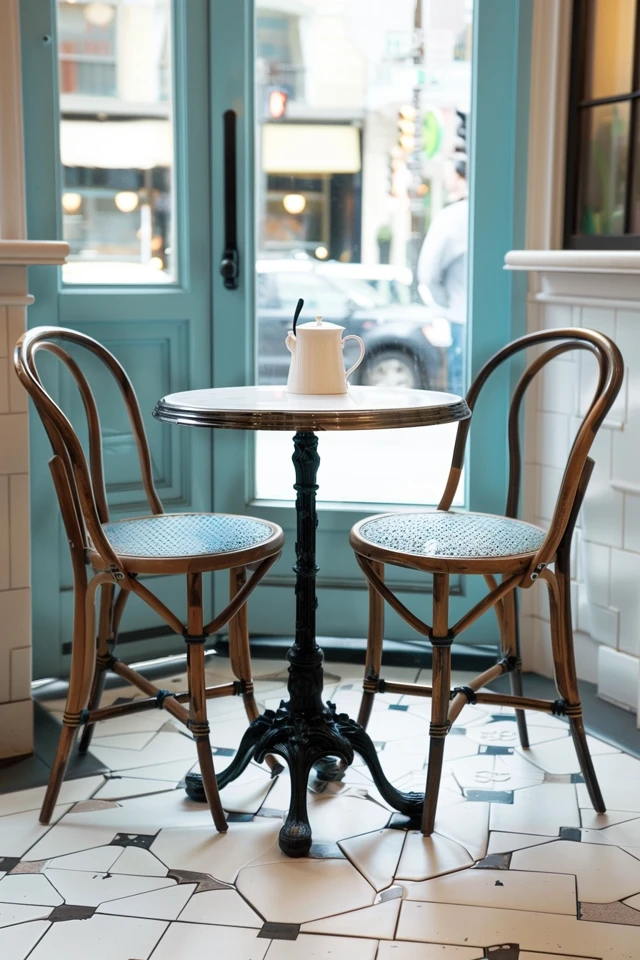
Charming French Bistro Table Styles for Your Nook
There is something undeniably magnetic about the classic French bistro aesthetic. It conjures images of slow mornings in Paris, sipping an espresso while watching the city wake up. In my years as an interior designer, I have found that clients often crave this feeling of effortless elegance, but they struggle to translate it into their actual homes. They love the look, but they worry it might feel too “themed” or impractical for daily use.
The beauty of the bistro table lies in its incredible versatility, especially for small nooks. Whether you have a tight corner in a kitchen, a sunroom alcove, or a compact apartment balcony, this style of table is often the perfect solution. It minimizes the visual footprint while maximizing style.
However, getting the look right involves more than just buying a round table with a metal base. If you are looking for visual inspiration, make sure to visit our curated Picture Gallery located at the very end of this blog post.
The Anatomy of an Authentic Bistro Table
To create a genuine bistro feel, you must understand the materials that define the style. The traditional French bistro table is built for high traffic and compact spaces. This means the materials are heavy, durable, and timeless.
The most iconic version features a solid marble top, usually Carrara or a similar white stone with grey veining. This is paired with a heavy cast iron base, often black, with intricate detailing. The contrast between the cool, smooth stone and the dark, textured metal is the heartbeat of this design.
Material Options and Durability
While marble is the classic choice, it is not the only option. In my design practice, I often walk clients through the following material hierarchy based on their lifestyle:
- Solid Marble: The gold standard. It is heavy and stays cool to the touch. However, it is porous. If you spill red wine or lemon juice, it will etch. I personally love the patina of lived-in marble, but if you want perfection, this might frustrate you.
- Quartz or Faux Stone: This is a fantastic alternative for families with young children. You get the visual look of marble without the anxiety of staining. It is non-porous and incredibly durable.
- Lacquered Wood or Werzalit: Common in actual French cafes, these tops are often molded wood chips with a weather-resistant resin coating. They are affordable, lightweight, and come in various colors, including faux marble or solid brass looks.
- Brass or Copper Rims: A metal rim around the table edge is a distinct bistro detail. It protects the stone edges from chipping and adds a layer of warmth. However, keep in mind that unlacquered brass will tarnish and darken over time.
Designer’s Note: The Patina Factor
One lesson I always teach my clients is to embrace “wabi-sabi,” or the beauty of imperfection, when choosing a bistro table. Real materials age. Brass darkens. Marble develops ghost marks.
If you try to fight this natural process, you will drive yourself crazy. Instead, view these marks as evidence of a life well-lived and meals shared. If you absolutely cannot stand etching, opt for a sealed quartz top or a lacquered finish.
Mastering the Math: Sizing Your Nook
The most common mistake I see homeowners make is buying a table that is the wrong scale for their nook. A bistro table is inherently intimate. If you go too big, you lose the charm and destroy the traffic flow.
We need to talk about specific numbers. In professional design, we look at the diameter of the table relative to the square footage of the nook.
Standard Diameter Guidelines
- 24-Inch Diameter: This is strictly for coffee or cocktails. It fits two people for a drink, but you cannot fit two full dinner plates and glassware comfortably. Use this for tiny balconies or reading corners.
- 30-Inch Diameter: This is the sweet spot for a breakfast nook for two. It creates enough surface area for two place settings and a small centerpiece without feeling crowded.
- 36-Inch Diameter: If you plan to seat three or four people occasionally, or if you like to work on your laptop at the table, bump up to 36 inches. Anything larger than this usually stops feeling like a “bistro” table and starts looking like a standard dining table.
Clearance Rules
You must respect the negative space around the table. A nook implies a confined area, but you still need to breathe.
I recommend leaving a minimum of 36 inches from the edge of the table to the nearest wall or obstruction if people need to walk behind the seated person. If the chair backs are against a wall (like in a corner), you can cheat this down to 24 inches for access, but it will be tight.
Why Pedestals Win
Bistro tables almost exclusively use pedestal bases (a single central column). This is a functional necessity in a small nook. Four legs on a small table create a “leg cage” that makes it difficult to scoot chairs in and out without tangling feet. A heavy cast iron pedestal provides stability without sacrificing legroom.
Seating Dynamics: Selecting the Right Chairs
A bistro table cannot exist in a vacuum; it relies heavily on the chairs to complete the narrative. The wrong chairs can make a high-end table look cheap, or make the nook physically uncomfortable.
The Riviera Chair
The most recognizable pairing is the French bistro chair, often called a Riviera chair. These are typically made of rattan or bentwood with woven synthetic seats in patterns of chevron or diamonds.
They are lightweight, which is excellent for nooks where you need to pull chairs out easily. They also add texture and color to the setup. However, true rattan is not meant for uncovered outdoor use in rainy climates.
The Bentwood Thonet Style
For a warmer, more indoor feel, the classic Thonet bentwood chair (specifically the No. 14 chair) is a perfect match. The curves of the wood echo the round shape of the table.
Height and Ergonomics
When mixing and matching brands, you must measure. Standard dining table height is 30 inches. Standard dining seat height is 18 inches.
You need 10 to 12 inches of clearance between the top of the seat and the underside of the table apron. Since bistro tables often have thick tops or metal sub-frames, ensure your chairs aren’t too high.
Designer’s Note: Mixing Materials
Avoid “matching sets.” If your table has a wood top, avoid wood chairs in the exact same stain. It looks flat.
If you have a marble top with an iron base, try warm wood chairs or woven rattan to offset the cold stone. If you have a wood table, consider metal industrial chairs or upholstered seating. Contrast creates depth.
Lighting and Decor Layers
Once the furniture is in place, the lighting defines the mood. In a nook, lighting should be lower and more intimate than in a main dining room.
Pendant Placement
A single pendant light or a small chandelier is ideal for a bistro nook. The rule of thumb for hanging a fixture over a small table is to position the bottom of the fixture 30 to 34 inches above the table surface.
Because bistro tables are smaller, keep the fixture scale in check. A pendant that is 12 to 18 inches wide is usually sufficient for a 30-inch table. If the fixture is too wide, you risk bumping your head when standing up.
To Rug or Not to Rug?
In a true French bistro setting, you rarely see rugs under the tables. The look is utilitarian and cleanable—often tile or wood floors.
However, in a home, a rug defines the zone. If you choose a rug, I recommend a round rug that mimics the table shape. The rug needs to be large enough that when you pull a chair out to sit, the back legs stay on the rug. Usually, a 6-foot round rug works well for a 30-inch table setup.
Accessories
Keep the tabletop styling simple. A small bud vase with fresh flowers, a sugar bowl, or a linen napkin holder is all you need. Clutter kills the bistro vibe. The goal is to leave space for the coffee and the croissant.
Common Mistakes + Fixes
Even with the best intentions, I see projects go sideways due to small oversights. Here are the most frequent errors I encounter when designing nooks, and how to fix them quickly.
Mistake 1: The Wobble Factor
Bistro tables, especially those with cast iron pedestals, are notorious for wobbling if the floor isn’t perfectly level.
The Fix: Before you buy, check if the base has adjustable leveling glides (small screw-in feet on the bottom). If you already own a table without them, buy adhesive felt furniture pads. You can stack two or three pads on the “short” leg to level it out without using a folded napkin, which looks messy.
Mistake 2: Ignoring Weight Limitations
Real marble tops are incredibly heavy. I have seen clients buy a vintage cast iron base and a separate marble slab, only to find the base creates a tipping hazard because the top is too heavy or wide for the spread of the feet.
The Fix: Ensure the “spider” (the metal cross under the tabletop) covers at least two-thirds of the table diameter. If the base is light aluminum and the top is stone, it will be top-heavy. Always pair heavy tops with heavy bases.
Mistake 3: Visual Clutter
Placing a bistro table in a corner that is already busy with bookshelves, toy bins, or heavy drapes makes the space feel claustrophobic.
The Fix: Give the nook breathing room. Remove heavy curtains and replace them with roman shades to expose more wall space. Move storage units at least two feet away from the seating area.
Renter and Budget-Friendly Considerations
You do not need a renovation budget to achieve this look. In fact, the bistro style is one of the most accessible designs for renters.
Temporary Installation
If you cannot swap out a chandelier, consider a plug-in pendant light with a swag hook. This allows you to center a light over your table without electrical work. Use a cord cover or a decorative chain to make it look intentional.
Banquette Hacks
If your nook is a tight corner, chairs might take up too much floor space. A bench or banquette against the wall is a brilliant space-saver.
For a budget-friendly version, I often use simple storage benches (like those from IKEA) and top them with custom foam cushions upholstered in performance velvet or faux leather. This gives you the “booth” feel of a bistro while adding hidden storage.
What I’d Do in a Real Project: A Checklist
If I were designing your nook today, this is the exact order of operations I would follow. Use this to keep your project on track.
- Step 1: Measure the “Swing.” I would tape out the floor shape of the table and then physically simulate pulling a chair out. Do I hit the wall? Do I hit the fridge? If yes, I size down the table.
- Step 2: Check the Floor. If you have hardwood floors, cast iron bases will scratch them immediately. I would apply heavy-duty felt pads to the base before it ever touches the ground.
- Step 3: Select the “Hero” Material. If we choose a marble table, the chairs will be wood or rattan to warm it up. If we choose a wood table, the chairs will be metal or upholstered.
- Step 4: Layer the Lighting. I would install a dimmer switch. Bistro vibes require mood lighting for dinner, but bright light for morning coffee/reading.
- Step 5: Accessorize with Utility. I would add a small gallery wall of art (3-4 small frames) near the table to anchor the space, rather than cluttering the table surface.
FAQs
Q: How do I clean a real marble bistro table?
A: Avoid vinegar or lemon-based cleaners; they will eat away the surface (etching). Use a pH-neutral stone cleaner or mild dish soap and warm water. Wipe up spills immediately.
Q: Can I use a bistro table as a primary dining table?
A: For one or two people, absolutely. For a family of four, it is likely too tight for daily dinners. It works best as a secondary eating zone or a breakfast spot.
Q: My nook is square. Should I get a square bistro table?
A: Generally, no. A round table flows better in a small square space. It removes the sharp corners that you might bump into and allows for more flexible chair placement.
Q: How do I stop the cast iron base from rusting outdoors?
A: If the paint chips, rust will form. Inspect it seasonally. Sand down any rust spots and touch them up with a rust-inhibiting spray paint (like Rust-Oleum) in a matching finish.
Conclusion
Creating a charming French bistro nook is about more than purchasing furniture; it is about carving out a pause button in your home. It creates a dedicated space for intimacy, whether that is a solitary cup of tea or a deep conversation with a partner.
By paying attention to the scale, respecting the materials, and balancing the textures, you can bring that Parisian magic into your daily routine. It is a design choice that prioritizes quality over quantity, proving that you don’t need a massive dining room to dine in style.
Picture Gallery


