
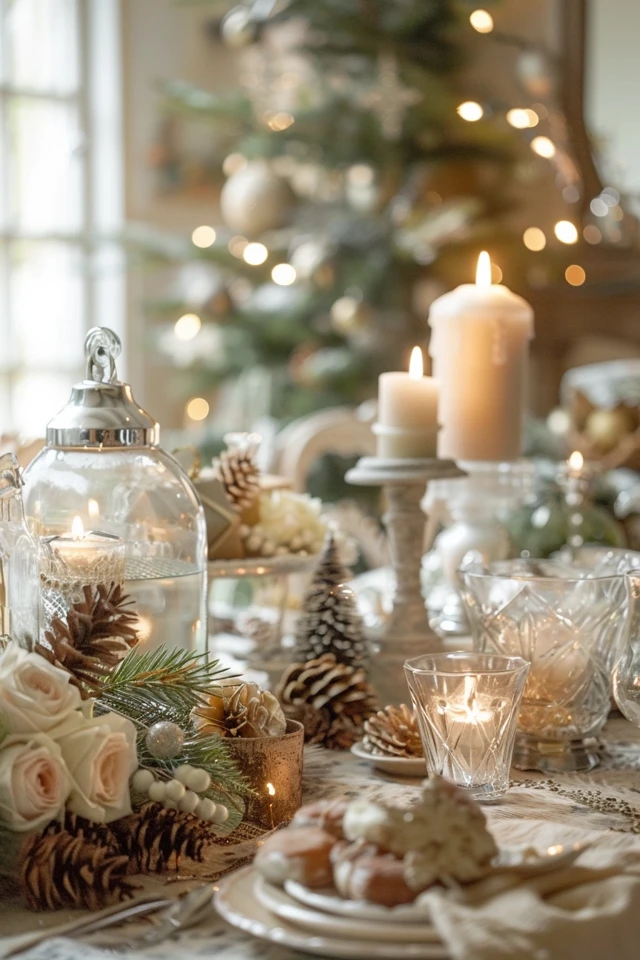
Charming French Country Christmas Decor Ideas
There is a quiet elegance to French Country design that feels tailor-made for the holiday season. It balances the rustic charm of a farmhouse with the refined, romantic details of a Parisian apartment. I have always found that this style allows you to decorate heavily without the space feeling cluttered or chaotic.
For my clients who want a sophisticated holiday look, I steer them away from bright neon reds and shiny plastics. Instead, we focus on natural textures, muted color palettes, and pieces that carry a sense of history. If you need visual inspiration before we dive into the details, you can jump straight to the Picture Gallery at the end of the blog post.
This guide will walk you through transforming your home into a French manor for the holidays. We will cover everything from selecting the right greenery to setting a table that encourages lingering conversation. Let’s create a space that feels collected, cozy, and timeless.
1. Establishing the Palette and Textiles
The foundation of French Country decor lies in its restrained color palette. We are not looking for the high-contrast red and green of American commercial Christmas decor. Instead, we aim for soft, muddy tones that evoke the French countryside in winter.
Start with a base of creamy whites, varying shades of greige, and soft linen hues. For your accents, look toward “antique” colors. Think dusty sage green, muted burgundy, faded slate blue, and tarnished gold rather than bright brass.
Textile Layering Rules
In a French Country scheme, texture is more important than pattern. I always recommend mixing at least three distinct fabric textures in a single room to create depth.
- Burlap and Jute: Use these for tree skirts or table runners to provide a rustic base.
- Raw Linen: Look for grain sack stripes (usually red or blue) for pillow covers or stockings.
- Velvet: A matte velvet ribbon in moss green or deep crimson adds a touch of luxury without being flashy.
Designer’s Note: The 60-30-10 Rule
When applying color to your holiday decor, stick to the classic designer’s ratio.
- 60% Neutrals: Your existing furniture, creams, whites, and natural wood tones.
- 30% Greenery: The trees, garlands, and wreaths (stick to natural timber colors).
- 10% Accent Color: This is where your berries, ribbons, or ornaments come in (e.g., deep red or slate blue).
Common Mistakes + Fixes
Mistake: Using bright white, polyester fabrics that look too crisp and modern.
The Fix: Wash new linen or cotton fabrics before using them to soften the fibers. If purchasing new items, look for “oatmeal” or “flax” colorways rather than “bright white.”
2. Mastering the Mantel and Fireplace
The fireplace is the heart of the French home, especially during the holidays. The goal here is “perfectly imperfect.” You want an asymmetrical or draped look that feels organic rather than stiff and mathematically precise.
I prefer to use a mix of greenery types on a mantel. A single strand of cheap garland rarely looks high-end. I usually zip-tie two different types of garland together—typically a cedar garland for drape and a spruce garland for volume.
Measurements and Mechanics
For safety and aesthetics, proper sizing is critical.
- Clearance: Ensure any hanging greenery is at least 18 inches above the firebox opening if you burn real wood.
- The Overhang: Let the garland hang down at least 12 to 18 inches on the sides of the mantel. This draws the eye down and grounds the design.
- Depth: The decor should occupy about 60% of the mantel’s depth. Leave the back 40% open for taller items like mirrors or art to breathe.
Layering Accessories
French decor relies heavily on metallics with patina. I love using mercury glass candlesticks of varying heights. Group them in clusters of three (odd numbers are visually more pleasing) on one side of the mantel.
Balance the candlesticks with a heavier object on the other side, like a vintage ironstone pitcher filled with winter berries. The key is visual weight balance, not mirror-image symmetry.
What I’d Do in a Real Project
- Step 1: Lay down a base layer of eucalyptus branches to add a soft, silvery-green tone.
- Step 2: Place the heavy evergreen garland on top.
- Step 3: Weave in a strand of warm white fairy lights (look for copper wire so it disappears into the branches).
- Step 4: Anchor the corners with heavy stocking holders or concealed Command hooks (rated for 5 lbs each).
- Step 5: Hang stockings made of ticking stripe fabric or cable knit wool.
3. The Tree: Styling with Vintage Charm
A French Country Christmas tree should look like it was decorated over generations, not bought in a single “bed-in-a-bag” kit. The tree itself should ideally look natural, perhaps with sparse branches that allow ornaments to hang freely.
If you are buying an artificial tree, look for “European Fir” or “Alpine Balsam” styles. These tend to have more spacing between branches, which mimics the look of a tree cut fresh from a forest.
Lighting and Kelvin Temperature
Lighting makes or breaks the cozy factor.
- Color Temperature: Always check the box for 2700K (Warm White). Anything higher (3000K+) will look blue and clinical.
- Bulb Density: For a high-end look, aim for 100 lights per foot of tree height. A 7-foot tree needs at least 700 lights.
Ornament Curation
Avoid plastic shatterproof ornaments unless you have toddlers or aggressive cats. If you must use them, place them deep inside the tree to reflect light, and save the glass ornaments for the tips.
I focus on three categories of ornaments for this style:
- Mercury Glass: The mottled silver finish reflects light beautifully and feels antique.
- Nature-Inspired: Dried orange slices, cinnamon sticks bundled with twine, or pinecones tipped with white paint.
- Fabric Elements: Small linen bows tied directly to the branch tips.
Designer’s Note: The Ribbon Technique
Do not wrap ribbon horizontally around the tree like a mummy. For a French look, use the “waterfall” or “tuck” method.
- Cut ribbon into 3-foot strips.
- Tuck one end deep into the tree.
- Billow it out slightly and tuck the other end in, moving vertically or diagonally down the tree.
- This saves ribbon and creates a luxurious, tufted effect.
4. Dining and Tablescapes
The dining table is where the French Country aesthetic truly shines. The goal is to create a welcoming, abundant table that doesn’t feel formal or stiff. We want guests to feel comfortable leaning in and resting their elbows on the table.
I often skip the traditional red tablecloth. Instead, I expose the wood table (if the finish is nice) and use a long, linen runner. If your table needs covering, use a white linen tablecloth as a base and layer a burlap runner on top.
The Centerpiece Rules
As a designer, my number one rule for dining tables is line-of-sight.
- Height Limit: Centerpieces should be below 14 inches or transparent (like tall thin candlesticks). Guests must be able to see each other across the table.
- Width Constraints: Leave at least 14 inches of space for place settings on each side of the centerpiece. If your table is narrow (under 40 inches wide), keep the greenery very slim.
Place Settings
Mix high and low elements. I love using rattan chargers (very French Country) under simple white ceramic plates. Top the plate with a linen napkin tied with twine and a sprig of rosemary.
Using mix-and-match vintage china is perfectly acceptable and encouraged. If you have chipped floral plates, stack them with simple white salad plates. The imperfections add to the charm.
Common Mistakes + Fixes
Mistake: Using scented candles on the dining table.
The Fix: Never interfere with the aroma of the food. Use unscented taper candles only. Save the cinnamon and balsam scents for the entryway or living room.
5. Entryway and Exterior Details
The transition from the outdoors to the indoors should be seamless. French exteriors are often understated but welcoming. We focus on natural materials that weather well in the elements.
The Front Door
A wreath is mandatory, but size matters.
- Scale: Measure your door width. The wreath should cover about 2/3 of the door’s width. A standard 18-inch wreath often looks dinky on a modern 36-inch entry door. Aim for a 24-inch to 30-inch wreath.
- Material: Olive branches, magnolia leaves, or boxwood are very French. Avoid perfectly round, stiff artificial wreaths. Look for “wild” wreaths with stray branches.
Planters and Urns
If you have space for planters, use cast iron or stone urns. Fill them with small evergreen trees or birch logs.
- The Thriller, Filler, Spiller Method:
- Thriller: Birch logs or a tall spruce top vertically in the center.
- Filler: Pine boughs and holly berries packed tightly around the base.
- Spiller: Cedar branches cascading over the rim of the pot to soften the edges.
The Foyer Console
Inside the door, the entry console sets the tone. I usually place a large mirror here to reflect the Christmas tree lights from the living room.
Add a large glass cloche filled with vintage ornaments or a stack of antique books topped with a brass bell. Keep the floor clear for boots and guests’ bags.
Final Checklist: The French Country Edit
Before you consider your decorating complete, run through this quick checklist. This “edit” is what separates a cluttered room from a designed space.
- Check the Sight Lines: Sit in every chair in the living room. Can you see the tree? Is a garland blocking the TV? Adjust accordingly.
- The Squint Test: Stand back and squint at your tree. If you see dark holes, add more reflective ornaments or lights in those spots.
- Scent Layering: Do you have a subtle background scent? A simmer pot with cloves, oranges, and water is better than a chemical spray.
- Cord Control: Are all extension cords hidden? Use zip ties to secure cords to table legs or tuck them under rugs.
- Texture Check: Do you have wood, glass, metal, and fabric represented in every room?
FAQs
Q: Can I do French Country with a limited budget?
A: Absolutely. This style relies on natural elements. Foraging for pinecones, clipping branches from your yard (or asking a local tree lot for scraps), and drying your own orange slices costs almost nothing. The “worn” look of vintage items can often be found at thrift stores rather than high-end boutiques.
Q: How do I mix silver and gold without it looking messy?
A: The trick is the finish. Avoid shiny, chrome-like silver or bright yellow gold. Use brushed nickel, pewter, antique brass, and champagne gold. When the finishes are matte or brushed, they blend beautifully. A safe ratio is 70% of one metal and 30% of the other.
Q: I rent my home. How can I hang heavy garlands?
A: Avoid nails. Use “Command” hooks, but use two or three for heavy areas. Alternatively, use over-the-door wreath hangers for interior doors. For mantels, use heavy stocking weights or tension rods inside the window frames to wrap garland around.
Q: What if I don’t have a fireplace?
A: You can create a focal point on a console table, a buffet, or even a piano. Treat the top of a bookshelf like a mantel. Drape garland off the edge and place your stockings on the wall adjacent to the tree. The “hearth” feeling comes from the gathering of decor, not just the fire.
Conclusion
Creating a French Country Christmas is about slowing down and appreciating the beauty in natural imperfections. It is a style that invites you to wrap yourself in a wool blanket, sip hot cocoa, and enjoy the soft glow of the tree.
Remember that the most beautiful homes are the ones that feel lived-in and loved. Don’t stress about symmetrical placement or having the most expensive ornaments. Focus on the warmth of the lighting, the texture of the linens, and the gathering of friends and family.
By layering natural greenery, vintage metals, and soft textiles, you will create a holiday atmosphere that is both elegant and deeply comforting. Happy decorating!
Picture Gallery


