
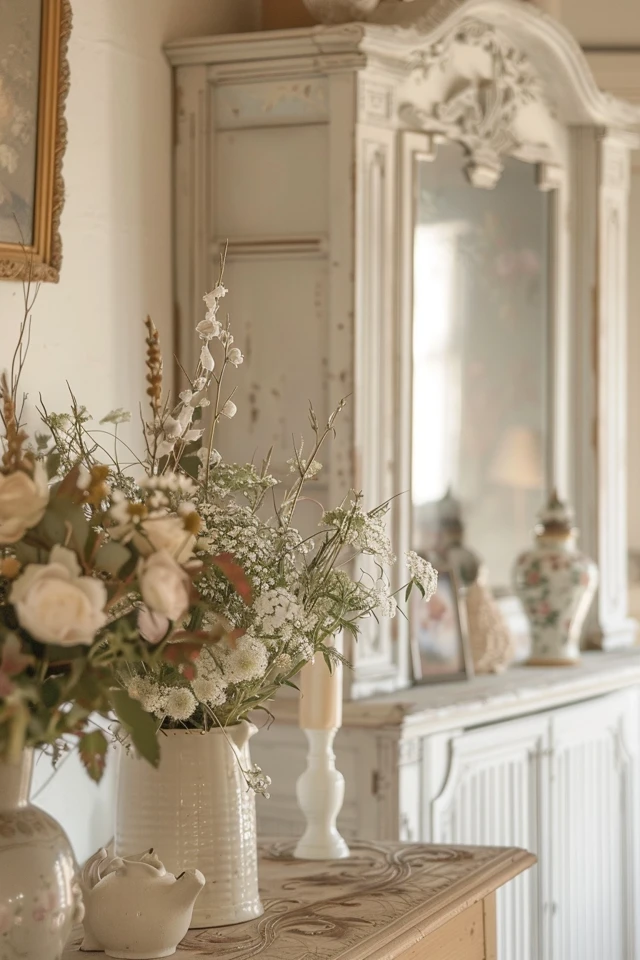
Charming French Country Entryway Inspirations
There is something undeniably magnetic about a French Country entryway. It manages to balance elegance with rustic ease, creating a space that feels curated yet lived-in. It is never stuffy, never too precious to touch, and always welcoming. This style relies on the concept of “perfectly imperfect,” where chipped paint and worn stone floors tell a story rather than signify neglect.
When designing a foyer in this aesthetic, we are looking for warmth. We want materials that age gracefully, like unlacquered brass, raw wood, and natural limestone. It is about capturing the light and airiness of Provence while maintaining the functionality required for a modern American home. You want your guests to walk in and immediately feel a drop in their blood pressure.
If you are looking for visual examples to guide your renovation or refresh, you are in the right place. For a massive dose of visual inspiration, be sure to check out the Picture Gallery at the end of this blog post. But first, let’s dive into the structural and stylistic elements that make this look work.
1. Establishing the Foundation: Floors and Walls
The “bones” of the room set the stage for everything else. In French Country design, the envelope of the room—the floors and walls—should feel substantial and historical, even if the house was built last year.
Flooring Choices
If you are renovating, flooring is your biggest opportunity to make a statement. Authentic French homes often feature natural stone. Tumbled travertine or limestone in varied beige and cream tones is the gold standard.
If you are working with wood, avoid high-gloss finishes. You want wide-plank oak with a matte, oil-rubbed finish. The wood should look like it has been walked on for generations. A herringbone or chevron laying pattern instantly adds that European flair without feeling too formal.
Wall Treatments
White walls are common, but they shouldn’t be stark or sterile. Look for warm whites with creamy or taupe undertones. If you want to add texture, shiplap can work, but install it vertically rather than horizontally to differentiate it from the “Farmhouse” trend.
Designer’s Note:
One of the most effective ways to add age to a new build is through a lime wash or plaster finish on the walls. This creates a velvety, mottled texture that catches the light beautifully. If plaster is out of the budget, a matte paint finish is essential. Eggshell or satin can look too plastic in this aesthetic.
Molding and Trim
Keep the trim simple but substantial. You don’t need ornate Victorian crown molding. Instead, opt for taller baseboards (at least 5 to 7 inches) and simple casing around doors. Painting the trim a soft “greige” (gray-beige) while keeping walls creamy white creates a subtle, sophisticated contrast often seen in French interiors.
2. Selecting the Anchor Furniture Pieces
The entryway is a high-traffic zone, so furniture placement is critical. You need pieces that ground the space without blocking the flow of traffic.
The Console Table
The console table is usually the hero of the entryway. For a French Country look, avoid heavy, blocky furniture. Look for tables with cabriole legs (curved legs) or turned legs that feel lighter visually.
Scale and Sizing Rules:
- Height: The table should be between 30 and 33 inches high. Anything lower feels like a coffee table; anything higher feels like a bar.
- Depth: Ensure the table is narrow enough to allow for a comfortable walkway. You need a minimum of 36 inches of clearance between the furniture and the opposite wall. Ideally, aim for 42 to 48 inches for a grander feel.
- Length: The table should not overwhelm the wall. Leave at least 6 to 10 inches of wall space on either side of the console.
Seating Options
A bench or a pair of occasional chairs adds immediate hospitality. A Louis XVI-style bench with fluted legs and linen upholstery is a classic choice. If you have a larger foyer, a round entry table in the center can be stunning, provided you have at least 4 feet of clearance all the way around it.
The Armoire
If your home lacks a coat closet, a freestanding wooden armoire is a lifesaver. Look for pieces with chicken wire door inserts or distressed mirrored fronts. This provides massive storage for coats and backpacks while acting as a stunning vertical focal point.
3. Lighting: The Jewelry of the Room
Lighting in a French Country foyer should feel romantic and soft. We are avoiding the sharp glare of modern LEDs in favor of fixtures that mimic candlelight or gas lanterns.
The Chandelier
A lantern-style pendant is the quintessential choice. Look for oversized iron or copper lanterns. Alternatively, a wooden chandelier with distressed beads or rusted iron arms works beautifully.
Hanging Height Guide:
The bottom of your chandelier should be at least 7 feet off the floor so tall guests don’t bump their heads. If you have a two-story foyer, the fixture should hang so it is centered in the window when viewed from the outside, or roughly level with the second floor if there is no window.
Sconces and Lamps
Never rely solely on overhead lighting. It creates unflattering shadows. Add a pair of buffet lamps to your console table. Look for slender bases in mercury glass or turned wood.
Sconce Placement:
If you opt for wall sconces flanking a mirror, mount them so the center of the light bulb is roughly 60 to 66 inches from the floor. This puts the light at human eye level, which is the most flattering.
Bulb Temperature
This is non-negotiable for this style. Use bulbs with a color temperature of 2700K. This provides a warm, yellow glow. 3000K or higher will look too blue and modern, killing the cozy, rustic vibe immediately.
4. Textures and Soft Goods
French Country style is tactile. It relies on a mix of rough and soft materials to create interest. Since the color palette is usually neutral, texture is what prevents the room from feeling boring.
The Rug
A rug is essential for acoustics and aesthetics. It anchors the furniture.
- Materials: Natural fibers like sisal, jute, or seagrass are perfect for high-traffic entryways. They are durable and add great earthiness.
- Vintage Options: If you want color, a vintage Oushak rug in muted pinks, blues, and creams is stunning. These hide dirt incredibly well due to their intricate patterns.
- Sizing: Do not buy a postage-stamp rug. Your rug should fill the space, leaving about 12 to 18 inches of bare floor visible around the edges. If using a runner, ensure it extends the full length of the hallway, stopping 6 inches before the next transition.
Fabrics
Upholstery on benches or chairs should be natural. 100% linen is the top choice, though a heavy cotton duck is also acceptable.
Practical Tip for Parents/Pet Owners:
Linen is beautiful but stains easily. I always recommend using “performance linen” or crypton fabrics that mimic the weave of linen but are stain-resistant and cleanable with soap and water.
Baskets
Woven baskets are functional decor. Place two large wicker baskets under a console table. This adds visual weight to the bottom of the vignette and provides a perfect “drop zone” for shoes, umbrellas, or dog leashes.
5. Accessorizing with Intent
The difference between a showroom and a home is in the accessories. This is where you inject personality and history.
The Mirror
A large mirror is almost mandatory in an entryway. It bounces light around and allows for a final outfit check.
- Style: Look for a Trumeau mirror (a mirror with a decorative panel above it) or a gilded frame that has been heavily distressed.
- Placement: Hang the mirror so the bottom is 4 to 6 inches above the console table. Do not hang it too high; it should feel connected to the table, not floating aimlessly above it.
Botanicals
Fresh flowers are lovely, but dried botanicals are very French. A pitcher filled with dried lavender, preserved olive branches, or dried hydrangeas adds a sculptural element that requires zero maintenance.
Art and Objects
Lean small oil paintings against the wall on your console table. Mix metals—pair a silver tray with a gold frame and an iron lamp. French style is collected, not matched.
Common Mistakes + Fixes
Even with the best intentions, it is easy to veer off track. Here are the most frequent errors I see in DIY French Country designs and how to fix them.
Mistake 1: The “Theme Park” Look
The Error: Over-the-top roosters, signs that say “Bonjour,” and excessive toile fabric everywhere.
The Fix: Subtlety is key. Remove word art entirely. Use toile in small doses (like a single pillow) rather than on walls and curtains. Let the materials (wood, stone, linen) speak for themselves.
Mistake 2: Buying Matching Sets
The Error: Buying a console table, mirror, and bench that all come from the same collection at a big-box store.
The Fix: Break up the set. If you have a wood table, pair it with a metal mirror and a fabric bench. Contrast creates the “collected over time” look that defines this style.
Mistake 3: Incorrect Scale
The Error: Using a tiny lamp on a large table, or a rug that floats in the middle of the room like an island.
The Fix: When in doubt, go bigger. A larger lamp makes a statement. A larger rug expands the room visually.
What I’d Do in a Real Project: A Mini Checklist
If I were designing your entryway tomorrow, this is the exact mental checklist I would run through to ensure success:
1. Check the Flow
I would tape out the floor with painter’s tape to ensure the console table doesn’t block the door swing or the walking path. I verify that 36+ inches of clearance exists.
2. Layer the Lighting
I would install a dimmer switch on the overhead fixture immediately. Mood is everything. Then, I would source a lamp for the console to ensure we have a secondary light source.
3. Secure the Rug
I would place a high-quality rug pad under the rug. In an entryway, a slipping rug is a safety hazard. A thick felt pad also makes a thin vintage rug feel luxurious underfoot.
4. The “Drop Zone” Test
I would ask where the keys go. If there isn’t a dedicated bowl or tray, the design fails. I would add a shallow marble or ceramic bowl specifically for keys and mail.
5. Greenery Check
I would ensure there is something organic in the room. If there is no natural light for a real plant, I would source high-quality preserved boxwood or olive stems.
FAQs
Can I do French Country in a small apartment entryway?
Absolutely. Use a demi-lune (half-moon) console table to save space; the curved edges prevent hip-bumping in tight quarters. Use a large mirror to visually double the space. Keep the color palette monochromatic (creams and whites) to reduce visual clutter.
How do I mix French Country with modern elements?
This is actually called “Modern French” and is very trendy. Keep the rustic architecture (floors and beams) and the antique shapes, but use modern art and cleaner lines for the lighting. For example, pair a rustic wood console with a sleek, black iron mirror and abstract art.
Is French Country the same as Farmhouse?
No. Farmhouse tends to be more industrial, utilizing shiplap, black metal, and stark whites. French Country is softer, more feminine, and more curved. It uses warm creams, curved furniture legs, and gilt accents rather than galvanized metal and barn doors.
Conclusion
Creating a charming French Country entryway is less about following strict rules and more about cultivating a feeling. It is about the crunch of imaginary gravel underfoot, the scent of lavender, and the warmth of a sun-drenched room in Provence.
By focusing on natural materials, proper scale, and warm lighting, you can transform your foyer from a pass-through space into a welcoming destination. Remember to prioritize durability alongside beauty—this is a space meant to be used, not just admired.
Picture Gallery


