
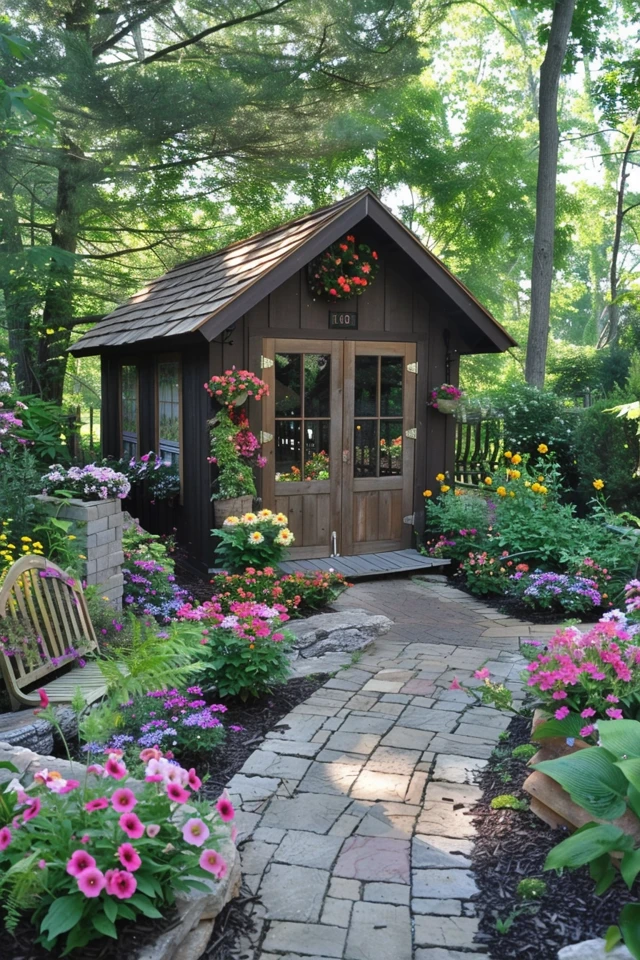
Charming Landscaping Ideas Around Sheds Guide
Many homeowners treat their backyard shed as purely utilitarian. It becomes a dumping ground for lawnmowers and holiday decorations, completely disconnected from the rest of the garden design. However, treating your shed as an architectural focal point can completely transform the depth and character of your yard.
I vividly remember a project in Portland where a client wanted to tear down a sturdy but ugly shed. Instead of demolition, we used climbing hydrangeas and a pea gravel patio to turn it into a destination reading nook. It saved them thousands of dollars and became their favorite part of the property.
You can achieve this transformation without professional construction crews. For more inspiration, be sure to check out the Picture Gallery at the end of the blog post.
1. Anchoring the Structure: Foundation Planting
The most common design mistake with sheds is the “floating box” effect. This happens when a shed sits directly on the grass or a concrete pad with zero transition to the ground. You need to anchor the structure visually using foundation plants.
The goal here is to hide the gap between the shed floor and the soil. This softens the hard, straight lines of the building. I always recommend using a layered planting approach, even in small spaces.
Start with a “backbone” of evergreen shrubs that won’t lose their leaves in winter. Boxwoods or dwarf hollies are excellent choices because they maintain structure year-round. Place these at the corners of the shed to soften the sharp angles.
Designer’s Note: The 12-Inch Rule
In my projects, I never plant directly against the shed walls. You must leave a gap of at least 12 to 18 inches between the mature size of the plant and the siding. This creates necessary airflow to prevent wood rot and allows you to access the wall for painting or repairs.
Plant Selection for Sun vs. Shade
If your shed is in full sun:
- Russian Sage: Adds height and a beautiful purple haze that contrasts well with wood.
- Coneflower (Echinacea): Sturdy, colorful, and attracts pollinators.
- Ornamental Grasses: Varieties like Maiden Grass add movement and texture.
If your shed is in the shade:
- Hostas: These are the workhorses of shade gardening. Use “Sum and Substance” for massive impact.
- Ferns: Their delicate texture contrasts beautifully with rustic shed siding.
- Astilbe: Adds necessary spikes of color in dark corners.
Common Mistakes + Fixes
Mistake: Planting aggressive vines that damage siding.
Fix: Avoid English Ivy at all costs. It traps moisture and ruins wood. Use a trellis system spaced off the wall (more on this later).
2. Designing Functional and Aesthetic Pathways
A shed without a proper path is a recipe for muddy floors and ruined lawns. From a design perspective, a path directs the eye and invites the user to explore the garden. It connects the main house to the outbuilding, making them feel like one cohesive property.
In my designs, I rarely use poured concrete for garden shed paths. It feels too industrial and permanent. Instead, I prefer permeable materials that allow for drainage and offer a softer, organic look.
Material Options:
- Pea Gravel: Inexpensive and creates a satisfying “crunch.” It needs a steel or heavy-duty plastic edging to stay in place.
- Flagstone steppers: Ideal for a cottage look. Plant creeping thyme between the stones for fragrance when stepped on.
- Brick pavers: Perfect for traditional or formal landscapes.
Scale and Dimensions
Practicality dictates the width of your path. If you use the shed for gardening equipment, the path must be wide enough for your widest tool.
- Standard Wheelbarrow: Requires a minimum 36-inch path width.
- Riding Mower: Measure your deck width and add 12 inches for comfortable clearance.
- Walking only: A 24-inch path is acceptable for single-file walking, but 36 inches is always more comfortable.
What I’d do in a real project
1. Excavate the path area down 4 inches.
2. Lay down professional-grade landscape fabric (not the cheap big-box store plastic).
3. Add 2 inches of crushed stone pack (road base) and tamp it down hard.
4. Top with 1.5 inches of decorative gravel or set your stones.
This ensures the path doesn’t sink into the mud after one rainy season.
3. Vertical Softening: Trellises and Window Boxes
Sheds are essentially big boxes with flat surfaces. To make them charming, you need to break up those flat planes. Vertical gardening is the most effective way to do this, especially if you have a small footprint and can’t plant deep beds.
Window boxes are an instant charm booster. However, scale is critical. A tiny window box on a large shed looks ridiculous. The box should be the full width of the window, including the trim.
Window Box Logistics:
- Depth matters: Choose boxes that are at least 8 inches deep. Anything shallower dries out too fast in the summer heat.
- Drainage: Drill holes. If the box sits on wooden brackets, ensure water drips away from the siding.
- The “Thriller, Filler, Spiller” method: Use a tall plant in the center, mounding plants around it, and trailing vines (like sweet potato vine) hanging over the edges.
The Trellis Strategy
Installing a trellis allows you to grow vines without damaging the shed walls. I often mount a wooden trellis on a hinge system. This allows the homeowner to tilt the trellis away from the building when they need to repaint the shed.
Top Climbers for Sheds:
- Clematis: Offers spectacular blooms. They like “hot heads and cool feet,” so plant low shrubs at their base to shade the roots.
- Climbing Hydrangea: Great for shade, but heavy. requires a very sturdy support structure.
- Star Jasmine: Provides an incredible scent, effectively perfuming the entire yard.
4. Creating a “Destination” Zone
If space allows, landscaping around a shed should include a small seating or utility area. This transforms the shed from a storage unit into a “destination.” This is particularly effective if you are tight on space inside the main house.
I often design a small patio “apron” directly in front of the shed doors. This serves two purposes. First, it acts as a landing pad so you aren’t standing in wet grass while unlocking the door. Second, it creates a spot for a bistro set.
Creating a Potting Station:
If you don’t want a seating area, consider an exterior potting bench.
- Place a rustic bench against the side of the shed (preferably the north or east side to keep plants cool).
- Use the shed wall to hang tools on hooks above the bench.
- This moves the mess of potting outside, keeping the interior of the shed clean for storage.
The Renter’s Approach (Non-Permanent):
If you cannot dig or build a patio:
- Use a large outdoor rug to define the space in front of the shed.
- Use heavy, large-scale ceramic pots to flank the doors instead of planting in the ground.
- Use solar bistro lights strung from the shed roof to a nearby tree to create a “ceiling.”
5. Concealing the Utilities and Ugly Bits
Let’s be honest: sheds often come with ugly accessories. Ramps, plastic bins, compost tumblers, and raised foundations are rarely attractive. A good landscape design anticipates these eyesores and plans for them.
Hiding the Ramp:
Ramps are necessary but often visually heavy.
- Planting: Use low, spreading junipers or creeping phlox on either side of the ramp. They will grow over the edges and soften the harsh lines.
- Pots: Place a cluster of pots at the base of the ramp (leaving clear width for tires) to distract the eye.
Hiding Storage Bins:
If you store trash cans or compost bins alongside the shed, use a privacy screen.
- Lattice panels: Build a simple L-shaped screen painted to match the shed.
- Tall Grasses: A row of Karl Foerster grass grows tall, straight, and thick enough to screen bins without taking up much width.
Lighting for Safety and Ambiance
You need to see where you are going.
- Motion spots: Essential for security, but mount them on the side or back.
- Warm sconces: Place decorative barn lights flanking the door. Use 2700K LED bulbs for a warm, inviting glow. Cool white (5000K) looks like a parking lot.
- Uplighting: If you planted a nice tree near the shed, place a small uplight at the base. It reflects light onto the shed, creating a soft backdrop.
Final Checklist
Before you head to the garden center, run through this list to ensure your project stays on track.
- Check the sun: Map out how many hours of direct sunlight the sides of your shed get. The north side will need completely different plants than the south side.
- Measure the roof overhang: The area directly under the eaves stays dry even when it rains. You will need to hand-water plants here more often.
- Identify water access: Is your hose long enough to reach the shed? If not, plan for rain barrels or extend your plumbing.
- Slope check: Ensure the ground slopes away from the shed foundation to prevent flooding.
- Call before you dig: Always check for underground utility lines, even for shallow planting beds.
FAQs
How do I landscape around a shed without attracting rodents?
Avoid dense ground covers like English Ivy right against the foundation, as these provide cover for mice. Instead, keep a 6-12 inch strip of gravel directly against the shed walls (the “no-plant zone”). Keep grass trimmed short nearby and avoid stacking firewood against the structure.
Can I plant trees near my shed?
Yes, but be careful with distance. Small ornamental trees like Dogwoods or Japanese Maples should be planted at least 6-8 feet away from the structure. Large shade trees need 15-20 feet. This prevents roots from heaving the shed foundation and branches from rubbing against the roof shingles.
What is the best way to edge a gravel path around a shed?
Steel edging is the professional gold standard. It creates a crisp, thin line that practically disappears. It holds up to frost heave better than plastic. If you are on a budget, pressure-treated 4×4 timber buried flush with the ground also works well for a rustic look.
How do I handle water runoff from the shed roof?
Sheds rarely have gutters, which creates a “drip line” trench in the soil. The best fix is to install a French drain (a trench with gravel and a perforated pipe) directly under the drip line. Alternatively, plant tough, moisture-loving plants like Irises or Daylilies exactly where the water falls.
Conclusion
Transforming the area around your shed changes the entire energy of your backyard. It stops being a place you try to ignore and starts being a feature you want to show off. By using proper scale, layering plants, and adding thoughtful hardscaping, you bridge the gap between “storage box” and “garden retreat.”
Remember that landscaping is a process. Start with the hardscaping and foundation plants, then layer in the decorative flowers and window boxes as your budget allows. The result will be a charming, cohesive space that adds real value to your home.
Picture Gallery


