
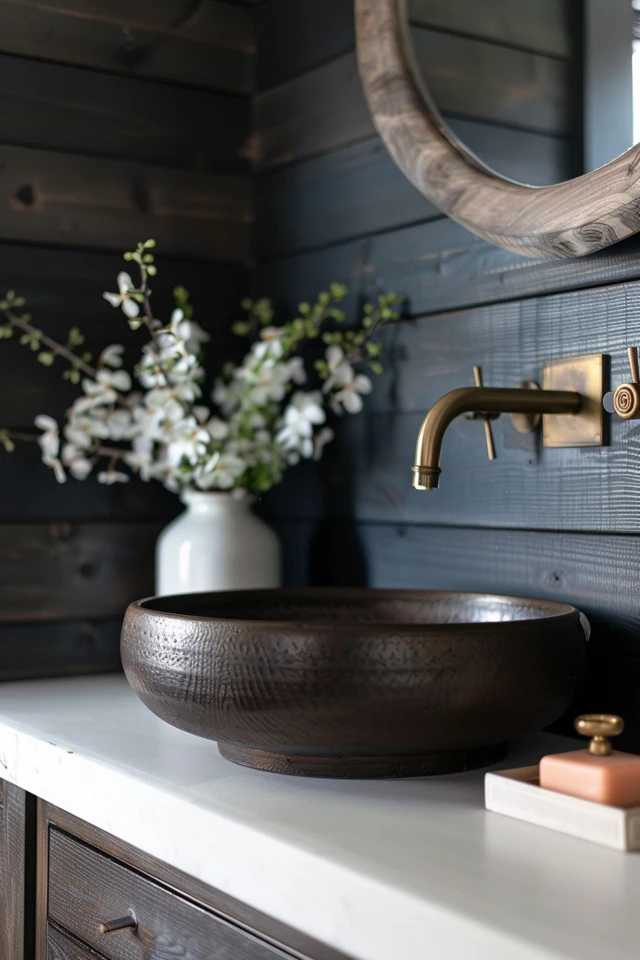
Title: Charming Rustic Powder Room Ideas for Your Home
Introduction
The powder room is often the smallest room in the house, yet it holds the most potential for dramatic impact. Because it is a space primarily used by guests and for short durations, you can take design risks here that might feel overwhelming in a main living area. A rustic aesthetic is particularly suited for these small quarters because it instantly creates a cozy, enveloping atmosphere that feels welcoming rather than stark.
I remember a specific project where a client was hesitant about going “rustic” because she feared it would look like a theme park cabin. We compromised by blending raw, natural textures with high-end metals and sophisticated lighting. The result was a space that felt grounded and historical, yet entirely modern in its function. That balance is exactly what we are aiming for in this guide.
In this post, we will explore how to layer textures, choose the right materials, and select fixtures that bring authentic charm to your half-bath. If you are looking for visual inspiration, you can jump right to the Picture Gallery at the end of this post.
Defining the Rustic Palette: Walls and Floors
The foundation of any rustic space lies in the architectural envelope—the walls and the floor. In a powder room, you have less square footage to cover, which means you can splurge on higher-quality materials without breaking the bank. The goal is to move away from flat drywall and introduce texture that catches the light.
Textured Wall Treatments
Standard painted drywall often falls flat in a rustic design. I almost always recommend some form of wall cladding to add depth. Shiplap is a classic choice, but for a more modern rustic look, consider applying it vertically rather than horizontally. This draws the eye upward, making small ceilings feel higher.
Another excellent option is a lime wash or Roman clay finish. These applications add a subtle, velvety movement to the walls that mimics the look of aged plaster found in old European farmhouses. If you opt for wallpaper, look for patterns that reference nature, such as botanical prints or subtle woven grasscloths, which add immediate warmth.
Flooring Materials that Ground the Space
For flooring, durability is key, but so is character. Slate tile is a personal favorite for rustic powder rooms because the natural cleft provides slip resistance and hides dirt exceptionally well. If you choose slate, go for a larger format tile, such as 12×24 inches, to minimize grout lines in a small floor plan.
Brick pavers are another high-impact choice. They offer a deeply historic feel that works beautifully in farmhouse or cottage-style homes. When using brick, ensure it is properly sealed with a high-quality masonry sealer to prevent staining. If you prefer wood, engineered hardwood is acceptable in a powder room since there is no shower humidity, but ensure you place a rug near the sink to catch splashes.
The Centerpiece: Vanity and Sink Selection
In a powder room, the vanity is the only major piece of furniture. This is where you should invest the bulk of your budget and design energy. A rustic vanity should feel less like a kitchen cabinet and more like a standalone piece of furniture with history and soul.
Repurposing Vintage Furniture
One of the most charming ways to achieve a rustic look is to convert an antique dresser or console table into a vanity. Look for pieces made of solid oak, pine, or walnut. The measurement rule of thumb here is critical: ensure the piece is at least 32 inches tall (or 30 inches if you are using a tall vessel sink).
When converting furniture, you will need to cut holes in the top and back for plumbing. Be mindful of the drawer functionality; usually, the top drawers must be fixed in place or shortened to “U-shape” drawers to accommodate the P-trap (the drain pipe). This is a bit more labor-intensive than buying a pre-made unit, but the character payoff is unmatched.
Sink Styles for Rustic Spaces
The sink style dictates the tone of the vanity. A vessel sink—a bowl that sits on top of the counter—is a natural fit for rustic designs. Stone vessel sinks carved from river rock, marble, or granite introduce an organic, sculptural element.
If you prefer an undermount sink for easier cleaning, pair it with a countertop that has a “living edge” or a textured finish, like leathered granite or soapstone. Avoid bright white, glossy cultured marble, as it tends to look too clinical against rustic wood tones. A hammered copper sink is another excellent contender, as its patina will deepen and improve over time.
Lighting: Setting the Mood
Lighting can make or break a rustic interior. If the light is too cool or too bright, it will wash out the textures you have carefully selected and make the wood look cheap. The goal is to create pockets of warm illumination that highlight the materials.
Color Temperature Rules
As a designer, I have a strict rule for rustic spaces: use bulbs with a color temperature of 2700K (Kelvin). This emits a warm, soft white light that mimics the glow of candlelight or a fireplace. Anything 3000K or higher will look too blue and modern, stripping the room of its cozy vibe.
Sconce Placement and Style
In a powder room, side-mounted sconces are superior to overhead vanity lights because they provide cross-illumination that is flattering for the face. Ideally, mount sconces so the bulb is roughly 60 to 66 inches off the finished floor. This places the light source at eye level for the average person.
For the fixture style, look for materials that age well. Iron, oil-rubbed bronze, and antique brass are standard. I love fixtures that incorporate seeded glass or fabric shades, as they diffuse the light and prevent glare. Avoid clear glass with exposed Edison bulbs if the fixture is right at eye level, as the filament can be blinding in a small room.
The Jewelry: Faucets and Hardware
The metal finishes in your powder room act as the jewelry of the space. In a rustic design, you want metals that feel substantial and slightly worn. High-shine chrome often feels too sterile, so I recommend leaning toward living finishes or brushed textures.
Living Finishes vs. Permanent Finishes
A “living finish” is a metal that is unlacquered and designed to patina (change color/oxidize) over time with use. Unlacquered brass is the gold standard here. It starts bright but quickly develops a dull, complex brown-gold tarnish that looks incredibly authentic.
If you prefer a finish that stays consistent, opt for PVD (Physical Vapor Deposition) finishes in brushed nickel, brushed gold, or matte black. Matte black is particularly effective in modern rustic designs as it adds a graphic punch that contrasts beautifully with warm wood tones.
Mixing Metals
Do not feel pressured to match every single metal in the room. In fact, matching everything can make the room look like it came from a “bed-in-a-bag” set. A professional approach is to mix two metals.
For example, use a matte black faucet and mirror frame, but choose antique brass for the sconces and cabinet hardware. The trick is to keep the sheens distinct. Do not mix two different brushed golds, as it will look like a mistake. Mixing black (a neutral) with a metallic (brass or copper) is the safest and most stylish bet.
Textiles and Accessories
Once the hard surfaces are installed, the room needs softening. Rustic design relies heavily on layers of texture to keep the space from feeling cold or heavy. This is where you introduce fabrics and smaller decor items.
Rug Selection
A vintage rug is a must-have for a rustic powder room. Look for a hand-knotted Turkish or Persian runner if space allows, or a 2×3 foot scatter rug. The deep reds, blues, and terracottas found in these rugs hide footprints and add a sense of history. Ensure you use a high-quality rug pad underneath to prevent slipping on stone or wood floors.
The Power of the Mirror
The mirror is often the focal point above the vanity. Avoid standard frameless contractor mirrors. Instead, choose a mirror with a heavy frame made of reclaimed wood, distressed metal, or even leather.
A round mirror works well to break up the hard, straight lines of shiplap or tile. If you are working with a tight space, a tall, narrow arched mirror can help accentuate verticality. Hang the mirror so the center is approximately 60 to 62 inches from the floor, adjusting slightly based on the height of the homeowners.
Designer’s Note: The Importance of Scale
One specific lesson I learned early in my career involves the scale of the vanity in a small powder room.
I once specified a beautiful, heavy rustic vanity that was 24 inches deep for a narrow powder room. While it fit on paper, once installed, it felt oppressive. The door swung open and nearly hit the cabinet, and the room felt claustrophobic.
Since then, I have adopted a strict rule: In small powder rooms (typically 5×5 feet or smaller), I seek out vanities that are 18 to 20 inches deep. Saving those 4 inches of floor space makes a massive difference in how the room “breathes.” If you are repurposing a vintage dresser, don’t be afraid to have a carpenter shave down the back depth to make it fit the scale of the room better.
Common Mistakes + Fixes
Mistake: Ignoring Ventilation
Rustic rooms often use wood and wallpaper, both of which are susceptible to moisture damage.
Fix: Even in a half-bath without a shower, humidity builds up. Ensure you have a working exhaust fan. If the fan cover is ugly plastic, spray paint it matte black or source a decorative vent cover to match your rustic aesthetic.
Mistake: Too Much Wood
Wood floors, wood vanity, wood mirror, and wood ceiling can result in the “sauna effect.”
Fix: Break up the wood tones with stone, metal, or painted surfaces. If you have a wood vanity and wood floor, use a stone countertop and painted walls to provide visual relief.
Mistake: The “Theme” Trap
Using too many literal symbols, like bear cutouts, “outhouse” signs, or excessive galvanized metal buckets.
Fix: Aim for “subtle implication” rather than literal translation. Use materials that imply a farmhouse (like shiplap or brick) rather than signs that say “Farmhouse.”
What I’d Do in a Real Project: A Mini Checklist
If I were designing a rustic powder room for a client tomorrow, this is the exact workflow I would follow:
1. Layout Check: Measure the toilet clearance. I need 15 inches from the center of the toilet to the vanity. If I have less, I switch to a pedestal sink or a floating vanity to free up visual floor space.
2. Wall Prep: I would install vertical tongue-and-groove paneling on the bottom two-thirds of the wall and paint it a moody color (like slate blue or forest green), leaving the top third for a warm white paint or wallpaper.
3. Lighting Layering: I would wire for two wall sconces flanking the mirror and one flush mount on the ceiling. I would put both circuits on a dimmer switch. Dimmers are non-negotiable for mood.
4. The “Wow” Factor: I would source a raw edge wood slab for the counter and mount a stone vessel sink on top.
5. Final Polish: I would style with a woven wastebasket, a brass soap dispenser (plastic bottles are banned!), and a small vase of dried eucalyptus or olive branches.
Final Checklist
Before you finalize your design or start purchasing materials, run through this quick summary to ensure you have covered all bases.
- Clearance: Do you have at least 30 inches of clearance in front of the toilet and vanity?
- Lighting: Are your bulbs 2700K warm white? Are your sconces at eye level?
- Storage: Does your vanity offer storage for extra toilet paper, or do you need a basket?
- Plumbing: If using a vessel sink, is your faucet tall enough to clear the rim?
- Privacy: Is the window treated with a shade or frosted glass?
- Door Swing: Does the door swing into the vanity? Consider changing the hinges so it swings out, or install a pocket door.
FAQs
Can I use wallpaper in a powder room?
Absolutely. The powder room is actually the safest place to use wallpaper because there is no steam from a shower. Just make sure the room is ventilated. Vinyl or non-woven wallpapers are more durable and easier to wipe down than traditional paper.
Is a rustic powder room expensive to build?
It can be very budget-friendly. Because the space is small, you can use remnants for stone countertops (leftover pieces from stone yards are sold cheaply). Repurposing a vintage dresser is often cheaper than buying a new vanity, though it requires some DIY labor.
How do I make a rustic bathroom look modern?
The key is clean lines and black accents. Pair rough wood with a sleek, matte black wall-mounted faucet. Use a frameless or thin-metal frame mirror. Avoid excessive clutter and keep the color palette restrained to three or four main tones.
What is the best paint finish for beadboard or shiplap?
I recommend a satin or semi-gloss finish for wood paneling. It highlights the texture of the wood grooves and is much easier to clean than matte paint. For the drywall above the paneling, an eggshell finish is standard.
Conclusion
Designing a rustic powder room is about more than just nailing up some barn wood. It is about creating a sensory experience through texture, warmth, and lighting. By paying attention to scale, mixing your metals, and choosing authentic materials that age gracefully, you can turn a utilitarian space into a charming retreat that guests will talk about.
Remember that this small room is a perfect container for big ideas. Do not be afraid to go darker with your paint colors or bolder with your stone choices. The constraints of the space are actually your greatest asset, forcing you to be intentional with every square inch.
Picture Gallery


