
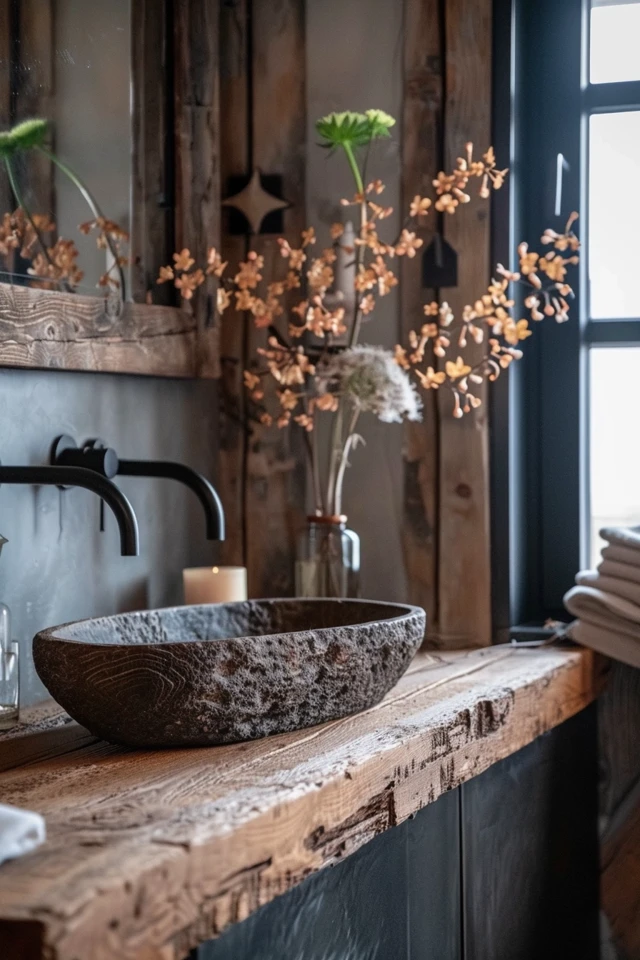
Charming Rustic Powder Room Ideas for Your Home
Designing a powder room is one of the most rewarding tasks in interior design because it is a low-risk, high-reward space. Since you do not spend hours in this room like you would a master bath or kitchen, you have the freedom to take bold design risks.
A rustic aesthetic is particularly effective in these small spaces because it focuses on texture and warmth rather than sprawling layouts. Whether you live in a mountain cabin or a suburban home, introducing natural wood, stone, and patinated metals creates an immediate sense of comfort.
If you are looking for visual inspiration, you can visit the Picture Gallery at the end of the blog post.
Defining the Rustic Palette: Walls and Floors
The foundation of any rustic space lies in the architectural envelope. In a powder room, your walls and floors act as the canvas. Because the footprint is usually small—often around 20 to 25 square feet—using textured materials won’t overwhelm the budget.
Wall Treatments
Drywall is functional, but it rarely screams “rustic.” To achieve that cozy, lived-in feel, I almost always recommend adding architectural millwork or stone.
Shiplap and Tongue-and-Groove
Wood paneling is a staple of rustic design. Horizontal shiplap leans slightly more toward “modern farmhouse,” while vertical V-groove paneling feels more historic and cottage-like.
If your ceilings are standard 8-foot height, install vertical paneling to draw the eye upward. If you have a narrow room, horizontal boards can visually widen the space.
Stone Veneer Accent Walls
A single wall clad in stacked stone or brick veneer adds incredible depth. I typically place this behind the vanity and mirror. It creates a focal point immediately upon entering the room.
If you choose stone, keep the grout lines minimal or recessed. This mimics the look of dry-stacked stone found in old foundations.
Limewash and Plaster
If wood or stone feels too heavy, consider a limewash paint application. This creates a cloudy, suede-like texture that feels aged and organic. It adds dimension without reducing the physical width of the room.
Flooring Choices
In a powder room, you do not need to worry as much about high humidity as you would in a bathroom with a shower. However, water splashes are still a reality.
Slate and Natural Stone
Large-format slate tiles (12×24 inches) are my go-to for rustic floors. The natural cleft surface provides grip and hides dirt well. Dark charcoal or blue-grey slate grounds the room and contrasts beautifully with wood cabinets.
Engineered Wood vs. Tile
While I love the look of hardwood, I usually hesitate to put real wood planks in a bathroom due to potential water damage around the toilet flange.
Instead, look for a high-quality porcelain tile that mimics reclaimed oak. Choose a “rectified” tile, which means the edges are cut straight. This allows for a super-thin 1/16-inch grout line, making the floor look like continuous wood planks.
Designer’s Note:
When installing floor tile in a small powder room, avoid small, busy patterns unless they are intended to be the main focal point. A larger tile actually makes a small room feel bigger because there are fewer grout lines to break up the visual field.
The Vanity: Reclaimed and Repurposed
In a rustic powder room, the vanity is the star of the show. Since you do not need massive amounts of storage for daily toiletries, you can prioritize aesthetics over drawer space.
Furniture-Style Vanities
One of my favorite tricks is converting an antique dresser or console table into a vanity. An old pine chest or a sawing table can add instant history to the room.
If you go this route, ensure the piece is sturdy enough to support a heavy stone countertop and sink. You will need a carpenter to cut the back for plumbing access and seal the wood with a marine-grade varnish to prevent water spots.
Live-Edge Slabs
For a more modern rustic look, a floating live-edge wood slab is stunning. Walnut, oak, or maple slabs with the bark removed maintain an organic feel.
Installation Rule of Thumb:
Floating vanities must be heavily reinforced. You cannot just screw brackets into drywall. The wall needs blocking (2x4s installed between the studs) behind the drywall to support the weight of the slab and the sink.
Sink Selection
The sink you choose dictates the height of your vanity.
Vessel Sinks
These sit on top of the counter and are very common in rustic designs. They come in copper, river stone, or hammered concrete.
Critical Measurement: Standard vanity height is 32 to 36 inches. If your vessel sink is 5 inches tall, your countertop must be lower—around 27 to 30 inches—so the rim of the sink ends up at a comfortable height.
Under-Mount Sinks
If you prefer a cleaner look, an under-mount sink works best with a stone or concrete countertop. This is easier to clean, as you can wipe water directly into the basin.
Lighting: Setting the Mood
Lighting in a powder room should be atmospheric. You are not applying makeup or shaving here, so you do not need blindingly bright “clinical” light.
Sconce Placement
I prefer wall sconces over overhead recessed cans in powder rooms. Sconces provide flattering, face-level light.
Spacing and Height:
Ideally, place two sconces flanking the mirror. Mount them roughly 60 to 66 inches from the floor to the center of the fixture. They should be about 28 to 30 inches apart to allow room for the mirror in between.
If your space is tight (less than 30 inches wide), install a single sconce above the mirror. Ensure it is wide enough to light the whole vanity but not wider than the mirror itself.
Fixture Styles
Lanterns and Cages
Open metal cages or lantern-style fixtures in iron or oil-rubbed bronze fit the rustic theme perfectly.
Seeded Glass
Look for glass shades that have bubbles or “seeds” in them. This diffuses the light and looks vintage.
Bulb Temperature
Always use warm white bulbs, preferably 2700K. Anything cooler (3000K or higher) will look too blue and modern, washing out the warmth of your wood and stone textures.
Hardware and Metals: The Jewelry of the Room
Rustic design relies heavily on patina. You want materials that look like they have aged gracefully.
Mixing Metals
Do not feel like all your metals must match. In fact, a rustic room looks more curated if they don’t.
I often pair a matte black faucet with unlacquered brass light fixtures. The black feels grounded and industrial, while the brass adds a touch of warmth and shine.
Faucets
Wall-Mount Faucets
If you are working with a narrow vanity (less than 18 inches deep), a wall-mount faucet is a lifesaver. It frees up counter space.
Installation Tip: This requires precise rough-in plumbing. The faucet spout needs to reach far enough to clear the drain but not splash over the rim. Generally, the spout should extend to the center of the drain.
Bridge Faucets
For a farmhouse rustic look, a bridge faucet (where the hot and cold handles connect to the main spout via a visible pipe) is a classic choice.
Accessories
Don’t overlook the toilet paper holder and towel ring. Avoid the standard chrome builder-grade options. Look for heavy cast iron, leather straps, or wrought iron hooks.
Styling and Soft Finishes
Once the hard surfaces are in, the soft finishes bring the “charming” element to the rustic design. These elements absorb sound and soften the hard lines of stone and wood.
Mirrors
The mirror is usually the second biggest focal point after the vanity.
Materials:
Look for frames made of reclaimed barn wood, distressed metal, or even a leather strap suspension mirror.
Scale:
The mirror should generally be about 70% to 80% of the width of the vanity. If your vanity is 30 inches wide, a 24-inch wide mirror is a good proportion.
Textiles
Towels
Ditch the standard terry cloth hand towel. In a rustic powder room, a Turkish pestemal towel (thin, woven cotton with tassels) looks elegant and dries quickly.
Rugs
A small rug warms up the cold tile floor. A vintage Oushak or a braided jute rug works well.
Sizing Guide: Ensure there is at least 4 to 6 inches of floor visible around the edges of the rug. A 2×3 foot rug is standard for most small powder rooms.
Organic Accessories
Finish the space with natural elements. A woven basket for extra toilet paper, a small wooden stool in the corner, or a vase with dried wheat or eucalyptus branches adds life without requiring maintenance.
Designer’s Note: Managing Space Constraints
In my years of designing small bathrooms, the biggest mistake I see is ignoring clearance zones. Just because a fixture fits physically doesn’t mean it works functionally.
The Toilet Zone
Building codes typically require a minimum of 30 inches of width for the toilet (15 inches from the center line to each side). In a rustic design where you might want to add wainscoting or stone cladding, remember that these materials add thickness to the walls.
If you add 2 inches of stone veneer to the wall next to the toilet, you have effectively narrowed your clearance. Always calculate your clearances based on the finished wall surface, not the studs.
Door Swing
In tiny powder rooms, an inward-swinging door can hit the vanity or toilet. If possible, switch to a pocket door or a barn door.
A barn door is particularly appropriate for this style. It sits on the outside of the room, freeing up valuable floor space inside, and the exposed track adds to the industrial-rustic vibe.
Common Mistakes + Fixes
Mistake: Overusing “Themed” Decor
Fix: Avoid signs that say “Outhouse” or excessive bear/moose motifs. It quickly turns a home into a caricature. Stick to authentic materials like wood and stone to convey the style, rather than kitschy accessories.
Mistake: Inadequate Lighting
Fix: Rustic materials (dark wood, slate, stone) absorb light. A single 60-watt bulb won’t cut it. Use multiple light sources or higher-lumen bulbs on a dimmer switch to control the brightness.
Mistake: Choosing a Vanity That is Too Deep
Fix: Standard kitchen depth is 24 inches; standard bath depth is 21 inches. In a powder room, you can often get away with 18 inches. This 3-inch difference significantly improves flow in a tight space.
“What I’d Do” Checklist
If I were designing a rustic powder room today, this is exactly how I would execute it:
- Demo: Remove existing baseboards and bulky medicine cabinets.
- Blocking: Open the wall to add wood blocking for a heavy mirror and floating vanity.
- Flooring: Install large-format slate tiles in a herringbone pattern for texture.
- Walls: Apply vertical tongue-and-groove paneling up to 48 inches high (wainscot height) and paint it a deep sage green or charcoal.
- Upper Walls: Use a creamy off-white paint or a subtle grasscloth wallpaper above the paneling.
- Vanity: Source a thick slab of white oak, seal it with matte polyurethane, and install a concrete vessel sink.
- Plumbing: Install a wall-mounted faucet in an aged brass finish to save counter space.
- Lighting: Install two iron sconces with linen shades for a soft glow.
FAQs
How do I protect wood countertops from water damage?
If you use real wood, it must be sealed properly. I recommend Waterlox or a high-quality marine spar varnish. You will need to re-seal it every few years. Wipe up standing water immediately to prevent dark rings.
Can I mix modern and rustic styles?
Absolutely. “Modern Rustic” is very popular. Keep the lines clean and simple (square sinks, minimal trim) but use rustic materials (raw wood, stone). This prevents the room from feeling cluttered or old-fashioned.
What is the best paint finish for a powder room?
Use an Eggshell or Satin finish for the walls. Flat paint hides imperfections but is hard to clean. Semi-gloss is too shiny for a rustic look. Satin offers a subtle glow and is wipeable.
Does a dark color make the room look smaller?
Dark colors can make a room feel smaller, but in a powder room, that is often a good thing. It creates a “jewel box” effect that feels cozy and intimate. Don’t be afraid of navy, charcoal, or forest green in a windowless powder room.
Conclusion
Creating a charming rustic powder room is about balancing rugged textures with modern comforts. By focusing on authentic materials like stone, iron, and wood, you can create a space that feels grounded and timeless.
Remember to pay attention to scale and lighting. In a small space, every inch counts, and the right lighting can make the difference between a gloomy cave and a cozy retreat. Whether you are doing a full renovation or a weekend refresh, these rustic elements will bring warmth and character to your home.
Picture Gallery


