
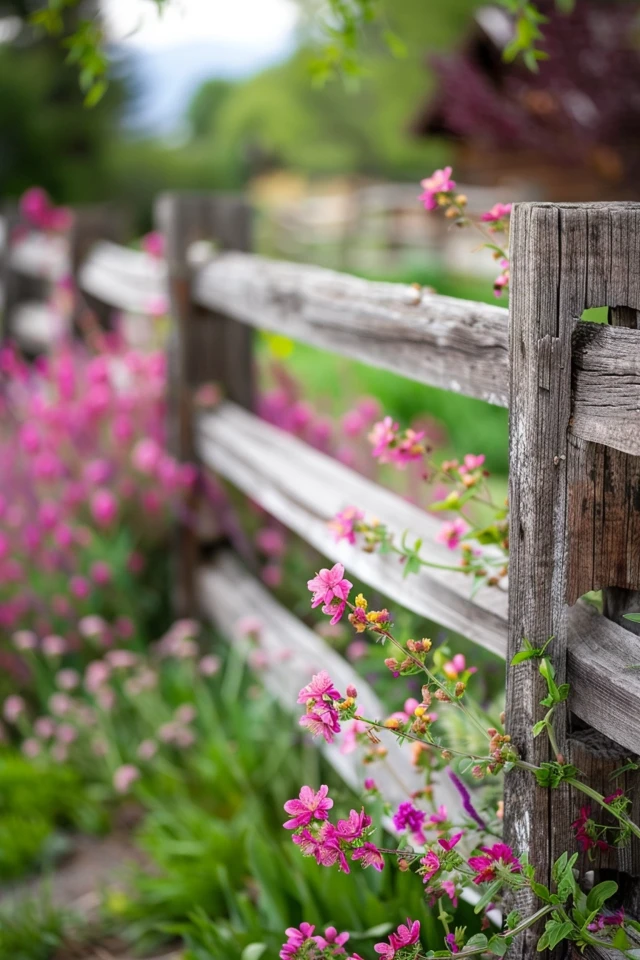
Title: Charming Rustic Split Rail Fence Landscaping Ideas
Introduction
There is something undeniably timeless about a split rail fence. It evokes images of rolling pastures, historic farmhouses, and a slower pace of life. Unlike privacy fences that wall you off from the world, a split rail fence defines your property while inviting the landscape in. It frames your view rather than blocking it.
However, a bare wooden fence can look a bit stark or unfinished without the right organic elements to soften it. The magic happens when you layer textures, colors, and heights against those weathered horizontal rails. As a designer, I view the fence not just as a boundary, but as a trellis and a backdrop for a living garden.
Whether you are looking to contain a rambunctious puppy or simply want to boost your curb appeal, the right landscaping strategy makes all the difference. For plenty of visual inspiration, be sure to check out the comprehensive Picture Gallery at the end of this blog post.
1. Understanding Scale and Fence Construction
Before you dig a single hole for a plant, you need to understand the physical structure you are working with. In landscape design, scale is everything. A split rail fence typically comes in two-rail or three-rail configurations. This choice dictates your planting height.
A two-rail fence usually sits about 36 to 48 inches high. This is strictly decorative or meant for large livestock. If you have a two-rail fence, keep your foreground plants low. You do not want to obscure the top rail, or the fence will disappear entirely visually.
A three-rail fence often reaches 54 to 60 inches. This provides a substantial backdrop. Here, you can get away with taller ornamental grasses or shrubbery in the back layer. The additional rail adds “visual weight,” meaning the fence can stand up to denser planting without looking cluttered.
Designer’s Note: Material Matters
Most clients opt for Western Red Cedar or Pressure-Treated Pine. Cedar offers a gorgeous natural grey patina over time and resists rot naturally. Pine is more budget-friendly but tends to warp and turn a greenish-grey. If you choose pine, treat it with a clear water repellent immediately. This keeps the rails straight, preserving the clean horizontal lines that make this style so attractive.
2. The “Drift” Planting Method vs. Linear Rows
The biggest mistake homeowners make is planting in a straight soldier line along the fence. This looks artificial and stiff. It fights against the rustic, casual nature of the split rail aesthetic.
Instead, I use the “drift” method. This involves planting in odd-numbered clusters (groups of 3, 5, or 7) that weave in and out from the fence line. You want to create a serpentine edge to your mulch bed rather than a straight ruler line.
Creating Depth with Layers
To achieve a professional look, you need three distinct layers of depth.
- The Backdrop (The Anchors): These are placed at fence corners or gate posts. I prefer evergreens here, such as Boxwood or Juniper. They provide structure in the winter when everything else has died back.
- The Mid-Ground (The Color): This is where your flowering shrubs live. Hydrangeas are a classic pairing with rustic wood. Their large, round blooms contrast beautifully with the straight, hard lines of the rails.
- The Foreground (The Softener): These are low-growing plants that spill over the edge of the mulch bed onto the grass. Creeping Phlox, Hostas, or Liriope work wonders here. They blur the line between the manicured garden and the lawn.
Spacing Rule of Thumb
Do not plant directly under the rails. I always mark the center of the plant at least 12 to 18 inches away from the fence line. You need space for the plant to reach mature size without pushing against the wood. More importantly, you need space to access the back of the bed for weeding and maintenance.
3. Vines: The Romantic Touch (With Caution)
Nothing says “cottage garden” quite like climbing roses or clematis weaving through weather-worn rails. This softens the hardscape instantly and adds vertical interest. However, this comes with a serious warning regarding wood integrity.
Wood needs to breathe. If you cover a wooden fence entirely in dense ivy, moisture will get trapped against the grain. This accelerates rot and can cut the lifespan of your fence in half.
The Safe Way to Trellis
If you want the vine look, follow these rules:
- Choose Annuals over Perennials: Morning Glories or Sweet Peas die back in the winter. This gives the wood a chance to dry out completely for several months of the year.
- Avoid Woody Vines: Wisteria and Trumpet Vine are incredibly heavy. They can physically break split rails, which are held together only by gravity and tapered ends.
- Clematis is King: Clematis is lightweight and airy. It doesn’t trap moisture like Ivy does. Plant it at the base of a post and gently guide it along the top rail.
4. Hardscaping and Practical Constraints
A split rail fence is rarely a standalone element. It usually interacts with driveways, walkways, and gates. The transition points are where the design often falls apart.
Gate Widths and placement
If you are installing a new fence, plan your gate widths carefully. A pedestrian gate should be 36 to 48 inches wide. However, if you have a ride-on mower, you must install a double gate or a removable section. There is nothing worse than finishing a landscape project and realizing the landscaper can’t get the mower into the backyard.
The “Mow Strip” Essential
Weed whacking around split rail posts is a nightmare. The nylon string eats away at the wood post over time, eventually causing it to snap.
To prevent this, I install a “mow strip” under the fence line. This is a 6-inch to 12-inch wide trench filled with crushed gravel or river rock. It suppresses weeds and allows you to mow right up to the gravel edge without the mower deck hitting the fence. It looks clean and saves you hours of labor every summer.
5. Making it Pet-Proof (The Invisible Mesh Trick)
This is the number one request I get from clients. They love the look of split rail, but they have a Golden Retriever or a small child. The wide gaps in a split rail fence obviously provide zero containment.
The solution is black vinyl-coated welded wire mesh. Do not use chicken wire; it looks cheap and bends easily. Do not use silver galvanized wire; it catches the sun and glares, ruining the rustic aesthetic.
Installation Best Practices
You want 2-inch by 4-inch rectangular mesh. It comes in rolls. You staple this to the inside of the fence (the yard side).
Why the inside? Because when a dog jumps against it, they are pushing the wire against the sturdy wooden rails, rather than popping the staples out.
From a distance of about 20 feet, the black wire becomes nearly invisible to the human eye. It disappears into the background shadows. You get the open, pastoral look of the split rail with the security of a solid barrier.
6. Lighting the Perimeter
Lighting transforms a rustic fence from a boundary into a feature. Since split rail fences are often far from the house, hardwiring low-voltage lighting can be expensive due to trenching costs.
Solar Post Caps
Solar technology has improved largely in recent years. Copper or black metal post caps with integrated LEDs are a great option. They cast a soft, downward pool of light that highlights the texture of the wood and the plants below.
Up-Lighting
For a more dramatic look, place solar spotlights at the base of every third post. Aim the light upward to catch the foliage of your corner anchor plants or the blooms of your climbing roses. This creates a rhythm of light and shadow around the property perimeter.
Common Mistakes + Fixes
Mistake: Ignoring Drainage.
The Fix: Split rail posts are buried directly in the dirt. If your soil is heavy clay, the post hole becomes a bucket of water, rotting the post base. Always dig the hole 6 inches deeper than needed and fill the bottom with crushed gravel to allow water to drain away from the wood.
Mistake: Over-planting saplings.
The Fix: That tiny Emerald Green Arborvitae looks cute now, but it will be 4 feet wide in five years. If you plant it 12 inches from the rail, it will eventually swallow the fence. Check the “mature width” on the plant tag and divide by two. That is your minimum distance from the fence.
Mistake: Using Pressure Treated Wood for Edible Gardens.
The Fix: If you are using the fence to enclose a vegetable garden, use Cedar or Locust wood. Older pressure-treated wood used arsenic, and while modern treatments are safer (copper-based), many organic gardeners prefer untreated rot-resistant woods to avoid any chemical leaching near food crops.
What I’d Do in a Real Project
If I were designing a suburban backyard with a split rail fence today, here is my exact shopping list and layout plan:
- Fence: 3-Rail Western Red Cedar (left untreated to weather gray).
- Containment: 4-foot tall black vinyl-coated welded wire (2×4 inch mesh).
- Corners: Cluster of 3 ‘Green Mountain’ Boxwoods for year-round structure.
- Mid-Fence Drifts: Ornamental grasses like ‘Karl Foerster’ (vertical accent) mixed with Black-Eyed Susans (color).
- Gate Arbors: A simple cedar arbor over the main gate with a ‘New Dawn’ climbing rose.
- Ground Cover: A heavy layer of premium shredded hardwood mulch (dark brown) to retain moisture and suppress weeds.
Final Checklist
Before you head to the nursery or lumber yard, run through this quick list to ensure you have covered the basics.
- Property Lines: Have you confirmed the fence is actually on your property? A survey is cheaper than moving a fence later.
- HOA Rules: Does your neighborhood require a specific number of rails or material type?
- Utilities: Have you called 811 (in the US) to mark underground utility lines before digging post holes?
- Maintenance Access: Have you left enough room between plants and the fence for future repairs?
- Water Access: Can your hose reach the new planting beds along the perimeter?
FAQs
Q: How long does a split rail fence last?
A: A cedar fence typically lasts 15 to 30 years depending on the climate and soil conditions. Pressure-treated pine usually lasts 10 to 15 years. Keeping vegetation trimmed back and ensuring proper drainage at the post base extends this lifespan significantly.
Q: Should I paint or stain my split rail fence?
A: I almost always advise against painting. Paint peels and requires tedious scraping and repainting. A transparent or semi-transparent stain is much better. It fades gradually rather than peeling, making re-application easy. However, the most popular look is simply letting it weather naturally.
Q: Can I use split rail fencing on a steep slope?
A: Yes, split rail is actually one of the best options for uneven terrain. Because the rails fit loosely into the posts, the fence can “rack” (adjust angles) to follow the contour of the land much better than rigid panel fencing.
Q: Is it expensive to landscape a long fence line?
A: It can be. To save money, focus your budget on the corners and the gate areas. Leave the long straight runs simple with just grass or a low-maintenance mulch strip. You don’t need to landscape every single foot of the perimeter.
Conclusion
Landscaping a rustic split rail fence is about finding the balance between wildness and control. You want to honor the agricultural roots of the fence style while adapting it to modern residential needs. By choosing the right plant scale, creating deep beds with curved edges, and solving practical issues like pet containment invisibly, you create a boundary that feels welcoming rather than restrictive.
The beauty of this style is its evolution. The wood will silver, the plants will fill in, and the landscape will settle into a comfortable, lived-in patina. It is a design choice that truly gets better with age.
Picture Gallery


