
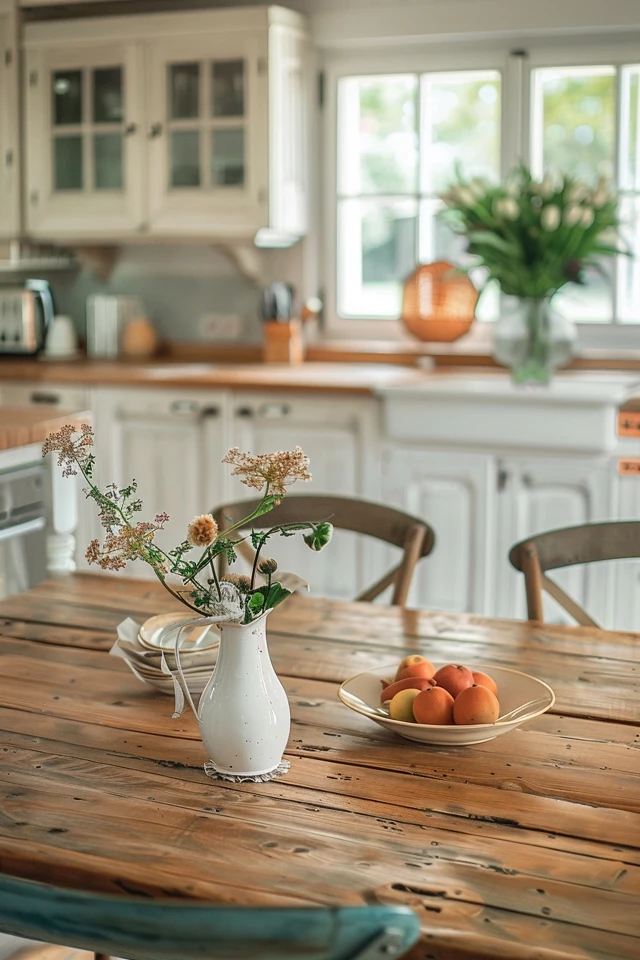
Charming Vintage French Country Kitchen Ideas
There is something undeniably magnetic about a French country kitchen. It manages to balance elegance with a rugged, practical usability that few other design styles can replicate. When I walk into a well-designed French-inspired space, I want to immediately start kneading dough or chopping herbs; it feels like a room built for living, not just for looking.
I recall a specific project early in my career where a client wanted “fancy but durable.” She had three dogs and twin toddlers, so delicate finishes were out of the question. We leaned heavily into the vintage French aesthetic because it embraces imperfections—scratches on a farm table or etching on a marble counter actually enhance the look rather than ruining it.
Whether you are doing a full renovation or just swapping out decor, getting this look right requires a balance of texture, muted colors, and high-quality materials. To give you plenty of visual inspiration, I have curated a massive Charming Vintage French Country Kitchen Ideas Picture Gallery at the end of this blog post.
1. The Foundation: Mastering the “Unfitted” Layout
The biggest difference between a modern American kitchen and a vintage French kitchen is the concept of “fitted” versus “unfitted” cabinetry. Modern kitchens often feature wall-to-wall lower and upper cabinets that look seamless.
French country kitchens traditionally evolved over time. They often look like a collection of free-standing furniture pieces rather than a built-in laboratory. To achieve this, I often skip the standard kitchen island cabinetry in favor of a large, antique work table.
If you have the space, look for a table that is at least 36 inches high to match standard counter height, or be prepared to add casters to lift a dining table up. This allows light to pass underneath the furniture, making the room feel airier and more authentic.
Integrating Standalone Pieces
If you are renovating, consider using a standalone hutch or an armoire instead of standard upper cabinets for pantry storage. This immediately adds age and character to the room.
For a rental-friendly version, you can simply remove the doors from a section of your existing upper cabinets. Paint the interior a soft sage green or warm cream to mimic the look of an open display cabinet.
2. The Color Palette: Muddy, Muted, and Warm
When selecting paint for a French country space, you want to avoid stark, brilliant whites. They feel too sterile and clinical for this aesthetic. Instead, lean toward “muddy” colors—tones that have a bit of gray or brown undertone.
Creamy whites, such as Benjamin Moore’s “White Dove” or “Swiss Coffee,” are staples in my designs. They provide a bright backdrop but maintain a warmth that glows under soft lighting.
Accent Colors
For cabinetry or accent walls, look to nature. Provençal design borrows heavily from the landscape. I frequently specify:
- Dusty Blue: Reminiscent of the sky on a hazy day.
- Sage Green: Like dried herbs or olive leaves.
- Warm Greige: A mix of gray and beige that mimics natural limestone.
- Mustard Yellow: A classic French tone, but use it sparingly as an accent rather than a main wall color.
Finish Matters
Never use high-gloss paint on walls or cabinets in this style. It reflects too much light and looks plastic.
I almost exclusively use matte or eggshell finishes. If you are adventurous, a limewash paint adds incredible texture and depth that flat paint cannot achieve. It mimics the plaster walls found in old French cottages.
3. Surfaces and Countertops: Embracing the Patina
In the US, we often obsess over countertops that look brand new forever. In French design, materials are chosen for how they age. This is crucial for authenticity.
The gold standard is natural stone. Marble, specifically Carrara or Calacatta, is beautiful, but it stains and etches. In a French kitchen, those etch marks are stories of meals past.
The Butcher Block Alternative
If stone is out of budget, wood countertops are a fantastic, authentic alternative. They are warm to the touch and quiet when you set down dishes.
I recommend sealing butcher block with Tung oil or a food-safe mineral oil. Avoid thick polyurethane varnishes, which look plastic and can peel over time.
Flooring Choices
For flooring, natural stone tiles like travertine or limestone in a tumbled finish are ideal. They hide dirt exceptionally well, making them perfect for homes with pets.
If you prefer wood floors, look for wide planks with a matte oil finish. Hand-scraped or reclaimed wood fits the vibe perfectly. Avoid narrow, high-gloss strip oak flooring if possible, as it tends to look too mid-century or modern.
4. Lighting and Hardware: The “Jewelry” of the Room
Lighting is where you can make or break the vintage vibe. Recessed can lighting is practical, but it has no soul. You need decorative fixtures to bring the scale down to a human level.
The Pendant Logic
Over an island or work table, I prefer oversized lanterns or ceramic pendants. A common mistake is going too small.
Designer Rule of Thumb: If your island is 6 feet long, look for two pendants that are at least 12 to 15 inches wide each. If they are too small, they look dinky and cheap. Hang them so the bottom of the fixture is 30 to 34 inches above the countertop.
Hardware Selection
Swap out brushed nickel or chrome for “living finishes.” Unlacquered brass is my top choice.
Unlacquered brass starts shiny but oxidizes quickly to a dull, golden brown. It requires zero maintenance if you like the antique look. Oil-rubbed bronze is another safe bet if you want high contrast against cream cabinets.
Cup Pulls vs. Knobs
For a classic look, use bin pulls (also called cup pulls) on drawers and simple round knobs on doors. This mix creates visual interest and mimics antique furniture construction.
5. Architectural Details: Beams and Hoods
If you have the architectural freedom, adding ceiling beams is one of the most impactful changes you can make. They instantly lower the visual height of the ceiling, making the kitchen feel cozy and enclosed.
You don’t need real structural beams. Box beams made of reclaimed wood are lightweight and can be installed over existing drywall.
The Range Hood
The range hood is often the focal point of a French kitchen. Stainless steel chimneys feel too industrial.
I typically design custom enclosures made of plaster or wood to hide the metal insert. A plaster hood with a simple wood trim creates a soft, sculptural curve that defines the cooking area.
Designer’s Note: The “Theme” Trap
Real-World Lesson: I once took over a project where the homeowner had gone overboard with the “French” theme. There were roosters on the towels, roosters on the rug, and lavender painted on the backsplash tiles. It felt like a gift shop, not a home.
My Advice: Authentic French style is about the materials, not the motifs. Capture the vibe through linen textures, copper metals, and natural wood. You don’t need a sign that says “Boulangerie” to tell people it’s a French-inspired kitchen. Subtlety is always more sophisticated.
Common Mistakes + Fixes
Mistake 1: Using bright white subway tile with dark grout.
This looks too industrial or farmhouse-modern.
The Fix: Use a handmade Zellige tile or a tumbled stone tile. The edges should be irregular. Match the grout to the tile color for a seamless, soft texture.
Mistake 2: Buying matching furniture sets.
Buying a dining table and chairs that match perfectly kills the vintage vibe.
The Fix: Mix and match. Pair a heavy wood table with lighter, painted chairs, or mix wood tones. It should look collected over generations.
Mistake 3: Skimping on drapery.
Bare windows feel cold and unfinished in this style.
The Fix: Install a simple cafe curtain on the lower half of the window. Use 100% linen. This provides privacy while letting light pour in from the top.
What I’d Do in a Real Project: The Mini Checklist
If I were designing a French Country kitchen for a client today, here is the exact order of operations I would follow:
- Secure the Sink: I would source a large, single-basin fireclay apron front sink. This is the anchor of the room.
- Select the Faucet: I would choose a bridge faucet in unlacquered brass with cross handles and a side spray.
- Find the Island: I would hunt antique fairs or Chairish for a vintage pine shop counter or farm table to serve as the island.
- Layer the Lighting: I would install sconces above the open shelving or flanking the sink window to add a warm glow at night.
- Add Texture: I would bring in a vintage runner rug (Oushak or Persian) to place between the sink and the island. This adds color and softness underfoot.
Final Checklist for Your Design
Before you finalize your purchases or renovation plans, run through this quick list to ensure you are hitting the right notes:
- Materials: Are there natural elements (wood, stone, linen, iron) present?
- Palette: Are the colors warm and muted rather than cool and stark?
- Patina: Do you have finishes that will age well (brass, copper, wood)?
- Storage: Have you incorporated some open shelving or glass-front cabinets to display pretty dishware?
- Scale: Is your lighting large enough to command presence?
- Warmth: Have you added fabric elements like rugs or curtains to dampen sound and soften the look?
FAQs
Can I achieve this look in a small kitchen?
Absolutely. The French country style is actually perfect for small spaces because it thrives on coziness. Focus on vertical storage with open shelves and use a light color palette to keep it from feeling cramped. A small bistro table can replace a bulky island.
Is marble countertop maintenance really that difficult?
It depends on your personality. If you need your counters to look pristine 100% of the time, marble will drive you crazy. It will scratch and stain with lemon juice or wine. However, if you accept the staining as “patina,” it is actually very low maintenance because you simply wipe it down and stop worrying about perfection.
How do I mix metals in this style?
I usually stick to two metals. Unlacquered brass is my primary choice for cabinet hardware and faucets. I then mix in copper (pots and pans) or matte black iron (light fixtures and door handles). Avoid mixing chrome with brass in this specific aesthetic; the contrast is often too sharp.
Is this style expensive to achieve?
It can be, but it doesn’t have to be. Because the style relies on “unfitted” furniture, you can save thousands by buying second-hand dressers or tables instead of custom cabinetry. Vintage rugs and accessories can also be found at estate sales for much less than retail prices.
Conclusion
Creating a charming vintage French country kitchen is less about following a strict set of rules and more about cultivating a feeling of warmth and history. It is a style that invites you to slow down, cook a real meal, and enjoy the company of friends and family.
By focusing on natural materials, warm lighting, and practical layouts, you can build a space that is resilient enough for daily life but beautiful enough to inspire you every morning. Don’t be afraid of scratches, dents, or tarnished brass—these are the elements that give your kitchen its soul.
Charming Vintage French Country Kitchen Ideas Picture Gallery


