
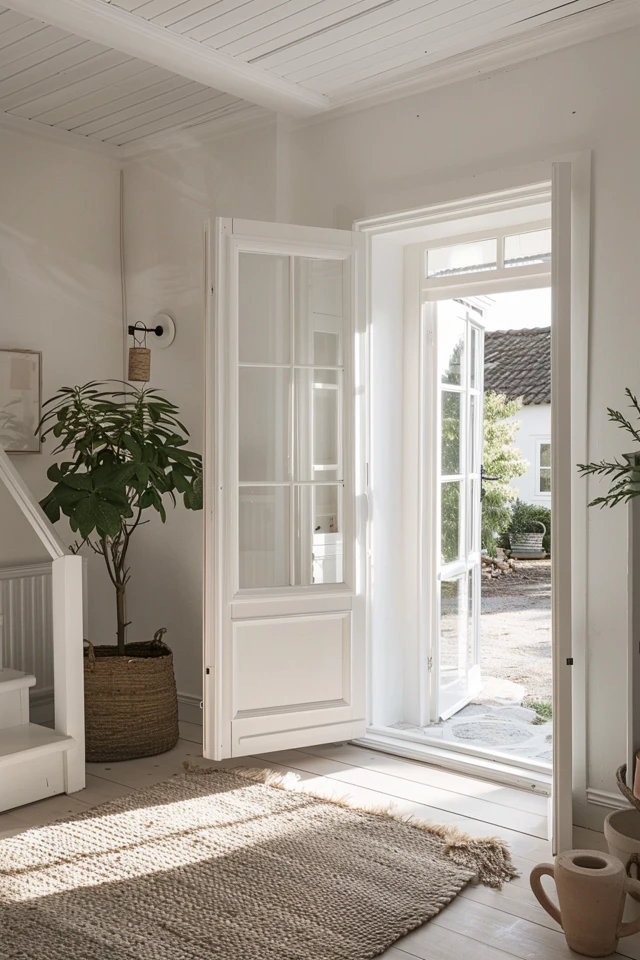
Chic Back Door Entryway Ideas for Your Home
The back door is often the unsung hero of the American home. While the front door gets the wreath and the formal welcome, the back door is usually where real life happens. It is the portal for muddy boots, wet paws, grocery bags, and kids rushing in from school.
Because this space is so high-traffic, it frequently becomes a chaotic dumping ground for shoes and coats. However, treating this area with the same design attention as your main foyer can transform your daily routine. For plenty of visual inspiration to help you visualize these concepts, be sure to check out the Picture Gallery at the end of the blog post.
Designing a chic back entryway is about marrying extreme durability with your personal aesthetic. You do not have to sacrifice style just because the area needs to be rugged. With the right layout, materials, and organizational systems, your back door can become one of the most functional and beautiful corners of your home.
1. Establishing the Drop Zone: Function First
Before we pick out paint colors or cute baskets, we have to address the “drop zone” dynamics. In interior design, we refer to this as the transition point where outdoor chaos meets indoor calm. If you do not give your items a specific home immediately inside the door, they will migrate to the kitchen island or the living room floor.
The most critical element of a functional back entry is vertical storage. You need a dedicated place to hang coats and bags immediately. If you have the space for built-in cabinetry, that is the gold standard, but a sturdy row of hooks is equally effective for tighter budgets.
Designer’s Note: The Rule of Heights
One common mistake I see in DIY entryway projects is hanging hooks too high for the actual users. Standard hook height is usually 60 to 64 inches off the finished floor for adults. However, if you have children, you must install a second row of hooks at about 36 to 42 inches. If the kids cannot reach the hook, the jacket ends up on the floor every single time.
You also need a landing surface. This could be a console table, a shelf, or a bench. When you walk in with keys, mail, or a leash in your hand, you need a flat surface to place them on immediately. If you skip this, those small items will clutter other surfaces in the house.
The Bench Requirement
A place to sit is not just a luxury; it is a necessity for a back door area. Taking off muddy boots requires balance.
- Depth Matters: A standard bench should be between 15 and 18 inches deep. Anything deeper than 18 inches tends to eat up too much floor space in a narrow hallway.
- Material Choice: Avoid velvet or delicate linens here. I always specify performance fabrics like Crypton or outdoor-rated textiles for seat cushions. Alternatively, a solid wood bench that can be wiped down is ideal for pet owners.
- Under-Bench Storage: Never let the space under the bench go to waste. This is the prime real estate for shoes.
2. Flooring and Rugs: The Foundation of Durability
The floor at your back entrance takes a beating. It faces grit, moisture, mud, and heavy foot traffic. Therefore, the flooring material you choose is the single most important decision for longevity.
If you are renovating, I highly recommend porcelain tile or natural slate. Porcelain is virtually indestructible and non-porous, meaning it won’t absorb water from wet shoes. Slate offers a beautiful, organic texture that naturally hides dirt, though it does require sealing.
Common Mistakes + Fixes
Mistake: Using polished marble or slippery ceramic tile at an entry point.
Fix: Always check the slip resistance rating. You want a matte or textured finish. Polished stone becomes a skating rink when wet, which is a major safety hazard at a back door.
Rug Selection Rules
If you cannot change the hard flooring, the rug becomes your shield. This is not the place for a high-pile Moroccan shag rug. It will trap dirt and is impossible to vacuum thoroughly.
I recommend vintage wool rugs or high-quality polypropylene indoor/outdoor rugs. Vintage wool is surprisingly durable because the lanolin in the fibers naturally repels stains. Indoor/outdoor rugs can often be taken outside and hosed off, which is a lifesaver during muddy seasons.
Sizing Your Rug
Scale is everything. A postage-stamp-sized doormat looks sad and uninviting.
- The 4-Inch Rule: If you are using a runner, leave about 4 to 6 inches of hard flooring visible on all sides. This makes the space feel intentional and custom.
- Door Swing Clearance: Before buying a rug, open your back door and measure the gap between the bottom of the door and the floor. Many back doors have weather stripping that sits low. You generally need a flat-weave rug (less than 1/4 inch thick) to ensure the door opens freely without bunching up the rug.
3. Maximizing Storage in Tight Footprints
Back door entries are rarely spacious. Often, they are narrow hallways or small nooks off the kitchen. This means we have to think vertically and creatively to maximize every square inch.
If you have a narrow hallway, avoid deep furniture. Standard cabinets are 24 inches deep, which is too bulky for most back entries. Look for “shoe cabinets” that feature tilt-out drawers. These are usually only 10 to 12 inches deep but can hold a dozen pairs of shoes.
The “Shoe Mountain” Solution
The biggest complaint I hear from clients is the pile of shoes blocking the door. A simple mat is not enough. You need defined containment.
- Open Cubbies: These work well for kids because they require zero effort. If they have to open a door to put shoes away, they won’t do it.
- Baskets: Large woven baskets are great for “ugly” items. Assign one basket per family member. This hides the visual clutter while keeping items accessible.
- Wall-Mounted Racks: If floor space is non-existent, install heavy-duty metal racks on the wall to hold boots upside down. This is particularly practical for farmhouses or homes in snowy climates.
Real-World Project Checklist: What I Would Do
If I were designing a 5×5 foot back entry for a client today, here is the exact formula I would use:
- Wall Treatment: Install beadboard or shiplap up to 60 inches high. Paint it a satin or semi-gloss finish. This protects the drywall from scuffs and is wipeable.
- High Shelf: Install a shelf at 66 inches high running the length of the wall for baskets (hats/gloves).
- Hooks: heavy-duty double hooks mounted directly into the studs or blocking below the shelf.
- Bench: A floating bench bracketed to the wall to keep the floor underneath completely clear for easy mopping.
4. Lighting and Ambiance
Just because it is a utility space does not mean it should feel like a utility closet. Lighting sets the mood. A single, harsh overhead boob light is unflattering and uninspired.
Layering your lighting makes the space feel like a proper room. If you have the ceiling height, a small semi-flush mount fixture adds character. Look for fixtures with a cage or a glass enclosure to keep dust off the bulb.
Sconces for Style and Function
I love using wall sconces in back entryways. They frame the door beautifully and provide light at face level, which is much more welcoming than overhead shadows.
- Placement: Mount sconces approximately 60 to 66 inches from the floor to the center of the light source.
- Bulb Temperature: Stick to 2700K or 3000K LED bulbs. This provides a warm, inviting white light. Anything over 3000K will look blue and sterile, like a hospital.
Hardware Finishes
Treat the hardware on your back door as jewelry. If you have a standard builder-grade handle, swapping it for a matte black, unlacquered brass, or oil-rubbed bronze set is an instant upgrade. Match your cabinet pulls and hooks to this finish for a cohesive look.
5. Blending Indoor and Outdoor Style
The back door is the bridge between your interior design and your landscape. The best designs blur the lines between the two, creating a smooth visual flow.
Consider the view through the glass. If your back door has a window, what do you see? If you see your patio furniture or garden, try to pull those colors inside. If you have blue cushions outside, a blue runner rug inside creates a seamless connection.
Glass and Privacy
If you want more light but need privacy, consider reeded or frosted glass for the door itself. This lets the sun pour in but obscures the view of the messy mudroom from the neighbors.
The “Dirt Room” Aesthetic
For homes with serious gardening or outdoor lifestyles, embrace the “potting shed” vibe. Use terracotta floor tiles, galvanized metal bins for storage, and durable green paint on the cabinetry. This embraces the dirt rather than fighting it.
Paint Colors for Durability
White is risky for a back entry unless you use a high-gloss finish. I often steer clients toward mid-tone greys, greens, or navys for the lower half of the walls or the cabinetry.
- Sherwin Williams “Retreat”: A beautiful earthy green that hides grass stains and scuffs.
- Benjamin Moore “Hale Navy”: A classic that grounds the space and makes hardware pop.
- Finish Guide: Use Satin or Semigloss for walls in high-traffic areas. Never use Flat or Matte paint here; it cannot be scrubbed.
6. Renter-Friendly Solutions
You do not need to own your home to have a chic back entry. If you cannot drill holes or replace flooring, you can still execute these design principles.
Furniture over Built-ins
Instead of built-in lockers, hunt for a tall, vintage armoire or a freestanding hall tree. These pieces offer the same functionality—hooks, bench, storage—but move with you when you leave.
Peel-and-Stick Tiles
If the existing vinyl floor is hideous, cover it with high-quality peel-and-stick floor tiles. They are durable enough for a year or two and can be removed with a hairdryer when you move out.
Command Hooks
Heavy-duty adhesive hooks have come a long way. They come in metallic finishes that look like real hardware. Use them for keys, leashes, and lightweight jackets. Just be sure to wait the full hour after applying them before hanging anything.
Final Checklist: The Functional Audit
Before you finalize your back door makeover, run through this quick audit to ensure you haven’t missed any functional requirements.
- Traffic Flow: Do you have at least 36 inches of clear walking path? If not, remove the bench or switch to a narrower console.
- Door Swing: Does the door open fully without hitting the rug or the furniture?
- Lighting: Is the light switch accessible immediately upon entering? You shouldn’t have to walk into the dark to find the switch.
- Pet Needs: If you have a dog, do you have a dedicated hook for the leash and a jar for treats?
- Waste Management: Do you have a small trash bin for junk mail or dryer lint?
- Mirror Check: Is there a small mirror for a last-minute check before you head out?
Frequently Asked Questions
How do I keep my back entryway smelling fresh with all the shoes?
Ventilation is key. Do not store damp shoes in closed cabinets immediately. Let them dry on a tray first. I also recommend placing a small charcoal air purifying bag inside shoe cubbies. It absorbs odors without adding artificial fragrance. Using a rug that is washable allows you to remove trapped odors periodically.
What is the best way to protect the walls from banging doors?
This is a common issue. Install a baseboard door stop or a hinge pin stop. If the door handle is hitting the wall, a clear adhesive bumper is a discreet fix. For a more decorative solution, wainscoting or beadboard provides a physical armor for the drywall that can take a hit better than sheetrock.
Can I use a runner rug if my hallway is very narrow?
Yes, but be careful with width. Standard runners are 2’6″ wide. If your hallway is only 3 feet wide, that looks crowded. Look for “2×3” scatter rugs or narrow vintage runners that are closer to 2 feet wide. Visually, you always want to see a strip of floor on the sides to keep the space from feeling claustrophobic.
How do I organize a back entry with no closet?
You have to create a “wardrobe” on the wall. Use a row of high hooks for off-season items and low hooks for daily items. Use a bench with storage for shoes. If you have the budget, a freestanding wardrobe closet (like the IKEA PAX system) can simulate a built-in closet effectively.
Conclusion
Transforming your back door entryway does not require a full-scale renovation. It requires a shift in perspective. By acknowledging that this space is the true “main entrance” for your daily life, you justify investing time and budget into it.
Focus on the trifecta of design: durable materials (like porcelain and performance fabrics), smart vertical storage (hooks and high shelves), and warm lighting. When you solve the functional problems of mud and clutter, the style naturally follows. A well-organized, durable space is inherently chic because it works effortlessly.
Start by clearing the space completely, measuring your available footprint, and identifying your family’s specific pain points. Whether it is a pile of shoes or lost keys, there is a design solution that can fix it beautifully.
Picture Gallery


