
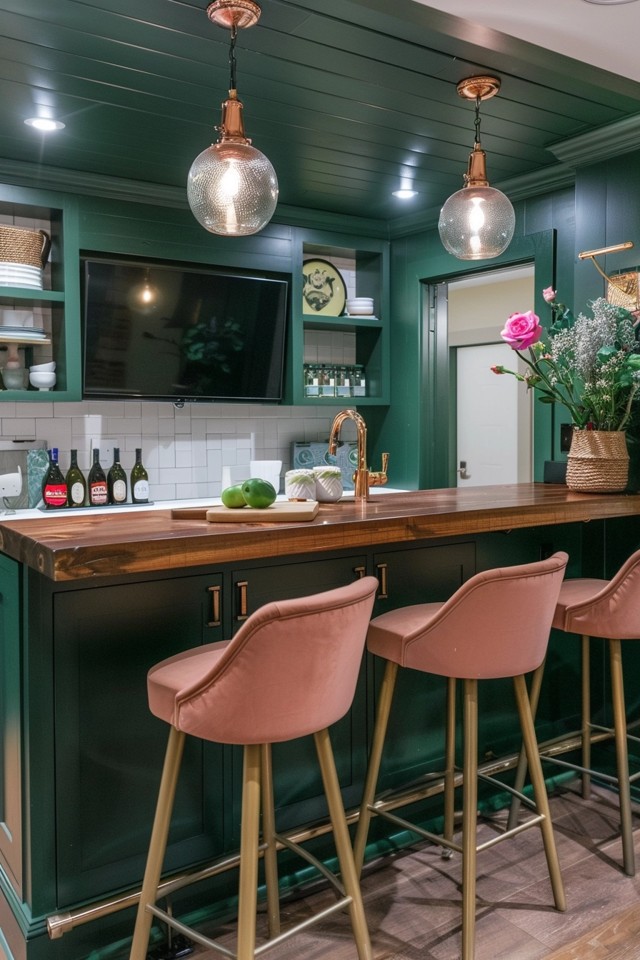
Chic Basement Bar Ideas with TV – Makeovers & Tips
For many homeowners, the basement represents a world of untapped potential. It often starts as a catch-all storage area, but with the right vision, it can become the most popular room in the house. Transforming this space into a chic bar with a dedicated entertainment area is one of the most rewarding renovation projects you can tackle.
The key to a successful basement bar isn’t just buying a kegerator and mounting a television. It requires blending the cozy, moody atmosphere of a lounge with the practical functionality of a sports bar. You want a space that feels sophisticated enough for cocktail hour but relaxed enough for Sunday football.
For plenty of visual inspiration, don’t miss the complete Picture Gallery located at the end of this blog post.
1. Establishing the Layout and Sightlines
Before you select a single tile or paint color, you must nail down the floor plan. In a basement, you are often working around structural columns and HVAC systems. Instead of fighting these, incorporate them into your zoning.
The most critical element in a bar-plus-TV setup is the sightline. If you are washing glasses or mixing a drink behind the island, you should still be able to see the screen. Avoid placing the bar in a location where the host has their back to the entertainment.
I typically recommend an L-shaped or Galley layout for basement bars. This keeps the plumbing consolidated on one wall while opening the seating area toward the television.
Designer’s Note: The Space Rule
One of the biggest issues I see in DIY basement designs is a lack of circulation space. You must leave at least 36 to 42 inches of clearance behind the bar stools. This ensures someone can walk past a seated guest without squeezing. If you have a back bar (cabinetry against the wall), you need at least 42 inches between the back cabinets and the front island for comfortable movement.
Common Mistakes + Fixes
Mistake: Ignoring the “landing zone.”
Fix: Do not place your bar immediately at the bottom of the stairs. Leave a minimum 4-foot landing area at the base of the staircase before any furniture begins to prevent the space from feeling cramped and dangerous.
2. Mastering Basement Lighting
Lighting is the make-or-break element in any basement design. Because natural light is usually scarce or non-existent, you cannot rely on a single grid of recessed can lights. That creates a sterile, office-like environment that kills the vibe of a chic bar.
You need to layer your lighting. Start with dimmable recessed lights for general cleaning and movement. Next, add pendant lights over the bar island to create a focal point and intimate atmosphere. Finally, incorporate accent lighting, such as LED strips under floating shelves or inside glass cabinets.
For the TV area, considering “bias lighting” is a pro move. This is soft LED lighting placed behind the television screen. It reduces eye strain in dark rooms and improves the perceived contrast of the image, making blacks look blacker.
Specific Measurements for Lighting
- Pendant Spacing: Space pendants 30 to 32 inches apart (measured center-to-center).
- Pendant Height: The bottom of the pendant should sit 30 to 36 inches above the countertop.
- Color Temperature: Stick to 3000K bulbs. Anything higher (4000K-5000K) looks too blue and clinical for a bar setting; anything lower (2700K) can feel a bit too yellow and sleepy.
3. Selecting Durable and Moisture-Resistant Materials
Basements have a different microclimate than the rest of the home. They are cooler and naturally more humid. When selecting materials, you must prioritize moisture resistance.
For flooring, I rarely recommend solid hardwood in a basement due to warping risks. Instead, opt for Luxury Vinyl Plank (LVP) or porcelain tile. LVP has come a long way; high-end options convincingly mimic white oak or walnut but are completely waterproof.
For countertops, quartz is the champion for basement bars. It is non-porous, meaning spilled red wine or citrus juice won’t etch the surface. Marble is beautiful, but in a low-light entertainment zone, stains can go unnoticed until the next morning.
Cabinetry Considerations
If you are on a budget, standard kitchen cabinetry works, but ensure the toe-kicks are made of moisture-resistant material or plastic legs rather than particle board. If your basement floor has any slope (common toward drains), custom cabinetry might be necessary to get a level countertop without massive shims.
What I’d Do in a Real Project
- Use dark finishes: Since basements are dark, lean into it. Charcoal, navy, or forest green cabinets look incredible in low light.
- Mirror the backsplash: Use an antiqued mirror as the backsplash for the back bar. It reflects light, making the room feel twice as big and much brighter.
- Add a footrail: Install a metal footrail on the front of the bar island. It protects the cabinetry from scuff marks and makes sitting significantly more comfortable.
4. The TV Setup and Acoustics
The television is the anchor of this space. However, a chic bar should not look like an electronics store. The goal is to integrate the technology seamlessly into the design.
Avoid placing the TV too high. This is an epidemic in home design. The center of the screen should be at eye level when seated. For a bar setup, you might mount it slightly higher to clear the heads of people sitting on the sofa, but never mount it touching the ceiling.
Acoustics are also a major challenge in basements. Concrete floors and drywall ceilings bounce sound around, creating an echo chamber. To fix this, you need soft, absorptive materials.
Soundproofing Tips
- Rug Sizing: Use a large, plush area rug in the TV viewing zone. Ensure the front legs of the sofa and chairs are on the rug. Ideally, leave 12 to 18 inches of bare floor around the perimeter of the room.
- Wall Treatments: Consider acoustic wood slat panels behind the TV. They are trendy, add texture, and help break up sound waves.
- Ceilings: If you have a drop ceiling, use acoustic tiles that look like tin or coffered wood rather than standard office tiles.
5. Furnishing for Comfort and Flow
Furniture selection defines how the room is used. You need a mix of “perching” spots and “lounging” spots. The bar stools are for perching, chatting, and snacking. The sofa or sectional is for long-term viewing.
When choosing a sofa, look for deep seating (at least 24 inches of seat depth) for maximum comfort. Performance fabrics like Crypton or high-quality velvet are excellent choices for handling spills and pet claws.
Don’t forget the “drink tables.” If you have armchairs, every seat needs a surface within arm’s reach to set down a beverage. A small side table or a C-table is perfect for this.
Bar Stool Logistics
There is a massive difference between “counter height” and “bar height.”
- Counter Height: The seat is 24-26 inches high. Used for standard kitchen islands (36 inches high).
- Bar Height: The seat is 28-30 inches high. Used for raised bar tops (42 inches high).
Check your counter height before ordering. Buying the wrong stools is the most common return I see clients make.
Final Checklist: The Designer’s Recap
Ready to start your renovation? Use this checklist to ensure you haven’t missed a step.
- Measure Ceiling Height: Check for low-hanging ducts or soffits that might interfere with cabinetry or pendant lights.
- Plan Plumbing Early: If you want a wet bar (sink/ice maker), locate the main drain stack immediately. Moving drains is expensive; moving water lines is cheap.
- Check Electrical Capacity: Ensure your breaker panel can handle a bar fridge, wine cooler, microwave, and TV simultaneously.
- Sample Paint in Context: Paint colors look darker in basements. Always test a large swatch on the wall with your actual lighting installed.
- Ventilation: If you are cooking or smoking cocktails, ensure you have proper exhaust ventilation.
- Internet Access: Basements often have poor Wi-Fi. Install a hardwired ethernet port behind the TV for lag-free streaming.
FAQs
Does a basement bar add value to my home?
Yes, generally speaking. A finished basement with a wet bar is a highly desirable feature, especially in family-centric neighborhoods. It adds usable square footage and functionality. However, don’t over-improve beyond what is standard for your neighborhood. If you spend $100,000 on a bar in a $300,000 home, you likely won’t see a full return.
What is the difference between a wet bar and a dry bar?
A wet bar includes a sink and running water, while a dry bar does not. A wet bar is significantly more functional for washing glasses and dumping ice, but it requires plumbing. A dry bar is much cheaper to install and essentially functions as cabinetry for storage and serving.
How do I hide the structural poles in my basement?
You have two main options: hide them or feature them. To hide them, you can build them into the end of your bar island or a partition wall. To feature them, wrap them in wood veneer to look like timber columns, or paint them a dark matte black for an industrial loft aesthetic.
Conclusion
Creating a chic basement bar with a TV area is about balancing aesthetics with rugged utility. It is a space where you can take design risks you might not take in your main living room—think darker walls, moodier lighting, and bolder textures.
By paying attention to the technical details—like lighting temperature, clearance distances, and material durability—you ensure the space works as well as it looks. Whether you are hosting the big game or just enjoying a quiet Friday night drink, a well-designed basement bar changes the way you live in your home.
Picture Gallery


