
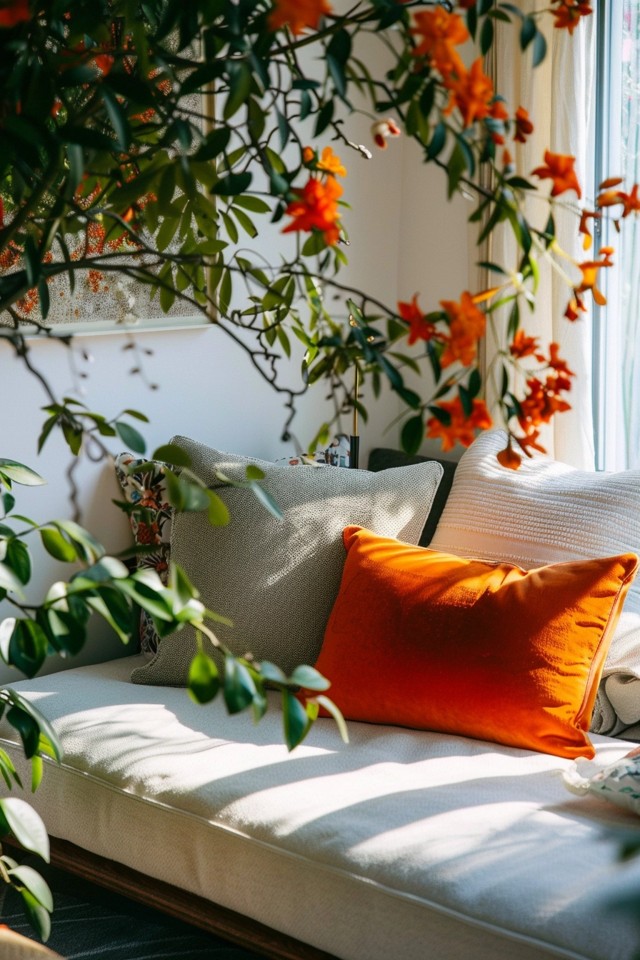
Chic Bedroom Ideas with Daybeds for Cozy Spaces
A daybed is often the unsung hero of interior design. It is the ultimate “Swiss Army Knife” of furniture, effortlessly bridging the gap between a sofa and a sleeper. In my years designing small city apartments and multipurpose guest rooms, I have found that a daybed is often the only solution that truly respects the square footage constraints of a compact room.
I recently worked on a project in a historic row house where the “third bedroom” was barely eight feet wide. A standard queen bed would have turned the room into a storage unit with no walking path. By pivoting to a custom upholstered daybed, we created a cozy reading den that doubled as a luxurious guest suite.
If you are struggling with a box room, a home office that needs to sleep guests, or a studio apartment, this guide is for you. Make sure to scroll all the way down because we have curated a stunning Picture Gallery at the end of this blog post to spark your imagination.
1. Layout Logic: Placing the Daybed for Flow
The most common mistake I see homeowners make is treating a daybed exactly like a standard bed. A standard bed usually centers on a wall with access from both sides. A daybed, however, thrives when it interacts with the room’s architecture differently.
In most cases, the daybed should be pushed lengthwise against the longest uninterrupted wall. This creates a “built-in” feel and maximizes the open floor area in the center of the room. This layout mimics a sofa arrangement, which makes the room feel larger and more social.
If you have a narrow room, avoid floating the daybed in the middle. It creates dead space behind the back frame that is hard to clean and visually awkward.
Designer’s Note: The Clearance Rule
In tight spaces, traffic flow is everything. You need a minimum of 30 inches of walking space between the edge of the daybed and the next piece of furniture, like a dresser or desk. If you plan to use a trundle drawer that pulls out, measure the depth of the trundle (usually 38 to 40 inches) and add another 12 inches so you can actually stand beside it while making the bed.
Common Layout Mistakes + Fixes
- Mistake: Blocking the only window with a high-backed daybed.
- Fix: If you must place the daybed in front of a window, choose a backless or low-profile frame. Ensure the frame height is at least 4 inches below the window sill to allow for curtain movement.
- Mistake: Placing the bed where the door swing hits the frame.
- Fix: Install a door stop on the floor or hinge, or consider swapping the door for a pocket door or sliding barn door if you are renovating.
2. Selecting the Right Frame and Material
The frame you choose dictates the entire vibe of the room. Because a daybed has three “sides” (a back and two arms), it has more visual weight than a standard bed frame.
For small rooms, I almost always recommend metal frames or slender wood spindles. These designs have “negative space” that allows light to pass through. This tricks the eye into thinking the furniture takes up less room than it actually does.
If you want a cozy, lounge-like atmosphere, go for an upholstered frame. Velvet or linen fabrics add softness and dampen sound, which is great for echo-prone rooms with hardwood floors. However, be aware that rolled arms on an upholstered daybed can add 6 to 10 inches to the total length.
Understanding Scale
Measure your intended wall. A standard twin mattress is 75 inches long. However, once you add a frame with arms, the total length often jumps to 80 or 85 inches. I have seen clients buy a frame that physically fits the wall but blocks a closet door from opening. Always tape out the full dimensions of the frame on the floor before buying.
What I’d Do in a Real Project
- For a Home Office/Guest Combo: I use a backless daybed. It looks more like a modern bench. I place it against a wall and use giant bolster pillows to create a “back” when needed.
- For a Child’s Room: I choose a frame with high rails on three sides. It creates a “cocoon” effect that kids love and prevents pillows from falling into the gap between the bed and the wall.
- For a Rental: I stick to modular daybeds that can be disassembled easily. Moving a solid wood daybed up three flights of stairs is a nightmare.
3. The Art of Styling: Bed vs. Sofa
The biggest challenge with daybeds is the identity crisis. Is it a bed? Is it a couch? If you style it with standard sleeping pillows and a messy comforter, it will just look like an unmade bed in a living space.
To achieve a chic look, you must treat the mattress like a seat cushion during the day. This means a fitted cover is essential. I prefer a tailored coverlet that is tucked tightly under the mattress on all sides. This is often called a “hospital corner” tuck.
Avoid standard sleeping pillows as your primary decor. They are too soft and floppy. Instead, build a structured back using Euro shams or firm bolster pillows.
The Pillow Formula
For a standard twin daybed, here is the styling math I use to make it look high-end:
- Base Layer: Three Euro shams (26 x 26 inches) lined up against the back wall. These cover the entire length and provide back support.
- Middle Layer: Two standard throw pillows (20 x 20 inches) centered in front of the gaps of the Euro shams.
- Accent: One lumbar pillow (12 x 20 inches) in the very center.
Designer’s Note: Fabric Matters
If this daybed will be used for sitting daily, avoid silk or delicate cotton for the cover. Use a heavy-weight linen, canvas, or a performance velvet. I often suggest Crypton fabrics for families with pets; liquids bead up and roll off rather than soaking into the mattress.
Common Styling Mistakes + Fixes
- Mistake: Using a puffy down duvet as the top layer.
- Fix: Switch to a quilt or matelassé coverlet. They are thinner and hold a shape better. Keep the fluffy duvet folded neatly in a closet or storage ottoman nearby.
- Mistake: Leaving the gap under the bed visible.
- Fix: If you don’t have a trundle, use a tailored bed skirt. For a modern look, choose a box-pleat skirt rather than a ruffled one.
4. Lighting and Side Tables for Functionality
Lighting a daybed requires a different approach than a standard bed. Because the long side is against the wall, you usually don’t have space for two nightstands flanking the head.
Wall-mounted sconces are the best friend of a daybed layout. They free up floor space and provide directed reading light. I recommend installing two sconces on the long wall, spaced roughly one-third and two-thirds of the way down the mattress length.
If you are a renter and cannot drill holes for hardwired lights, look for plug-in sconces with cord covers. Alternatively, a floor lamp placed at one end of the daybed can serve as both task lighting and ambient lighting.
The Nightstand Dilemma
Since you likely won’t have a traditional nightstand setup, you need a surface for a glass of water and a phone.
- The C-Table: This is a table that slides over the mattress. It is perfect for working on a laptop or holding a drink.
- Floating Shelf: Install a narrow picture ledge about 10 inches above the top of your back pillows. It creates a spot for art and a small perch for a phone.
- The Drink Table: These are tiny, heavy-bottomed tables (usually 8-10 inches in diameter). They fit anywhere and add a sculptural element.
Lighting Rules of Thumb
When hanging sconces above a daybed, the bottom of the shade should be approximately 30 to 36 inches above the top of the mattress. This prevents you from hitting your head on the fixture when you sit up, but keeps the light close enough for reading.
5. Storage Solutions: Maximizing the Footprint
In a cozy space, every piece of furniture must earn its keep. The volume of space underneath a daybed is prime real estate.
The most seamless option is a daybed with a built-in trundle. However, instead of a second mattress, use the trundle drawer for storage. It is perfect for off-season clothing, extra linens, or wrapping paper.
If you prefer an open-frame aesthetic (legs visible), you can still add storage. Look for rolling bins made of wire, rattan, or wood. The key is to make sure the bins match the decor.
Designer’s Note: The Rug Connection
If you are using rolling storage or a trundle, be careful with your area rug. A high-pile shag rug will make it impossible to pull out the drawer. Stick to low-pile wool, jute, or flat-weave rugs.
Ideally, the front legs of the daybed should sit on the rug to anchor the space. If the room is very small, a 5′ x 8′ rug usually works well. If you have a trundle, ensure the rug stops before the pull-out mechanism, or is large enough that the trundle rolls entirely on top of it.
Common Storage Mistakes + Fixes
- Mistake: Overstuffing open storage bins.
- Fix: If you use open baskets under the bed, use canvas liners or lids. Visual clutter under furniture makes a small room feel messy and smaller.
- Mistake: Buying storage bins that are too tall.
- Fix: Measure the clearance from the floor to the side rail, then subtract one inch. You need that gap for easy sliding.
Final Checklist: Designing Your Daybed Space
Before you purchase anything or start moving furniture, run through this quick checklist to ensure you have covered all the bases.
Planning & Measuring:
- Have you measured the wall length? (Account for baseboards).
- Have you accounted for the arm width of the frame?
- Is there 30+ inches of clearance for walking or trundle use?
- Does the location block any heating vents or outlets?
Selection & Styling:
- Does the frame material match the room’s visual weight? (Metal for airy, Upholstery for cozy).
- Do you have a firm mattress cover or quilt for a “tailored” look?
- Do you have 3 Euro shams or large bolsters for back support?
Functionality:
- Is the lighting reachable from a seated position?
- Is there a surface nearby for a drink or phone?
- Is the rug pile low enough for under-bed storage access?
Frequently Asked Questions (FAQs)
What is the standard size of a daybed mattress?
Most daybeds take a standard Twin mattress (38″ x 75″). Some manufacturers offer Twin XL (38″ x 80″) or Full (54″ x 75″) sizes, but these are rarer. Always check the frame specifications before buying a mattress.
Can two adults sleep on a daybed?
On a standard daybed, no. It is too narrow. However, if you buy a “pop-up trundle,” the bottom mattress lifts up to the same height as the main mattress, creating a King-sized sleeping surface. This is the best option for hosting couples.
Are daybeds comfortable for everyday sleeping?
Yes, but only if you buy a real mattress. Many daybeds are sold with thin foam pads that are uncomfortable for long-term use. If you plan to sleep on it nightly, buy a quality hybrid or memory foam twin mattress with a thickness of 8 to 10 inches.
How do I keep the pillows from falling behind the daybed?
This is a common annoyance. The best fix is to pull the daybed slightly away from the wall (about 1 inch) and use very firm Euro shams that stand up on their own. Alternatively, buy a daybed frame that has a back panel or rail included.
Can I use a regular sofa as a daybed?
You can, but a sofa is usually narrower and has tilted cushions, making it bad for sleeping. A daybed has a flat platform designed for a mattress. If you want a sofa look, buy a deep daybed and use extra-thick back cushions.
Conclusion
Integrating a daybed into your home is one of the smartest moves you can make for a small or multipurpose room. It invites you to curl up with a book on a rainy afternoon while standing ready to host a guest at a moment’s notice.
The secret to a chic daybed setup lies in the details. It is about treating the structure like a piece of architecture and the bedding like upholstery. By focusing on tailored linens, proper scale, and strategic lighting, you can elevate a simple twin mattress into a sophisticated design statement.
Don’t be afraid to experiment with pillow arrangements or bold fabrics. The daybed is a versatile canvas that can adapt as your style—and your needs—change over time.
Picture Gallery


