
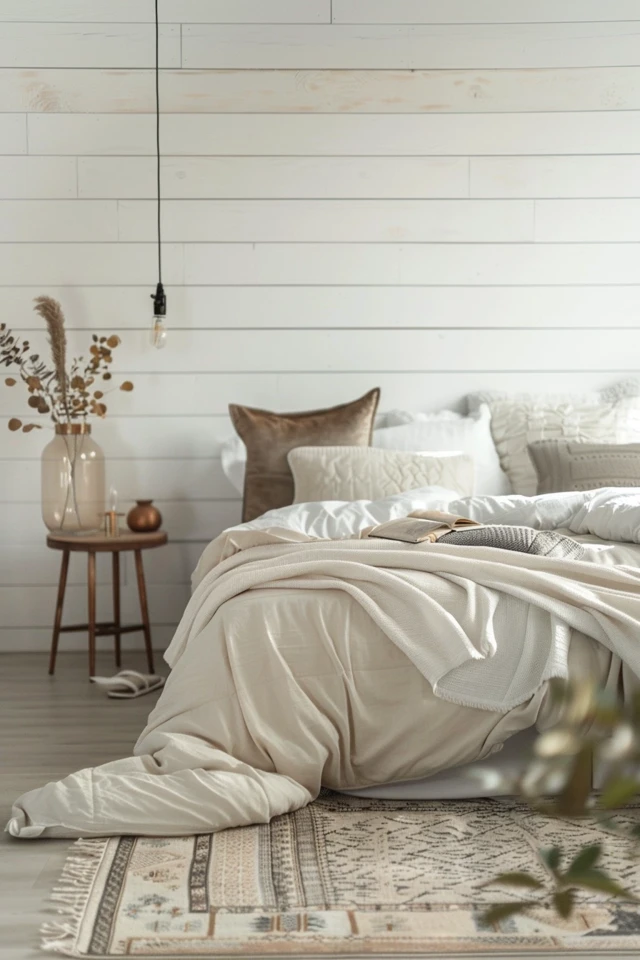
Chic Bedroom Shiplap Wall Ideas for a Cozy Space
There is a reason shiplap remains a staple in interior design long after the initial “farmhouse” craze settled down. It offers instant texture and architectural interest to a boxy room without the visual chaos of patterned wallpaper. In a bedroom specifically, it provides a sense of enclosure and warmth that paint simply cannot achieve on its own.
I often tell my clients that the bedroom should feel like an exhale at the end of the day. Using wood cladding or tongue-and-groove paneling creates a tactile layer that absorbs sound and softens the acoustics. It turns a plain drywall box into a customized retreat.
While many associate this material with rustic cottages, modern applications are sleek, moody, and sophisticated. If you are seeking visual inspiration, jump to our curated Picture Gallery at the end of the blog post to see these concepts in real rooms.
Choosing the Right Orientation and Scale
The first decision you need to make isn’t color; it is the direction and width of the boards. This single choice dictates how large or intimate the room feels. The physics of visual perception plays a huge role here.
Horizontal Installation
Horizontal lines naturally draw the eye side-to-side. If you are working with a smaller bedroom, running shiplap horizontally will make the wall appear wider.
This is the most traditional application. It evokes a sense of calm and stability because the lines mimic the horizon. However, you must be careful with low ceilings.
If your ceilings are standard 8-foot height, wide horizontal planks can sometimes make the ceiling feel lower. In this case, stick to a standard 5-inch reveal to keep the proportions balanced.
Vertical Installation
Vertical shiplap is my go-to trick for rooms with low ceilings or attic spaces with slanted rooflines. The vertical lines draw the eye upward, instantly creating the illusion of height.
This orientation feels more modern and less “nautical” than horizontal boards. It creates a rigid, tailored look that works exceptionally well behind a headboard.
Board Width Rules of Thumb
Scale is everything. If you use boards that are too narrow, the wall looks busy and striped. If they are too wide, you lose the texture.
- Standard: A 5 to 6-inch board face is the safest bet for most rooms.
- Modern: Go wider. An 8-inch or 10-inch board looks contemporary and less busy.
- Cottage/Vintage: A narrower 4-inch beadboard style fits historic homes best.
Color Palettes and Finishes for Mood
The days of painting every shiplap wall bright white are behind us. While white is timeless and crisp, using color on millwork elevates the design to a luxury level.
The Dark and Moody Approach
Bedrooms are primarily for sleeping, so I love leaning into dark colors that promote rest. Painting shiplap in charcoal, navy, or forest green creates a cocoon-like effect.
The texture of the gaps between boards catches the light, meaning a dark wall won’t look flat like a dark painted drywall might. Deep greens (like a dried thyme color) pair beautifully with leather headboards and brass sconces.
Sheen Levels Matter
This is a technical detail that ruins many DIY projects. Do not use high-gloss paint on bedroom shiplap unless you want it to look like plastic.
I recommend an eggshell or satin finish. Eggshell has just enough durability to be wiped down but is matte enough to hide imperfections in the wood. A flat matte finish looks velvety and expensive, but be warned: it marks up easily if you lean pillows against it.
Natural Wood Stains
For a Scandinavian or mid-century vibe, skip the paint. White oak shiplap or clear pine sealed with a matte poly brings organic warmth into the space.
If you choose natural wood, ensure the rest of the room stays airy. Use white bedding and neutral rugs to prevent the room from feeling like a sauna.
Common Mistakes + Fixes
Mistake: Installing baseboards before the shiplap.
Correction: Shiplap adds thickness to the wall. It should sit on top of the drywall but behind the baseboard. If you leave existing baseboards, the shiplap will stick out further than the trim, creating an awkward overhang. You must remove the baseboards, install the shiplap (stopping 1/2 inch from the floor), and then reinstall the baseboards over the shiplap.
Mistake: Not accounting for outlets.
Correction: Your electrical outlets will be sunken into the wall because of the added wood thickness. You need to buy “box extenders” from the hardware store. These are cheap plastic spacers that bring the outlet flush with your new wood wall. It’s a safety requirement, not just aesthetic.
Installation Realities: Material Choice and Durability
Before you head to the lumber yard, you need to choose your material substrate. This depends on your budget and your tolerance for “character.”
MDF vs. Real Pine
I specify MDF (Medium Density Fiberboard) for 90% of my painted projects.
- MDF Pros: It is perfectly smooth, has no knots to bleed through, and doesn’t warp as much as real wood. It paints beautifully.
- MDF Cons: It cannot be stained. It creates fine dust when cut.
- Pine Pros: It has real grain texture. It is rigid and durable. It is required if you want a stained look.
- Pine Cons: Knots will eventually bleed through paint (appearing as yellow circles) unless you use a shellac-based primer. Boards are often warped and require force to install straight.
Renters and Temporary Solutions
If you do not own your home, peel-and-stick shiplap wallpaper has come a long way. Look for textured vinyl options, not just flat printed paper.
Alternatively, you can use thin plywood strips adhered with small brad nails (no glue). This leaves only tiny holes to fill when you move out, similar to hanging pictures.
Pet and Kid Durability
Shiplap is much more durable than drywall. It withstands knocks from vacuum cleaners and toys. However, dust does settle in the grooves.
In a bedroom, this is usually manageable. A quick run with a vacuum brush attachment or a microfiber wand once a month keeps the ridges clean.
Final Checklist: What I’d Do in a Real Project
If I were designing your bedroom today, here is the exact workflow I would follow to ensure success.
- Measure Twice: Calculate square footage and add 15% for waste and bad cuts.
- Locate Studs: Mark all studs on the wall before covering them. You will need to nail into these for a secure hold.
- Prime the Wall: Paint the drywall a color matching your final finish where the seams will fall.
- Level the First Board: Gravity is your enemy. Use a long level (4-foot) to ensure your first board is perfectly straight. Do not trust the floor or ceiling to be level.
- Stagger Seams: If your wall is wider than your boards, stagger the cuts so seams don’t line up vertically. Keep seams at least 24 inches apart.
- Electrical Extenders: Install box extenders for all outlets and switches immediately.
- Caulk Corners: Only caulk the inside corners and where the wood meets the ceiling/baseboard. Do not caulk the horizontal lines between boards.
- Prime and Paint: Use a roller for the face and a brush for the grooves. Two coats are mandatory.
FAQs
Does shiplap make a room look smaller?
Generally, no. Because it adds texture and draws the eye along the lines (either up or across), it usually makes a room feel more expansive. However, painting it a very dark color in a room with no natural light can make it feel tighter, though cozier.
Is shiplap going out of style in 2024/2025?
The “farmhouse” distressed look is fading, but the material itself is timeless. Clean, modern applications (thinner lines, vertical orientation, moody colors) are very much on-trend. It is considered a standard architectural texture now, similar to crown molding.
How high should I hang sconces on a shiplap wall?
For bedside reading, mount sconces so the bulb is approximately 60 to 66 inches from the floor. If they are over a nightstand, center them over the table or just slightly outboard.
Can I install shiplap over textured walls?
Yes, this is one of its best benefits. You can install it directly over orange-peel or knockdown texture without sanding, as long as the high spots aren’t extreme (over 1/4 inch). The wood hides everything.
Conclusion
Adding shiplap to your bedroom is one of the highest-impact changes you can make with a moderate budget. It bridges the gap between construction and decoration, giving your room a finished, custom feel that paint alone cannot provide.
Whether you opt for a vertical application in a soothing sage green or a classic white horizontal wrap, the key is attention to detail. Mind your spacing, choose the right sheen, and layer in soft textiles to keep the room inviting. It transforms a place to sleep into a place to recharge.
Picture Gallery


