
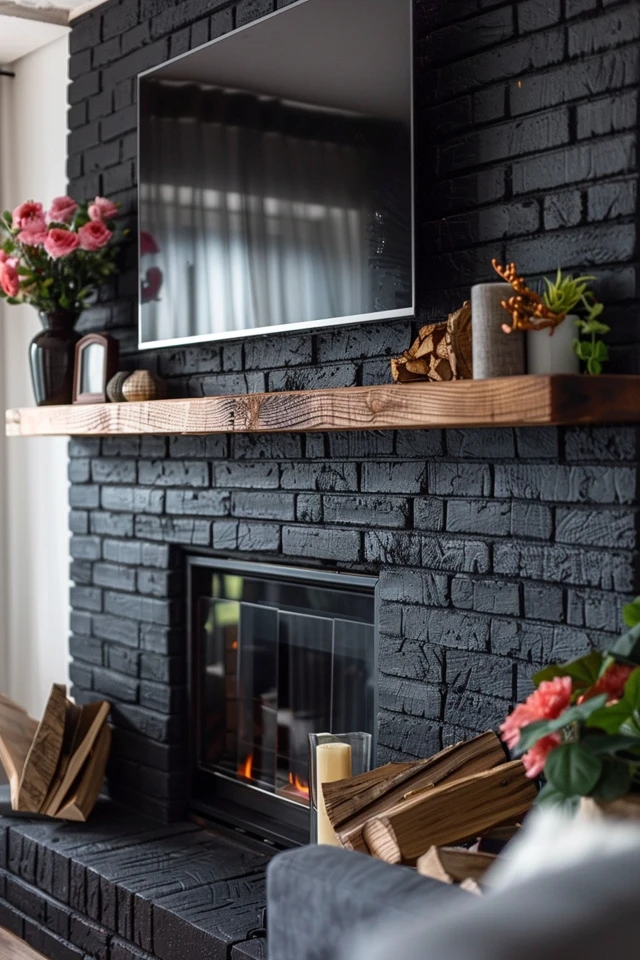
Chic Black Brick Fireplace Ideas for Cozy Homes
A fireplace is naturally the focal point of any living room, but a standard red or beige brick surround can sometimes feel dated or disjointed from a modern aesthetic. Painting or staining brick black is one of the most effective, high-impact updates you can make to a space. It instantly grounds the room, creates a sophisticated backdrop for decor, and can actually make a space feel cozier rather than darker.
Many homeowners hesitate to take the plunge because black feels permanent and intimidating. However, when executed correctly with the right finish and styling, a black fireplace serves as a stunning anchor that elevates everything around it. It works across design styles, from modern farmhouse to moody maximalism and industrial lofts.
If you are looking for visual inspiration, you can skip strictly to the Picture Gallery at the end of this blog post. For those ready to roll up their sleeves and transform their space, let’s dive into the technical details and design rules that will ensure your project is a success.
Choosing the Right Shade and Finish
The biggest misconception about black paint is that there is only one option. In reality, black comes in a spectrum of undertones, ranging from cool blues and greens to warm browns and charcoals.
If your room has a lot of cool natural light (north-facing windows), a stark, true black like Sherwin Williams Tricorn Black can look incredibly sharp and architectural. If your room relies on warm artificial lighting or faces south, a softer black with charcoal undertones, like Benjamin Moore Wrought Iron or Sherwin Williams Iron Ore, often reads as more organic and inviting.
The Gloss Level Matters
The sheen you choose determines how the fireplace interacts with light and how easy it is to clean.
- Flat or Matte: This is generally the designer’s choice for older brick. It hides surface imperfections, chips, and uneven mortar lines. However, it can be harder to wipe down if you have a wood-burning fireplace that generates soot.
- Eggshell or Satin: This offers a slight reflectiveness that makes the black look richer. It is much easier to wipe clean, making it ideal for active households.
- Semi-Gloss: Generally avoid this for brick. High shine on uneven textures often ends up looking like plastic or fresh tar.
Designer’s Note: The “Black Hole” Effect
One specific risk with black fireplaces is creating a “black hole” in your living room where light goes to die. To prevent this, I always recommend testing your paint swatch at night with your lamps on, not just during the day. If the black looks flat and lifeless, you may need a shade with slightly more light reflectance value (LRV) or a satin finish to catch the glow of the fire.
Prep Work and Application: Paint vs. Stain
There are two primary ways to darken your brick: masonry paint and brick stain. Understanding the difference is vital for the longevity of your finish.
Masonry Paint
Paint sits on top of the brick, creating a uniform, opaque film. This is the best option if your brick has been previously painted or if you dislike the texture of your current brick and want to smooth it out visually.
The Process:
- Deep Clean: Vacuum the brick with a brush attachment. Scrub with a solution of TSP (Trisodium Phosphate) and water to remove decades of soot and grease. Paint will peel if it bonds to dust, not brick.
- Prime: Use a high-quality masonry primer. Brick is porous and “thirsty.” Without primer, it will soak up three coats of expensive topcoat before looking even.
- Paint: Use a long-nap roller (at least 3/4 inch) to get into the crevices, followed by a brush for the mortar lines.
Brick Stain
Stain penetrates the porous surface rather than sitting on top. This is my preferred method for maintaining the natural texture and character of the brick. It creates a breathable surface that won’t chip or peel over time.
The Process:
- Absorbency Test: Splash water on your brick. If it beads up, there is a sealer present, and stain won’t work. If it soaks in immediately, you are good to go.
- Application: Stain is usually thinner than paint. You apply it with a brush and often wipe away excess with a rag.
- Opacity Control: You can layer stain to get darker results, but it will always look more “material” and less “coated” than paint.
Common Mistakes + Fixes
- Mistake: Painting the inside of the firebox with standard wall paint. Standard latex paint is flammable and will peel or off-gas when heated.
- Correction: Use High-Heat Paint (rated for 1,200°F or higher) specifically for the interior firebox. This usually comes in a flat black spray or brush-on can.
- Mistake: Ignoring the mortar lines.
- Correction: When using black, missed spots in the mortar glare white and look sloppy. Use a stiff angled sash brush to jab paint into deep mortar pockets before rolling the face of the brick.
Styling: Balancing the Visual Weight
A black fireplace has significant visual weight. To prevent it from dominating the room aggressively, you must balance it with the right decor, textures, and scale.
The Rule of Contrast
Dark objects disappear against a black background. If you place a black iron clock or dark bronze candlesticks on a black mantle, they will vanish.
What I’d do in a real project:
- Metals: Use unlacquered brass, polished nickel, or gold. These reflect light and pop against the dark backdrop.
- Botanicals: Fresh greenery or dried wheat stems in light ceramic vases provide organic relief to the heavy masonry.
- Art: Choose artwork with a thick white mat board. The white creates a buffer between the art and the brick, drawing the eye in.
Mantle Rules of Thumb
If you are adding a wood mantle to a black fireplace, the tone of the wood is critical.
- Walnut / Dark Stain: Creates a moody, monochromatic, sophisticated look.
- White Oak / Blonde Wood: Creates a modern, high-contrast, Scandinavian or Japandi aesthetic.
- Rough-Hewn Reclaimed Beam: leans into the Modern Farmhouse or Rustic Industrial vibe.
Placement Specs:
Ideally, a mantle should sit 54 to 60 inches from the floor, depending on ceiling height. Ensure there is at least 12 inches of clearance between the top of the firebox opening and the bottom of the mantle (check your local fire codes, as this varies by municipality).
Lighting Your Dark Feature
Lighting is the secret weapon that makes a black fireplace look expensive rather than just dark. Because black absorbs light, standard ambient room lighting is often insufficient to showcase the texture of the brick.
Sconces and Picture Lights
Installing sconces on the brick face is a game-changer. If you cannot hardwire electricity into existing masonry, use rechargeable “puck light” sconces or battery-operated picture lights attached to artwork.
Placement Guide:
- Sconces: Mount them approximately 60 to 66 inches from the floor, flanking artwork or a mirror.
- Picture Lights: Mount directly above the frame of your artwork.
The Mirror Trick
Hanging a mirror over a black fireplace is a classic move for a reason. It reflects the light from the opposite side of the room, effectively “breaking” the solid wall of black.
However, be mindful of what the mirror reflects. If it reflects a ceiling fan or a messy kitchen, it distracts. Tilt the mirror slightly downward (use a wire on the back to adjust the angle) so it reflects the furniture layout instead of the ceiling.
The Hearth and Floor Connection
The hearth acts as the transitional zone between your black fireplace and the rest of the room. This area requires careful consideration of materials and safety.
Rug Spacing
Never push a rug all the way up to the hearth. It looks cramped and poses a safety risk for wood-burning fires.
Designer Rule: Leave 12 to 18 inches of exposed floor between the hearth edge and your area rug. This “breathing room” allows the fireplace to stand as its own architectural element.
Hearth Materials
If you are painting the vertical brick, you must decide what to do with the horizontal hearth.
- Painted Hearth: You can paint the hearth with special floor/porch paint, but be warned: ash, wood, and foot traffic will scratch it quickly.
- Stone Slab: To upgrade the look, cover the brick hearth with a single slab of honed slate, black granite, or limestone. This looks much more premium than painted brick.
- Tile Overlay: Tiling over a brick hearth is a DIY-friendly weekend project. A matte black hexagonal tile or a high-contrast patterned cement tile pairs beautifully with a black surround.
Final Checklist: The Project Roadmap
Before you buy your first gallon of paint, run through this checklist to ensure you have accounted for all variables.
Planning Phase:
- Check if the brick has a sealer (water test).
- Decide on finish: Paint (solid) vs. Stain (textured).
- Select sheen: Matte, Eggshell, or Satin.
- Inspect mortar: Repair any crumbling joints with fresh mortar or caulk before painting.
Preparation Phase:
- Scrub brick with TSP and wire brush.
- Vacuum thoroughly.
- Tape off walls, floors, and mantle with painter’s tape.
- Buy a high-quality masonry primer.
Execution Phase:
- Prime the brick (let cure fully, usually 24 hours).
- Paint the firebox interior with High-Heat spray paint.
- Cut in mortar lines with a brush.
- Roll the brick face.
- Apply second coat if needed.
Styling Phase:
- Reinstall or style mantle.
- Place hearth accessories (brass tools, log holder).
- Position rug 12-18 inches away.
FAQs
Can I paint my fireplace black if my room is small?
Yes, absolutely. A black fireplace in a small room draws the eye to a single focal point, which actually simplifies the visual clutter. To keep the room feeling airy, keep the surrounding walls light (white, cream, or pale greige) and use a large mirror on the mantle to bounce light around.
Is painting brick reversible?
Generally, no. Once you apply standard latex or acrylic paint to brick, removing it is an incredibly difficult, labor-intensive, and expensive process that often damages the brick surface. If you are a renter or unsure, consider using a peelable rubber coating (though heat resistance is a concern) or simply placing a large fire screen to cover most of the brick.
How do I clean a black painted fireplace?
Dust shows up prominently on black surfaces. Use a soft brush attachment on your vacuum cleaner to remove dust from the rough texture. For soot marks, a damp microfiber cloth with a drop of mild dish soap works well. Avoid abrasive sponges, which can buff the paint and create shiny spots on a matte finish.
Does the type of fire I have change the paint I should use?
For the exterior surround, standard masonry paint is fine for gas, electric, and wood fireplaces as the exterior brick rarely gets hot enough to damage paint. For the interior firebox, you must use high-heat paint regardless of the fuel source. If you have a wood stove insert, be careful around the metal trim—use high-heat paint for any metal that gets hot.
Conclusion
Transforming your fireplace with black paint or stain is a bold move that pays off in style points. It redefines the architecture of your room, providing a modern, chic backdrop that makes furniture and art pop. While the preparation takes elbow grease, the actual painting is achievable for almost any DIY skill level.
Remember that the success of this project lies in the prep work and the styling. Don’t skip the cleaning step, and don’t be afraid to experiment with lighting to ensure your new focal point glows rather than disappears. With the right approach, your black fireplace will become the coziest spot in the house.
Picture Gallery


