
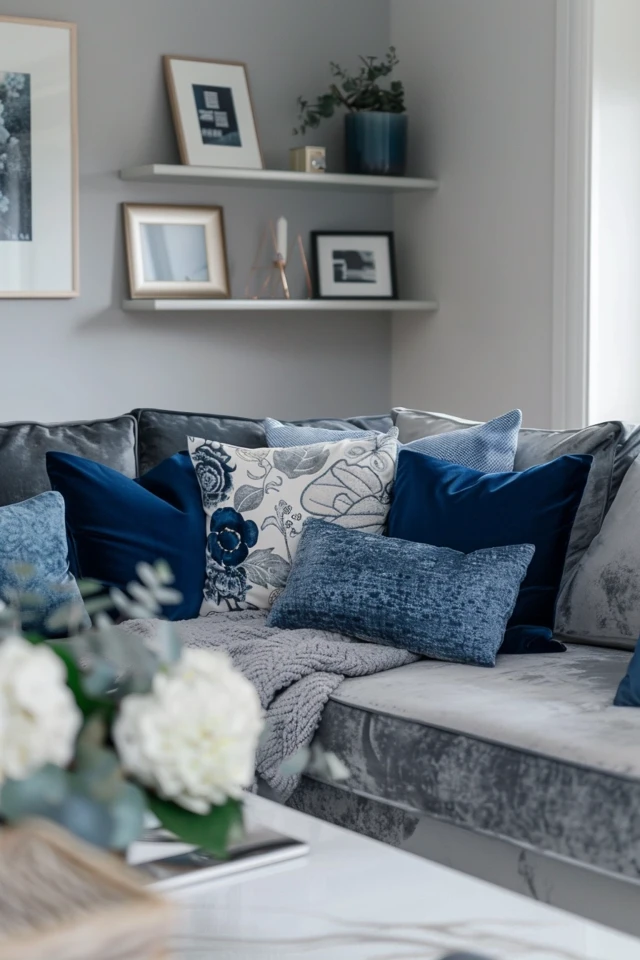
Chic Blue & Grey Living Room Ideas for Your Home
Blue and grey is one of the most enduring color combinations in interior design history, yet it is also one of the easiest to mess up. When executed correctly, this pairing feels sophisticated, serene, and expensive. However, without the right textures or lighting, it can quickly turn a living room into a cold, unwelcoming space that feels more like a corporate lobby than a home.
I remember a project I worked on in a high-rise downtown where the client loved navy blue but was terrified of the room feeling dark. We balanced deep indigo walls with a pale dove-grey sectional and injected massive amounts of warmth through walnut wood tones and brass accents. The result was moody but incredibly cozy, proving that this palette is versatile enough for almost any architectural style.
In this guide, I will walk you through exactly how to layer these colors, select the right furniture scale, and avoid the common pitfalls of cool-toned rooms. If you are looking for visual inspiration, I have curated a comprehensive picture gallery at the end of this post to spark your imagination.
1. Mastering the Undertones: Paint and Palette Foundation
The biggest mistake homeowners make with blue and grey living rooms is ignoring undertones. Grey is rarely just a mix of black and white; it usually carries invisible hues of blue, green, or violet. If you pair a “cool” grey paint with a “warm” blue sofa, the grey will suddenly look dirty or pink.
To get this right, you need to decide if you are leaning into a cool, crisp aesthetic or a warmer, muddier vibe. For a crisp look, choose a grey with blue undertones and pair it with a true navy. For a cozier vibe, look for “greige” (grey-beige) paint colors and pair them with slate blue or teal.
Lighting plays a massive role here. If you have a north-facing room, the light will be naturally blue and cool. Avoid cool greys here, or your room will feel like an icebox. Instead, use a grey with a yellow or brown base to counteract the chill.
Designer’s Note: The 24-Hour Rule
Never paint a room based on a swatch you looked at for five minutes in a hardware store. Paint looks drastically different at 10:00 AM than it does at 8:00 PM.
What I do in every project:
- Buy sample pots of your top three grey choices.
- Paint large 2×2 foot poster boards, not the wall directly.
- Move these boards around the room for 24 hours to see how the blue and grey interact with your specific lighting conditions.
2. Furniture Selection and Layout Strategy
Once your palette is set, you need to select the anchor pieces. In a blue and grey living room, I usually recommend choosing one color for the “heavy” items and the other for the accents. For example, a charcoal grey sectional is a safe investment piece that hides stains well, allowing you to bring in blue through armchairs or ottomans.
Scale is just as important as color. A common issue with modern grey sofas is that they can look boxy and generic. To combat this, look for sofas with distinct details like tufting, exposed wooden legs, or a unique silhouette. This adds character that plain grey fabric often lacks.
When laying out your furniture, ensure you maintain proper flow. You need 30 to 36 inches of clear walking space around your main seating area. If you are adding a blue accent chair, make sure it isn’t shoved into a corner; give it room to breathe.
Common Mistake: The “Furniture Showroom” Look
The Mistake: Buying a matching grey sofa, grey loveseat, and grey chair set. This makes the room feel flat and uninspired.
The Fix: Break up the set. If you have a grey sofa, buy two blue club chairs. Or, if you have a navy velvet sofa, pair it with light grey leather armchairs. Mixing materials and colors creates a custom, high-end look.
3. Layering Textures to add Warmth
The danger of a blue and grey palette is that both colors are visually “receding,” meaning they can feel distant or cold. Texture is the secret weapon to fixing this. You need to introduce materials that beg to be touched.
If your sofa is a flat weave grey linen, your throw pillows should be chunky knit wool, velvet, or faux fur. If your walls are a matte navy, consider a grey rug with a high pile or a silk blend that catches the light. This contrast prevents the room from looking one-dimensional.
Don’t forget the hard surfaces. A glass coffee table in a blue and grey room can sometimes feel too clinical. Instead, I often introduce wood elements. A warm walnut coffee table or oak side tables bring a necessary organic element that grounds the cool colors.
Checklist: The Texture Mix
To ensure your room feels finished, try to include at least three of the following textures:
- Velvet: Adds depth and luxury, especially in navy blue.
- Leather: A cognac leather ottoman looks incredible against blue and grey.
- Metal: Brass or matte black hardware.
- Natural Fiber: A jute rug layered under a patterned blue rug.
- Wood: Warm timber tones to counteract the cool palette.
4. Lighting and Metallic Finishes
Lighting temperature will make or break a blue and grey room. Because these colors sit on the cooler side of the spectrum, using “daylight” bulbs (5000K) will make your living room feel like a hospital waiting area. You want to aim for 2700K to 3000K bulbs, which provide a warm, inviting glow.
When it comes to metal finishes, you have two distinct paths. Polished chrome or nickel will create a very modern, sleek, and high-contrast glam look. However, this can feel chilly.
My personal preference is to use unlacquered brass, antique gold, or bronze. The yellow and red undertones in these metals are the direct complement to blue, making them pop beautifully. A brass floor lamp against a navy wall is a timeless design moment that adds instant heat to the space.
Pro Tip: The Layered Lighting Plan
Never rely on a single overhead light. For a standard 15×20 living room, you should aim for three light sources at different heights:
- Ambient: A chandelier or recessed lighting on a dimmer switch.
- Task: A floor lamp near the reading chair or table lamps on end tables.
- Accent: Picture lights over artwork or LED strips in bookshelves to highlight blue accessories.
5. Real Life Functionality: Kids, Pets, and Upkeep
Let’s talk about living in this room. One of the reasons I love grey and blue is their practicality. Dark blue and charcoal grey are incredibly forgiving colors for families with kids or pets. They hide denim transfer, ink stains, and dark pet fur much better than beige or white.
However, if you have a white dog or cat, a navy velvet sofa will be a nightmare. In that specific case, a light grey woven fabric is a smarter choice as it camouflages light shedding. Always consider the color of your pet’s fur when choosing your primary upholstery.
For rugs, durability is key. In high-traffic living rooms, I avoid solid blue or solid grey rugs because they show every crumb and piece of lint. Instead, opt for a patterned rug that incorporates both colors. A vintage-style distressed rug or a geometric pattern will hide life’s messes until vacuum day.
Window Treatment Rules
Drapery adds softness and sound dampening.
- Height: Mount your curtain rod 4 to 6 inches above the window frame (or just below the ceiling molding) to make the room look taller.
- Length: Panels should just “kiss” the floor. Avoid curtains that hover 2 inches above the ground; it looks like high-water pants and ruins the scale.
- Color: If walls are grey, try navy drapes for drama. If walls are blue, soft grey drapes lighten the mood.
Final Checklist: Creating Your Blue & Grey Oasis
Before you start buying, run your plan through this designer checklist to ensure you haven’t missed any critical elements.
1. The Palette Check
Does your grey paint have the right undertone for your lighting? Have you tested a swatch for 24 hours?
2. The Warmth Factor
Do you have wood tones or warm metals (brass/gold) included? If everything is grey, blue, and chrome, it will feel too cold.
3. The Texture Audit
Do you have a mix of soft (velvet/wool) and hard (wood/metal) surfaces?
4. The Scale Confirmation
Is your rug large enough? The front legs of all furniture pieces should sit on the rug. For most living rooms, an 8×10 is the minimum; a 9×12 is usually better.
5. The Lifestyle Test
Are the fabrics suitable for your household? Have you chosen performance fabrics if you have toddlers or puppies?
FAQs
Is grey still in style for living rooms?
Absolutely, but the type of grey has shifted. The cool, flat “flipper grey” of the early 2010s is out. It has been replaced by warmer, richer greys and greiges (grey-beige) that feel more organic and welcoming. When paired with blue, it remains a classic combination that transcends trends.
What wood tone goes best with blue and grey?
Walnut is my top choice. The rich, dark warmth of walnut contrasts beautifully with both navy and light grey. White oak is also excellent if you are going for a “Coastal” or “Scandi” look, as it keeps the room feeling airy and light. Avoid woods with heavy red or orange lacquers, like cherry, as they can look dated against modern greys.
Can I mix different shades of blue in one room?
Yes, and you should! A room with only one shade of blue looks flat. Layering navy, teal, slate, and sky blue adds depth. The trick is to ensure they share a similar “dustiness” or saturation level so they feel like they belong to the same family.
How do I stop my blue and grey room from looking gloomy?
Lighting and white space. Ensure you have adequate lamp lighting (2700K temperature). Also, introduce crisp white elements—like white matting on artwork, white trim, or a white marble coffee table—to break up the darker colors and reflect light.
Conclusion
Designing a chic blue and grey living room is about finding the balance between cool sophistication and warm comfort. By paying attention to paint undertones, layering diverse textures, and selecting the right scale for your furniture, you can create a space that feels both stylish and deeply livable.
Don’t be afraid to experiment with darker shades of blue for a cozy, cocoon-like effect, or lighter greys for an airy, open feel. The beauty of this palette lies in its versatility. Trust your eye, measure twice, and prioritize materials that feel good to the touch.
Picture Gallery


