
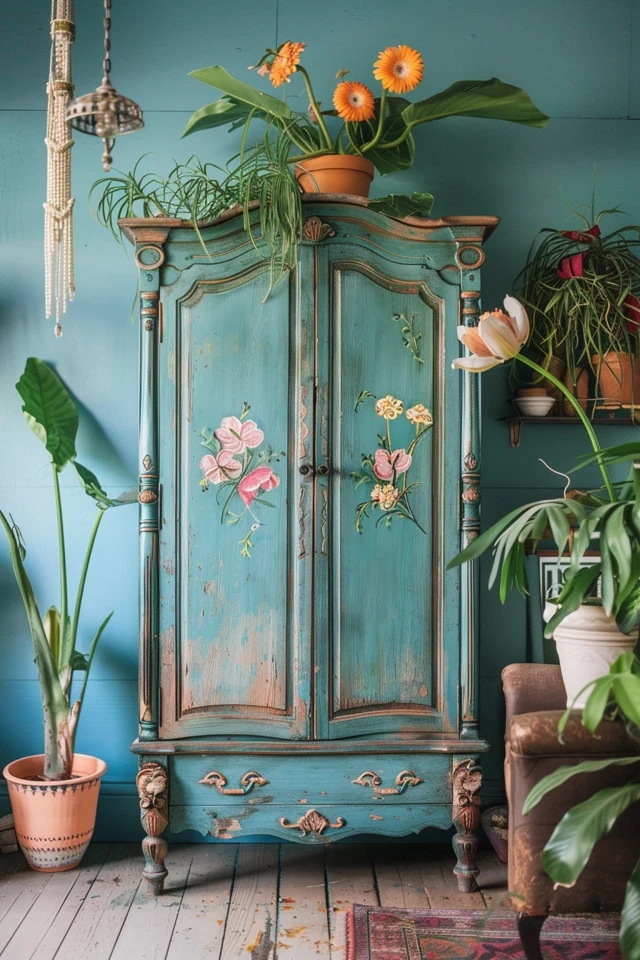
Chic Chalk Paint Armoire Ideas for Home Décor
An armoire is often the command center of a room, providing massive storage while acting as a primary focal point. However, many of us inherit these pieces in heavy, dated orange oak or dark mahogany that sucks the light right out of a space. To help you visualize the transformation, I have curated a comprehensive Picture Gallery at the end of the blog post with stunning before-and-after examples.
Chalk paint is the great equalizer in the world of furniture restoration. It allows you to take a piece that feels imposing and dated and turn it into something architectural and soft. Because the finish is matte and velvety, it minimizes the visual weight of large furniture.
Whether you are looking to create a French country linen closet or a moody, modern bar cabinet, the process is accessible but requires specific techniques to last. In this guide, I will walk you through design decisions, application methods, and the crucial finishing steps that many DIYers skip.
Why Chalk Paint is the Designer’s Choice for Large Furniture
Chalk-style paint is distinct from latex or acrylic paint because of its high mineral content. This composition allows it to adhere to almost any surface without extensive sanding.
For an armoire, which has a massive surface area, this saves hours of labor. The finish dries to a flat, chalky matte that hides imperfections in old wood. If your vintage piece has dings or scratches, a high-gloss paint would highlight them, but chalk paint blends them into the character of the piece.
Furthermore, chalk paint is porous until sealed. This allows you to manipulate the finish easily. You can wet-distress it to reveal the wood underneath or layer different colors to create depth that factory finishes cannot replicate.
Designer’s Note: The Scale Factor
In my projects, I often see clients paint a massive armoire in a bright, saturated color, only to regret it immediately. Remember scale. A color that looks cute on a small nightstand can feel overwhelming on a 7-foot tall cabinet.
If you are painting a large armoire for a small room, stick to neutrals or muted tones. If you want a bold color, ensure the room has high ceilings or ample natural light to balance the visual weight.
Choosing Your Style: Techniques and Color Palettes
Before you dip your brush, you need to decide on the “vibe.” An armoire is too big to be stylistically ambiguous. It will set the tone for the entire room.
The French Provincial Look
This is the most classic application for chalk paint. It mimics the look of antiques found in the south of France.
- Colors: Creamy whites, soft greys, or pale blues.
- Technique: Apply two coats of solid color. Once dry, use fine-grit sandpaper (220-grit) to gently sand the edges, raised detailing, and corners. This mimics natural wear.
- Waxing: Finish with clear wax, then apply dark antique wax into the crevices to highlight the carvings.
The Modern Matte Finish
Chalk paint doesn’t have to look rustic. You can achieve a sleek, modern look that fits transitional homes.
- Colors: Charcoal, matte black, navy, or forest green.
- Technique: Use a high-quality oval brush or a sprayer to minimize brush strokes. Do not distress.
- Hardware: Swap out wooden knobs for oversized brass or matte black pulls. Modern hardware changes the entire personality of the piece.
The Textured Boho Wash
This style works well if you want the wood grain to peek through slightly. It feels organic and relaxed.
- Colors: Terracotta, sage green, or teal.
- Technique: Dilute the paint with water (about 10-20%). Brush it on and wipe it back with a lint-free rag before it dries completely.
- Result: This creates a semi-transparent stain effect rather than a solid opaque coat.
Common Mistakes + Fixes
Mistake: Skipping the clean-up because the can says “no prep.”
Fix: Furniture polish and oils from decades of use will repel paint. Always clean the piece with a degreaser or TSP (Trisodium Phosphate) substitute before painting.
Mistake: “Bleed-through” on cherry or mahogany wood.
Fix: If you see pink or yellow stains seeping through your white paint, stop. You have tannin bleed. You must apply a coat of shellac-based primer to seal the wood tannins before continuing with chalk paint.
Step-by-Step: The Professional Application Process
While the marketing claims you can slap this paint on anything, a professional finish requires a specific workflow. Following this order ensures the paint cures hard and doesn’t chip off next month.
1. Structural Prep and Cleaning
Remove all hardware. Don’t try to paint around handles; it never looks clean. Remove the doors if possible. This prevents drips and allows you to paint the edges thoroughly.
Scrub the piece with TSP and water. Rinse with clean water and let it dry completely. If there is loose veneer, glue it down or fill it with wood filler now.
2. The First Coat
Use a natural bristle brush or a specialized synthetic oval brush. These hold more paint than standard sash brushes.
Paint in the direction of the wood grain. The first coat does not need to look perfect. It will look streaky. This is normal. The goal here is adhesion, not full coverage.
3. The Second Coat and Smoothing
Once the first coat is dry (usually 30-60 minutes), apply the second coat. This provides your true color opacity.
If you want a super smooth finish, use a high-grit sanding sponge (400-grit) lightly over the dried paint before sealing. This knocks down ridges and makes the finish feel like butter.
4. Interior Considerations
Decide if you are painting the inside. If the armoire will be left open (like a bookshelf or coffee bar), paint the interior a contrasting color for a pop of interest.
If the doors will stay closed, you can leave the wood natural or simply condition it with hemp oil to refresh the scent and shine.
Sealing: Wax vs. Polyurethane
Chalk paint is porous. If you spill water on unsealed chalk paint, it will stain. You must seal it. The choice depends on how you use the armoire.
When to Use Wax
Wax is the traditional choice. It creates a soft, low-luster sheen that looks authentic on antiques.
- Best for: Guest rooms, decorative storage, or pieces that won’t be touched daily.
- Application: Brush on clear wax, wipe off the excess with a clean cloth. Buff it when dry for shine.
- Maintenance: You may need to re-wax every year or two.
When to Use Polyurethane (Water-Based)
If this armoire is in a high-traffic area, wax is not durable enough.
- Best for: Kitchen pantries, coat closets, kid’s rooms, or media centers.
- Application: Use a matte or satin water-based polycrylic. Do not use oil-based poly, as it will yellow over light paint colors.
- Durability: This creates a hard, wipeable shell that resists scratches and fingerprints.
Styling the Armoire in Your Space
Once the piece is painted and cured, placement is key. An armoire is a dominant object, so it dictates the room’s layout.
Placement Rules of Thumb
Clearance: Ensure you have at least 36 to 48 inches of clearance in front of the armoire. You need to be able to swing the doors open fully without hitting the sofa or blocking a walkway.
Ceiling Height: A tall armoire needs breathing room. Ideally, there should be at least 6 to 12 inches of space between the top of the cabinet and the ceiling. If it touches the ceiling, it looks cramped.
Rug Interaction: In a living room, place the armoire against the wall. Do not put the front legs on the area rug unless the rug is massive. Leaving the piece fully off the rug usually creates a better sense of boundaries in the room.
Internal Organization and Styling
If you have removed the doors or have glass inserts, the inside matters as much as the outside.
- Wallpaper: Apply a peel-and-stick wallpaper to the back panel of the interior. A subtle floral or geometric print adds incredible depth.
- Lighting: Install battery-operated puck lights or LED strips under the shelves. This turns a dark cabinet into a display case.
- Baskets: Use uniform baskets (woven seagrass or wire) on the lower shelves to hide clutter. This keeps the visual noise down while maintaining utility.
What I’d Do in a Real Project: Mini Checklist
If I were hired to revamp a client’s armoire today, this is the exact protocol I would follow to ensure professional results.
Planning Phase
- Measure the space to ensure the armoire fits without blocking flow.
- Test paint swatches on a piece of poster board in the room to see how the lighting affects the color.
- Purchase new hardware beforehand to ensure the existing holes match, or fill the old holes before painting.
Execution Phase
- Clean with TSP. This is non-negotiable.
- Apply one coat of stain-blocking primer (like BIN Shellac) if the wood is dark cherry or mahogany.
- Apply two coats of high-quality chalk style paint.
- Lightly sand with a 400-grit pad for a smooth touch.
- Seal with two coats of matte water-based topcoat for durability (preferred over wax for modern homes).
Styling Phase
- Install new hardware.
- Place felt pads under the feet to protect the floor.
- Style the shelves with a mix of books (vertical and horizontal stacks) and organic objects.
Frequently Asked Questions
Do I really need to wax chalk paint?
Yes, or you must seal it with a topcoat. Unsealed chalk paint will absorb oils from your hands, dust, and spills. It will look dirty very quickly and cannot be cleaned effectively without removing the paint.
Can I paint over an armoire that is already painted?
Yes. Just give the old paint a good cleaning and a light scuff sand with medium-grit sandpaper to give the new paint some “tooth” to grab onto.
How much paint do I need for a large armoire?
For a standard large armoire (approx. 4ft wide by 6ft tall), one quart (approx. 1 liter) of chalk paint is usually sufficient for two coats. If you are painting the interior as well, buy two quarts.
Why is my white paint turning yellow?
This is “bleed-through.” Tannins from the wood are leaching into the paint. You need to seal the area with a shellac-based primer (oil-based or alcohol-based) and then repaint. Water-based primers usually won’t stop this.
How long does it take to cure?
Chalk paint dries to the touch in an hour, but it takes about 21 to 30 days to fully “cure” or harden. Be gentle with the piece for the first month. Don’t place heavy objects or drag items across the surface during this time.
Conclusion
Refinishing an armoire with chalk paint is one of the most high-impact DIY projects you can undertake. It saves a functional piece of furniture from the landfill and allows you to customize your home’s storage to fit your exact aesthetic.
Whether you choose a distressed French farmhouse look or a sleek, solid color, the key is in the preparation and the finishing. Don’t rush the cleaning, and choose the sealer that fits your lifestyle.
With the right color and hardware, that hulking orange oak cabinet can become the most elegant feature in your room. It is about seeing the potential in the shape and structure, and letting the paint do the heavy lifting.
Picture Gallery


