
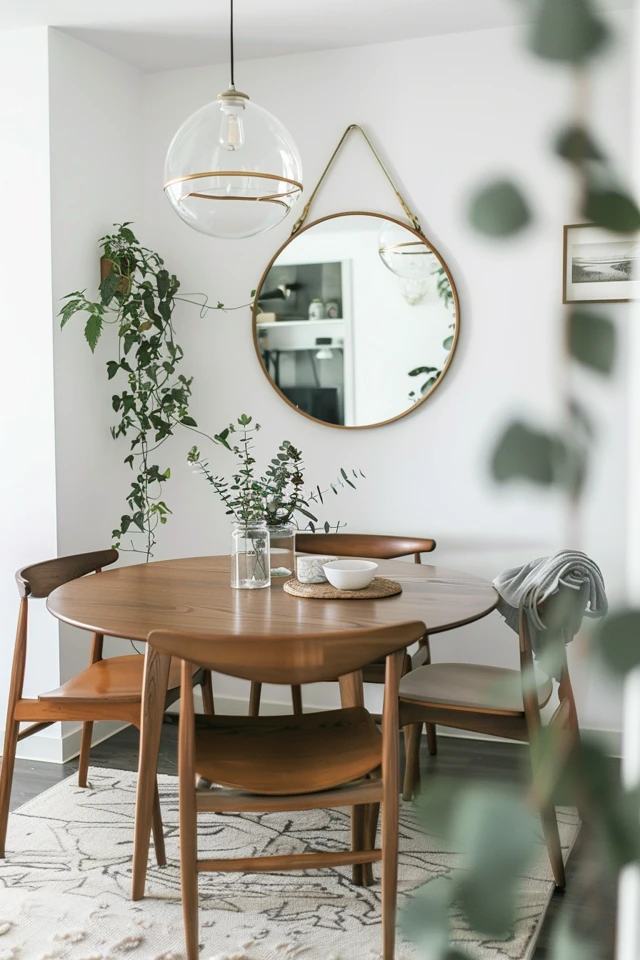
Chic Dining Room Wall Mirror Ideas to Enchant
Dining rooms often present a unique challenge in home design. Unlike a living room centered around a television or a fireplace, the dining room is centered around interaction and atmosphere. One of the most powerful tools in my design arsenal to elevate this space is the strategic use of mirrors.
A well-placed mirror does far more than fill empty wall space. It acts as a kinetic piece of art, manipulating light and artificially expanding the square footage of the room. I recall a project in a cramped, windowless urban apartment where we installed a massive, antiqued floor mirror horizontally at chair-rail height. Suddenly, the room felt like it had a grand window overlooking a shadowy garden, completely transforming the dining experience from claustrophobic to intimate. For a visual feast of inspiration, be sure to scroll down to the Picture Gallery at the end of the blog post.
However, selecting and placing a dining room mirror requires more than just picking a pretty frame. It involves precise math regarding reflection angles, scale relative to your furniture, and careful coordination with your lighting fixtures. In this guide, I will walk you through the technical and stylistic decisions required to use mirrors to their full enchanting potential.
Mastering Scale and Vertical Placement
The most common mistake I see in DIY dining room designs is a mirror that looks like a postage stamp floating on a massive wall. Scale is the single most important factor in making a mirror look expensive and intentional.
When hanging a mirror above a sideboard, buffet, or console table, you must respect the rule of thirds. Ideally, the mirror should span about two-thirds to three-quarters of the width of the furniture piece below it. If your sideboard is 60 inches wide, look for a mirror (or a set of mirrors) that totals roughly 40 to 45 inches in width. If the mirror is too small, the furniture will swallow it; if it is wider than the furniture, the room will feel top-heavy and unbalanced.
Vertical placement is equally critical and often botched. A good rule of thumb is to leave 4 to 6 inches of breathing room between the top of your sideboard and the bottom of the mirror frame. You want a connection between the two pieces so they read as a single vignette, but not so close that they feel crowded.
If you are hanging a mirror on a blank wall without furniture beneath it, the center of the mirror should sit at eye level. Standard eye level is usually defined as 57 to 60 inches from the finished floor. However, in a dining room, people are mostly sitting. You may want to lower that center point slightly—to about 54 or 56 inches—so that seated guests can see the reflection of the room rather than just the ceiling.
Designer’s Note: The Reflection Trap
Before you drill a single hole, hold the mirror up (or have a helper do it) and sit in a dining chair. What do you see? If the mirror reflects the kitchen trash can, a bathroom door, or a clutter pile, do not hang it there. A mirror doubles whatever it faces. Aim to reflect a chandelier, a piece of art on the opposite wall, or a window with a view.
Shape Dynamics and Room Architecture
The shape of your mirror can either reinforce the architecture of your room or soften it. Most dining rooms are full of rectangles: a rectangular table, a rectangular rug, rectangular windows, and a rectangular server. This is often referred to as “hardscape” dominance.
To break up this monotony, I frequently specify round or oval mirrors. A large circular mirror introduces softness and fluidity that counteracts the sharp corners of a dining table. This is particularly effective in smaller dining nooks where you want the energy to flow around the space rather than hitting hard stops.
Conversely, if you have a round dining table, a square or rectangular mirror can provide necessary structure. It acts as an anchor, grounding the floating nature of a round table layout.
For rooms with high ceilings, consider vertical shapes with an arch top. Arched mirrors mimic the shape of grand windows and draw the eye upward, emphasizing the height of the room. If you have low ceilings (8 feet or under), horizontal landscape mirrors are your best friend. They stretch the wall visually, making the room feel wider and deeper than it actually is.
Common Mistakes + Fixes
- Mistake: Using a single small mirror on a long wall.
- Fix: If you love a smaller mirror, buy two or three of them. Hang them side-by-side with 2 to 4 inches of spacing between them. This creates a “triptych” effect that commands the wall just as well as one massive piece.
- Mistake: Ignoring the frame depth.
- Fix: In a narrow dining room, avoid deep, chunky frames that protrude 3 or 4 inches from the wall. Guests walking past might bump into them. Stick to flush mounts or low-profile frames in tight circulation paths.
Materials, Finishes, and Durability
The finish of your mirror frame acts as the “jewelry” of the dining room. It is essential to coordinate this with your light fixture, but you do not need to match it perfectly. In fact, I prefer when they don’t match exactly.
If you have a brass chandelier, a matte black or dark bronze mirror frame creates a sophisticated, modern contrast. If your light fixture is heavy and industrial, a wood-framed mirror can introduce warmth and texture to soften the look. The goal is cohesion, not uniformity.
For households with young children or active pets, the material and glass type matter for safety and maintenance. “Foxed” or antiqued mirror glass is a fantastic option for high-traffic dining areas. The glass is treated to look aged, with smoky patches and speckles. This distress hides fingerprints and smudges much better than pristine, clear glass, meaning you aren’t Windexing it before every dinner party.
Renters often feel left out of the heavy mirror game because they fear damaging walls. However, oversized floor mirrors are a chic solution. A tall, heavy floor mirror leaned against the wall creates a relaxed, atelier vibe.
If you choose the leaning route, you must secure the top. Use a furniture strap or a heavy-duty velcro anchor attached to the wall studs to prevent the mirror from tipping forward if bumped. This is non-negotiable if you have kids or dogs.
Leveraging Light and Atmosphere
Lighting is the secret sauce of interior design, and mirrors are the amplifier. In a dining room, we generally want moody, ambient light rather than bright, clinical illumination.
Placing a mirror behind a pair of wall sconces is a classic designer trick. The mirror reflects the glow of the sconce, doubling the light output without adding electricity. This creates a sparkling, candlelit effect that is incredibly flattering for skin tones during dinner.
If you have a chandelier, positioning a mirror to reflect it adds depth. However, be wary of glare. If your chandelier uses exposed bulbs (like Edison bulbs or candelabras), staring into the reflection can be blinding. Install a dimmer switch on your dining fixture—this is arguably the most important upgrade you can make in the room.
For dark dining rooms that lack natural light, consider a “windowpane” mirror. These are large mirrors divided by a grid, resembling a French door or window. When placed opposite a doorway or an interior opening, they trick the brain into thinking there is an additional window in the room, significantly brightening the psychological feel of the space.
What I’d Do in a Real Project: A Mini Checklist
- Step 1: Assess the wall structure. Is it drywall, plaster, or brick? Heavy mirrors (50+ lbs) require French cleats drilled into studs, not just wire on a nail.
- Step 2: Check the “Temperature.” If the room feels cold, I choose a gold leaf or wood frame. If it feels stuffy, I choose a frameless or thin metal frame.
- Step 3: Test the height. I tape the outline of the mirror on the wall using painter’s tape before buying. I live with the outline for two days to ensure the scale feels right.
Styling the Surrounding Space
A mirror rarely hangs in isolation. The items you place on the sideboard below it interact with the glass. This is where styling brings the look together.
Avoid placing tall, solid objects directly in front of the center of the mirror, as they block the reflection and defeat the purpose. Instead, opt for the “valley” arrangement. Place taller items (like buffet lamps or candlesticks) on the far left and right ends of the sideboard, flanking the mirror. Keep the center low with a shallow bowl, a tray, or a low floral arrangement.
Plants are excellent companions for mirrors. The reflection doubles the greenery, making a single fern look like a lush garden. Just ensure the foliage doesn’t obscure too much of the glass.
If you are creating a gallery wall that incorporates a mirror, treat the mirror as the anchor piece. Place it slightly off-center for a dynamic, modern look, or dead center for a traditional, symmetrical layout. Surround it with smaller art pieces, ensuring the frames coordinate but don’t match perfectly.
Final Checklist: Ready to Hang?
Before you finalize your purchase and put holes in your wall, run through this quick checklist to ensure your plan is solid.
- Weight Rating: Have you checked the weight of the mirror and bought anchors rated for at least double that weight?
- Stud Finder: Have you located the studs? If not, do you have toggle bolts (snaptoggles) for drywall installation?
- Reflection Check: Have you sat in every chair to ensure no one gets a blinding glare from a light fixture?
- Proportion: Is the mirror roughly 2/3 the width of the furniture below it?
- Clearance: Is there a 4 to 6-inch gap between the buffet and the frame?
- Safety: If leaning, is it strapped? If hanging, are you using two D-rings or a cleat rather than a single wire (which causes mirrors to hang crooked)?
Frequently Asked Questions
Is it bad Feng Shui to have a mirror in the dining room?
Actually, in Feng Shui, mirrors in the dining room are considered excellent. The dining table represents abundance and wealth. A mirror reflecting the table is said to double that wealth and food. The only “bad” placement is if the mirror “cuts off” the heads of the diners (hung too low) or reflects a bathroom or sharp corner.
Can I hang a mirror opposite a window?
Yes, this is the best place for it! It bounces natural daylight deep into the room. However, check the exposure. If you have a west-facing window with intense sunset glare, you might need sheer curtains to prevent the mirror from becoming a laser beam in the evening.
How do I clean a large mirror without streaks?
Skip the paper towels; they leave lint. Use two microfiber cloths. Wet one with a mix of water and a drop of dish soap (or a vinegar solution) to clean the grime. Use the second dry cloth to buff it immediately. This prevents the cloudy haze often seen on large surfaces.
My dining room is tiny. Should I get a small mirror?
No. Small mirrors make small rooms look smaller. Go big. A large mirror blurs the boundaries of the walls, making the room feel expansive.
Conclusion
Integrating a mirror into your dining room is one of the highest-impact design moves you can make with a modest budget. It changes the light, the perceived space, and the mood of your gatherings.
Whether you opt for a sleek, modern circle to soften a boxy room or a grand, antiqued floor mirror to add drama, the key lies in the execution. Pay attention to the scale, respect the reflection, and secure it safely. When done correctly, your mirror won’t just be a decoration; it will be the silent host that makes every dinner party feel a little brighter and more magical.
Picture Gallery


