
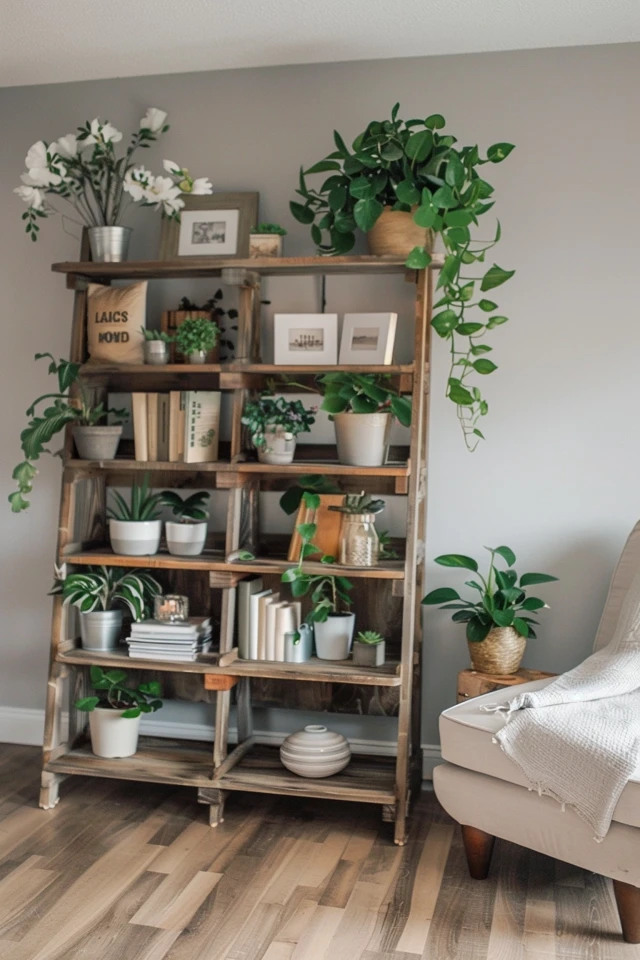
Chic Farmhouse Wooden Ladder Decor Tips
Wooden ladders are the quintessential farmhouse accessory because they bridge the gap between utility and artistry. They bring immediate height to a room without the visual bulk of a bookshelf or armoire. I love using them to introduce vertical lines in spaces that feel too heavy on low-profile furniture, like modern sectionals or platform beds.
However, styling a ladder requires more than just leaning it against a wall and throwing a blanket over a rung. For a huge dose of inspiration, make sure to scroll down because I have curated a stunning Picture Gallery at the end of this blog post. When done incorrectly, a ladder can look like cluttered storage rather than a deliberate design element.
In this guide, we will cover exactly how to select, secure, and style wooden ladders for that high-end farmhouse look. We will look at specific measurements for spacing, rules for mixing textiles, and safety tips for homes with active families.
Selecting the Right Ladder: Scale and Finish
The first step is sourcing a ladder that fits the proportions of your room. A common mistake is choosing a piece that is too short for standard ceilings, making the room feel stunted. If you have standard 8-foot ceilings, look for a ladder that is at least 6 feet tall.
For ceilings 9 feet or higher, you need a 7-foot ladder to maintain proper vertical scale. The goal is to draw the eye upward, highlighting your ceiling height. If the ladder is too short, it gets lost behind sofa backs or visually merges with wainscoting.
Material nuances matter:
- Vintage/Antique: These offer the best texture but often come with splinters or rot. They work best in “pure” farmhouse or cottage aesthetics.
- New/Reclaimed: These are usually smoother and square-cut. They suit “modern farmhouse” or transitional spaces better.
- Bamboo/Round Rung: These lean towards boho-farmhouse. They are lightweight but can look flimsy if not anchored by heavy textiles.
Designer’s Note:
When I source vintage ladders for clients, I always perform the “snag test.” Run a nylon stocking or a delicate silk cloth over the rungs. If it snags, you cannot use it for fine linens or knits until it has been sanded and sealed. It sounds tedious, but it saves your expensive throws from being ruined.
Common Mistakes + Fixes:
- Mistake: Using a ladder with round rungs for heavy displays.
- Fix: Round rungs are slippery. If you plan to hang heavy quilts or potted plants, choose a ladder with flat steps (like an orchard ladder) for stability.
- Mistake: Ignoring the finish color.
- Fix: Contrast is key. If your walls are white shiplap, use a stained wood ladder. If your walls are dark or moody, use a whitewashed or bleached wood ladder to make it pop.
The Living Room: Mastering the Blanket Display
The most classic application for a farmhouse ladder is the blanket display, but there is a technique to making it look chic rather than messy. The key is “The Waterfall Method” versus ” The Tuck.”
For a clean, modern farmhouse look, fold your throws lengthwise into thirds so they fit neatly inside the vertical rails. Drape them so the front and back hang at equal lengths. This reduces visual noise and emphasizes order.
If you prefer a cozy, “lived-in” aesthetic, use the waterfall method. Place the bulkiest knit on the bottom rung, puddling slightly on the floor if you want that dramatic effect. Place lighter throws on upper rungs, folded neatly. This creates a visual pyramid that feels grounded.
Spacing Rules of Thumb:
- Wall Distance: The base of the ladder should be approximately 10 to 12 inches away from the baseboard. This creates a safe leaning angle without encroaching on the walkway.
- Furniture Proximity: Leave at least 18 inches of breathing room between the ladder and any adjacent furniture (like a side table or armchair). Crowding the ladder makes the corner feel cramped.
What I’d do in a real project:
- Texture Mixing: I never use three blankets of the same material. I mix one chunky cable knit, one faux fur or boucle, and one lightweight linen or waffle weave.
- Color Palette: I stick to a tonal palette. If the room is grey, I use charcoal, heather grey, and cream. High-contrast patterns on ladders can look chaotic very quickly.
- The “Naked” Rung: I usually leave the top rung empty. It allows the eye to see the wood grain and prevents the piece from looking top-heavy.
Bathroom Storage: Verticality in Tight Spaces
Bathrooms often suffer from a lack of floor space, making vertical storage essential. A wooden ladder is a perfect solution for hanging towels in a guest bath or master suite, but humidity is a major factor here.
If you bring a raw wood vintage ladder into a bathroom, the steam from showers will eventually warp the wood or cause mold growth. You must seal the wood with a matte, water-based polyurethane. This protects the piece while maintaining the natural look.
Placement Strategy:
Place the ladder near the tub or shower entry, but ensure it is outside the “splash zone.” A good rule is to keep it at least 24 inches from the water source to prevent constant soaking.
Styling for Function:
- S-Hooks: Use matte black or antique brass S-hooks on the rungs to hang wire baskets. This creates storage for loofahs, soaps, or extra toilet paper.
- Drying Space: Unlike a hook where towels bunch up and stay damp, a ladder allows you to spread the towel flat. Ensure the ladder is wide enough (at least 18 inches) to accommodate a bath sheet folded in half.
Common Mistakes + Fixes:
- Mistake: Overloading the ladder in a small bathroom.
- Fix: Limit the ladder to two nice towels and one decorative element (like a eucalyptus bundle). Do not treat it as a hamper for dirty laundry.
- Mistake: Slippage on tile floors.
- Fix: Bathroom floors are slick. You must apply rubber grip pads to the feet of the ladder. I also recommend using a clear rubber bumper where the top of the ladder meets the wall to prevent paint scuffs.
Kitchen and Dining: Suspended Pot Racks and Drying Stations
Moving the ladder from the wall to the ceiling is a transformative design move. Suspended ladders make incredible pot racks over kitchen islands or drying racks in laundry rooms. This requires more technical skill but offers a huge payoff.
This application works best in homes with ceiling heights of 9 feet or higher. If your ceilings are 8 feet, a suspended ladder might feel oppressive unless it is hung very close to the ceiling surface.
Installation Essentials:
You cannot simply screw hooks into drywall for this. A wooden ladder plus cast iron pots can weigh upwards of 50-80 pounds. You must anchor heavy-duty eye hooks directly into the ceiling joists.
Height and Measurements:
- Over an Island: The bottom of the ladder (or the hanging pots) should be roughly 30 to 36 inches above the counter surface. You want to reach the pots easily without them obstructing your view across the room.
- Over a Dining Table: Treat it like a chandelier. The bottom should be 30 to 34 inches above the table surface.
Designer’s Note:
When suspending a ladder, use heavy-gauge industrial chains or thick jute rope, depending on your style. For a modern farmhouse look, black chain is best. For a cottage or coastal farmhouse look, go with the jute rope.
What I’d do in a real project:
- Lighting Integration: I love weaving edison bulb string lights or pendant cords through the rungs. It turns the storage unit into a custom light fixture.
- Botanicals: I attach bundles of dried herbs (lavender, rosemary, thyme) to the outer rails. It adds fragrance to the kitchen and softens the hard lines of the wood.
Seasonal Styling and Entryways
The entryway is the handshake of the home, and a ladder here serves as a versatile vignette that changes with the seasons. Because entryways are high-traffic, safety is paramount.
In a narrow hallway or foyer, a ladder takes up minimal floor depth (usually only 15-20 inches deep when leaned). This is far more space-efficient than a console table, which is typically 18-24 inches deep and blocky.
Seasonal Switch-Ups:
- Spring/Summer: Hang a lightweight wreath made of boxwood or olive branches on the top rung. Drape a thin Turkish towel on the middle rung.
- Fall/Winter: Wrap the side rails in faux cedar garland. Hang stockings or heavy wool scarves. You can even wire battery-operated fairy lights to the back of the rails for a soft glow at night.
Anchoring for Safety:
In an entryway where kids run by or guests drop bags, you cannot rely on gravity alone. I recommend using a small metal “L” bracket attached to the underside of the top rung and screwed into the wall. Alternatively, use clear earthquake straps. This is non-negotiable if you have pets or toddlers.
Common Mistakes + Fixes:
- Mistake: Blocking the light switch.
- Fix: Always measure the distance from the floor to your light switches before placing the ladder. The side rail should not overlap the switch plate.
- Mistake: Visual clutter with coats.
- Fix: Do not use the entry ladder as a coat rack. It is for scarves and hats only. Heavy coats add too much bulk and hide the beautiful wood of the ladder.
Final Checklist
Before you finalize your ladder decor, run through this quick checklist to ensure safety and style.
- Check the lean: Is the base 10-12 inches from the wall?
- Check the feet: Do you have rubber grips or felt pads to protect the floor?
- Check the finish: Have you sanded or sealed the wood to protect your fabrics?
- Check the anchor: If you have kids or pets, is the top secured to the wall?
- Check the scale: Is there negative space around the ladder, or does it feel crowded?
- Check the styling: Have you limited the items to 3-4 pieces to avoid clutter?
FAQs
Q: Can I use a painting ladder for decor?
A: Yes, double-sided stepladders (A-frame) are great for plant stands because they have wide steps. However, straight extension ladders are better for hanging blankets. Avoid aluminum ladders; stick to wood for the farmhouse aesthetic.
Q: How do I clean a raw wood ladder?
A: Avoid harsh chemical cleaners. Dust it regularly with a microfiber cloth. If it needs a deeper clean, use a damp cloth with a tiny drop of mild dish soap, then dry it immediately. Do not soak the wood.
Q: My ladder is leaving marks on the wall. What should I do?
A: This is common with vintage wood or stained pieces. Apply stick-on felt furniture pads to the back of the ladder where it touches the wall. This creates a barrier and prevents paint transfer.
Q: Is it okay to paint a vintage ladder?
A: If the wood is in bad shape or the color clashes with your room, absolutely. A matte black ladder looks stunning in a modern farmhouse space, while a sage green ladder works well in a cottage style.
Conclusion
Integrating a wooden ladder into your farmhouse decor is one of the most effective ways to add character and functionality to a room. Whether you are using it to display heirloom quilts in the living room or as a creative pot rack in the kitchen, the success lies in the details.
Remember to respect the scale of your room, prioritize safety with proper anchoring, and edit your accessories so the ladder itself remains the star. By following these rules of thumb regarding spacing, finishes, and textiles, you can turn a simple utilitarian tool into a sophisticated design feature.
Picture Gallery


