
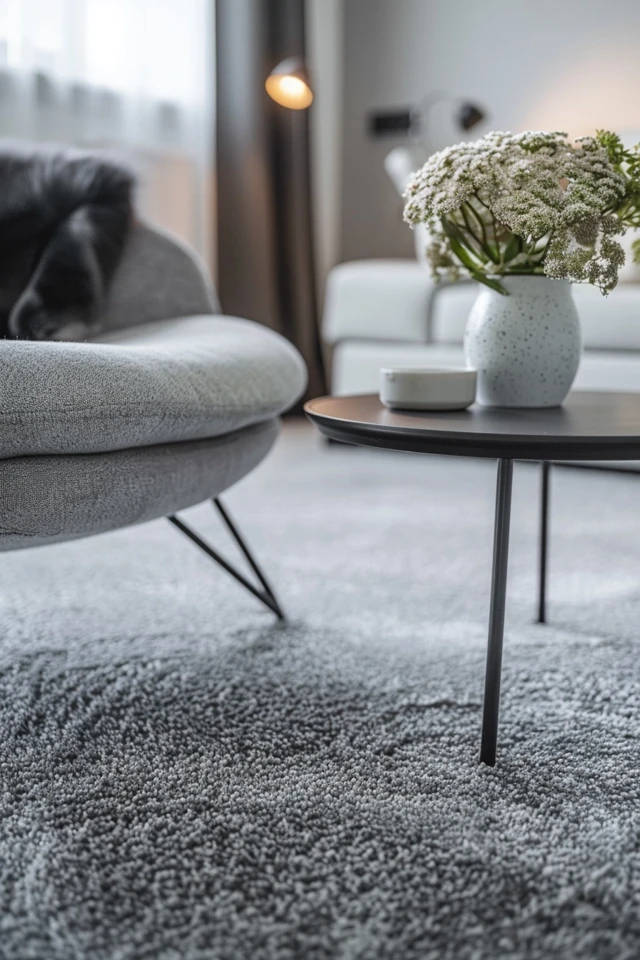
Chic Grey Carpet Living Room Ideas for Your Home
When I walk into a new client’s home, grey carpet is often the first thing they apologize for. They see it as “builder-grade,” uninspired, or simply a safe choice that lacks personality. However, I always tell them to stop apologizing and start visualizing.
Grey carpet is actually one of the most versatile foundations you can have in a living room. It acts as a quiet anchor that allows your furniture, art, and textiles to take center stage without fighting for attention. The secret lies not in ripping it out, but in understanding how to style around it to create depth and warmth.
For a dose of visual inspiration, don’t miss our curated Picture Gallery included at the very end of this blog post.
1. Decoding the Undertones: Cool vs. Warm Grey
Before you buy a single throw pillow or gallon of paint, you must identify the undertone of your carpet. Grey is rarely just a 50/50 mix of black and white. It almost always leans toward blue (cool), green (neutral/cool), or violet/beige (warm).
If you try to pair a cool, blue-grey carpet with warm, honey-oak furniture, the room will feel disjointed. The clash happens because the underlying colors are fighting each other. To find your undertone, place a piece of stark white printer paper against the carpet in natural daylight.
If the carpet looks steel-like or icy next to the paper, you have a cool grey. If it looks muddy, mushroom-colored, or slightly brown, you are working with a warm grey or “greige.” Knowing this dictates your entire color palette moving forward.
Designer’s Note: The Lighting Factor
In my experience, artificial lighting changes everything. A grey carpet that looks modern and crisp during the day can turn dingy or green at night if your lightbulbs are too yellow.
I recommend using LED bulbs with a color temperature of 3000K (Kelvin). This mimics bright halogen light and keeps grey looking true to color. Avoid 2700K (too yellow) or 5000K (too blue/clinical) in a living room setting.
Common Mistakes + Fixes
- Mistake: Ignoring the floor color when painting walls.
- The Fix: Always swatch paint on the wall near the baseboard. Observe how the carpet color reflects onto the paint color at different times of the day.
- Mistake: Assuming all greys match.
- The Fix: Do not try to match your sofa fabric exactly to the carpet. It creates a “cubicle effect.” Aim for at least two shades lighter or darker for contrast.
2. The Art of Layering Rugs on Carpet
One of the most frequent questions I get is, “Can I put a rug over wall-to-wall carpet?” The answer is a resounding yes. In fact, it is often necessary to define a seating area and break up the monotony of a large grey expanse.
Layering adds texture and color, instantly making the room feel intentional rather than accidental. This is especially critical for renters who cannot change the flooring but want to inject their own style. The key is contrast in texture, not just color.
If your carpet is a plush or twist pile, choose a flat-weave rug, a woven wool, or a natural jute rug. You need a firm surface on top to prevent bunching. If your carpet is a low-pile loop (berber), you can get away with a slightly thicker pile rug on top.
Rules of Thumb for Rug Sizing
- The Anchor Rule: Ensure the front legs of all major seating furniture (sofa and armchairs) sit on the area rug. This grounds the furniture group.
- The Border Rule: Leave at least 12 to 18 inches of the wall-to-wall carpet visible around the perimeter of your area rug. This prevents the “postage stamp” look.
- The Floating Rule: If you have a massive room, the rug can float in the center, but all furniture legs should be entirely on the rug.
What I’d Do in a Real Project
When layering on carpet, “rug creep” is a nightmare. The top rug will ripple and move as you walk on it.
I always specify a “carpet-to-carpet” rug pad. These are specifically designed with a tacky surface on both sides to grip the textile fibers of the bottom layer and the backing of the top layer. Do not skip this $30–$50 investment; it saves you from tripping hazards and constant adjusting.
3. Selecting Wall Colors that Elevate Grey
Once you know your undertones, choosing wall colors becomes a strategic game of contrast. You generally have two design paths: high drama or airy minimalism. Both work beautifully with grey carpet, but they create very different moods.
For an airy, open feel, look for off-whites and creams. However, you must pair like with like. If your carpet is a cool blue-grey, choose a crisp white with a cool base. If your carpet is a warm greige, choose a creamy white or a soft linen color.
For high drama, embrace the moodiness. Deep charcoal, navy blue, or forest green walls can make a grey carpet look incredibly chic and expensive. Dark walls blur the boundaries of the room, often making it feel larger and cozier simultaneously.
The Monochromatic Approach
You can also do “color drenching,” where the walls are a similar shade of grey to the floor. This is a high-level design move that requires texture to work.
If the walls and floors are the same tone, you must introduce wainscoting, heavy molding, or velvet drapes to create visual interest. Without architectural details, a grey-on-grey box can feel depressing.
Texture Checklist for Grey Rooms
- Metals: Brass and gold warm up cool grey carpets. Chrome and matte black sharpen the look for a modern industrial vibe.
- Woods: Walnut and rich oak add necessary warmth. Avoid grey-washed woods, as they will wash out the room.
- Glass/Acrylic: Use these for coffee tables if you want to show off a layered rug or keep the space feeling open.
4. Furniture Selection: Scale and Materiality
Grey carpet is a visual sponge; it absorbs light and tends to look heavy. Therefore, your furniture needs to provide lift and contrast. Avoid heavy, skirted sofas that go all the way to the floor, as they will look like distinct blocks sitting on concrete.
Instead, opt for furniture with legs. Sofas and armchairs raised on wooden or metal legs allow you to see a bit of the floor underneath. This creates a sense of air flow and makes the room feel less stuffy.
Material selection is equally important. Leather is a fantastic choice for grey carpeted rooms. A cognac or saddle-leather sofa provides a massive injection of warmth that counteracts the coolness of the floor.
Layout and Spacing Guidelines
- Traffic Patterns: Maintain a 30-to-36-inch walkway between furniture pieces for comfortable movement.
- Coffee Table Distance: Place your coffee table 14 to 18 inches from the edge of the sofa. This is close enough to set down a drink but far enough to walk through.
- Curtain Height: Mount your curtain rods 4 to 6 inches above the window frame (or all the way to the ceiling). This draws the eye up, away from the floor.
Designer’s Note: Dealing with Carpet Divots
Heavy furniture leaves dents in carpet. If you like to rearrange often, this is annoying.
To fix this, place an ice cube in the dent and let it melt. As the fibers absorb the water, they swell. Once dry, fluff the spot with a stiff brush or a fork. It works like magic to erase the history of your furniture layout.
5. Lighting and Textiles: The Finishing Touches
Lighting is the jewelry of the room, but in a space with carpet, it serves a functional purpose too. Carpet absorbs light, whereas hardwood reflects it. This means a carpeted living room often needs more lumens (light output) than a room with hard flooring.
Do not rely on a single overhead fixture. You need layers of light. Start with ambient light (recessed cans or a central pendant), add task light (reading lamps near armchairs), and finish with accent light (picture lights or table lamps).
Textiles are your opportunity to introduce color. Since the floor is neutral, you can swap out throw pillows and blankets seasonally without clashing.
The Rule of Three for Styling
When styling pillows or accessories, odd numbers are more visually appealing. Group three items of varying heights on a side table.
On a sofa, mix three patterns: one large-scale print, one small-scale geometric, and one solid texture (like velvet or boucle). This keeps the eye moving and prevents the grey backdrop from becoming stagnant.
Window Treatments
Drapes should touch the floor or “kiss” the carpet. Do not let them hover two inches above the carpet pile; it looks unintentional.
If your carpet is a solid grey, consider curtains with a subtle pattern or a contrasting border tape. This draws the eye to the vertical surfaces and adds architectural structure to the window wall.
Final Checklist: Your Design Roadmap
If you are ready to tackle your living room, use this checklist to ensure you stay on track. This is the exact mental process I use for my consultations.
- Step 1: The Swatch Test. Place white paper on the floor to determine if your carpet is cool or warm.
- Step 2: The Palette. Select wall colors and major furniture pieces that complement that specific undertone.
- Step 3: The Anchor. Decide if you need a layered area rug. If yes, buy a “carpet-to-carpet” pad immediately.
- Step 4: The Lift. Choose a sofa or armchairs with exposed legs to reduce visual heaviness.
- Step 5: The Warmth. Incorporate wood tones, leather, or brass accents to counter the “office” feel of grey.
- Step 6: The Light. Check your bulb temperature. Aim for 3000K to keep colors accurate.
- Step 7: The Maintenance. Buy a carpet rake or quality vacuum to keep the pile lifted and fresh.
FAQs
Q: Is grey carpet outdated?
A: Not at all. While grey wood floors are trending out, grey carpet remains a classic staple because it is a neutral backdrop. It becomes outdated only when paired with outdated decor, like matching grey walls and grey furniture without any texture.
Q: How do I clean grey carpet in high-traffic areas?
A: Grey is forgiving, but traffic lanes can turn dark. Vacuum at least twice a week to prevent dirt from grinding into the fibers. For spot cleaning, blot (never rub) with a mixture of water and a drop of clear dish soap. Professional steam cleaning is recommended every 12 to 18 months.
Q: Can I mix warm wood furniture with cool grey carpet?
A: Yes, but you need a bridge. Use a rug that contains both cool greys and warm browns to tie the two elements together. Alternatively, add pillows or art that feature both tones. The contrast between cool floors and warm wood is actually very sophisticated if balanced correctly.
Q: What if I’m renting and can’t paint the walls?
A: Focus on what you can control: the “middle” layer. Use a large, bold area rug to cover most of the carpet. Use floor-to-ceiling curtains to cover the walls. Use large-scale art or removable wallpaper to draw attention away from the beige/white rental walls.
Conclusion
Grey carpet is often misunderstood, but it offers a soft, quiet elegance that hard flooring simply cannot replicate. It provides sound dampening, physical warmth, and a neutral stage for your life.
By paying attention to undertones, layering textures, and ensuring your lighting is on point, you can transform a standard living room into a high-end sanctuary. Trust your eye, follow the rules of scale, and don’t be afraid to layer up.
Picture Gallery


