
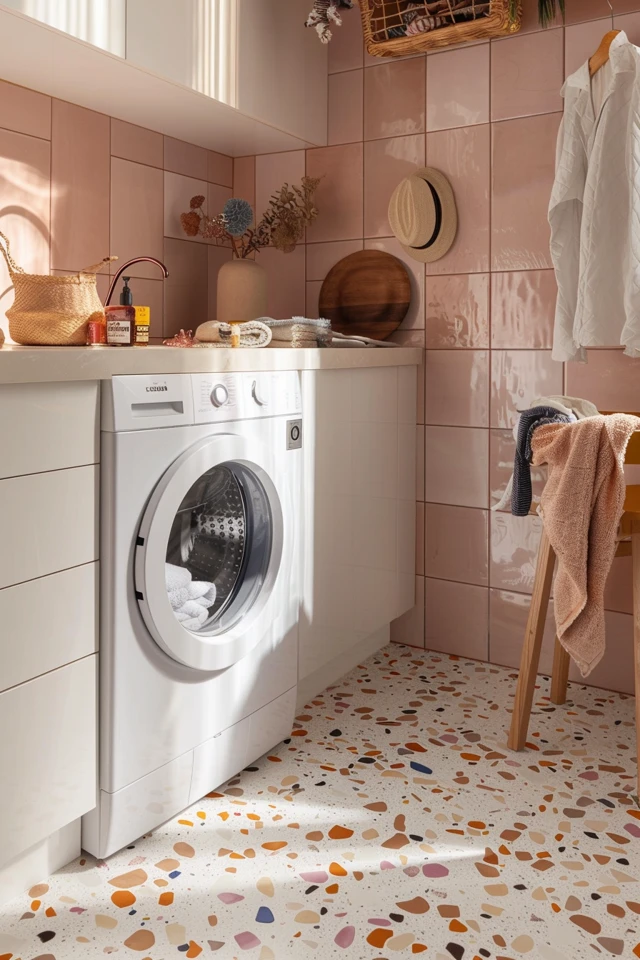
Chic Laundry Room Floor Tile Ideas to Inspire
Laundry rooms are often the hardest working spaces in our homes, yet they frequently receive the least amount of design attention. We tend to close the door on the piles of clothes and utilitarian sinks, treating the space purely as a functional necessity. However, I have found that elevating the design of a utility room actually makes the chore of washing and folding much more bearable.
When I renovated my own laundry space last year, I realized that the floor is the single most impactful element you can change. It sets the tone for the entire room, handles the brunt of the wear and tear, and offers a unique opportunity to take risks you might not take in a main living area. To help you visualize these concepts, I have curated a comprehensive comprehensive Picture Gallery at the end of this blog post.
In this guide, I will walk you through the practical and aesthetic considerations for choosing the perfect laundry room tile. We will look at materials that can withstand water, patterns that hide lint, and installation tricks that make a small room feel grand.
1. Prioritizing Material Durability and Water Resistance
Before we get to the pretty patterns, we must talk about the science of the substrate. Laundry rooms are high-moisture environments prone to leaks, spills, and humidity.
The best choice for most households is porcelain tile. Unlike standard ceramic, porcelain is fired at higher temperatures, making it denser and virtually impervious to water absorption. I always recommend looking for “through-body” porcelain, where the color goes all the way through the tile, so chips are less noticeable.
Natural stone, such as slate or limestone, offers a beautiful organic texture that synthetic materials cannot perfectly mimic. However, natural stone is porous. If you choose this route, you must commit to sealing the stone upon installation and resealing it annually.
Here is a quick hierarchy of materials based on laundry room suitability:
- Porcelain: The gold standard. Durable, waterproof, and low maintenance.
- Cement (Encaustic) Tile: Stunning matte finish and deep colors, but requires sealing and can etch from harsh detergents.
- Luxury Vinyl Tile (LVT): Softer underfoot and warmer, offering 100% water resistance at a lower price point.
- Natural Stone: High maintenance but adds significant value and texture.
Designer’s Note: The Slip Factor
A common mistake I see homeowners make is choosing a polished finish for a laundry room. While it looks sleek in a showroom, polished tile becomes a skating rink when wet.
Always check the Dynamic Coefficient of Friction (DCOF) rating on the spec sheet. You want a rating of 0.42 or higher for wet areas. I prefer matte or textured finishes not just for safety, but because they hide dust and pet hair better than high-gloss surfaces.
2. Mastering Scale and Pattern in Small Spaces
Most laundry rooms are relatively compact, which leads many people to believe they must use small tiles. This is a myth. In fact, using larger tiles in a small room can actually make the space feel larger because there are fewer grout lines to break up the visual field.
If you are working with a narrow, galley-style laundry room, consider a large-format rectangular tile (such as 12×24 inches). Laying these tiles perpendicular to the long walls can visually widen the room.
On the other hand, laundry rooms are the perfect “jewel box” rooms to experiment with bold patterns that might feel overwhelming in a kitchen or living room.
Here are my rules of thumb for pattern play:
- The Checkerboard: This classic pattern is having a major resurgence. For a laundry room, try a muted checkerboard using grey and white marble, or terracotta and cream, rather than stark black and white.
- Herringbone: This layout adds instant sophistication. Use a 4×12 inch subway tile for the floor. Just know that herringbone installation costs more and requires about 15-20% extra material for cuts.
- Micro-Pattern: Penny tiles or hex mosaics work well, but be prepared for a lot of grout. High grout density actually increases slip resistance, which is a functional bonus.
Common Mistakes + Fixes
Mistake: Using a busy, small-scale patterned tile in a room with exposed plumbing and open shelving.
Fix: If your walls are busy with shelves and supplies, go for a solid, larger-scale floor tile to ground the space. If your cabinetry is concealed and sleek, that is when you use the floor to make a loud statement.
3. Color Psychology and Practicality
The color of your floor dictates how often you will feel the need to clean it. In a laundry room, you are dealing with dryer lint, which is usually greyish-white, and potentially mud from sports gear or gardening.
Solid white floors are the hardest to keep looking clean. Every stray hair and speck of dust will be visible. Conversely, extremely dark black tiles show water spots and light-colored lint instantly.
The “sweet spot” for laundry flooring is mid-tone greys, warm beiges, or patterned tiles that incorporate multiple colors. These offer high forgiveness for daily messes.
The Grout Debate
I cannot stress this enough: do not use bright white grout on a laundry room floor. It will eventually discolor from foot traffic and moisture.
Instead, I recommend:
- Warm Grey or Greige: Matches almost anything and hides dirt.
- Charcoal: Creates a graphic pop against lighter tiles.
- Epoxy Grout: This is an upgrade from standard cement-based grout. It is waterproof, stain-proof, and does not need sealing. It is harder to install, so your tiler might charge more, but it is worth it for longevity.
4. Budget-Friendly Solutions and Renter Hacks
You do not need to rip out the subfloor to get a chic look. If you are renting or working with a tight renovation budget, there are excellent non-permanent options available today.
Peel-and-stick vinyl tiles have come a long way. Brands now offer “groutable” vinyl tiles that look surprisingly realistic. The key to success here is surface preparation. You must clean the existing floor with a degreaser to ensure the adhesive bonds correctly.
Another option for unsightly existing tile is proper tile paint. This is a labor-intensive process involving sanding, priming with a high-adhesion bonding primer, and painting. Stenciling over old ceramic tile can mimic the look of expensive cement tile for the cost of a quart of paint.
What I’d Do in a Real Project: The Mini Checklist
If I were designing a laundry room tomorrow with a moderate budget ($2,000 – $4,000 for flooring), here is my exact formula:
- Material: Matte porcelain tile with a stone look (slate or travertine effect).
- Size: Large format hexagons (10-inch or larger).
- Grout: Mapei Ultracolor Plus in a color that matches the darkest tone in the tile (to create a seamless look and hide stains).
- Comfort: I would install an electric radiant heat mat underneath. It adds about $300-$500 to the project but makes standing there to fold clothes infinitely more pleasant in winter.
5. Transitions and Layout Logistics
The difference between a DIY look and a professional finish often lies in the transitions. How does the tile meet the hallway wood floor?
You want to avoid bulky transition strips whenever possible. In a professional renovation, we try to flush out the subfloors so the tile and the adjacent wood floor are level. If that is not possible, use a Schluter metal edge profile for a clean, modern line, or a marble threshold for a traditional feel.
Consider the direction of the light. If you have a window in the laundry room, inspect how the light hits the floor. High-texture tiles (like slate) will cast small shadows, emphasizing the texture. This is desirable for rustic styles but might annoy someone who wants a pristine, flat look.
Also, think about your appliances. Washing machines are heavy and vibrate. If you are using large format tile, ensure your installer uses a high-quality thin-set mortar with flexibility additives to prevent cracking under the vibration.
Final Checklist
Before you order your samples, run through this final checklist to ensure you have covered all your bases.
- Durability Check: Is the material porcelain or sealed stone? (Avoid standard ceramic for floors).
- Slip Resistance: Is the finish matte or textured? (DCOF > 0.42).
- Scale Verification: Have you brought a sample into the room? (Colors change drastically under artificial laundry lighting).
- Overage Calculation: Did you order 10% extra for standard layouts or 15-20% extra for herringbone/diagonal layouts?
- Grout Selection: Have you chosen a non-white, stain-resistant grout?
- Baseboard Plan: Will you use tile baseboards (great for mopping) or wood baseboards (better for style continuity)?
FAQs
Q: Can I use peel-and-stick tile over existing ceramic tile?
A: Yes, but you need to fill the grout lines of the existing tile with a leveling compound first. If you stick vinyl directly over deep grout lines, the vinyl will eventually sag into the gaps, revealing the grid pattern of the floor underneath.
Q: Is underfloor heating safe for laundry rooms?
A: Absolutely. In fact, it helps dry out the room if there is excess humidity. Just ensure the heating system is rated for wet areas and installed by a certified electrician.
Q: How do I clean encaustic cement tiles?
A: You must use a pH-neutral cleaner. Avoid vinegar, bleach, or harsh acidic cleaners, as they will eat away at the sealant and damage the pigment in the cement.
Q: What is the best tile size for a 5×7 laundry room?
A: I love a 12×24 inch tile for a space this size. It minimizes grout lines. Alternatively, an 8×8 inch patterned tile fits the scale perfectly without feeling cluttered.
Conclusion
Designing a laundry room is about balancing high performance with personal joy. Since this is a room where you perform work, the environment should support you, not add to your stress. By choosing the right material—like durable porcelain or warm vinyl—and selecting a pattern that brings you happiness, you change the psychology of the chore.
Don’t be afraid to take a risk with color or layout here. It is a contained space, making it the perfect canvas for creative expression. Whether you go with a classic checkerboard or a modern slate herringbone, the right floor will ensure your laundry room is a space you actually want to be in.
Picture Gallery


