
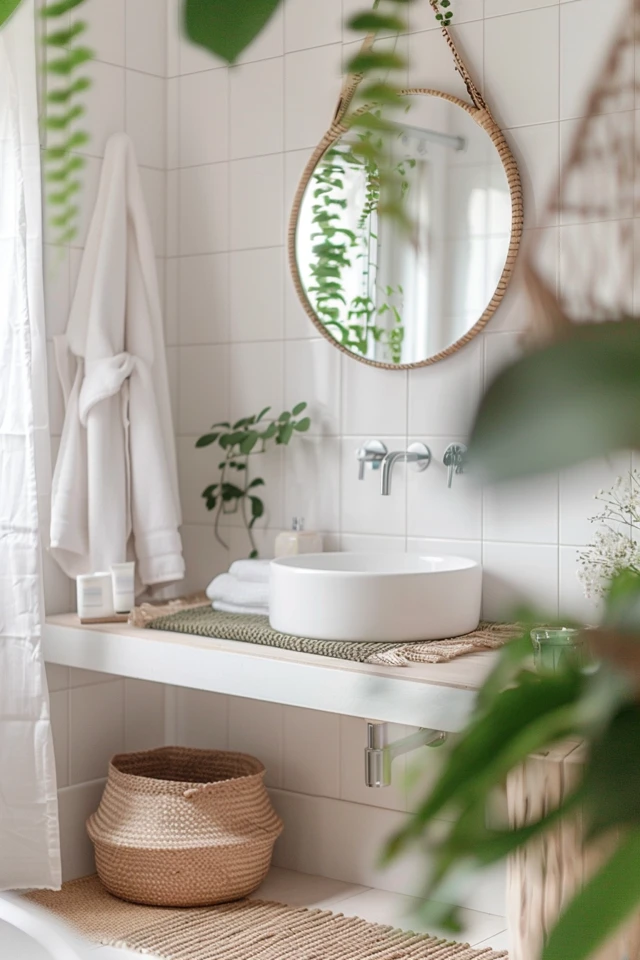
Chic Small Pool House Bathroom Ideas & Tips
Designing a pool house bathroom is distinct from any other bathroom in your home. It needs to handle heavy foot traffic, dripping wet swimsuits, and potentially muddy feet, all while looking effortless and stylish. I remember one of my first projects where we treated the pool bath like a standard powder room; within a month, the wallpaper was peeling from humidity and the rug was a constant soggy mess.
That experience taught me that durability must come first, but it doesn’t mean you have to sacrifice the aesthetic. A small pool house bathroom is actually the perfect place to take design risks with bold tiles or fun hardware because it is a contained, experiential space. It serves a specific purpose, which makes the design parameters much clearer than a multi-purpose family bath.
In this guide, I will walk you through layout strategies, material selections, and styling tricks specifically for compact pool baths. For immediate inspiration, keep in mind that a curated Picture Gallery is at the end of this blog post to help you visualize these concepts. Let’s dive into the practical details of creating a space that is as resilient as it is beautiful.
1. Optimizing Layouts for Tight Footprints
When dealing with a small pool house, square footage is often at a premium. The goal is to maximize flow so guests aren’t bumping elbows while changing.
If you are working with a new build or a gut renovation, consider the “wet room” approach. This eliminates the shower curb and glass enclosure, tiling the entire floor and walls. It makes a 5×7 foot room feel significantly larger because your eye isn’t stopped by a shower door.
If a full wet room isn’t in the budget, prioritize a corner shower with a neo-angle base. This clips the corner of the shower, usually giving you back about 6 to 8 inches of floor space. In a tight bathroom, that is enough clearance to make the difference between a comfortable entry and squeezing past the toilet.
Door Swing and Entry
One of the biggest mistakes in small pool baths is a door that swings into the room, hitting the vanity or blocking the toilet.
- The Fix: Install a pocket door or a barn door. If the wall structure doesn’t allow for a pocket door, reverse the swing so the door opens outward toward the pool deck.
- Privacy Note: If you use a barn door, ensure it is wider than the opening by at least 2 inches on each side to prevent sightlines through the cracks.
Designer’s Note: The “Change Room” Test
Before finalizing your layout, simulate the act of changing out of a wet swimsuit. You need a minimum of 36 inches of clear turning radius in the center of the room. If the vanity is too large and encroaches on this space, swap it for a smaller pedestal sink or wall-mounted basin. Your guests need room to move more than they need counter space for toiletries.
2. Selecting Bomb-Proof Materials
A pool house bathroom faces harsh conditions: chlorine, salt water, intense UV rays, and constant moisture. The materials you choose must be non-porous and slip-resistant.
Flooring Safety Ratings
Natural stone like polished marble is beautiful, but it is a lawsuit waiting to happen in a pool bath. It becomes incredibly slippery when wet and is prone to etching from pool chemicals.
- Go for Porcelain: Look for porcelain tile with a matte or textured finish.
- Check the Specs: Ask for the DCOF (Dynamic Coefficient of Friction) rating. You want a rating of 0.42 or higher for wet areas.
- Penny Tiles: Small-scale mosaics like penny rounds or hex tiles are excellent because the high volume of grout lines provides natural traction for bare feet.
Wall Coverings
Standard drywall can struggle in these environments, especially if the bathroom isn’t climate-controlled year-round. I prefer covering walls with PVC shiplap or beadboard up to a chair rail height (roughly 36 to 42 inches).
PVC or composite materials look exactly like wood when painted but are impervious to water. This protects your walls from wet towels leaning against them and splashing water from kids.
Countertops and Vanities
Avoid wood countertops or porous stones like limestone. Engineered quartz is your best friend here. It is non-porous, resists bacteria, and stands up to chlorine drips. For the vanity cabinet itself, a floating design is ideal. It exposes more floor, making the room feel wider, and prevents the bottom of the cabinet from wicking up water from puddles on the floor.
3. Strategic Storage for Wet Zones
Storage needs in a pool bath are different from a primary bath. You don’t need drawers for makeup or medicine; you need spots for towels and wet suits.
The Power of Hooks
In a small space, towel bars take up too much horizontal wall real estate. Hooks are far more efficient.
- Placement: Install a row of sturdy hooks at 60 to 65 inches high. This keeps long beach towels from dragging on the floor.
- Quantity: Plan for at least one hook per person you expect to host regularly. If you have a family of four, install five or six hooks.
- Material: Use marine-grade stainless steel or PVD-coated brass to prevent rust and corrosion over time.
Niches and Ledges
Since we are likely minimizing vanity size, utilize the vertical space in the shower area. Install a horizontal niche that runs the length of the shower wall rather than a small square box.
This provides ample space for shampoo bottles and soap without encroaching on the shower footprint. If framing allows, a ledge behind the toilet is also a great spot for storing extra rolls of paper or a small succulent to bring life to the space.
Common Mistakes + Fixes
Mistake: Using open shelving for clean towels near the splash zone.
Fix: If the room is small, humidity will make clean towels feel damp before they are even used. Store clean towels in a high cabinet or on a shelf above the door frame (a classic hotel trick) to keep them as dry as possible.
4. Lighting and Ventilation Essentials
Proper ventilation is non-negotiable. A pool house bathroom is essentially a steam room. Without a powerful exhaust fan, you will battle mold and mildew within weeks.
Ventilation Specs
Do not rely on a window alone. You need a mechanical exhaust fan.
- Sizing: For a small bathroom (under 50 sq ft), a 50 CFM fan is the standard minimum, but I always upgrade to 80 or 110 CFM for pool houses to clear moisture rapidly.
- Timer Switches: Install a humidity-sensing switch or a timer switch. Guests often forget to turn fans on, or turn them off too early. A sensor ensures the fan runs until the moisture is gone.
Lighting Layers
Lighting should be bright and fresh. Avoid yellow-toned bulbs which can make a small, tiled room feel dingy. Aim for a color temperature of 3000K (bright white) to 3500K.
Because space is tight, wall sconces are often better than overhead cans, which can cast shadows on faces. Place sconces at eye level (roughly 65 inches from the floor) on either side of the mirror. If you are really tight on width, mount the sconces directly onto the mirror surface. This doubles the light output through reflection and saves wall space.
5. Adding “Chic” to the Function
Just because the room is durable doesn’t mean it has to be boring. Small spaces are the best places to use high-impact design elements because you need less material, which keeps costs down.
The “Jewel Box” Effect
Treat the bathroom like a little jewel box.
- Wallpaper: Use a vinyl or performance wallpaper on the upper half of the walls. Large-scale botanical prints or bold stripes work beautifully to distract from the small size of the room.
- Ceiling Color: Don’t leave the ceiling white. Painting the ceiling a pale blue or a soft sage green draws the eye up and mimics the sky, making the ceiling feel higher.
- Statement Mirror: Skip the builder-grade rectangular mirror. Choose a round mirror or an organic shape. Curves soften the hard lines of tile and plumbing fixtures.
Color Palettes
For pool houses, I generally steer towards two directions:
1. Crisp Coastal: Bright whites, navy blues, and polished nickel hardware. It’s timeless and feels clean.
2. Organic Modern: Warm greys, sandy beiges, matte black hardware, and wood-look tiles. This hides dirt well and feels very spa-like.
What I’d Do in a Real Project
If I were designing a 5×8 pool bath today, here is my exact formula:
- Flooring: 2-inch hexagonal matte porcelain tile in a charcoal grey (hides dirt).
- Walls: White V-groove paneling up to 48 inches high.
- Upper Walls: A punchy, tropical wallpaper pattern.
- Vanity: A 24-inch wall-mounted sink with an exposed chrome trap (adds a vintage industrial vibe).
- Fixture: A high-arc faucet to allow room for filling water bottles.
Final Checklist: The Pool House Bath
Before you call the contractor or start demo, run through this checklist to ensure you haven’t missed any critical functional details.
Planning & Layout
- Is the door swing outward or pocketed?
- Is there a 36-inch turning radius for changing clothes?
- Have you designated a “wet zone” vs a “dry zone”?
Materials & Finishes
- Is the floor tile rated DCOF > 0.42 for slip resistance?
- Are you using epoxy grout? (It is waterproof and stain-resistant).
- Is the hardware PVD or marine-grade to resist rust?
- Is the vanity material non-porous (Quartz/Porcelain)?
Plumbing & Electric
- Is the exhaust fan rated for high humidity and sized correctly?
- Are all outlets GFCI protected?
- Do you have a floor drain? (Highly recommended for easy cleaning).
- Is the water heater sufficient for back-to-back showers?
Accessories
- Do you have enough hooks for maximum occupancy?
- Is there a wastebasket? (Often forgotten, but essential).
- Is there a mirror safe for high humidity (copper-free backing)?
FAQs
Q: Can I use wood flooring in a pool house bathroom?
No, I strongly advise against it. Even sealed wood will eventually warp or rot with the constant presence of standing water and humidity. If you love the look of wood, choose a high-quality wood-look porcelain tile.
Q: What is the best toilet for a small pool bath?
A compact elongated toilet or a wall-hung toilet is best. Wall-hung models house the tank inside the wall, saving you about 10 to 12 inches of depth. They are also much easier to clean underneath.
Q: How do I prevent the bathroom from smelling like damp towels?
Ventilation is key, but also consider installing a heated towel rack. They dry towels much faster than standard hooks, preventing mildew growth. Also, ensure you use antimicrobial paint on the walls to inhibit mold.
Q: Do I really need a bathtub in a pool house?
Almost never. A shower is far more practical for rinsing off chlorine. Removing the tub is the single best way to gain space for storage or a larger changing area.
Q: Should I insulate the interior walls?
Yes. Insulating the interior walls provides soundproofing, which is important for privacy in small structures where the bathroom might be right next to the seating area.
Conclusion
Designing a chic small pool house bathroom requires a shift in mindset. You are balancing the utility of a locker room with the comfort of a high-end spa. By prioritizing slip-resistant flooring, robust ventilation, and smart changing space, you solve the functional problems first.
Once the “bones” are right, you can layer in the personality with bold wallpapers, interesting lighting, and quality hardware. Remember, the best pool bath is one where guests can run in dripping wet without worrying about ruining anything, and you can clean it up with a quick hose-down or mop.
Take your time with the layout and materials. A well-planned pool bath will not only add value to your property but will save you countless headaches regarding maintenance and cleaning in the future.
Picture Gallery


