
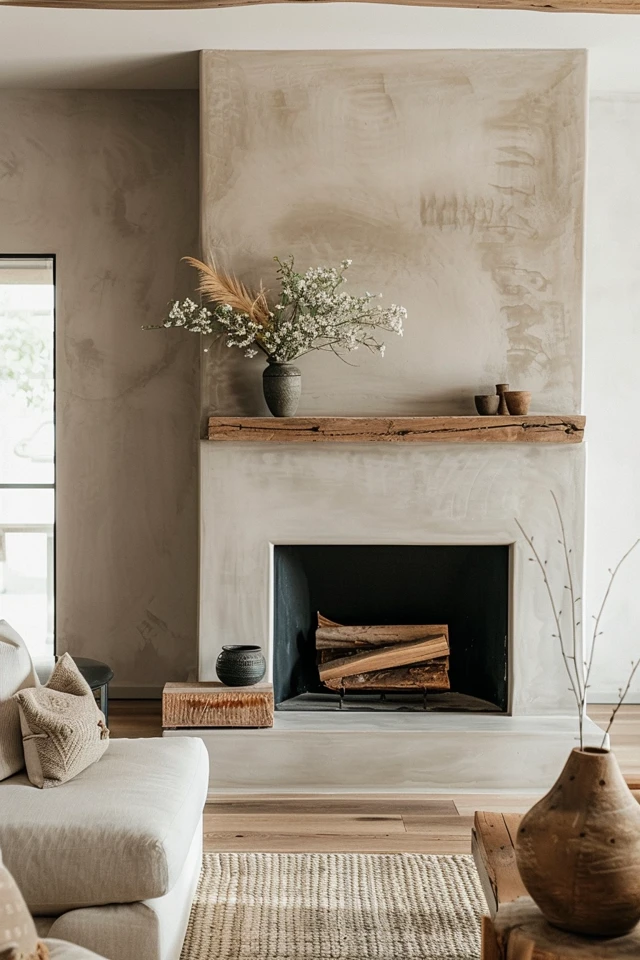
Chic Stucco Fireplace Ideas for Modern Homes
For years, exposed brick and heavy stone dominated the fireplace conversation. But recently, I have seen a massive shift toward calmer, more organic textures in my interior design projects. Stucco, lime wash, and Venetian plaster have moved from exterior walls to the focal point of the living room.
There is something undeniably grounding about a floor-to-ceiling stucco fireplace. It bridges the gap between modern minimalism and old-world Mediterranean charm. It softens a room while simultaneously commanding attention. If you are looking for visual inspiration, jump straight to the Picture Gallery at the end of this blog post.
However, getting this look right requires more than just troweling some plaster over drywall. I have walked into too many homes where the finish looked messy rather than intentional, or where the proportions felt “off.” In this guide, I will walk you through the design principles, technical considerations, and styling tricks to achieve a chic stucco fireplace that stands the test of time.
1. Defining Your Stucco Style: Texture and Tone
When clients ask for a “stucco fireplace,” they usually have one of three distinct looks in mind. Understanding the difference is crucial for communicating with your contractor or artisan.
The Santa Barbara Finish
This is the most traditional “stucco” look. It features a soft, undulating surface that isn’t perfectly flat. It feels organic and handmade. This works best in Spanish Revival, Mediterranean, or Transitional homes. The goal here is imperfection that feels warm, not sloppy.
Venetian Plaster / Polished Plaster
This is a sleek, modern approach. The finish is troweled smooth and often burnished to create a marble-like sheen. It is cool to the touch and reflects light. I use this often in contemporary penthouses or Ultra-Modern homes where we want texture without “rusticity.”
Microcement
This is the industrial cousin of stucco. It is incredibly durable, waterproof, and has a matte, velvety texture. It is fantastic for a wabi-sabi or Japandi aesthetic. It lacks the shiny depth of Venetian plaster but offers a consistent, seamless color.
Selecting the Right Undertone
White is never just white. Because stucco has texture, it creates its own shadows. This means a “cool white” can look blue and dingy in a room with north-facing light.
For a cozy living room, I almost always spec a warm white or a “greige” with yellow or red undertones. This prevents the fireplace from looking like a sterile hospital wall.
Designer’s Note: The “Sample Board” Rule
Never approve a finish based on a 2-inch chip. I require my plaster artisans to create a 2-foot by 2-foot sample board. I take this board into the client’s home and lean it against the wall where the fireplace will be. We look at it in the morning light and evening artificial light. The texture changes dramatically throughout the day.
2. Architecture and Proportions
The beauty of a stucco fireplace is often its shape. Unlike brick, which relies on a grid, stucco can cover curves, slopes, and monolithic blocks. However, scale is the place where DIYers often make mistakes.
The Rule of Thirds
If you have standard 8-foot ceilings, a massive, wide fireplace can make the room feel squat. As a general rule, the width of the fireplace surround (including the firebox) should generally not exceed one-third of the wall’s total length if you want a balanced look.
If you are going for a dramatic “entire wall” fireplace, ensure you have the ceiling height (9 feet or higher) to support that visual weight.
To Mantel or Not to Mantel?
Modern stucco fireplaces often skip the traditional mantel shelf. This creates a clean, vertical line that draws the eye up.
If you do want a mantel, I recommend a reclaimed wood beam that spans the entire width. The contrast between rough wood and smooth plaster is visually stunning.
Hearth Height and Depth
If you plan to use the hearth for seating (which I highly recommend for entertaining), the sweet spot for height is between 11 and 18 inches off the finished floor.
For depth, you need at least 16 to 20 inches of non-combustible material extending from the firebox opening. This isn’t just a design preference; it is a standard building code requirement for wood-burning units to catch wayward sparks.
Common Mistakes + Fixes
Mistake: The “Floating” Look.
Some designs have the stucco hover a few inches above the floor.
The Fix: Anchor it. A fireplace should feel like it is part of the architecture, growing out of the foundation. Bring the stucco all the way to the floor or rest it on a stone or concrete hearth slab.
Mistake: ignoring the firebox interior.
The Fix: Don’t leave the inside of the firebox standard yellow brick if the outside is chic plaster. Paint the firebox high-heat matte black or line it with herringbone firebrick for a custom finish.
3. Integrating Technology and Functionality
The most common question I get is, “Where do I put the TV?” With a sleek stucco design, you do not want wires dangling down the front.
Recessed Niches
If you are building the fireplace surround from scratch (framing + drywall + plaster), you have a golden opportunity. I often frame a recessed niche specifically for the TV. This allows the screen to sit flush with the stucco surface rather than protruding 4 inches out.
The Frame TV Solution
If you must mount a TV on your beautiful stucco work, use a TV that mimics art. Samsung’s “The Frame” is the industry standard for this.
When the TV is off, it displays art. Because stucco provides such a gallery-like backdrop, digital art looks surprisingly intentional here.
Hidden Components
Where does the cable box or Apple TV go?
- Option A: Ideally, run an HDMI tube through the wall to a nearby cabinet or built-in shelf.
- Option B: If that isn’t possible, install a recessed media box behind the TV itself to house the plugs and small stick-style streamers.
Managing Heat
Plaster and stucco are non-combustible, but heat can still cause hairline cracks over time if the substrate shifts.
If you are installing a gas insert or an electric linear fireplace, check the manufacturer’s “clearance to combustibles” manual. You may need to install a heat shift system (which diverts hot air up through vents near the ceiling) to safely mount a TV or preserve the plaster finish directly above the opening.
4. Renovation Realities: Materials and Cost
You might be wondering if this is a DIY project or a pro-only job. It depends heavily on the material you choose.
Traditional Stucco (3-Coat System)
This involves wire lath, a scratch coat, a brown coat, and a finish coat. It is heavy, messy, and requires skilled labor. It is rarely done indoors unless it is new construction.
Lime Wash or Roman Clay
This is a paint-on or trowel-on finish that mimics the look of stucco.
- Pros: Affordable and DIY-friendly. You can apply it over smooth drywall.
- Cons: It has less depth and physical texture than real plaster. It creates the color variance but not the tactile experience.
Microcement / Synthetic Plaster
This is my preferred method for renovations. It is applied in thin layers (about 3mm total) over cement board or drywall. It is flexible (resists cracking) and waterproof.
What I’d Do in a Real Project
If I am renovating a dated red brick fireplace for a client:
1. Fur out the wall: I would not plaster directly over uneven brick. I would frame over it with 2x4s or metal studs to create a new, square shape.
2. Sheathing: Cover the frame with cement board (like Durock), not standard drywall. Cement board is heat resistant and provides a better grip for the plaster.
3. Corner Beads: Use metal corner beads to get those sharp, modern edges—or vinyl bullnose beads if the client wants curves.
4. The Finish: I would hire a pro to apply a two-coat Venetian plaster or microcement. The labor cost is usually $15-$25 per square foot, but the result is luxury.
5. Styling the Surroundings
Once the fireplace is finished, the way you style the room determines if it feels “cold” or “chic.” Stucco is a hard material. To make the room livable, you must layer in softness.
Rug Sizing and Placement
A stucco fireplace usually reads as a solid, heavy object. To balance this, your rug needs to be substantial.
Do not use a skimpy 5×7 rug. In a standard living room, I usually opt for a 9×12 or 10×14 rug. The front legs of your sofa and armchairs should sit on the rug.
Leave about 12 to 18 inches of bare floor between the hearth and the edge of the rug. This safety zone looks intentional and prevents embers (if wood-burning) from damaging the textile.
Lighting the Texture
This is the secret sauce. Texture only exists if there is light to create shadows.
I always try to install recessed gimbal lights or directional track heads in the ceiling, positioned about 18-24 inches away from the fireplace wall.
Aim the light to “graze” down the front of the stucco. This highlights the trowel marks and handmade nature of the finish. Without grazing light, a white stucco fireplace can look like a flat white sheet of paper at night.
Greenery and Ceramics
Because the fireplace is earth-toned and organic, nature-inspired decor works best.
- Large Scale: Place a tall, structural tree (like a Black Olive or Ficus) in a heavy ceramic pot on one side of the hearth.
- Asymmetry: Don’t just put two matching candlesticks on the mantel. Try a grouping of three unglazed ceramic vases on one side of the hearth floor.
Final Checklist: The Project Roadmap
Before you start demolition or call a contractor, run through this quick checklist to ensure you haven’t missed a critical step.
- Check Codes: Have you verified the required clearance for non-combustible materials for your specific firebox?
- Choose the Form: Are you going floor-to-ceiling? Are you adding a log storage niche? Sketch the shape.
- Select the Finish: Are you doing Roman Clay (paint-like) or actual Troweled Plaster (textured)?
- Lighting Plan: Have you planned for grazing light from the ceiling to accent the texture?
- Electrical Rough-In: If mounting a TV, have you run the HDMI and power cables behind the framing before plastering?
- Sample Board: Have you seen a large sample of the color in your specific room’s lighting?
FAQs
Can I apply stucco directly over my existing brick fireplace?
Technically, yes, if you use a bonding agent. However, I rarely recommend it. The mortar lines of the brick often “telegraph” (show through) the stucco over time. It is much safer to fur out the wall with cement board first for a smooth, lasting finish.
Does a white stucco fireplace get dirty with soot?
It can. If you have a wood-burning fireplace, smoke can stain the area just above the opening. I recommend sealing the plaster with a matte, penetrating sealer. This allows you to gently wipe it down with a damp cloth and mild soap. If you use a gas insert, this is rarely an issue.
Will the plaster crack with the heat?
Hairline cracks are part of the character of traditional stucco. However, significant cracking usually happens because of shifting framing, not just heat. Using a modern microcement with flexible polymers significantly reduces the risk of cracking compared to old-school cement stucco.
How much does a stucco fireplace renovation cost?
For a DIY cosmetic update using Roman Clay over drywall, you might spend $500–$800. For a full professional build-out (framing + cement board + professional Venetian plaster), expect to pay between $3,000 and $6,000, depending on your location and the size of the surround.
Conclusion
A stucco fireplace is more than just a trend; it is a return to materials that feel substantial and handmade. Whether you choose a polished Venetian finish for a city apartment or a rough, sandy texture for a coastal cottage, this design choice brings an immediate sense of calm to a living space.
The key to success lies in the preparation. Frame it right, light it well, and embrace the subtle imperfections that make the finish unique. It transforms the fireplace from a standard appliance into a sculptural piece of art that anchors your entire home.
Picture Gallery


