
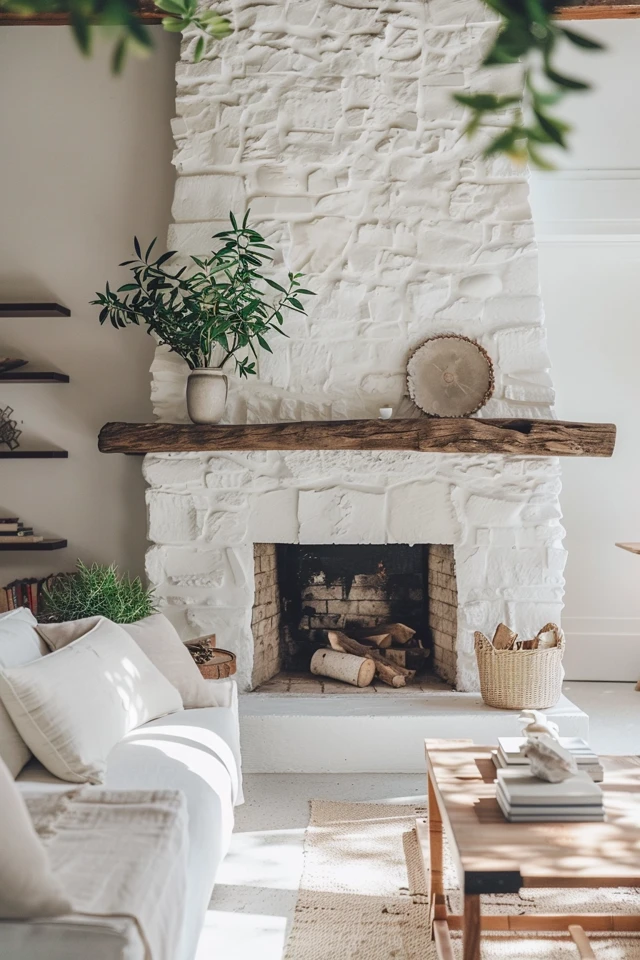
Title: Chic White Stone Fireplace Ideas For Cozy Homes
Introduction
There is something undeniably grounding about a white stone fireplace. It acts as the anchor of a living room, offering a texture that is both rugged and refined while keeping the overall palette light and airy. Whether you are renovating a mid-century ranch or building a modern farmhouse from scratch, white stone serves as a versatile canvas that adapts to your furniture and seasonal decor.
However, choosing “white stone” is just the beginning of the design journey, as the variations in cut, grout style, and material composition can dramatically alter the final look. To help you visualize these differences, we have compiled a comprehensive Picture Gallery at the end of this blog post that showcases real-world examples.
In my years as an interior designer, I have found that the fireplace is rarely just about heat; it is about architectural weight and focal hierarchy. When executed correctly, a white stone surround creates a sense of history and permanence, even in a new build.
In this guide, we will move past generic advice and dive into the technical details of selecting, installing, and styling a white stone fireplace. We will cover the specific measurements you need for mantels, how to light the stone to reveal its texture, and how to maintain that pristine white surface in a house full of kids and pets.
1. Selecting the Right Material: Natural vs. Manufactured
The first decision you face is the material itself. “White stone” is a broad category, and the specific geological makeup of the stone dictates its durability, stain resistance, and cost.
Limestone and Sandstone
For a soft, matte, and organic look, Austin white limestone is a classic choice, particularly in rustic or transitional homes. It has a chalky texture that absorbs light rather than reflecting it. However, because it is extremely porous, it requires heavy sealing if you plan on using a wood-burning fire. Smoke and soot can permanently yellow unsealed limestone.
Marble and Quartzite
If you want something more tailored or modern, look for rough-cut marble or split-face quartzite. These stones often have a slight sparkle or crystalline structure. They are harder and denser than limestone, making them easier to wipe down. I often specify stacked white quartzite for coastal homes because it mimics the texture of driftwood and sea spray.
Cast Stone and Veneers
Modern manufactured stone veneers have come a long way. They are lighter than natural stone, which means you typically do not need to reinforce your floor joists to support the weight. In renovation projects where we are retrofitting a fireplace onto a second story, high-quality stone veneer is often the only safe option.
Designer’s Note: The Weight Factor
A full-bed masonry fireplace can weigh several tons. If you are remodeling an existing home, always consult a structural engineer before adding full-bed stone. In 90% of my renovation projects, we use “thin stone veneer” (real stone cut to 1-inch thickness) or high-end cast stone to avoid structural issues.
2. Mortar, Grout, and Installation Styles
The stone you choose provides the texture, but the mortar technique dictates the style. The way the stones are spaced and how the grout is applied can make the difference between a sleek modern feature and an old-world cottage vibe.
Dry Stack Application
This is the most popular choice for contemporary and transitional homes. In a dry stack installation, the stones are laid tightly against each other with no visible mortar showing between them. This highlights the jagged, natural edges of the stone.
This technique relies heavily on the skill of the mason. They must piece the stones together like a complex puzzle to minimize gaps. It creates a clean, shadow-heavy look that works beautifully with down-lighting.
Over-Grouted or “German Schmear”
If you want a softened, romantic, or European farmhouse aesthetic, consider an over-grouted application. Here, the mason applies mortar heavily between the joints and even smears it slightly over the face of the stone.
This technique reduces the visual contrast between the individual stones, creating a monolithic, textured wall. It is excellent for disguising lower-quality stone or updating a dated red brick fireplace by whitewashing it with mortar.
Standard Raked Joint
This is the traditional method where grout creates a distinct grid or pattern between stones. If you choose this, the color of the mortar becomes critical.
Common Mistake + Fix
Mistake: Using standard gray cement mortar with bright white stone. The gray creates a dirty, grid-like contrast that looks dated.
Fix: Always specify white or ivory mortar that matches the stone color. This creates a cohesive, seamless appearance that makes the room feel larger.
3. The Anatomy of the Fireplace: Mantels, Hearths, and Fireboxes
A wall of white stone can feel cold if it is not balanced with the right architectural elements. The mantel and hearth provide the necessary visual break and functional surface area.
The Mantel: Material and Placement
White stone screams for warmth, which is why a wood mantel is almost always my go-to recommendation. A reclaimed white oak beam introduces texture and history. For a sleeker look, a smooth walnut box mantel offers a mid-century modern contrast.
Measurements:
- Depth: Aim for a mantel depth of at least 8 to 10 inches. Standard 6-inch mantels are often too shallow to layer artwork and vases effectively.
- Height: Code requirements vary, but generally, combustible materials (wood) must be at least 12 inches above the firebox opening. I prefer mounting them at 54 to 60 inches from the floor to keep artwork at eye level.
The Hearth: Raised vs. Flush
A raised hearth (usually 18 inches high) is practical for families. It provides extra seating during parties and acts as a safety barrier to keep toddlers away from the firebox.
A flush hearth (level with the floor) is better for small rooms as it does not encroach on floor space. If you go with a flush hearth, use a single slab of stone (like honed slate or bluestone) rather than tiles to avoid grout lines that trap ash.
The Firebox Interior
Do not ignore the inside of the fireplace. Standard yellow firebrick can look cheap against a luxurious white stone exterior.
I almost always recommend painting the inside of the firebox with high-heat matte black paint or installing a herringbone brick liner in charcoal. The black interior makes the white stone exterior pop and hides soot marks effectively.
4. Designing the Room Layout Around the Stone
Once the fireplace is installed, the challenge shifts to furniture placement. A white stone fireplace is a commanding focal point, and your layout should acknowledge it without being enslaved by it.
The “Floating” Furniture Plan
Avoid pushing your sofa up against the wall opposite the fireplace. This creates a “waiting room” effect. Instead, float your seating group in the middle of the room, facing the hearth.
Measurements:
- Anchor Rug: The front legs of all seating should sit on the rug. The rug should ideally stop 12 to 24 inches from the hearth to adhere to fire safety codes and expose the beautiful flooring.
- Coffee Table: Place the coffee table 14 to 18 inches from the sofa. This is close enough to set down a drink but far enough to walk through.
- Walkways: Ensure you have 30 to 36 inches of clear walking path around the seating group.
Lighting the Stone
Lighting is the secret weapon for textured surfaces. If you rely solely on a central ceiling fan or table lamps, your stone will look flat.
To truly capture the drama of rough-cut stone, you need “grazing” light. This involves placing recessed lighting or directional gimbals in the ceiling, roughly 12 to 18 inches away from the wall.
When you turn these on, the light skims down the face of the stone, creating dramatic shadows and highlights. This adds depth to the room and makes the fireplace look expensive.
5. Durability and Maintenance for Real Life
White stone is beautiful, but is it practical? The answer is yes, provided you take preventative measures.
The Soot Issue
If you have a wood-burning fireplace, smoke rollout is a real possibility. Over time, this creates a gray or yellow haze on the stone directly above the opening.
Prevention:
- Sealing: You must seal natural stone. Use a penetrating, matte sealer that protects against stains without making the stone look shiny or plastic.
- Hoods: If you have persistent draft issues, install a small metal hood or visor at the top of the firebox opening to deflect smoke back into the flue.
Cleaning White Stone
Accidents happen. If you get soot on the stone, do not wipe it with a wet rag immediately, as this drives the soot deeper into the pores.
Instead, use a vacuum with a brush attachment to remove loose particles. Then, use a specialized masonry cleaner or a poultice (a paste made of cleaner and absorbent material) to draw the stain out. Avoid vinegar or acidic cleaners on limestone or marble, as they will etch the surface.
Design for Kids and Pets
If you have active children, reconsider a sharp-edged, stacked stone raised hearth. Those corners are knee-bruisers. A “bullnose” or rounded edge on the hearth stone is a subtle change that saves a lot of tears.
For pet owners, white stone is actually quite forgiving regarding fur (unlike black slate), but be wary of rough textures near the floor that might snag dog collars or collect dander that is hard to vacuum.
6. Styling: The Finishing Touches
Styling a white stone fireplace requires restraint. The stone itself is a major texture, so you do not want to clutter it.
The Rule of Three
When styling the mantel, group items in odd numbers. A large mirror or piece of art in the center creates an anchor. Flank it on one side with a tall vase and on the other with a low stack of books or a small bowl.
Scale Matters
A common error is using decor that is too small. If your fireplace is 6 feet wide, a 5×7 photo frame will look like postage functionality.
Go big. Your central art piece should be roughly two-thirds the width of the mantel. If your mantel is 60 inches wide, your art should be about 40 inches wide.
Seasonal Swaps
White stone is a neutral backdrop that shifts with the seasons.
- Spring/Summer: Use clear glass vases with greenery, woven baskets, and light wood accents.
- Fall/Winter: Swap in brass candlesticks, dark ceramic vessels, and dried wheat or branches.
Final Checklist: What I’d Do in a Real Project
If I were managing your fireplace renovation tomorrow, here is the exact mental checklist I would run through to ensure success:
Step 1: Verify the Structure
I would check the floor joists. If we are using heavy natural stone, we might need blocking underneath the floor. If the budget or structure is tight, I would pivot to a high-quality thin veneer.
Step 2: Mock Up the Scale
I would use blue painter’s tape to outline the fireplace on the wall. This helps visualize the height and width. I always check that the firebox does not look “squat” or too small for the overall stone surround.
Step 3: Coordinate the Mortar
I would demand a “mock-up board” from the mason. I never let a mason start the wall without seeing a 2×2 foot sample of the stone with the grout dried. Wet mortar looks different than dry mortar.
Step 4: Plan the Tech
If a TV is going above the fireplace, I would install a recessed outlet and a conduit pipe inside the wall before the stone goes up. This allows you to fish HDMI cables through later without dangling wires.
Step 5: Seal It Immediately
I would schedule the sealing for the day after the grout cures. It is much easier to seal a clean fireplace than to try and clean a dirty one later.
FAQs
Can I paint my existing stone fireplace white?
Yes, but proceed with caution. Once you paint stone, you cannot easily go back. Use a mineral-based masonry paint or a lime wash rather than standard latex paint. Latex sits on top and looks plastic, while lime wash soaks in and maintains the stone’s texture.
Is it safe to mount a TV on a white stone fireplace?
Structurally, yes, if you use the right masonry anchors. However, from a design and comfort standpoint, it can be tricky. It often forces you to crane your neck. If you must do it, use a mount that tilts down or creates a recess in the stone so the TV sits flush. Also, be aware that heat rising from the fireplace can damage electronics over time.
How much does a white stone fireplace cost?
This varies wildly. A DIY project using peel-and-stick veneer might cost $500. A professional installation with natural limestone and a new firebox can range from $5,000 to $15,000 depending on the height of the ceiling and local labor rates.
What is the best flooring to pair with white stone?
White stone is incredibly versatile. It looks stunning against wide-plank white oak floors (the “California Casual” look) but works equally well with dark walnut floors for high contrast. I usually advise against pairing it with gray-toned vinyl flooring, as the undertones often clash.
Conclusion
A chic white stone fireplace is more than just a trend; it is a design element that brings light, texture, and architectural interest to your home. It bridges the gap between modern minimalism and cozy, rustic charm.
By paying attention to the details—the type of grout, the depth of the mantel, and the lighting layout—you can create a feature that feels custom and intentional. Remember that the goal is not just to cover a wall in stone, but to create a backdrop for the life that happens in your living room.
Whether you are curling up with a book on a rainy Tuesday or hosting family game night, a well-executed white stone fireplace creates the perfect atmosphere of warmth and sophistication.
Picture Gallery


