
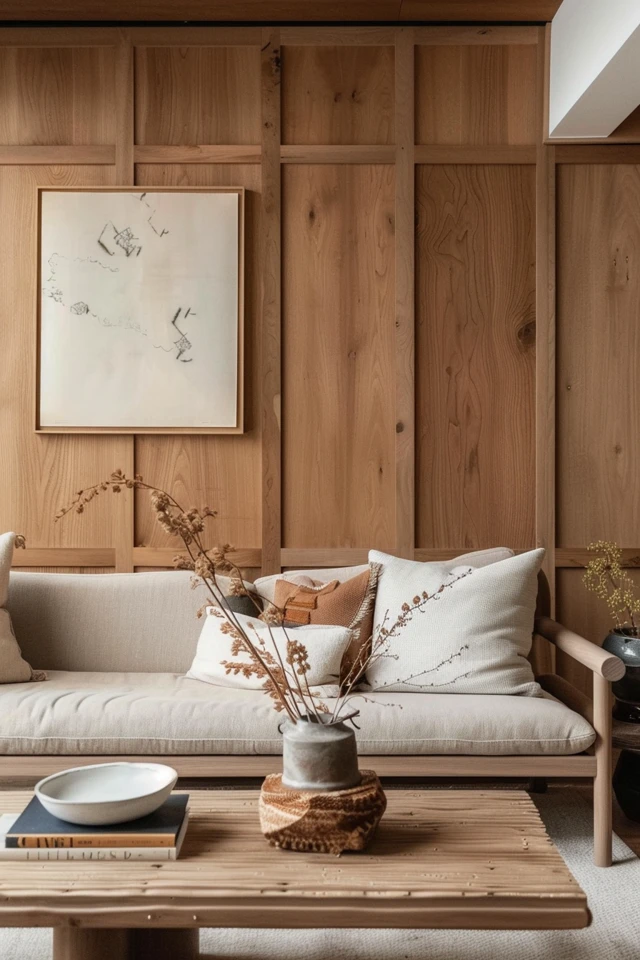
Title: Chic Wood Trim Accent Wall Ideas for Your Home
Introduction
There is a moment in almost every interior design project where a room feels finished, yet somehow flat. The furniture is scaled correctly, the rug anchors the space, and the lighting is layered, but the walls themselves lack character. This is usually where I recommend a wood trim accent wall. Unlike paint or wallpaper, which add color or pattern, wood trim adds architectural depth and shadow. It changes the physical shape of the room.
I remember working on a master bedroom renovation for a client in a standard builder-grade suburban home. The room was a perfect square, which often feels boxy and uninspired. We installed a floor-to-ceiling geometric grid pattern painted in a deep charcoal, while the rest of the room remained a soft greige. Immediately, the ceiling felt higher, the bed felt more grounded, and the room gained a sense of history it never actually had.
Whether you are planning a DIY weekend project or hiring a carpenter, planning is the most critical stage. The difference between a high-end look and a messy experiment usually comes down to math and material selection. If you are looking for visual inspiration, you can find a curated Picture Gallery at the end of this blog post to spark your creativity.
1. Choosing the Right Style for Your Architecture
The first step in designing a chic accent wall is ensuring the style of the trim matches the “bones” of your house. A mismatch here can make the design feel forced or out of place. You want the trim to look like it could have been part of the original build.
Board and Batten
This is perhaps the most versatile style. It consists of vertical strips of wood (battens) covering the seams between boards, though modern iterations often skip the backing board if the drywall is smooth.
- Traditional: Uses wider spacing (16 to 24 inches) and often stops at chair-rail height.
- Modern: goes floor-to-ceiling with tighter spacing or a grid pattern.
- Best for: Farmhouse, Craftsman, and Transitional homes.
Picture Frame Molding
Also known as box molding, this involves creating squares or rectangles using thinner, more decorative trim. It creates a sense of elegance and formality.
- Designer Rule: Keep the spacing between the boxes consistent, usually between 3 to 4 inches.
- Best for: Colonial, Victorian, and Parisian-chic aesthetics.
Vertical Slat Wood
This style uses narrow strips of wood placed very close together. It creates significant texture and draws the eye upward, making it excellent for rooms with low ceilings.
- Material Note: White oak or walnut slats look stunning when stained rather than painted.
- Best for: Mid-Century Modern, Scandi, and Contemporary spaces.
Geometric and Abstract
This involves placing trim at angles to create triangles, diamonds, or irregular shapes. It is a high-energy look that serves as art in itself.
- Caution: This style is very specific. Ensure you really love the pattern, as it is harder to patch and paint over than vertical lines.
- Best for: Nurseries, creative offices, or modern dining rooms.
2. The Math Behind the Magic: Layout and Scale
The number one reason trim projects fail is poor spacing logic. If you end up with a tiny, 2-inch box at the end of your wall, the illusion of structure is broken. You must calculate your layout before buying a single piece of lumber.
The Spacing Formula
To get equal spacing for vertical battens, follow this logic:
1. Measure the total width of the wall.
2. Decide how wide your batten boards are (e.g., 2.5 inches).
3. Estimate how many styles (vertical boards) you want.
4. Multiply the number of boards by the width of one board.
5. Subtract that number from the total wall width.
6. Divide the remaining number by the number of “spaces” (which is usually the number of boards minus one, or plus one depending on if you have end pieces).
Handling Baseboards and Crown Molding
Your accent wall must interact with existing trim.
- The Baseboard Dilemma: Ideally, the vertical trim should sit on top of the baseboard. However, most trim is thicker than standard baseboards.
- The Fix: You can either replace the baseboard with a thicker craftsman style, or cut the bottom of your vertical trim at a 45-degree angle so it tapers back into the existing baseboard. This is a cleaner, more professional look than having the trim overhang.
Obstacles and Outlets
Never pretend an outlet or light switch doesn’t exist. If a vertical batten lands directly on an outlet, you need to adjust your entire spacing calculation. It is better to shift the design by two inches than to notch out a piece of wood around a switch plate.
Designer’s Note: The “Plumb” Reality
Here is a hard truth I learned early in my career: Your walls are not straight. Your ceiling is likely not level, and your floor is not flat.
If you rely solely on measuring from the corner of the room, your pattern will look crooked. Always use a laser level or a 4-foot bubble level. Draw your pattern directly on the wall with a pencil before cutting wood. If the gap at the ceiling is tighter on the left than the right, you will need to scribe the top piece of molding to fit the gap, or use caulk to hide the discrepancy.
3. Selecting Materials and Finishes
The material you choose dictates the durability and the finish quality of the wall. While solid wood is traditional, it isn’t always the best choice for painted walls.
MDF (Medium Density Fiberboard)
For painted accent walls, MDF is the industry standard.
- Pros: It is perfectly smooth, has no knots, doesn’t warp easily, and is affordable.
- Cons: It swells if it gets wet (bad for bathrooms) and creates fine dust when cut.
- Recommendation: Use pre-primed MDF boards to save painting time.
Pine or Poplar
If you want a stained wood look, or if you are installing in a moisture-prone area like a bathroom, use solid wood.
- Poplar: Harder than pine and takes paint very well, though it is more expensive.
- Pine: Cheap and accessible, but prone to knots and warping. You must use shellac-based primer on knots, or they will bleed through the paint eventually.
PVC and Polystyrene
These are lightweight, rot-proof options.
- Best for: Damp basements or bathrooms.
- Installation: Requires specific adhesives as regular wood glue won’t bond well.
Finish Sheens
The sheen of the paint affects how the trim is perceived.
- Monochromatic (Color Drenching): Paint the trim and the drywall the exact same color. To create subtle contrast, use a Satin or Semi-Gloss finish on the wood trim and a Matte or Eggshell finish on the drywall. This captures light differently and highlights the architecture.
- High Contrast: If you leave the wall white and paint the grid black, ensure your cutting-in lines are razor sharp. Flaws are highly visible in high-contrast designs.
4. Installation: Common Mistakes + Fixes
Even with great planning, installation has hurdles. Here is how to navigate the common pitfalls that separate DIY looks from professional results.
Mistake: Relying Only on Nails
Brad nails hold the wood in place while the glue dries, but they don’t pull the wood tight enough to the wall forever. Drywall has flex.
- The Fix: Always use construction adhesive (like Liquid Nails) on the back of the trim. This prevents the wood from warping away from the wall during seasonal humidity changes.
Mistake: Ignoring the Caulk
Gaps between the wood and the wall are inevitable because drywall is bumpy. If you paint without caulking, you will see a dark shadow line along every board.
- The Fix: Use a paintable, flexible caulk on every single seam where wood meets wall. Run a damp finger or a caulk tool over the bead to smooth it. This step is tedious but non-negotiable for a chic finish.
Mistake: Poor Wood Joinery
Where two pieces of wood meet (like a horizontal rail meeting a vertical stile), a simple butt joint can look amateur if not sanded flush.
- The Fix: Once installed, apply wood filler (not caulk) to the face of the joints. Overfill it slightly, let it dry, and sand it completely smooth. When painted, it should look like one continuous piece of material.
5. Styling Your New Accent Wall
Once the dust has settled and the paint has dried, you have to furnish the room. The accent wall is the star, so you don’t want to block it entirely, but you also don’t want to leave it bare.
Art Placement
If you have installed a grid or picture frame molding, you have created natural frames.
- Inside the Box: Place art centered within the molding “boxes.” Ensure the artwork is small enough to have “breathing room” (negative space) between the frame and the molding—at least 2 to 3 inches on all sides.
- Over the Trim: In modern grid walls, it is acceptable to hang large art that spans across the trim. Just ensure the canvas sits flat; you might need to add bumpers to the back of the frame where it touches the wall.
Sconces and Lighting
Wall sconces look incredible on wood trim walls.
- Height: For a bedroom, sconces should be roughly 60–66 inches from the floor, or just above shoulder height when sitting up in bed.
- Placement: Center them within a vertical panel or specific grid block. If you didn’t wire them behind the wall, you can use “puck lights” for a wire-free solution, though hardwiring is always preferred for resale value.
Furniture Scale
A heavy wood wall needs furniture with presence. A spindly wire chair might get lost against a bold dark shiplap wall. Opt for upholstered pieces with solid fabrics that contrast the wall color. If the wall is dark Navy, a camel leather or cream boucle sofa pops beautifully.
Real Project Checklist: What I’d Do
If I were managing this project for your home, this is the exact workflow I would follow to ensure success:
1. Sketch and Tape: I would use blue painter’s tape to mock up the design on the wall. This allows you to “feel” the scale before buying wood.
2. Locate Studs: Mark every stud in the wall. You want your horizontal rails to hit studs whenever possible for strength.
3. Buy 10% Extra: Purchase 10% more material than you calculated. Mistakes happen, and wood batches can vary.
4. Sand Before Install: It is much easier to sand the faces of your MDF or wood boards while they are on sawhorses than when they are nailed to the wall.
5. Prime Cut Ends: If using MDF in a bathroom, I prime the cut ends of the boards before installing to seal them against moisture.
6. The “Touch” Test: After sanding the wood filler, I close my eyes and run my hand over the joint. If I can feel the seam, I sand more. Paint highlights texture; it doesn’t hide it.
FAQs
Can I install a trim accent wall on textured drywall?
Yes, but with caveats. If you have heavy “popcorn” or “knockdown” texture, the trim will not sit flush, leaving jagged gaps. You have two options: skim coat the wall flat first (messy but best result) or use a heavy bead of caulk to fill the gaps. For heavy textures, I recommend installing a flat board backing (like thin hardboard) behind the trim to create a smooth surface.
Does a dark accent wall make a room look smaller?
Dark colors visually advance, meaning the wall will feel closer to you. However, this creates intimacy and depth rather than claustrophobia. To keep the room feeling open, keep the ceiling white and ensure you have adequate lighting. A dark wall in a room with no natural light can feel cave-like, so add mirrors to reflect light.
How expensive is a DIY wood trim wall?
This varies by material. A standard 10×10 foot wall using MDF strips in a grid pattern typically costs between $200 and $400 for materials (wood, glue, caulk, paint). If you use solid white oak or walnut, the material cost can easily jump to $1,000 or more.
Is this rental friendly?
Traditional installation is not. However, you can use “peel and stick” molding made of PVC or foam. These are lightweight and cut with scissors. Just be aware that the adhesive can sometimes damage drywall upon removal, so you may still lose a portion of your security deposit for patching and painting.
Conclusion
A wood trim accent wall is one of the highest-return investments you can make in your home’s interior. It bridges the gap between construction and decoration, providing a permanent elegance that throw pillows and rugs simply cannot achieve. Whether you opt for a moody, floor-to-ceiling library grid or a light and airy farmhouse batten, the key lies in patience. Measure twice, level constantly, and never skip the sanding.
By respecting the architecture of your home and following the rules of scale, you can create a feature that looks like it was always meant to be there.
Picture Gallery


