
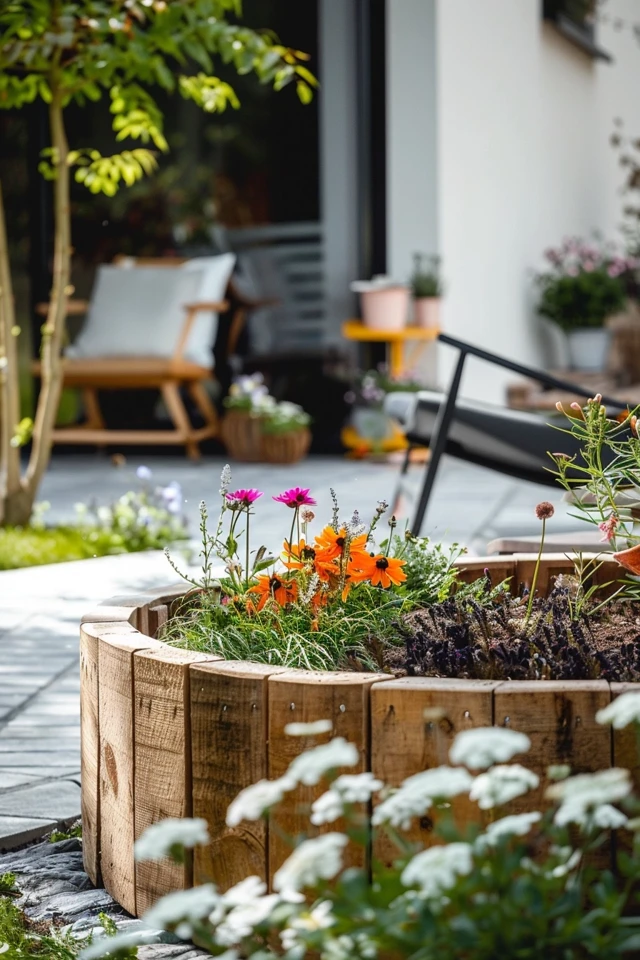
Circular Raised Garden Bed – Ideas: Grow in Style
Introduction
Rectangular garden beds are the standard for a reason. They align easily with fences, maximize square footage in small urban lots, and are generally easier to build with standard lumber. However, relying strictly on straight lines can leave a landscape feeling rigid, boxy, and uninviting.
In my years designing outdoor living spaces, I often introduce curves to soften the hard architectural lines of a home. A circular raised garden bed does exactly this; it acts as a visual punctuation mark that draws the eye and encourages flow rather than strict linear movement. For plenty of visual inspiration to help you visualize these concepts, be sure to scroll down to the Picture Gallery at the end of the blog post.
Whether you are looking to create a centralized kitchen garden or a decorative floral focal point, circular beds offer distinct ergonomic and aesthetic advantages. This guide will walk you through the design principles, material choices, and practical installation tips needed to successfully integrate round beds into your landscape.
1. The Design Strategy: Why and Where to Use Circles
When I start a landscape plan, I look at the “circulation patterns”—how people move through the space. Straight paths encourage fast movement, while curved lines and circles encourage pausing and gathering.
Placing a circular raised bed in the center of a yard creates a destination. It stops the eye and forces the viewer to look at the garden from all angles, rather than just viewing it as a border against a fence. This 360-degree accessibility is also highly functional for maintenance.
However, placement is critical. A common error is floating a small circle in the middle of a massive lawn without any connection to the rest of the design. This creates what we call the “UFO effect”—an object that looks like it just landed there by accident.
Designer’s Note: Grouping and Scale
In a recent project with a large, rectangular backyard, a single 4-foot round bed looked lost. To fix this, we implemented the “Rule of Three.” We installed three circular beds of varying diameters (one 6-foot, two 4-foot) clustered together with gravel pathways between them. This created a cohesive “garden room” rather than isolated circles.
Establish Proper Spacing
One of the most important rules of thumb in landscape design is pathway width. You must leave enough room between the curve of the bed and any surrounding walls, fences, or other beds.
- Minimum Clearance: Allow at least 36 inches of walking space around the entire circumference. This allows one person to walk comfortably.
- Functional Clearance: If you plan to use a wheelbarrow or garden cart, bump this width up to 48 inches. Curves are harder to navigate with equipment than straight lines.
- Seating Clearance: If you plan to place a bench near the bed, you need 36 inches for the bench depth plus another 30-36 inches for legroom and foot traffic.
2. Material Selection: Style Meets Durability
Achieving a perfect circle with DIY wood planks is incredibly difficult and often results in a jagged, polygon shape. For true circular beds, I almost always recommend manufactured steel, woven wattle, or masonry.
Corten and Galvanized Steel
Metal rings are my go-to for modern and transitional homes. They provide a thin, crisp edge that saves space compared to thick stone walls. Corten (weathering steel) develops a protective rust patina that looks stunning against green foliage.
Pros:
- Extremely durable and rot-proof.
- Thin profile maximizes planting area.
- Retains heat in spring, warming soil earlier.
Cons:
- Metal conducts heat; in very hot climates, this can bake roots near the edges.
- Higher upfront cost than lumber.
Stone and Brick Masonry
For traditional or cottage-style homes, stacked stone or brick adds a sense of permanence. This is a labor-intensive route, but it adds significant value to the property.
The “Keyhole” Variation:
If you are building a large masonry circle (over 6 feet in diameter), you will not be able to reach the center. I recommend a “keyhole” design. This is where you create a notch in the circle, allowing you to walk into the center of the bed for harvesting and maintenance.
Stock Tanks (The Renter-Friendly Option)
Galvanized stock tanks are a staple in farmhouse design, but they work surprisingly well in modern settings too. Because they have bottoms, they are ideal for renters or homeowners with poor native soil or heavy tree roots.
Designer’s Tip for Stock Tanks:
Drill more drainage holes than you think you need. I usually drill a 1/2-inch hole every 6 inches across the entire bottom. Elevate the tank on bricks or gravel to ensure water can freely exit the holes.
3. Ergonomics and Dimensions
Scale is the hardest part of design to master without experience. A circle drawn on paper always looks different than the physical object in the yard.
The Radius Rule
The average person can comfortably reach about 24 to 30 inches into a garden bed. This dictates your maximum diameter.
- 4-Foot Diameter: You can easily reach the center from any side. This is the ideal size for most vegetable gardens.
- 6-Foot Diameter: You will likely struggle to weed the exact center without stepping into the bed, which compacts the soil.
- Solution for Large Beds: If you want a 6-foot or larger circle, plant a permanent perennial shrub, small tree, or obelisk in the “dead zone” center that doesn’t require frequent weeding.
Height Matters
The height of the bed determines its function and visual weight.
- 6-12 Inches: This is essentially a defined border. It provides good drainage but requires bending or kneeling.
- 18-24 Inches: This is the “sweet spot” for raised beds. It sits at knee height, making it easy to weed while perching on the edge. It also deters rabbits.
- 30+ Inches: This is a standing garden. It is excellent for accessibility or elderly gardeners, but it requires a massive amount of soil to fill.
Common Mistakes + Fixes
Mistake: Underestimating soil settling.
Fix: When filling a circular bed, overfill it by about 2-3 inches. Within two weeks of watering, the soil level will drop significantly. If you fill it flush to the rim initially, you will end up with a bed that looks half-empty a month later.
4. Integration with Hardscaping
A circular bed should not just sit on top of the grass. This creates a nightmare for mowing; trying to maneuver a lawnmower around a curve usually results in uneven grass or scratched bed materials.
The Mow Strip
I always install a “mow strip” or border around circular beds. This is a 6-to-12-inch band of gravel, pavers, or bricks at ground level surrounding the bed.
- Function: The mower wheel rides on the strip, allowing the blade to cut all the grass cleanly without hitting the planter.
- Aesthetic: It acts as a frame for your picture, making the bed look intentional and finished.
Creating a Focal Point with Gravel
One of my favorite budget-friendly transformations is to remove a square patch of lawn and replace it with pea gravel or decomposed granite. Center the circular tank or bed in this gravel square.
This contrast between the organic circle and the geometric square gravel pad creates high visual tension, which is a hallmark of professional design. It also creates a mud-free zone for you to stand while harvesting herbs.
What I’d Do in a Real Project
If I were designing a small courtyard, I would place a 5-foot diameter Corten steel bed in the center. I would surround it with crushed basalt gravel. Then, I would install three solar uplights equally spaced around the perimeter, aiming up at the plants. This turns the garden bed into a sculptural light feature at night.
5. Planting Strategies for 360-Degree Viewing
Designing the plant layout for a circle is different than a rectangular border. In a border, you have a “back” (usually a fence) and a “front.” In a circle, everything is visible from everywhere.
The Cone Principle
Think of your planting plan as a cone or pyramid.
- Center (The Peak): Place your tallest, most structural element here. A bay leaf topiary, a rosemary bush, a tuteur trellis with sweet peas, or a dwarf citrus tree works perfectly.
- Middle Ring (The Body): Surround the center with medium-height bushy crops. Peppers, bush beans, kale, or zinnias provide volume.
- Outer Edge (The Spill): Use trailing plants that soften the hard edge of the planter. Nasturtiums, trailing thyme, strawberries, or alyssum should hang over the sides.
Monoculture vs. Polyculture
While a mix of vegetables is functional, sometimes a single-species mass planting is more impactful design-wise.
- The Lavender Ring: A round bed completely filled with lavender creates a stunning, fragrant purple mound that looks good year-round in mild climates.
- The Tulip Burst: In fall, pack the circle with tulip bulbs. In spring, you get a concentrated explosion of color that looks like a bouquet emerging from the ground.
Final Checklist: Planning Your Project
Before you buy materials, run through this quick checklist to ensure your site is ready.
- Sun Exposure: Does the center of the chosen circle spot get 6-8 hours of direct sun? (Watch out for shadows from the house that move throughout the day).
- Water Access: Is there a hose bib nearby? Dragging a hose around curves and obstacles is frustrating.
- Level Ground: Is the ground flat? If you are placing a rigid steel ring on a slope, you must dig out the high side to level it. Do not prop up the low side, or soil will wash out.
- Soil Calculation: Calculate the volume of a cylinder (Pi x Radius squared x Depth). Order bulk soil delivery if you need more than 1 cubic yard (27 cubic feet). Bagged soil adds up fast in cost and plastic waste.
- Material Weight: If placing on a deck or balcony, check the structural load. Wet soil weighs roughly 100 lbs per cubic foot. A large round bed can easily weigh over a ton.
FAQs
How do I irrigate a circular bed effectively?
Square grid irrigation doesn’t work well here. I recommend using drip line tubing with built-in emitters spaced every 6 inches. Coil the tubing in a spiral pattern, starting from the center and working your way out to the edge. Secure it with landscape staples. This ensures even water distribution without overspray.
Can I put a circular raised bed on concrete?
Yes, but drainage is key. If the bed is bottomless, the water will weep out onto the concrete and cause staining. I recommend using a bed with a bottom (like a stock tank) or laying down a heavy-duty pond liner inside the bed frame, then adding a layer of gravel before the soil. You will still need a drain outlet, ideally directed toward a drain or lawn area.
Do metal beds get too hot for plants?
In my experience, the soil only heats up significantly in the 2-3 inches directly touching the metal. The thermal mass of the soil in the center stays cool. However, if you live in a desert climate (Arizona, Nevada), avoid planting delicate greens like lettuce right against the metal edge. Keep the sensitive plants in the center and use heat-loving herbs like thyme near the rim.
What is the best way to keep grass out of a bottomless round bed?
Grass is relentless. Before installing the bed, scalp the grass down to the dirt. Lay down thick cardboard (remove tape and staples) over the entire area, extending 6 inches past where the bed will sit. Place the bed on top, then fill with soil. The cardboard will smother the grass and eventually decompose, allowing deep roots to penetrate later.
Conclusion
Circular raised garden beds are more than just a vessel for growing food; they are powerful design tools that disrupt the monotony of rectangular backyards. By introducing curves, you create a landscape that feels organic, softer, and more welcoming.
Whether you opt for the industrial chic of Corten steel or the rustic charm of stone, remember that scale and placement are your most important decisions. Give the bed room to breathe, ensure you can reach the center, and layer your plants to take advantage of the 360-degree view. With the right planning, a simple circle can become the heart of your garden.
Picture Gallery


