
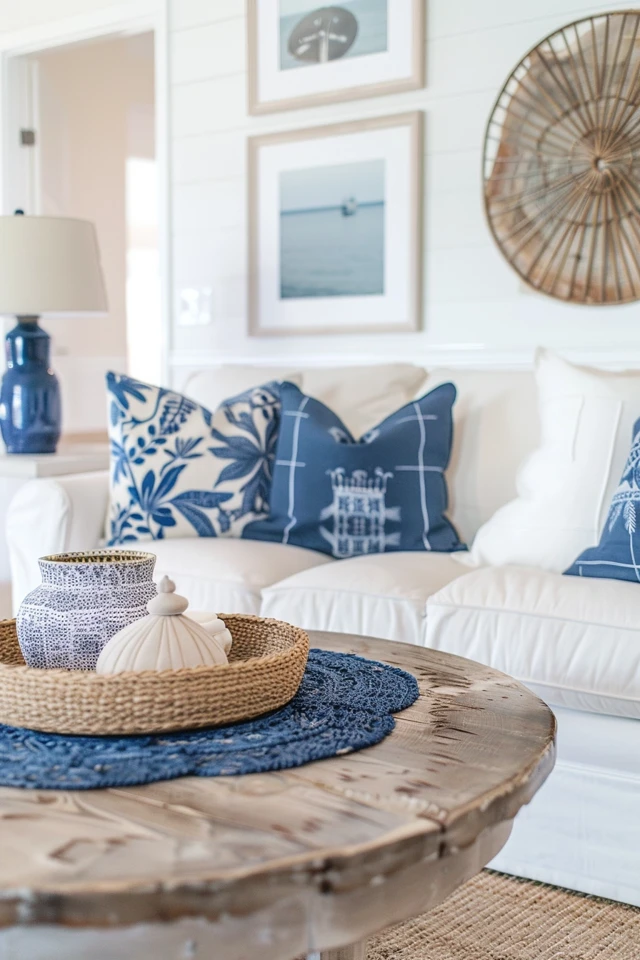
Coastal Charm: Nautical Living Room Decor Ideas
There is a distinct reason why we gravitate toward the ocean. The sound of the waves and the vastness of the horizon instantly lower our heart rates, creating a sense of calm that is hard to replicate elsewhere. Bringing that feeling into a living room is not about turning your home into a theme park; it is about capturing the essence of the coast through texture, palette, and light.
In my years designing coastal properties, the biggest challenge is always restraint. It is easy to go overboard with anchor motifs and “Life is Better at the Beach” signs, but true nautical design is much more sophisticated and subtle. For a massive dose of visual inspiration, don’t miss the curated Picture Gallery located at the very end of this post.
This guide will walk you through creating a refined nautical living space that feels curated and collected. We will cover everything from the architectural bones of the room to the final styling layers, ensuring your space feels breezy and authentic rather than kitschy.
1. The Foundation: Mastering the Nautical Palette
The most critical step in a nautical living room is establishing the color story. Many people immediately think of bright royal blue and stark white, but that high-contrast look can feel jarring and dated.
A modern nautical palette draws from the entire landscape, not just the water. Think of the color of wet sand, dried driftwood, dune grass, and the foggy grey of a morning mist. These neutrals provide a soft, forgiving backdrop that makes the darker blues pop.
When selecting your “navy,” look for complexity. A flat primary blue can look juvenile. Instead, opt for deep indigos or colors with a slight charcoal undertone, such as Benjamin Moore’s “Hale Navy” or “Gentleman’s Gray.”
Designer’s Note: The 60-30-10 Rule
To keep the room balanced, I use the classic 60-30-10 proportion rule.
- 60% Dominant Color: This should be your neutrals. White walls (try a warm white like Swiss Coffee), sandy beige upholstery, or light grey flooring.
- 30% Secondary Color: This is where your blues come in. Use them on accent chairs, a large area rug, or heavy drapery.
- 10% Accent Color: This is for contrast. In nautical design, this is often a metallic finish like unlacquered brass or a pop of deep crimson or rusty orange to mimic vintage life preservers.
Common Mistakes + Fixes
Mistake: Painting the walls a dark navy in a small room with low natural light.
The Fix: Keep the walls white or off-white to bounce light around. Use navy on the furniture or wainscoting instead. If you must do dark walls, ensure you have excellent artificial lighting and light-colored furniture to create contrast.
2. Texture and Materials: bringing the Dock Inside
Nautical design is inherently tactile. If you close your eyes and touch the surfaces in the room, they should feel organic and slightly weathered. Smooth, high-gloss lacquers and plastics rarely work in this aesthetic.
Start from the ground up with natural fiber rugs. Jute, sisal, and seagrass are staples because they mimic the texture of rope and sand. However, they can be rough on bare feet.
I often recommend a “layering” technique for my clients. Start with a large, flat-woven jute rug that fills the room (leave 12 to 18 inches of bare floor visible around the perimeter). Then, layer a smaller, softer wool or vintage rug on top to anchor the seating area.
Wood Finishes
Avoid cherry or red-toned woods, as they tend to clash with coastal blues. Instead, look for:
- White Oak: Keeps things light and airy.
- Driftwood/Weathered Grey: Adds a rustic, lived-in charm.
- Dark Walnut: Provides a “captain’s quarters” vibe if you want a moodier, more masculine space.
Wall Treatments
Ship-lap is the most obvious choice, but it must be done correctly to look high-end. The boards should be wide (nickel gap is preferred) and installed horizontally to visually widen the room.
For a more traditional nautical look, consider beadboard wainscoting installed on the lower third of the wall. This adds architectural interest and durability, protecting walls from scuffs in high-traffic family rooms.
3. Furniture Selection: Comfort Meets Durability
A coastal living room should invite you to sit down and stay awhile. The furniture needs to be substantial but approachable.
The Sofa:
The quintessential nautical sofa is slipcovered. Linen or heavy cotton duck fabrics are ideal because they breathe well and offer a casual, unstructured look. If you have pets or children, opt for a “performance linen” or Crypton fabric. These resist stains and can often be bleached or heavily scrubbed.
Accent Chairs:
This is a great place to introduce materials like rattan, wicker, or leather. A pair of spindle chairs with navy cushions can add a nice architectural element without blocking sightlines, which is crucial if your living room overlooks a view.
Coffee Tables:
I generally prefer round coffee tables in nautical rooms to break up the linear nature of ship-lap and striped fabrics. A large, round ottoman with a tray is a practical choice for families. If you choose a wood table, look for something with a reclaimed finish or a glass top with a driftwood base.
Space Planning and Measurements
Proper spacing is key to a relaxing flow.
- Traffic Flow: Leave 30 to 36 inches of walkway space between furniture pieces.
- Coffee Table Distance: Position the coffee table 14 to 18 inches from the sofa. This is close enough to set down a drink but far enough to walk through.
- Rug Sizing: Ensure the front legs of all seating furniture sit on the rug. In a standard 12×14 foot living room, an 8×10 or 9×12 rug is usually required. A rug that floats in the middle of the room “island style” makes the space look smaller and cheaper.
4. Lighting: The Lighthouse Effect
Lighting in a nautical room serves two purposes: illumination and jewelry. This is where you can introduce metallic finishes that nod to maritime hardware.
Hardware Finishes:
Polished nickel and unlacquered brass are the gold standards here. Polished nickel has a warmer tone than chrome and resists tarnish well. Unlacquered brass develops a patina over time, mimicking the hardware found on vintage ships.
Fixture Styles:
- Lanterns: oversized glass lanterns work beautifully as pendants or table lamps.
- Caged Sconces: Use bulk-head style lights or caged sconces flanking a fireplace or artwork.
- Rope Details: Lamps wrapped in heavy rope add instant texture, but limit this to one or two pieces to avoid looking themed.
Lighting Layers
Never rely on a single overhead light. You need three layers:
1. Ambient: Recessed cans or a central chandelier.
2. Task: Reading lamps near armchairs.
3. Accent: Picture lights over maps or art, or wall sconces to highlight texture.
Designer’s Note: Bulb Temperature
The color of your light bulb changes everything. For a cozy, coastal warmth, always use bulbs with a Kelvin rating between 2700K and 3000K. Anything higher (4000K-5000K) will look blue and sterile, resembling a hospital rather than a sunset.
5. Styling the Details: Subtle vs. Literal
This is the phase where designs often go wrong. The goal is to suggest the sea, not scream it.
Art Selection:
Swap out generic “beach” prints for something with history. Vintage sea charts or maps of your local coastline are excellent conversation starters. Black and white photography of waves or boats is timeless and dramatic.
You can also frame maritime flags or signal flags for a pop of color. If you do this, frame them in clean, modern gallery frames to elevate the look.
Accessories:
Edit your accessories ruthlessly. Instead of a bowl of fifty small seashells, choose one large, sculptural piece of coral or a giant clam shell.
Textiles:
Stripes are a must, but vary the scale. Mix a wide “awning stripe” on a rug with a thin “ticking stripe” on throw pillows.
The “Rental Friendly” Coastal Look
If you are renting, you cannot install ship-lap or change flooring.
- Use Curtains: Hang floor-to-ceiling white linen curtains. Install the rod 4-6 inches above the window frame and let the fabric extend 6-10 inches beyond the width on each side. This mimics the breeziness of a beach house.
- Slipcovers: If you are stuck with a dark leather sofa, use large cream knit throws or canvas slipcovers to lighten the visual weight.
- Removable Wallpaper: There are excellent peel-and-stick grasscloth wallpapers available now that add texture without damaging drywall.
What I’d Do in a Real Project: The Mini-Checklist
If I were hired today to design a nautical living room, this is the exact mental checklist I would run through to ensure success:
1. Check the Scale
Does the room have high ceilings? If so, I need taller lamps and higher curtain rods. Low furniture in a tall room feels doll-like.
2. Audit the Palette
Do I have too much blue? I will lay out all the fabric swatches. If it looks like a uniform, I need to add leather, wood, or brass to break it up.
3. Test the Durability
I will scratch the wood samples and rub the fabrics. Sand and salt air (even if imagined) imply a rougher environment. Materials must hold up.
4. Layer the Lighting
I will ensure there are at least three sources of light at eye level (table or floor lamps) to create a warm glow in the evening.
5. Add Life
Every room needs something living. I would add a large Fiddle Leaf Fig or a potted palm in a wicker basket to bring green into the palette.
Frequently Asked Questions
What is the best white paint for a coastal living room?
I frequently reach for Benjamin Moore’s “White Dove” or “Chantilly Lace.” White Dove is softer and warmer, while Chantilly Lace is crisp and bright. Always test a swatch on your wall and observe it at different times of day before committing.
Can I mix metals in a nautical room?
Absolutely. In fact, you should. A mix of matte black and brass looks modern and collected. A good rule of thumb is to pick one dominant metal (e.g., brass for lighting) and a secondary metal (e.g., matte black for door handles and curtain rods).
How do I make my room look nautical without it looking like a beach house rental?
Avoid word art. No signs that say “Beach,” “Relax,” or “Sand.” Avoid motifs like anchors, seahorses, and starfish printed on fabrics. Instead, rely on the materials: rope, linen, brass, wood, and a sophisticated color palette.
Is leather furniture okay for this style?
Yes, specifically cognac or caramel-colored leather. It warms up the cool blue and white tones and adds a rich, classic texture that feels like luggage or a vintage boat interior.
Conclusion
Creating a coastal charm living room is about capturing a mood. It is the interplay of light, natural textures, and a soothing palette that transports you to the water’s edge.
By focusing on quality materials like linen and solid wood, and paying attention to the architectural details like lighting and layout, you can create a space that feels timeless rather than trendy. Remember to edit your accessories and prioritize comfort. After all, the best beach houses are the ones where you feel free to kick off your shoes and relax.
Picture Gallery


