
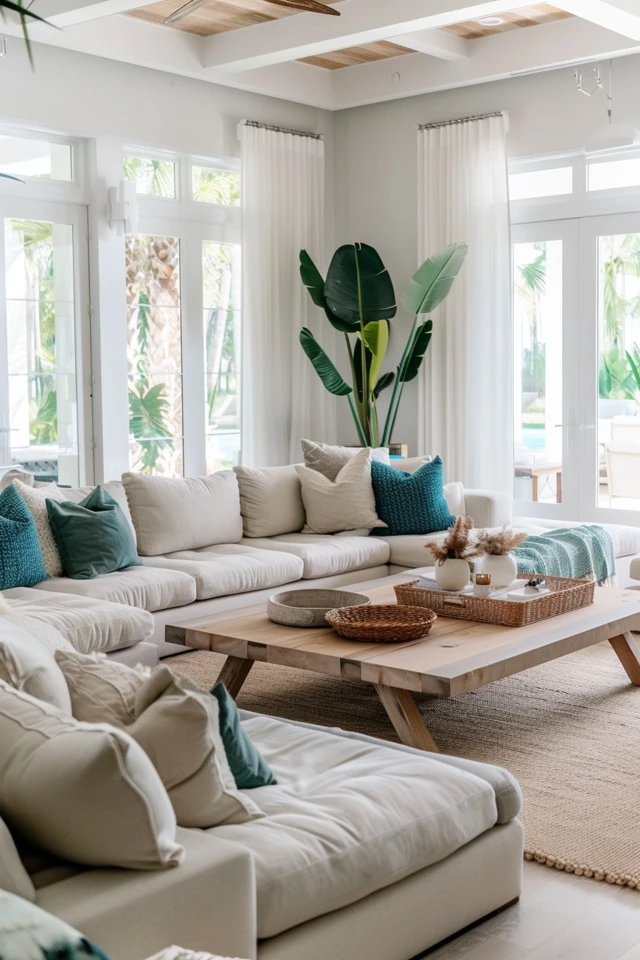
Coastal Florida Living Room Ideas I Love
Designing a living room in Florida requires a specific mindset. You aren’t just decorating for aesthetics; you are designing for a lifestyle that involves intense sunlight, high humidity, and a blurred line between indoors and outdoors. The “Florida look” has evolved significantly over the last decade, moving away from kitschy nautical themes toward sophisticated, organic, and airy spaces.
When I approach a project in a coastal setting, my goal is to create a room that feels like a deep exhale. It should be durable enough to handle sandy feet and wet swimsuits while remaining elegant enough for evening cocktails. I have compiled a comprehensive Picture Gallery at the end of this blog post to illustrate these concepts in real homes.
Whether you are renovating a condo in Sarasota or refreshing a bungalow in Jacksonville, the principles remain the same. We prioritize light, texture, and flow. Let’s dive into the practical details of creating a coastal living room that stands the test of time.
1. The Foundation: Flooring and Rugs for the Tropics
In many parts of the country, hardwood is the gold standard. In Florida, however, humidity and sand change the rules. While engineered hardwood is possible, I often steer clients toward high-quality porcelain tile or luxury vinyl plank (LVP) for main living areas.
Porcelain tile that mimics natural stone or light oak offers the best defense against moisture. It is cool to the touch, which is a blessing in August, and it is virtually indestructible. If you crave the look of wood, LVP has become incredibly realistic and is 100% waterproof.
Choosing the Right Rug
Because tile can feel cold and echo-prone, your area rug selection is critical. This is where we bring warmth back into the room.
- Natural Fibers: Jute and seagrass are staples in coastal design. They provide incredible texture and hide sand perfectly. However, they can be rough on bare feet. If you want comfort, look for a jute/wool blend or a chunky looped jute, which tends to be softer.
- Performance Rugs: For households with kids or pets, I highly recommend polypropylene rugs that mimic the look of sisal. You can scrub them with bleach and water, and they resist mold—a genuine concern in humid climates.
- Sizing Rules: A common mistake is buying a rug that “floats” in the middle of the room. Your rug should be large enough that at least the front legs of all major furniture pieces (sofa and accent chairs) sit on it. Ideally, leave 12 to 18 inches of bare floor visible around the perimeter of the room to maintain an airy feel.
Designer’s Note: Avoid heavy, high-pile wool rugs in non-air-conditioned spaces or rooms with open sliding doors. Wool holds moisture and can develop a musty scent in high humidity. Stick to flatweaves or low-pile synthetic blends.
2. The Palette: Beyond White and Blue
The stereotypical Florida living room is stark white with navy blue accents. While classic, this look can feel a bit dated or “rental property” if not executed with nuance.
I prefer a palette rooted in sand, salt, and driftwood. We want to mimic the colors found in the dunes, not necessarily the deep ocean. Think warm creams, greige (a mix of gray and beige), soft sage greens, and pale terracottas.
Understanding Light Reflectance Value (LRV)
When choosing white paint, you must look at the Light Reflectance Value. In Florida, the sun is incredibly bright. A pure bright white on the walls can be blindingly intense when the afternoon sun hits it.
I often use whites with a lower LRV or slightly warmer undertones to absorb some of that glare. Colors like “Swiss Coffee” or “White Dove” (Benjamin Moore) have enough creaminess to feel soft rather than clinical.
Texture is the New Color
If you want a neutral room, you must vary your textures to prevent it from looking flat. If your walls are smooth and your sofa is linen, you need contrast.
- Wall Treatments: Shiplap is popular, but consider applying it vertically for a more modern, ceiling-heightening effect. Tongue-and-groove ceilings add instant architectural character.
- Stone Accents: Using coral stone or a light stacked stone on a fireplace or feature wall grounds the space and adds necessary roughness to smooth drywall.
3. Furniture Selection: Durability Meets Comfort
The furniture in a coastal living room needs to invite relaxation. Formal, stiff furniture feels out of place against a backdrop of palm trees.
The Case for Slipcovers
I cannot overstate the value of slipcovered upholstery in a Florida home. A white sofa sounds dangerous until you realize you can unzip the cover and throw it in the wash with bleach.
Look for heavy-weight linen or cotton duck fabrics. They breathe better than synthetics, meaning you won’t stick to the couch on a hot day. The relaxed, slightly wrinkled look of linen fits the coastal vibe perfectly.
Mixing Materials
To avoid the “furniture showroom” look, mix your wood tones and materials.
- Wicker and Rattan: Incorporate one or two pieces, such as a side chair or a coffee table. Do not buy a full matching set of wicker furniture; it will look like a sunroom from 1990.
- Acrylic and Glass: In smaller condos, I love using an acrylic coffee table or glass side tables. They take up zero visual weight, making the room feel larger and allowing your rug texture to show through.
- Light Woods: Bleached oak, whitewashed pine, and driftwood tones work best. Avoid dark, red-toned cherry or mahogany, which can feel heavy and formal.
Common Mistakes + Fixes:
Mistake: Using metal furniture that isn’t rated for coastal environments.
Fix: Salt air corrodes standard metal quickly, even indoors if windows are often open. Choose marine-grade stainless steel, aluminum, or coated metals to prevent pitting and rust.
4. Managing the Sun: Window Treatments and Lighting
Lighting a Florida room is about two things: controlling the harsh natural light during the day and creating a soft glow at night.
Window Treatments
You need a layered approach. The sun here fades furniture rapidly and heats up the house.
- Solar Shades: These are fantastic for ocean-facing windows. They cut the UV rays and glare but still allow you to see the view.
- Drapery: Layer linen curtains over the shades for softness. Crucial tip: Always line your curtains. Unlined linen will rot and shred from sun damage within two years in a south-facing window. A privacy lining also adds weight, helping the curtains hang beautifully.
- Mounting Height: Mount your curtain rod 4 to 6 inches above the window frame (or as close to the ceiling as possible) to draw the eye up.
The Ceiling Fan Debate
In design photos, you often see gorgeous chandeliers. In real Florida living, you need air movement. A stagnant room feels hotter than it is.
You do not have to sacrifice style for function. Look for fans with simple lines and wood-tone blades. Avoid fans with bulky light kits attached. Instead, rely on recessed lighting and floor lamps for illumination, letting the fan strictly provide airflow.
5. Bringing the Outdoors In: Botanicals and Styling
The final layer is what creates that lush, tropical feeling. Since the landscape outside is green year-round, your interior should reflect that.
Plant Life
Real plants are always preferred. The humidity in Florida makes it easier to keep tropical houseplants alive compared to drier climates.
- The Statement Tree: A large Bird of Paradise or a Fiddle Leaf Fig in a woven basket fills an empty corner beautifully.
- Low Maintenance: If you lack a green thumb, Snake Plants and ZZ plants thrive on neglect and still offer that sculptural green pop.
- Palms: Be careful with indoor palms; some, like the Majesty Palm, are prone to spider mites. The Kentia Palm is a more expensive but much hardier and elegant choice.
Accessories
Edit your accessories ruthlessly. We want “curated coastal,” not “beach kitsch.”
- Organic Shapes: Use bowls made of teak or oversized glass vases filled with a single type of palm frond.
- Coffee Table Styling: Start with a large tray to corral items. Add a stack of large coffee table books (think photography or travel), a piece of coral (faux is fine and eco-friendly), and a candle with a fresh scent like sea salt or citrus.
- Avoid: Signs with words on them (e.g., “Beach House,” “Relax”), wooden anchors, or excessive amounts of small seashells scattered about.
Final Checklist: What I’d Do in Your Home
If I were consulting on your Florida living room today, this is the mental checklist I would run through to ensure the design is successful:
- Check the flow: Is there a clear, unobstructed path from the entrance to the sliding glass doors? Walkways should be at least 30 to 36 inches wide.
- Audit the fabrics: Are the sofa fabrics performance-grade? If you pour a little water on a swatch, does it bead up or soak in?
- Verify rug size: Does the rug anchor the room, or does it look like a postage stamp? When in doubt, go bigger. An 8×10 or 9×12 is usually standard for average living rooms.
- Layer the lighting: Do you have three sources of light? (1) Overhead/Fan, (2) Table/Floor lamps, (3) Ambient/Accent light.
- Test paint samples: Have you painted large swatches on different walls and watched them change throughout the day? Florida morning light is vastly different from afternoon storm light.
Frequently Asked Questions
Should I put carpet in my Florida living room?
I generally advise against wall-to-wall carpet in Florida living rooms, especially on the ground floor. It traps sand, retains humidity (which can lead to mold issues), and is harder to keep clean. If you love softness, invest in a high-quality, large area rug over tile or wood.
How do I make a small condo living room feel bigger?
Use a monochromatic color palette. When the walls, curtains, and large furniture pieces are similar in tone (e.g., all warm white or soft beige), the boundaries of the room disappear. Also, choose furniture with legs. Seeing the floor underneath the sofa and chairs tricks the eye into thinking the floor space is larger.
What is the best way to deal with humidity for furniture?
Keep air circulating. Don’t push furniture flush against the walls; leave an inch or two for airflow. Use a dehumidifier if your AC struggles to keep humidity below 55%. Avoid untreated iron or steel, as they will rust.
Can I use velvet in a coastal room?
Yes! Performance velvet in a soft color like celadon, sea glass blue, or sandy beige adds incredible luxury and texture. It contrasts beautifully with rougher textures like jute or sisal. Just avoid dark, heavy velvets that feel wintery.
Conclusion
Creating a coastal Florida living room is about balancing beauty with the realities of the environment. It is about embracing the sunlight while protecting your interiors from it, and welcoming the relaxed vibe without sacrificing elegance. By focusing on durable flooring, breathable fabrics, and a palette drawn from nature, you can design a space that feels like a permanent vacation.
Remember that the best interiors evolve over time. Start with your major pieces—the flooring, the sofa, the rug—and layer in the accessories and art as you find things you truly love.
Picture Gallery


