
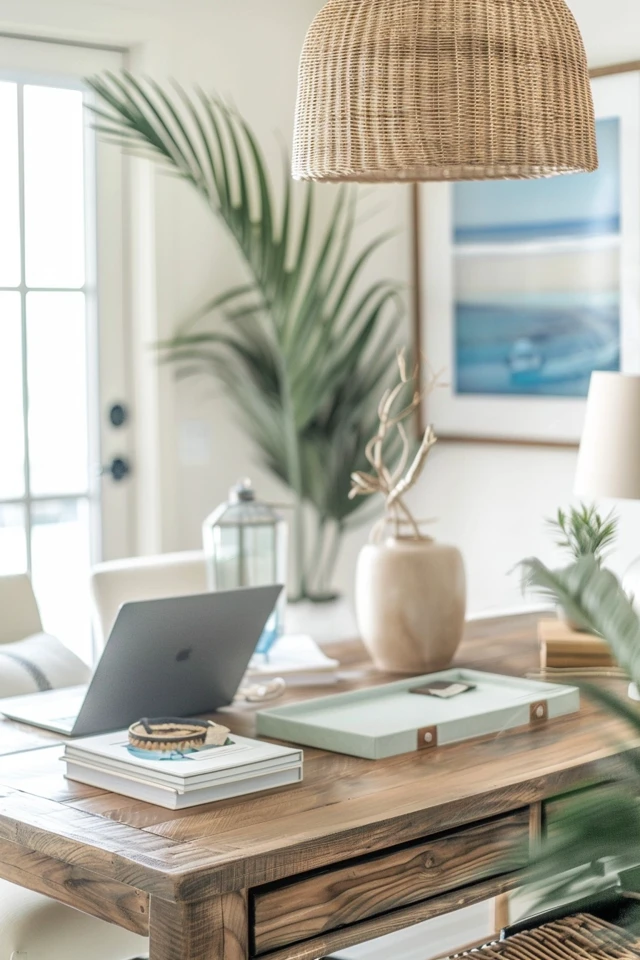
Title: Coastal Office Ideas for a Serene Workspace
Introduction
Create a workspace that feels like a deep exhale. Designing a coastal home office isn’t about gluing seashells to a picture frame; it is about capturing the essence of the coast through light, texture, and an airy atmosphere. When done correctly, this aesthetic lowers stress and boosts productivity by mimicking the natural calm of the seaside.
Many people mistake coastal design for a “beach theme,” which often leads to kitschy decor that feels out of place in a professional setting. Instead, we want to focus on refined palette choices, organic materials, and intentional layout planning that prioritizes flow. For a curated collection of visual examples to guide your renovation, be sure to check out the Picture Gallery included at the end of this article.
In this guide, I will walk you through the practical steps of building a serene coastal workspace from the floor up. We will cover paint specifications, ergonomic layouts, glare reduction, and the specific textures that bring this look to life without sacrificing durability.
1. Defining the Modern Coastal Palette
The foundation of any coastal room is the color palette, but this requires nuance to avoid looking like a nursery. The goal is to reflect the environment—sand, surf, sky, and stone—without being literal.
Start with your base whites. In a workspace, you want a white that is crisp but not blindingly clinical. I often specify “warm whites” rather than “cool whites” to keep the room inviting. Look for paint colors with a slight creamy or grey undertone to soften the light reflection on your monitor.
The 60-30-10 Rule for Coastal Offices:
- 60% Primary Color: Warm white or soft sand. This covers walls and large cabinetry to maximize light bouncing around the room.
- 30% Secondary Color: Soft blues, sage greens, or “greige” (grey-beige). Use this for upholstery, curtains, or an area rug.
- 10% Accent Color: Deep navy, charcoal, or warm brass. This provides necessary contrast so the room doesn’t float away.
Avoid high-saturation turquoises or bright corals on large surfaces. These colors can be visually fatiguing during an eight-hour workday. Instead, lean toward desaturated tones like sea glass, slate blue, or driftwood grey.
If you love dark colors, a “moody coastal” look is trending and effective. Painting the walls and trim a deep navy (like Benjamin Moore’s Hale Navy) creates a cozy, library-like atmosphere. This works exceptionally well if your office gets limited natural light, as it embraces the shadows rather than fighting them.
2. Layout and Flow for Productivity
A beautiful office is useless if it functions poorly. The layout must prioritize your workflow while maximizing the feeling of space. In coastal design, “flow” is literal; you want to be able to move through the room like a breeze.
The Command Position:
Ideally, place your desk where you can see the door but are not directly in line with it. This is a classic Feng Shui principle that reduces subconscious anxiety. Do not push your desk directly against a wall if you have the space.
Clearance Rules of Thumb:
- Chair Space: Allow at least 36 to 42 inches of clearance behind your desk chair. You need to be able to slide back and stand up without hitting a bookshelf or wall.
- Walkways: Main traffic paths should be a minimum of 30 inches wide, though 36 inches is preferred for a spacious feel.
- Desk Size: For a primary workspace, do not go smaller than 48 inches wide by 24 inches deep. If you use dual monitors, aim for 60 inches wide.
If you are dealing with a small room, consider a “floating” layout. Place a rug in the center of the room and anchor the front legs of the desk on it. This defines the work zone and makes the room feel larger than shoving furniture into corners.
Designer’s Note:
One lesson I learned the hard way involved a client who wanted a desk facing the window for the view. While it sounds romantic, the contrast between the bright window and the computer screen caused severe eye strain within a week. If you face a window, you absolutely need light-filtering shades. The best position is usually perpendicular to the window.
3. Selecting Materials and Textures
Texture is the secret sauce of coastal design. Since the color palette is generally subdued, texture adds the necessary visual weight and interest. We are looking for materials that feel organic and worn-in, rather than slick and polished.
Wood Tones:
Step away from dark mahogany or cherry woods, which feel too heavy and traditional. Instead, opt for white oak, ash, or whitewashed woods. These lighter tones hide dust better and keep the visual weight of the furniture low. A “cerused” finish, where white pigment fills the wood grain, is a quintessential coastal look.
Natural Fibers:
Incorporate elements like rattan, cane, jute, or seagrass. However, be strategic about where you use them. A rattan desk chair looks beautiful, but it is often uncomfortable for long work sessions and can snag clothing.
Instead, use cane webbing on cabinet doors to hide printers and paperwork. This allows air to circulate (good for electronics) and hides clutter while adding that beachy texture. Use woven baskets for trash bins or plan storage.
Metals:
Mix your metals to keep the room from feeling flat. Matte black hardware adds a modern edge and grounds the space. Unlacquered brass or brushed nickel feels timeless and nautical. Avoid high-gloss chrome, which can feel too commercial for a serene home office.
4. Lighting and Window Treatments
Lighting a home office is a balancing act. You need high functionality for reading and video calls, but you want to maintain a soft, ambient glow. Coastal light is characteristically diffused and warm.
Layering Your Lighting:
- Ambient: A central pendant or flush mount. Look for fixtures made of capiz shell, woven rope, or seeded glass.
- Task: A desk lamp is non-negotiable. Choose one with an adjustable arm. Ideally, the light source should be below your eye level to prevent glare on screens.
- Accent: If you have shelving, add small picture lights or LED strip lighting to highlight decor. This adds depth to the room in the evenings.
Bulb Temperature Matters:
For a workspace, avoid “daylight” bulbs (5000K+), which can feel harsh and blue. Also, avoid very warm “candlelight” bulbs (2700K), which can make you sleepy. The sweet spot for a coastal office is 3000K to 3500K. This provides a clean, neutral white light.
Window Treatments:
The biggest functional challenge in a coastal office is glare. You want the sun, but not on your screen.
My go-to solution is a dual setup:
1. Solar Shades: These mount inside the window frame. They block UV rays and glare but still allow you to see the view outside.
2. Linen Drapes: Mount these high and wide. They soften the edges of the window and add vertical height to the room. White or flax-colored linen adds luxury and sound absorption.
5. Flooring and Rugs
The floor is the largest surface in the room and sets the tone. In a coastal space, light wood flooring is ideal. If you have dark floors, a large area rug is your best friend to lighten the palette.
Rug Sizing Logic:
A common mistake is buying a rug that is too small, creating a “floating island” look.
- The Rule: The rug should extend at least 18 to 24 inches beyond the sides of your desk.
- Chair Movement: Ensure the rug is large enough that your chair creates a barrier. You do not want your chair casters rolling off the edge of the rug every time you back up.
Material Selection:
While natural fiber rugs like jute and sisal look incredibly coastal, they are rough on bare feet and difficult to clean if you spill coffee. They also do not play well with rolling office chairs.
The Fix: Look for “indoor/outdoor” rugs made of PET (recycled plastic) or high-quality wool blends with a low pile. These mimic the look of natural fibers but are soft, durable, and allow chair wheels to roll smoothly. If you absolutely want jute, layer a smaller, softer vintage-style rug on top of it under the desk.
6. Styling: The “Less is More” Approach
Clutter is the enemy of serenity. In a coastal office, every object should have breathing room. We want to style with intention, using objects that evoke the sea without screaming about it.
Artwork:
Replace generic motivation posters with large-scale photography. A single, oversized print of a horizon line or a black-and-white photo of waves has a calming effect. Hang art so the center is 57 to 60 inches from the floor (eye level for standing), or lower if you will mostly view it while seated.
Greenery:
Plants bridge the gap between indoors and outdoors.
- Large Plants: A Bird of Paradise or a Fiddle Leaf Fig adds height and fills empty corners. Place them in woven baskets.
- Desk Plants: A small succulent, ZZ plant, or Snake plant requires low light and minimal water.
Bookshelf Styling:
Follow the 2/3 rule: fill shelves only two-thirds full. Leave negative space. Group books by color (whites, blues, greens) or turn the spines inward for a neutral textural look (controversial to readers, but effective for design). Mix in ceramic vases, driftwood pieces, or coral sculptures.
Common Mistakes + Fixes
Mistake 1: Ignoring Acoustics.
Coastal design uses a lot of hard surfaces (wood, glass, metal). This creates echoes, which are terrible for Zoom calls.
The Fix: Add soft absorption points. A thick rug pad, linen curtains, and even a canvas wall art piece help dampen sound.
Mistake 2: “Theme Park” Decor.
Using anchor-print pillows, “Beach This Way” signs, and rope everywhere.
The Fix: Focus on materials, not motifs. Use a rope-wrapped lamp base instead of a rope sign. Use a blue linen pillow instead of one with a crab printed on it.
Mistake 3: Buying the Wrong Chair.
Sacrificing your back for a pretty wooden chair.
The Fix: Buy a high-quality ergonomic office chair. You can find them in white or light grey frames with mesh backs that fit the coastal vibe perfectly without wrecking your spine.
What I’d Do in a Real Project
If I were designing a 12×12 home office today with a moderate budget, here is exactly what I would specify:
1. Paint: Benjamin Moore “Swiss Coffee” on walls (eggshell finish) and trim (satin finish).
2. Desk: A 60-inch white oak writing desk with simple, clean lines.
3. Storage: A low credenza behind the desk in a light grey wash with cane-front doors to hide the printer and router.
4. Rug: An 8×10 wool-blend rug in a subtle cream and beige stripe.
5. Chair: A white-frame Herman Miller Sayl chair or similar ergonomic mesh option.
6. Lighting: A brass floor lamp with a linen drum shade in the corner, and a ceramic table lamp on the desk.
7. Windows: Woven wood shades in a light bamboo tone, layered with stationary white linen panels.
Final Checklist
Use this checklist to ensure you have covered all the bases for your serene workspace.
- Palette Check: Do I have a 60/30/10 mix of warm whites, soft blues/neutrals, and a grounding accent?
- Ergonomics: Is my desk at least 24″ deep? Do I have 36″+ clearance behind my chair?
- Lighting: Do I have at least two light sources (overhead + task)? Are bulbs between 3000K-3500K?
- Glare Control: Do my windows have shades that filter light without blocking it entirely?
- Rug Size: Does the rug extend 18″ past the desk? Can I roll my chair without falling off the edge?
- Storage: Do I have closed storage (drawers/doors) to hide paper clutter?
- Greenery: Is there at least one living plant in the room?
FAQs
How do I make a rental office feel coastal without painting?
Focus on large-scale decor. Use removable wallpaper with a grasscloth texture on one accent wall. Invest in large, light-colored curtains and hang them as high as possible using tension rods or command hooks if drilling isn’t allowed. A large area rug will cover unattractive rental flooring.
Can I mix coastal with modern or farmhouse styles?
Absolutely. “Coastal Modern” is very popular; simply swap rustic woods for sleeker, lacquered white finishes and glass. “Coastal Farmhouse” leans heavily on shiplap walls, slipcovered furniture, and galvanized metal accents. The key is keeping the color palette consistent.
My office is in a windowless closet. Can it still be coastal?
Yes. In a windowless space, lighting is everything. Use 3500K LED bulbs to mimic natural daylight. Use a large mirror to reflect light and create depth. paint the walls a very light, reflective white (like Benjamin Moore Chantilly Lace) to maximize brightness.
Is it okay to use a dining chair as a desk chair?
Only if you work for very short periods (less than 2 hours a day). For full-time work, a dining chair offers no lumbar support and is not height-adjustable. If you must use one, add a firm lumbar pillow and a seat cushion.
Conclusion
Designing a coastal office is about more than just aesthetics; it is about curating an environment that supports your mental well-being. By prioritizing natural light, honest materials, and an uncluttered layout, you create a space that fosters focus and creativity.
Remember that this is a process. Start with the “bones” of the room—the layout and the paint—before worrying about the accessories. A serene workspace is one where function meets feeling, allowing you to tackle your to-do list with the calmness of a quiet day at the beach.
Picture Gallery


