
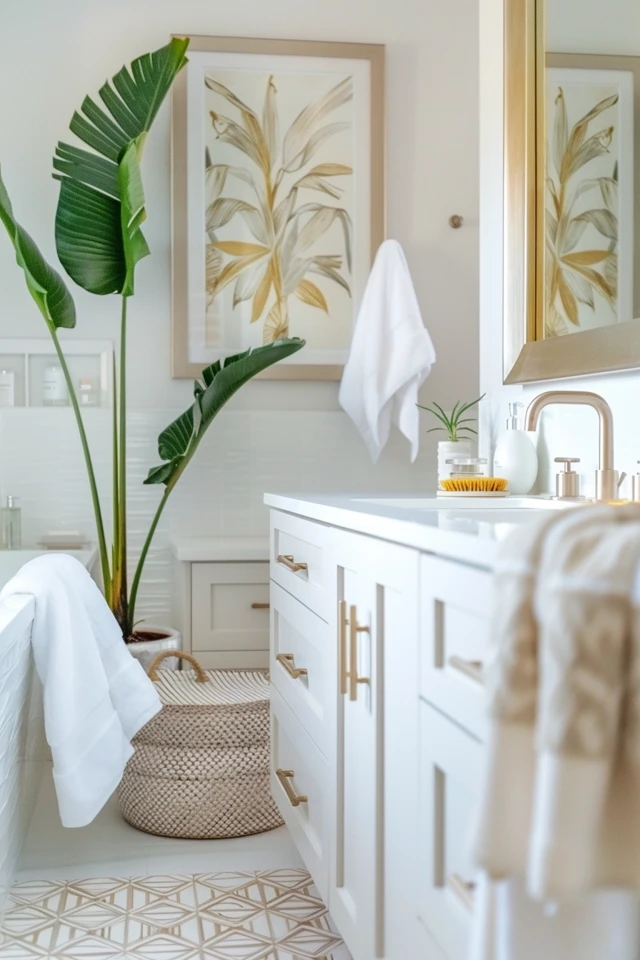
Coastal Small Bathroom Ideas for Chic Spaces
Designing a small bathroom requires a delicate balance of function and style, especially when aiming for a coastal aesthetic. If you are looking for visual inspiration, you can jump straight to the curated Picture Gallery at the end of this blog post to see these ideas in action. However, if you want to understand the mechanics of space planning and material selection, keep reading.
I recall a project in a cramped 1940s bungalow where the client wanted a “beach house vibe” in a five-by-eight-foot powder room. The challenge wasn’t just the size; it was avoiding the cliché motifs that often make coastal design feel cheap or temporary.
We achieved a high-end look by focusing on light, texture, and architectural details rather than theme-heavy decor. In this guide, I will walk you through the professional techniques I use to bring that breezy, sophisticated coastal feeling into tight square footage.
1. Establishing the Palette: Beyond Blue and White
When people think of coastal design, their minds often go immediately to navy blue and bright white. While classic, this high-contrast combination can actually make a small bathroom feel smaller and more enclosed.
For a chic, modern coastal look, I prefer to lean into a “sand and spray” palette. This involves warmer whites, soft creams, greiges, and bleached wood tones that mimic driftwood.
The Rule of Thumb for Small Space Color:
Limit your primary palette to three materials or colors. In a small bathroom (typically under 40 square feet), visual chaos is the enemy. By keeping the color story tight, you allow the eye to travel smoothly across the room without interruption.
Color Formulas That Work:
- The Organic Coast: Creamy white walls (like Benjamin Moore Swiss Coffee) + White Oak vanity + Brass fixtures.
- The Misty Morning: Pale gray-green tile (think sea glass) + Matte white fixtures + Polished Nickel hardware.
- The Modern Dunes: Warm beige limestone floors + Crisp white walls + Matte Black accents for contrast.
Designer’s Note: The 60-30-10 Rule
In a small bathroom, 60% of the room should be your dominant color (usually your wall tile or paint). 30% is your secondary color (flooring or vanity cabinet). The final 10% is your accent (faucets, lighting, and handles). Following this ratio prevents the space from feeling disjointed.
2. Tile Selection and Layout Strategy
In a compact bathroom, tile is your most powerful tool for manipulating perception. The right tile can make ceilings feel higher and floors feel wider.
One specific material I love for coastal bathrooms is Zellige tile (or Zellige-style ceramic). These tiles have an imperfect, handcrafted glaze that reflects light unevenly, much like sunlight hitting the surface of the water.
Vertical vs. Horizontal:
If your ceilings are standard height (8 feet) or lower, run your wall tile vertically. A vertical stack bond draws the eye upward, creating an illusion of height. If the room is narrow but has high ceilings, a horizontal running bond can help visually widen the space.
Common Mistakes + Fixes:
- Mistake: Using small mosaic tiles on both the floor and the walls. This creates too many grout lines, which looks busy and shrinks the room.
- Fix: Pair a small-scale mosaic floor (like a hexagon or penny round) with a large-format wall tile. The contrast in scale creates breathing room.
Practical Measurements:
For shower niches in small bathrooms, I try to span the full width of a wall if possible, or at least 24 inches wide. This reduces visual clutter by consolidating shampoo bottles into one horizontal line rather than a cramped vertical box.
3. The Vanity: Scale and Storage
Selecting a vanity for a small coastal bathroom is a battle between storage needs and floor space. Heavy, boxy cabinets can weigh down a room and block flow.
My go-to solution for these spaces is a floating vanity. By exposing the floor underneath the cabinet, you extend the sightline all the way to the wall. This trick instantly makes the bathroom feel larger and airier.
Material Matters:
To achieve that coastal warmth, look for light wood species. White Oak, Ash, or a light Maple with a clear, matte sealer are ideal. Avoid dark cherry or mahogany, as they tend to feel too traditional and heavy for this aesthetic.
Countertop Choices:
Stick to quartz or solid surface materials in solid white or very subtle veining. A busy granite countertop will fight with your other textures.
Common Dimensions:
- Depth: Standard vanity depth is 21 inches. In very tight spaces, look for “slim” vanities that are 18 inches deep. This saves three inches of walkway, which is significant in a small room.
- Width: ensure you have at least 4 inches of clearance between the side of the vanity and a wall or toilet for cleaning ease.
Designer’s Note: Storage Reality Check
If you choose a floating vanity or a pedestal sink to save space, you lose storage. Compensate for this by installing a recessed medicine cabinet. Modern versions are sleek and can hide toothbrushes and skincare, keeping the counters clear.
4. Lighting: The Jewelry of the Room
Lighting in a coastal bathroom should be soft, diffuse, and abundant. You want to replicate natural daylight as much as possible.
Avoid a single overhead “boob light” fixture. It casts unflattering shadows and does nothing for the design. Instead, layer your lighting.
Sconce Placement:
Ideally, place sconces on either side of the mirror at eye level (roughly 60 to 66 inches from the floor). This provides the most flattering cross-illumination for your face. If you don’t have the width for side sconces, opt for a long linear fixture above the mirror.
Finish Coordination:
- Polished Nickel: It has a warmer undertone than chrome and fits the coastal vibe perfectly. It feels like vintage boat hardware.
- Unlacquered Brass: This brings warmth to a white-heavy room. It will patina over time, adding to the “lived-in” coastal charm.
- Matte Black: Use this sparingly to add a modern edge and ground the airy colors.
Bulb Temperature is Critical:
Always use LED bulbs with a color temperature between 2700K and 3000K. Anything higher (4000K+) will look blue and clinical, like a hospital. Anything lower will look too yellow and dingy for a fresh coastal space.
5. Finishing Touches: Texture over Clutter
The difference between a “themed” bathroom and a “styled” bathroom lies in the accessories. We want to avoid signs that say “Relax” or shower curtains printed with anchors.
Instead, we tell the coastal story through natural textures. Think jute, rattan, linen, and glass.
Textile Selection:
Choose a shower curtain in a natural linen or a waffle-weave cotton. These fabrics allow light to filter through while adding a tactile element. If you are renovating, a clear glass frameless shower door is the ultimate space-expander.
The Rug:
Skip the rubber-backed fuzzy bath mats. They often look cheap and trap dirt. Instead, use a flat-weave Turkish rug or a durable indoor/outdoor runner. They dry quickly and add a layer of sophistication.
Styling “Rules”:
- Glass Canisters: Decant cotton balls and swabs into clear glass jars. It removes packaging noise.
- Greenery: A small fern or air plant loves the humidity of a bathroom and adds a pop of life.
- Wood Accents: A simple wooden stool or a teak bath mat can warm up a room dominated by cold tile.
Final Checklist: What I’d Do in a Real Project
If I were hired to design a small coastal bathroom tomorrow, this is the exact workflow I would follow. You can use this as your project roadmap.
Step 1: Assess the plumbing. Can the toilet or sink move? If not (which is common for budget reasons), measure the exact footprint available for the vanity.
Step 2: Choose the floor tile first. I would select a durable porcelain tile in a warm gray or sand tone. I prefer a matte finish to prevent slipping.
Step 3: Select the wall treatment. I would likely run shiplap (nickel gap paneling) horizontally on the walls up to 48 inches high, painted in a semi-gloss white for durability.
Step 4: Pick the vanity. I’d source a 30-inch white oak floating vanity with a white quartz top.
Step 5: Layer the lighting. I would install two polished nickel sconces with clear glass shades to keep the visual weight light.
Step 6: Hardware check. I would match the faucet to the light fixtures but perhaps choose matte black cabinet pulls for a tiny bit of contrast.
Step 7: Final styling. I would hang a round mirror (curves soften the square lines of a small room) using a rope or leather strap detail.
FAQs
Can I use wallpaper in a small full bathroom with a shower?
Yes, but with caution. You must use “vinyl” or “non-woven” wallpaper specifically designed for high-humidity areas. Install high-quality ventilation (an exhaust fan) to prevent peeling. I recommend keeping wallpaper on the upper half of the wall, above wainscoting or tile, to protect it from direct splashes.
How do I make a windowless bathroom feel like it has natural light?
The secret is mirrors and gloss. Use a large mirror to reflect the artificial light you have. Choose glossy wall tiles rather than matte, as they bounce light around the room. Ensure your light bulbs are 3000K brightness to mimic warm daylight.
Is a pedestal sink better than a vanity for small spaces?
Strictly for floor space, yes. A pedestal sink makes a room feel massive. However, for practicality, it is often a nightmare because there is zero storage and zero counter space. I only recommend pedestal sinks for powder rooms (guest bathrooms) where storage isn’t required.
What is the best paint finish for a coastal bathroom?
Satin or Semi-Gloss. Matte paint absorbs moisture and is hard to clean. Satin has a soft glow that fits the coastal look but is durable enough to wipe down. Semi-gloss is even more durable but can highlight imperfections in the drywall.
Conclusion
Creating a chic coastal bathroom in a small footprint is about restraint and intentionality. It is about capturing the feeling of the coast—the light, the airiness, the natural textures—rather than displaying a collection of nautical objects.
By focusing on durable materials like quartz and porcelain, maximizing vertical space with stacked tile, and prioritizing lighting, you can turn a cramped bathroom into a rejuvenating retreat. Remember to measure twice, keep your color palette limited, and invest in high-quality fixtures that you touch every day.
Picture Gallery


