
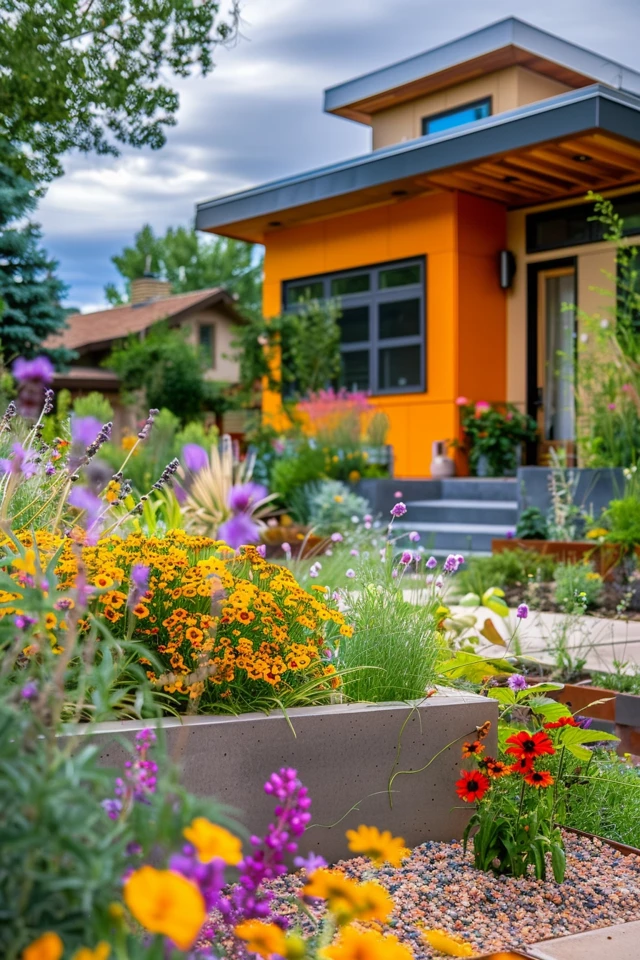
Colorado Xeriscape Ideas for Front Yards
Living in Colorado means dealing with high-altitude sun, heavy clay soil, and weather that swings from eighty degrees to snowing in a span of twenty-four hours. Maintaining a traditional Kentucky Bluegrass lawn here is not just labor-intensive; it is an uphill battle against the local climate. As a designer, I have seen too many homeowners fight nature rather than working with it, resulting in high water bills and frustrated weekends.
Xeriscape often gets a bad reputation as merely “zero-scape” or a pile of rocks with a lonely cactus, but that could not be further from the truth. A well-designed xeriscape is lush, colorful, and creates significant curb appeal that actually frames your home better than flat grass ever could. If you are looking for visual inspiration, keep in mind that a full Picture Gallery is included at the end of this blog post.
By shifting your front yard to a water-wise design, you gain texture, depth, and a landscape that looks beautiful even in the dead of winter. This guide will walk you through the practical steps, design rules, and plant choices to create a Colorado front yard that turns heads.
1. Establishing the Hardscape Structure
In interior design, we start with the floor plan and furniture layout; in landscape design, we start with hardscape. Because xeriscaping relies less on a carpet of green grass to unify the space, your hardscape—paths, retaining walls, and borders—must do the heavy lifting.
You need to define how people move through the space before you plant a single seed. A common mistake is making walkways too narrow; a front entry path should be at least 48 inches wide to allow two people to walk side-by-side comfortably. If you have the space, 60 inches creates a grander, more welcoming entrance.
Use materials that complement your home’s exterior architecture. If you have a mid-century modern home, look for rectangular concrete pavers with river rock gaps. If your home is a traditional craftsman, irregular flagstone or warm brick pavers tend to blend better.
Designer’s Note: The “Landing Zone”
I always advise clients to create a “landing zone” near the front porch or halfway down the main path. This is a widened area of hardscape, perhaps 6 to 8 feet in diameter, where you might place a bench or simply allow space for guests to pause. It stops the yard from feeling like a runway and makes it feel like a destination.
Common Mistakes + Fixes
Mistake: Using plastic edging to separate rock/mulch from the sidewalk.
Fix: Use 4-inch steel edging. It provides a crisp, professional line that doesn’t warp in the sun. It creates a visual separation that makes the garden look intentional rather than messy.
2. The “Thrill, Fill, and Spill” Planting Strategy
When removing a lawn, the biggest challenge is avoiding a sparse, polka-dot look where small plants sit three feet apart surrounded by acres of mulch. To get a lush look with low water, I use the container gardening rule of thumb on a macro scale: Thrill, Fill, and Spill.
Thrillers (The Anchors):
These are your focal points that provide height and structure. In a front yard, you want 1 to 3 of these depending on the size of the lot.
- Dwarf Blue Spruce: Keeps that classic Colorado mountain look but stays manageable in scale.
- Serviceberry (Autumn Brilliance): Offers spring flowers, summer berries, and incredible red fall color.
- Yucca or Agave: For a more sculptural, modern look.
Fillers (The Body):
These plants bridge the gap between the ground and the anchors. They should be planted in drifts (groups of 3, 5, or 7) rather than singly.
- Russian Sage: Extremely drought tolerant and adds a hazy purple texture.
- Karl Foerster Grass: Provides vertical interest and looks great even when brown in winter.
- Coneflower (Echinacea): Native, sturdy, and attracts pollinators.
Spillers (The Ground Plane):
These soften the hard edges of your walkways and retaining walls.
- Creeping Phlox: Creates a carpet of color in spring.
- Sedum (Stonecrop): Indestructible and fills in gaps between rocks perfectly.
- Ice Plant: Succulent ground cover that blooms in neon brights.
Pro-Level Rule of Thumb: Spacing
Read the plant tag for the “mature width.” If a plant grows to 24 inches wide, plant the center of the next plant 24 inches away. It will look sparse for year one, but by year three, they will touch. If you plant them closer for instant gratification, they will choke each other out and become prone to mildew.
3. Zoning Your Irrigation and Soil Prep
The unsexy truth about beautiful gardens is that they are 90% soil preparation. Colorado soil is notoriously heavy clay or rocky alkaline. Before you plant, you must amend the soil.
For a 1,000 square foot front yard, I typically recommend tilling in at least 3 to 4 cubic yards of compost or “squeegee” (fine gravel) to improve drainage. Native plants hate “wet feet,” meaning if their roots sit in standing water, they will rot.
Regarding water, xeriscape does not mean “no water.” It means “efficient water.” You must hydro-zone your yard. This means grouping plants with similar water needs together. Do not put a water-loving Hydrangea next to a drought-loving Lavender; one will die, or you will waste water keeping the other alive.
What I’d Do in a Real Project
- Zone 1 (Closest to the house/spigot): Moderate water usage. This is where I put the showier perennials that might need a drink once a week.
- Zone 2 (Middle ground): Low water usage. Establish plants here that, after two years, can survive on rainfall alone or once-a-month watering.
- Zone 3 (Edges/hell strips): No water usage (once established). This is for the toughest natives and rocks.
Irrigation Retrofit Tip
Convert your spray zones to a drip grid. Spray heads lose massive amounts of water to evaporation in the dry Colorado air. Netafim (inline drip tubing) laid out in a grid pattern under the mulch ensures water goes directly to the roots.
4. Mulch: Rock vs. Wood
There is a heated debate in xeriscaping about rock mulch versus wood mulch. As a designer, I use both, but for specific purposes.
Wood Mulch (Cedar or Gorilla Hair):
Use this around your perennials and shrubs. Wood mulch helps retain soil moisture and keeps the ground temperature cooler, which plants love. Over time, it breaks down and improves that heavy clay soil.
- Depth: Apply 3 to 4 inches thick.
- Aesthetic: Provides a soft, dark background that makes green foliage pop.
Rock Mulch (River Rock or Cobble):
Use this in areas where you have high drainage needs, near the foundation of the house, or in the “hell strip” between the sidewalk and street.
- Warning: Rock absorbs heat during the day and radiates it at night. This can cook delicate plants.
- Designer Rule: Do not use small pea gravel near a walkway; it travels and ends up all over the pavement. Use 1.5-inch rock or larger for stability.
Common Mistakes + Fixes
Mistake: Placing rock mulch right up against the siding of the house.
Fix: Leave a 12 to 18-inch barrier of hardscape or larger cobble. This prevents termites and water splashing dirt onto your facade. It also helps with fire mitigation, a serious concern in many parts of Colorado.
5. Creating Winter Interest
In Colorado, our gardening season is short. Your front yard needs to look good from November to April when everything is dormant. If you rely solely on flowers, your yard will look flat and dead for half the year.
This is where “bones” come in. You need structural elements that catch the snow and cast shadows.
Boulders:
Large boulders are the sculptures of a xeriscape. When placing a boulder, bury the bottom 1/3 of it into the ground. A boulder sitting on top of the soil looks like it fell off a truck; a buried boulder looks like the earth grew around it.
Ornamental Grasses:
Do not cut your grasses back in the fall. Leave them standing. The blonde stalks against the white snow are stunning, and the seed heads provide food for birds. Cut them back in late March instead.
Evergreens:
Ensure at least 30% of your plant material is evergreen. Mugo Pines, Juniper ground cover, or even broadleaf evergreens like Mahonia keep the garden looking alive when the perennials have died back.
Final Checklist: The Designer’s Approach
If I were consulting on your front yard today, this is the exact order of operations I would follow.
- 1. Site Analysis: Map out sun exposure. Which areas get the baking afternoon sun (West/South) and which are shaded (North/East)?
- 2. Kill the Grass: Solarize it with plastic, sod cut it, or sheet mulch it with cardboard. Do not just put rocks over grass; the grass will grow through.
- 3. Hardscape Layout: Install your paths, patios, and large boulders first. Heavy machinery should be done before soil prep.
- 4. Soil Amendment: Till in compost. This is the best investment you will make.
- 5. Drip Irrigation: Install the grid. Test it for leaks before covering it.
- 6. Place Plants: Set the pots out while still in containers to check spacing and composition. Step back to the curb to view it.
- 7. Plant and Mulch: Plant high (don’t bury the crown of the plant). Mulch immediately to seal in moisture.
- 8. Water: Even xeriscape plants need daily water for the first 2-3 weeks to establish roots.
FAQs
Does xeriscaping mean I can never have a lawn?
Not at all. I often design “area rugs” of turf—small, intentional patches of Buffalo grass or Dog Tuff grass. These use a fraction of the water of Bluegrass and provide a soft place for pets or kids to play, while the rest of the yard is converted to planting beds.
How much maintenance is really involved?
Year one is high maintenance for watering and weeding. By year three, a well-designed xeriscape requires significantly less maintenance than a lawn. You are mostly cutting back perennials once a year in spring and doing occasional weeding. You eliminate weekly mowing entirely.
Will my HOA allow this?
In Colorado, legislation has been passed that prevents HOAs from forcing homeowners to have water-thirsty turf. However, they can still regulate the aesthetics (percentage of live plant material vs. rock). Always submit a plan with a clear plant list and hardscape diagram to get approval before breaking ground.
What if I have a massive tree in the front yard?
Mature trees are gold. Xeriscaping under a tree is actually known as dry shade gardening. You will use different plants like Coral Bells (Heuchera), Bleeding Heart, and shade-tolerant ornamental grasses. Be very careful not to sever the tree roots when removing turf or installing paths.
Conclusion
Transforming your Colorado front yard into a xeriscape is an investment in both your home’s value and the local ecosystem. It shifts the aesthetic from a generic green carpet to a curated garden that reflects the natural beauty of the Rockies.
Remember that landscape design is patience in action. The photos you see in magazines are usually of gardens that have been maturing for three to five years. Trust the process, give your plants space to breathe, and focus on the hardscape structure first. By following these principles, you will create a space that is not only water-wise but genuinely welcoming.
Picture Gallery


