
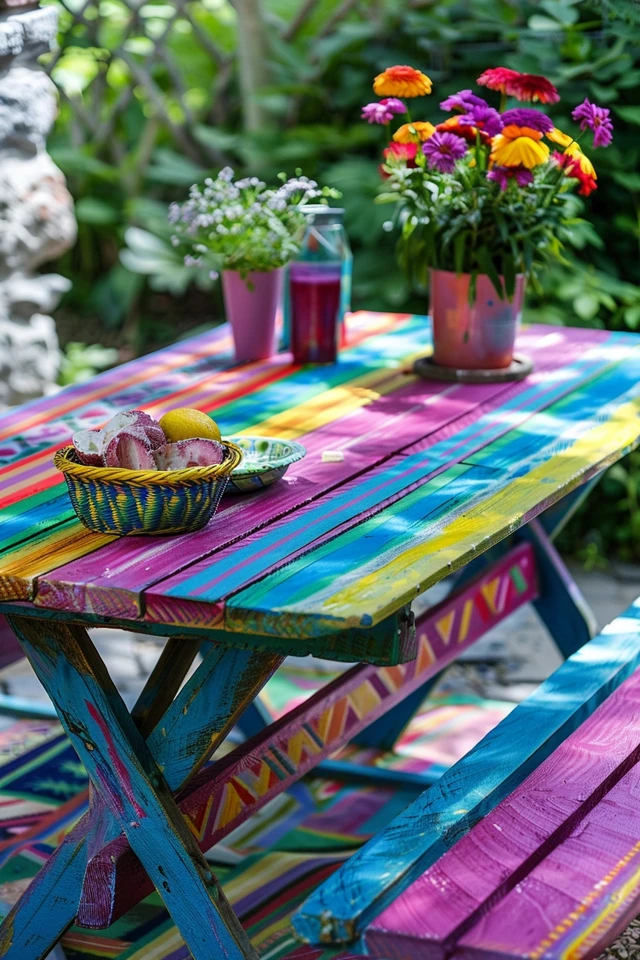
Colorful Painted Picnic Table Ideas for Your Yard
The humble picnic table is a staple of the American backyard. It is functional, durable, and usually incredibly boring in its raw wood state. A simple coat of paint can transform this utilitarian piece into a vibrant focal point that anchors your outdoor living space.
I once worked with a client who had a lush, meticulously landscaped garden, but her patio felt disconnected and flat. We sanded down her graying, weathered picnic table and painted it a deep, high-gloss navy blue with a citron yellow stripe down the center. To help you visualize these transformations, I have curated a stunning Picture Gallery at the end of this blog post.
This project is one of the highest-impact DIYs you can tackle in a weekend. However, outdoor furniture faces harsh realities like UV rays, standing water, and temperature fluctuations. If you do not choose the right materials and prep the surface correctly, your hard work will peel within a season.
Choosing the Right Paint and Finish
The most critical decision you will make is not the color, but the type of paint. Standard interior wall paint will not survive the elements, no matter how much sealer you apply. You need a product engineered to expand and contract with the wood as humidity levels change.
I almost always recommend a high-quality 100% acrylic exterior latex paint. It is flexible, breathable, and retains color well over time. For a rock-hard finish that resists scratches from dining ware, you can also use an exterior oil-based enamel, though the cleanup requires mineral spirits and the drying time is significantly longer.
Sheen matters for both durability and aesthetics. I advise against flat or matte finishes for picnic tables because they trap dirt and bird droppings, making them impossible to clean. A satin or semi-gloss finish sheds water effectively and wipes down easily after a barbecue.
Designer’s Note: The Sealer Trap
A common lesson I learned early in my career involves clear coats. Do not use standard polyurethane, which turns yellow and cracks under sunlight. You must use a “Spar Urethane,” originally designed for boats. It contains UV blockers and is flexible enough to prevent cracking when the wood swells in the rain.
Design Concepts: Beyond Solid Colors
While a solid color is classic, a picnic table offers a unique canvas for patterns because of the slat construction. You can treat each slat as an individual stripe without needing complex taping techniques. This is an excellent way to introduce a color palette without overwhelming the yard.
The Rainbow Slat Method
This is a favorite for families with young children or pool areas. You paint each board of the tabletop and bench seats a different color. To keep it looking designer rather than chaotic, stick to the same tonal family (all pastels or all neon) rather than mixing muted and bright tones.
The Faux “Table Runner”
If you want a sophisticated look for adult dinner parties, paint the entire table a neutral shade like charcoal or sage green. Then, paint the center three slats a contrasting color or a geometric pattern. This creates a permanent table runner that provides visual structure even when the table is unset.
Buffalo Check and Gingham
This requires more patience but looks incredible in cottage-style gardens. You will need three shades of the same color: light, medium, and dark. Use painter’s tape to create a grid, painting the intersections the darkest shade to mimic the weaving of fabric.
Preparation: The Step Most People Skip
You cannot simply paint over old, gray wood and expect it to look good. Preparation is 70% of the work. If your table is brand new pressure-treated wood, you must wait at least 3 to 6 months for the chemical moisture to dry out before painting, or the paint will blister immediately.
Start by washing the table thoroughly with a deck cleaner to remove mildew and dirt. Once dry, sand the entire surface. I start with 80-grit sandpaper to remove old finishes or rough splinters, then finish with 120-grit for a smooth surface that feels good against bare legs.
The primer is non-negotiable. If you are painting pine or cedar, knots will eventually bleed tannins through your paint, creating ugly brown circles. Use a high-quality, oil-based exterior stain-blocking primer. It smells strong, so wear a mask and work in a ventilated area, but it is the only thing that seals those knots permanently.
Common Mistakes + Fixes
Mistake: Painting the Underside of the Feet
Fix: Never paint the bottom grain of the table legs. This traps moisture inside the wood, causing it to rot from the inside out. Instead, soak the bottom inch of the legs in a wood preservative or clear epoxy to seal them against ground moisture.
Mistake: Painting in Direct Sunlight
Fix: If the wood is hot to the touch, the paint will dry too fast, preventing it from bonding into the wood grain. This leads to peeling. Plan your painting for an overcast day or work in the shade of a garage.
Mistake: Ignoring the Gaps
Fix: Picnic tables rely on the gaps between slats for drainage. If you apply paint too thickly, it creates bridges across these gaps. Water will pool in these bridges, ruining the finish. Run a putty knife through the gaps while the paint is wet to keep them clear.
Styling and Placement Logic
Once your table is painted, where you place it dictates how often you will use it. A common error is placing the table too far from the kitchen. In landscape design, we try to keep dining zones within 20 to 30 feet of the back door to make carrying food trays easy.
Consider the ground surface beneath the table. Painted wood feet should not rest directly on grass or soil, as they will wick up moisture. I recommend creating a gravel pad, using pavers, or placing the table on a deck. If it must go on grass, place a small concrete paver or a slate tile under each foot.
Rule of Thumb: Clearance Zones
You need space to get in and out of a picnic table comfortably. Ensure you have at least 36 inches of clearance on all sides of the table. If the table is near a wall or a fence, increase this to 48 inches so people can walk behind those seated on the bench.
Lighting and Accessories
A painted table needs the right accessories to shine. Since picnic tables are heavy and visual “anchors,” I like to balance them with lighter elements. String lights are a perfect companion. Ideally, hang them 8 to 9 feet above the ground to create an intimate ceiling without posing a safety hazard.
Rug Sizing for Picnic Tables
If you use an outdoor rug, size is crucial. The rug must extend at least 24 inches past the bench on all sides. A standard picnic table is often 6 feet long, meaning you likely need an 8×10 or 9×12 rug. Anything smaller looks like a postage stamp and creates a tripping hazard.
For comfort, consider adding tie-on seat cushions. This is also a great way to protect your paint job from the rivets on denim jeans, which are notorious for scratching painted benches. Choose high-performance outdoor fabrics that are fade-resistant.
What I’d Do in a Real Project
If I were managing this project for a client, here is the exact mini-checklist I would follow to ensure professional results:
- Check Moisture: Use a moisture meter to ensure the wood is under 15% humidity before priming.
- Sand Edges: Round over any sharp corners on the table and benches with a sander to prevent paint from chipping on the sharp edge.
- Prime: Apply one coat of oil-based exterior primer. Let cure for 24 hours.
- Paint: Apply two coats of exterior acrylic latex in a satin finish.
- Sand Between Coats: Lightly scuff with 220-grit paper between paint coats for a glass-smooth finish.
- Protect Feet: Install adjustable metal glides on the bottom of the legs to keep the wood off the ground.
Maintenance and Winter Care
Even the best paint job requires maintenance. Bird droppings are highly acidic and will eat through paint if left for weeks. Rinse your table regularly with a garden hose. Avoid power washing a painted table up close, as the high pressure can lift the paint.
Covering your table in the winter is the single best thing you can do to extend its life. Use a breathable furniture cover rather than a plastic tarp. Plastic tarps can trap condensation, leading to mold growth on your beautiful new paint job.
Every spring, inspect the table for hairline cracks in the paint. Touch these up immediately. Water intrusion is the enemy. A ten-minute touch-up session in April saves you from a full sanding and repainting job in August.
Final Checklist
Ready to start? Ensure you have these steps covered before you buy your first can of paint.
- Confirm the wood is dry and not “green” pressure-treated lumber.
- Purchase exterior-grade primer (oil-based preferred for knots).
- Select 100% acrylic exterior latex paint or oil-based enamel.
- Acquire 80, 120, and 220 grit sandpaper.
- Check the weather forecast for 3 days of dry weather.
- Plan your pattern and buy necessary painter’s tape (FrogTape is best for crisp lines).
- Buy metal glides or pavers for the table feet.
FAQs
Is painted wood food safe?
Generally, once exterior paint has fully cured (which can take up to 30 days), it is safe for incidental contact. However, I never recommend placing food directly on a painted surface. Always use plates, cutting boards, or a tablecloth. Avoid paints containing lead if you are restoring a very old vintage table.
How long does the paint need to dry before I can use the table?
While the paint may feel dry to the touch in a few hours, it takes time to cure and harden. I advise clients to wait at least 72 hours before sitting on the benches or placing heavy items on the table. If you sit on it too soon, the paint may feel tacky or peel off onto your clothes.
Can I paint a plastic picnic table?
Yes, but you need paint specifically formulated for plastic. Standard exterior paint will flake off plastic because it cannot bond to the non-porous surface. Look for spray paints designed to bond to plastic, and clean the table thoroughly with ammonia-based cleaner first to remove manufacturing oils.
What if my table has large cracks?
Do not just fill cracks with paint. Use an exterior-grade wood filler or a two-part wood epoxy for structural repairs. Fill the crack, let it overfill slightly, and sand it flush once dry. This prevents water from entering the crack and freezing, which would split the wood further.
Conclusion
Painting a picnic table is more than a maintenance task; it is an opportunity to inject personality into your yard. Whether you choose a sleek monochrome look or a playful rainbow pattern, the result is a custom piece of furniture that invites people to gather.
Remember that the success of this project lies in the preparation. Take the time to sand, prime, and seal correctly. By following these professional guidelines, you will create a durable, beautiful centerpiece that withstands the seasons and sets the stage for countless summer memories.
Picture Gallery


