
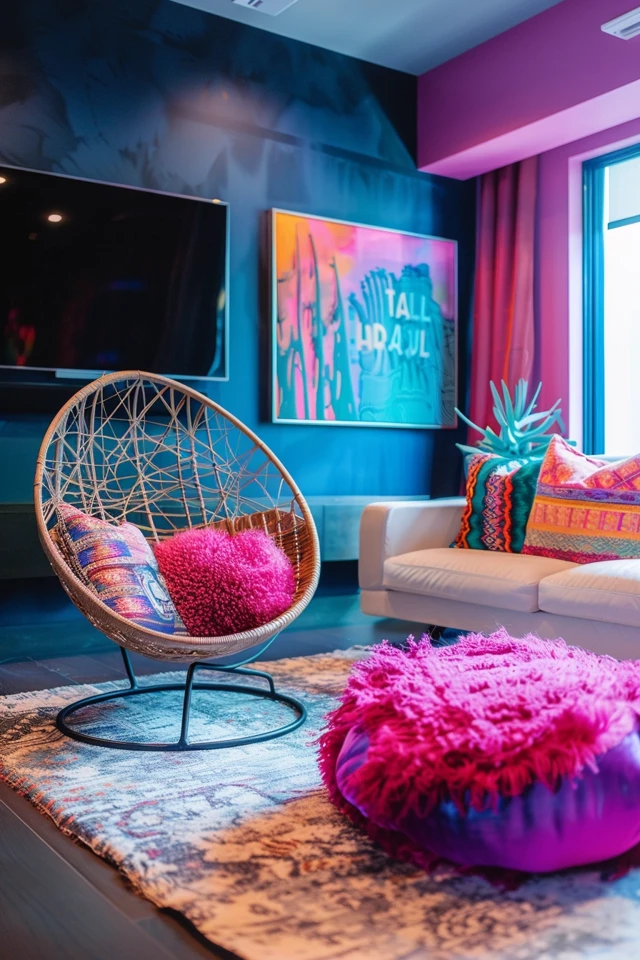
Cool Teenage Hangout Room Ideas for Your Home
Designing a space for teenagers is one of the most unique challenges in residential interior design. You are effectively negotiating a treaty between childhood nostalgia and emerging adulthood, all while trying to contain the noise and clutter that comes with the territory. Parents often ask me how to create a room where their kids actually want to stay, rather than disappearing into the basement or leaving the house entirely.
The secret lies in treating their hangout space like a high-end lounge rather than a playroom. It needs to respect their need for privacy, accommodate their tech-heavy hobbies, and be durable enough to handle pizza nights and sleepovers. If you are looking for visual inspiration to spark your creativity, be sure to check out the Picture Gallery at the end of this blog post.
In this guide, I will walk you through the practical steps of building a functional, stylish teen retreat. We will cover everything from acoustic control and lighting layers to the specific measurements required for a comfortable layout.
1. Zoning the Space for Multi-Functionality
A teenager’s room rarely serves just one purpose. In my projects, I always treat these spaces as micro-apartments. You need distinct zones for sleeping (or lounging), studying, and socializing. If you do not define these zones, the room will quickly become a chaotic catch-all.
Start by mapping out the “traffic flow.” You need a minimum of 30 to 36 inches of clearance for main walkways. If you are working with a tight space, 24 inches is the absolute minimum between furniture pieces to avoid shin collisions.
Designer’s Note: The “Perimeter” Trap
The biggest mistake I see DIYers make is pushing every single piece of furniture against the walls to “create more space.” This actually kills the social vibe. It makes the room feel like a dance hall with no dancers. Instead, pull the seating off the walls. Floating a sofa or a pair of lounge chairs creates a cozy conversation circle that feels intentional and mature.
Defining the Social Zone
The social zone is the anchor of a hangout room. If you have the square footage, separate the sleeping area from the hanging-out area. In a bedroom, this might mean lofting a bed to put a loveseat underneath. In a dedicated bonus room or basement, focus the seating around a focal point, which is usually a screen or a gaming setup.
The Study Nook
Even a hangout room often needs a spot for homework or creative projects. Do not face the desk toward the bed or the TV if you can help it; it kills productivity. I prefer placing desks perpendicular to a window to maximize natural light without causing screen glare. A standard desk height is 29 to 30 inches. Ensure your chair has adjustable height so the user’s elbows are at a 90-degree angle when typing.
Common Mistakes + Fixes
- Mistake: Using a rug that is too small, making the room look disjointed.
- Fix: Your rug should anchor the furniture. For the lounge area, ensure at least the front two legs of the sofa and chairs are sitting on the rug. If the room is large (12×14 or bigger), an 8×10 rug is usually the minimum size you should consider.
2. Seating Strategies: Durability Meets Comfort
Teens do not sit like adults. They lounge, sprawl, slouch, and pile up. Because of this, formal upright seating rarely works. You want furniture that encourages relaxation but holds its shape.
When selecting a sofa or sectional, look for “lounge depth.” A standard sofa is about 38 to 40 inches deep. For a teen room, I recommend looking for depths of 42 to 45 inches. This deeper seat allows for cross-legged sitting and napping.
Fabric Selection for Real Life
You must assume that food and drinks will be spilled. Do not buy linen or delicate rayons.
- Performance Velvet: This is my go-to. It is incredibly durable, soft to the touch, and easy to clean with water.
- Crypton Fabrics: If you are buying custom upholstery, ask for Crypton. It is stain, moisture, and odor-resistant at a molecular level.
- Leather or Faux Leather: easy to wipe down, but can be cold and sticky. If you go this route, add plenty of throw blankets.
Versatile Seating Options
Fixed seating is great, but teens have fluctuating guest lists. You need auxiliary seating that can move. Poufs and ottomans are standard, but I prefer “floor cushions” with actual structure or modern bean bag alternatives filled with memory foam rather than polystyrene beads.
Designer’s Note: Weight Capacity Matters
Cheap bean bags flatten out in a month. Invest in foam-filled sacks (like Lovesac or similar brands) that come with washable covers. Ensure the dimensions are at least 4 feet in diameter if they are meant for sleeping or serious gaming.
3. Lighting: The Tech-Forward Approach
Lighting in a teen room is less about a single overhead fixture and more about mood control. Teens live in a digital world, and their lighting often reflects that. You need three distinct layers: ambient, task, and decorative (RGB).
The RGB Element
It might seem gimmicky to some adults, but color-changing LED strips are a non-negotiable for many modern teen rooms. They allow the user to customize the vibe instantly.
- Placement: Run LED strips behind the TV or monitor (bias lighting) to reduce eye strain.
- Cove Lighting: If you have crown molding, running a strip along the top creates a high-end architectural look.
- Under-Furniture: strip lights under a floating media console or a bed frame create a cool “hover” effect.
Task and Ambient Balance
For general lighting, aim for warm white bulbs (2700K to 3000K). Anything higher (4000K+) will feel like a hospital or a cafeteria. Install a dimmer switch on the overhead light. This is the single cheapest upgrade that adds the most value.
For the study area, you need a dedicated task lamp. The bottom of the shade should be at roughly eye level when seated to prevent glare.
Common Mistakes + Fixes
- Mistake: Ignoring screen glare on the TV or computer.
- Fix: Install blackout curtains or high-quality solar shades. If the window faces the screen directly, you must have a window treatment that blocks 100% of light. Measure your curtain rod to extend 4 to 6 inches past the window frame on each side to minimize light leakage at the edges.
4. Acoustic Control and Wall Treatments
Hangout rooms are noisy. Whether it is video games, music, or just a group of friends laughing, sound dampening is crucial for the sanity of the rest of the household.
Soft Surfaces Absorb Sound
Hard surfaces bounce sound waves, creating echoes. To dampen the noise, you need mass and soft textures.
- Curtains: Use heavy velvet or lined drapes. They add luxury and absorb significant sound.
- Rugs: A high-pile or wool rug with a thick felt pad underneath creates a massive difference in acoustics, especially in second-floor rooms.
Wall Treatments
If the room shares a wall with a master bedroom or a home office, consider acoustic panels. You don’t have to use egg-crate foam. There are many felt geometric tiles available now that look like art installations but function as sound absorbers.
Wallpaper is another great way to add personality. For teens, tastes change fast. I almost exclusively use “peel-and-stick” wallpaper for client projects involving teenagers. It allows for bold choices—like a graffiti mural or a geometric print—without the long-term commitment of traditional paste.
What I’d Do in a Real Project:
If I am designing a gaming room, I often create a “feature wall” behind the screens using dark felt acoustic slats. It looks incredibly modern (very “tech noir”), cuts down on light reflection, and significantly dampens the shouting that happens during online matches.
5. The Snack and Storage Station
If you want the teens to stay in the hangout room, feed them there. A mini-kitchenette or snack station elevates the room from a bedroom to a lounge.
The Mini-Fridge Setup
You do not need plumbing to have a hospitality station. A freestanding mini-fridge is perfect for soda and water.
- Ventilation: Ensure the fridge has at least 2 to 3 inches of clearance on all sides for heat dissipation. Do not stuff it tight inside a cabinet unless it is specifically rated as an “undercounter” unit.
- Electrical: Plug the fridge directly into the wall outlet, not a power strip, to avoid tripping breakers.
Closed Storage is King
Open shelving looks great on Instagram, but in a teen room, it becomes a dust magnet and a display of clutter. Prioritize closed storage.
- Media Consoles: Look for units with doors that allow remote signals to pass through (infrared friendly) or use RF remotes.
- Drawer Depth: Ensure drawers are deep enough (at least 6 inches) to hold game controllers, charging cables, and snack bags.
Designer’s Note: The “Drop Zone”
Teens are notorious for dropping their bags and gear the moment they walk in. Create a designated “drop zone” near the door. Heavy-duty hooks (installed into studs, not drywall anchors) are essential for heavy backpacks. A simple bench with shoe storage underneath keeps the tripping hazards at bay.
Final Checklist: The Designer’s Review
Before you start buying furniture or painting walls, run your plan through this checklist. This is the same mental list I use to ensure a project is viable.
- Check the Electrical Load: If you are adding a gaming PC, two monitors, a TV, a mini-fridge, and a microwave, make sure the circuit can handle it. You may need a surge protector with a high joule rating.
- Measure the Entryway: Can that 84-inch sofa actually fit through the door or up the stairs? I have seen many sofas get returned because they couldn’t make the turn in the hallway.
- Validate the Wi-Fi: A hangout room with a weak signal is useless. Test the speed in that specific room. You might need a mesh extender or a hardwired ethernet port for gaming.
- Test the Rug Size: Use painter’s tape to outline the rug on the floor. Does it look like a postage stamp? If so, go bigger.
- Review the Lighting Plan: Do you have at least three sources of light (overhead, lamp, accent)?
Frequently Asked Questions
How do I design a hangout room on a tight budget?
Focus on paint and lighting first. Dark, moody paint colors (like navy or charcoal) can make inexpensive furniture look more premium and “lounge-like.” RGB LED strips are very cheap and add immediate impact. For furniture, look for second-hand solid wood pieces you can repaint, rather than buying cheap particle board furniture that will break in a year.
What if the room is small (under 100 sq ft)?
Go vertical. Loft the bed to put a desk or a bean bag lounge underneath. Use wall-mounted shelving instead of floor-standing bookcases to keep the floor plan open. Use a large mirror to bounce light and fake depth.
How do I make the room gender-neutral for siblings?
Focus on texture and geometry rather than themes. A palette of greys, greens, or terracottas works well for everyone. Use leather, wood, and metal accents. Let the personalization come from easily changeable items like throw pillows, posters, or the RGB lighting colors.
Is it safe to put a microwave in a bedroom?
Generally, yes, provided the electrical circuit can handle the amperage (usually 10-15 amps for a microwave). However, you must be vigilant about food cleanliness. I usually advise against microwaves in bedrooms due to the smell and the mess potential, sticking only to a beverage fridge.
Conclusion
Creating a cool teenage hangout room is about respecting their growing independence while providing a safe, comfortable environment. It is a shift from designing for “play” to designing for “living.”
By focusing on durable materials, flexible seating arrangements, and tiered lighting, you create a space that adapts to their changing needs. Remember that the best rooms evolve. Start with the major pieces—the sofa, the rug, the desk—and let your teen fill in the rest with their personality. When you get the fundamentals right, you aren’t just decorating a room; you are building the backdrop for some of their best memories.
Picture Gallery


