
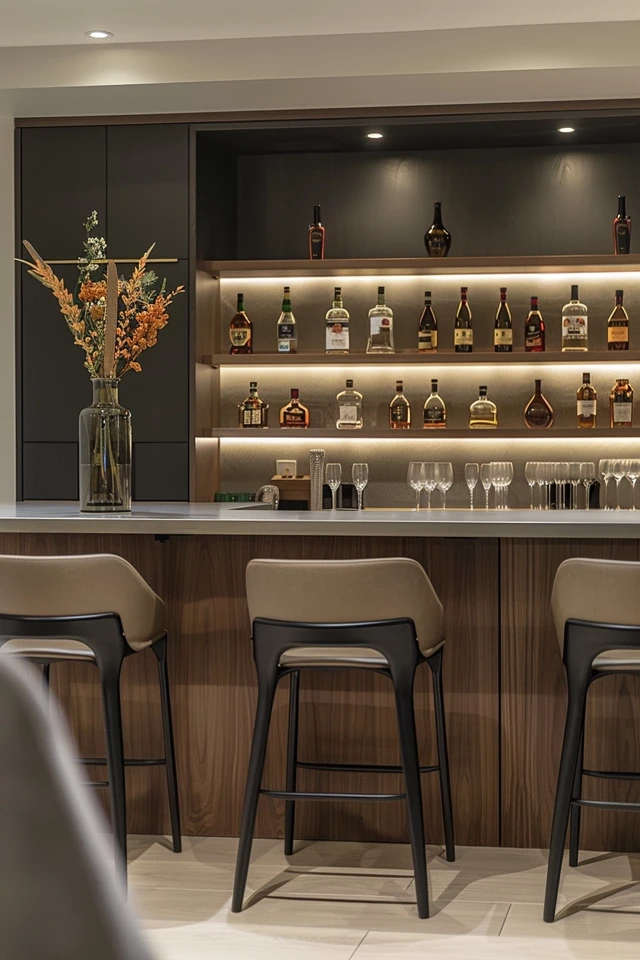
Cozy Basement Small Bar Ideas for Your Home
Turning a basement into a usable living space is one of the most rewarding home improvement projects you can tackle. There is something inherently intimate about a basement; its separation from the main floor makes it the perfect candidate for a moody, tucked-away retreat. Specifically, adding a small bar can transform a neglected storage corner into the ultimate hosting hub.
However, basements present unique challenges, such as low ceilings, limited natural light, and tight layouts. As an interior designer, I view these not as flaws, but as opportunities to create atmosphere. A small footprint actually works in your favor here, allowing you to invest in higher-quality materials since you need less of them.
Whether you are dreaming of a moody speakeasy or a bright, modern kitchenette, the key lies in mastering scale and lighting. For those looking for visual inspiration, we have curated a comprehensive Picture Gallery at the end of the blog post. Let’s dive into the practical rules and design strategies that will make your small basement bar feel grand.
1. Layout Strategies for Tight Footprints
The first step in designing a small basement bar is identifying the “dead zones” in your current layout. You do not need an entire room to create a functional bar; you only need a few feet of wall space or a clever niche. In my projects, I often look for recessed areas that might have been intended for closets or media centers.
One of the most efficient layouts for a small basement is the “single-wall” wet bar. This keeps all plumbing and cabinetry on one linear plane, which saves floor space and reduces construction costs. If you are working with a depth of at least 25 inches, you can fit standard base cabinetry and a sink.
Another high-value layout option is the “under-stair” bar. This space is almost always underutilized in basements. By custom-fitting cabinetry into the triangular void beneath the staircase, you gain a deep storage area for wine fridges or kegerators without encroaching on the main living area.
Designer’s Note: The “Drink Rail” Solution
If you do not have room for a full sit-down bar with an overhang, install a drink rail. This is a shallow shelf (usually 8 to 10 inches deep) mounted at bar height (42 inches) along a wall or behind a sofa. It provides a place to set a drink without requiring the 3-foot clearance needed for a full island setup.
Defining Your Dimensions
When planning your layout, stick to standard industry measurements to ensure comfort.
- Bar Height: A standard raised bar is 42 inches high. You will need 30-inch stools for this.
- Counter Height: A standard kitchen-style counter is 36 inches high. You will need 24-inch stools for this.
- Overhang: For comfortable knee space, your countertop overhang should be between 10 and 12 inches.
- Walkway Clearance: If you have a bar island, you need at least 36 inches of clearance between the back bar and the island for one person to work comfortably. Ideally, aim for 42 inches if possible.
2. Mastering Basement Lighting
Lighting is the single most critical element in a basement design. Because you are likely working with little to no natural light, you must manufacture the ambiance artificially. The goal is to avoid the “sterile office” look that comes from relying solely on recessed can lights.
You need to layer your lighting. Start with recessed lights on a dimmer for general cleaning and visibility, but do not rely on them for mood. In a small bar, under-cabinet lighting is non-negotiable. LED tape lights installed beneath floating shelves or upper cabinets add a warm glow that highlights your glassware and backsplash.
Pendant lights are great for defining the space, but watch your head height. Basement ceilings are often lower than the standard 8 feet. If your ceiling is low, opt for semi-flush mounts or wall sconces instead of low-hanging pendants. Wall sconces are particularly effective in small bars because they draw the eye up, making the ceiling feel higher.
Choosing the Right Temperature
The “temperature” of your light bulbs, measured in Kelvins (K), dictates the feeling of the room.
- 3000K: This is a crisp, neutral white. It is good for task lighting if you are chopping limes or reading recipes.
- 2700K: This is the sweet spot for a cozy bar. It mimics the warm glow of incandescent bulbs and feels inviting.
- Dim to Warm: I highly recommend investing in “dim-to-warm” LED technology. As you dim these lights, the color temperature drops, simulating the sunset-like glow of a real candle.
3. Selecting Materials for Durability and Aesthetics
Basements have a different microclimate than the rest of the house. They can be prone to humidity and temperature fluctuations. Therefore, the materials you choose for your small bar need to be as durable as they are beautiful.
For flooring, I generally advise clients to avoid solid hardwood in basements due to the risk of warping from moisture. Instead, opt for Luxury Vinyl Plank (LVP) or porcelain tile that mimics wood or stone. These materials are waterproof and can withstand the occasional spilled drink or plumbing mishap.
When selecting countertops for a small bar, you can often find “remnants” at stone yards. Since the square footage is low, you might be able to afford a high-end quartz or soapstone that would be too expensive for a full kitchen. Quartz is my top recommendation because it is non-porous, meaning wine and citrus juices won’t etch or stain the surface.
The Backsplash Opportunity
In a small bar, the backsplash is your focal point. Since the wall area is small, this is the place to splurge on an interesting tile or finish.
- Mirror: An antiqued mirror backsplash is a designer trick for small spaces. It reflects light and doubles the visual depth of the room, making a cramped nook feel spacious.
- Dark Grout: If you use subway tile, consider a dark grout. It hides splashes and adds a graphic, industrial edge that suits basement environments.
- Stone Slabs: Running the countertop material up the wall creates a seamless, luxurious look that is very easy to clean.
4. Storage Solutions for Compact Spaces
In a small basement bar, you rarely have the luxury of endless cabinetry. You must be ruthless about what you store. Keep the bulk of your party supplies in a storage room and only keep the essentials at the bar: glassware, liquor bottles, and bar tools.
Upper cabinets can sometimes feel heavy and imposing in a room with low ceilings. To keep the space feeling open, I almost always swap upper cabinets for open floating shelves. Use wood shelves that match your cabinetry or metal shelving for a more modern look.
Ensure your shelving is deep enough for your needs. Liquor bottles and dinner plates generally require a depth of 12 inches. If you are only storing tumblers and stemware, you can get away with a shelf depth of 10 inches, which helps the room feel larger.
Organizing the “Wet” Zone
If you are installing a sink, the cabinet beneath it will largely be occupied by plumbing. To maximize this space:
- Tilt-out Trays: Install a tilt-out tray on the false drawer front in front of the sink to store sponges and stoppers.
- Door Mounts: Use the back of the cabinet doors to mount racks for cutting boards or cleaning supplies.
- Compact Appliances: Look for 15-inch or 18-inch appliances. A standard dishwasher is 24 inches, but an 18-inch bar dishwasher is often plenty for a basement setup. Similarly, wine fridges come in slim 15-inch widths that hold roughly 20 to 30 bottles.
5. Styling to Create the “Cozy” Factor
Once the construction is done, the “cozy” factor comes from the styling layers. This is where you soften the hard edges of stone and cabinetry. Since basements can feel cold, introduce texture wherever possible.
Start with bar stools. Avoid cold metal seats; instead, choose stools upholstered in leather, velvet, or performance fabric. Leather is excellent for basements because it warms up to body temperature quickly and wipes clean. If you choose fabric, ensure it is treated for stain resistance.
Rug placement is tricky in a bar area, but a runner placed just outside the “splash zone” can anchor the space. Look for flat-weave wool or polypropylene rugs. These materials are durable and low-profile, so they won’t trip you up while you are serving drinks.
Accessories that Add Warmth
Don’t clutter the counter, but do add organic elements.
- Wood Boards: Lean a stack of wooden cutting boards against the backsplash. The wood tones warm up the tile and stone.
- Brass Hardware: Unlacquered brass or oil-rubbed bronze hardware adds a sense of history and warmth that chrome or nickel often lacks.
- Plants: Even in a basement, a touch of green is vital. If you have zero natural light, use high-quality preserved moss bowls or extremely realistic faux stems. Do not use fake plants that look plastic; they cheapen the design.
Common Mistakes + Fixes
Mistake: Ignoring Acoustics.
Basements are often concrete boxes that echo. A bar full of clinking glass makes this worse.
The Fix: Soften the room with sound-absorbing materials. Use acoustic panels wrapped in fabric as art, install heavy drapery if there are windows, and ensure there is a rug in the adjacent seating area.
Mistake: Over-scaling Furniture.
People often buy large, puffy recliners or massive bar stools that choke the walkway.
The Fix: Choose “apartment scale” furniture. Look for stools with a small footprint and sofas with clean, straight lines rather than rolled arms.
Mistake: forgetting electrical outlets.
It is incredibly frustrating to have a bar where you cannot plug in a blender or charge a phone.
The Fix: Plan for outlets on the backsplash and potentially on the side of the island. Pop-up outlets that hide in the countertop are a sleek solution for islands.
What I’d Do in a Real Project: A Mini-Checklist
If I were designing a small basement bar for a client tomorrow, this is the exact workflow I would follow to ensure success.
1. Check the Mechanics first.
Before drawing a pretty picture, I would locate the main soil stack (sewage pipe). Placing the wet bar sink near existing plumbing saves thousands of dollars. If the drain line is above the floor level, we need a sewage ejector pump. I would determine this budget impact immediately.
2. Establish the focal point.
I would pick one wall to be the “star.” I would likely cover this entire wall in a moody, textured wallpaper or a brick veneer. This sets the tone immediately.
3. Select the “Hero” piece.
I would find a stunning slab of stone for the counter or a unique vintage light fixture. In a small space, one incredible item elevates everything else.
4. Plan the appliance clearance.
I would tape out the floor to ensure that when the dishwasher or wine fridge door is open, it doesn’t hit the island or the wall behind it. I never rely just on paper plans for this; physical verification is key.
5. Finalize the “Touch” points.
I would spend a disproportionate amount of time selecting the cabinet pulls and the faucet. These are the things you touch every time you use the bar. They should feel heavy and substantial.
FAQs
Does a basement bar add value to my home?
Yes, generally speaking. Finished basements with functional amenities like a bar or kitchenette yield a high return on investment, often recouping 70% to 75% of costs upon resale. It differentiates your listing from others with generic basements.
Do I need a permit for a small basement bar?
If you are adding plumbing or electrical wiring, the answer is almost certainly yes. Electrical and plumbing work requires inspection to ensure safety. Cosmetic changes like cabinets and flooring usually do not require a permit, but always check your local building codes.
Can I use stock cabinets for a basement bar?
Absolutely. Because bar layouts are often simple straight runs, you can easily use stock or semi-custom cabinets from big-box stores. To make them look custom, add crown molding, high-end hardware, and professional under-cabinet lighting.
How do I handle ventilation?
If you have a dishwasher or a lot of moisture, ventilation is important. Ensure your basement’s HVAC system is balanced to handle the extra space. A small dehumidifier hidden in a cabinet (with a drain line) is a pro move to keep the bar smelling fresh, not musty.
Conclusion
Creating a cozy small bar in your basement is about embracing the constraints of the space. By leaning into the moody atmosphere with warm lighting, rich materials, and smart layout choices, you turn a dark corner into the most popular seat in the house.
Remember that scale is everything. Keep your furniture streamlined, your lighting layered, and your palette cohesive. Whether you are mixing cocktails for a party of ten or pouring a glass of wine for a movie night for two, these design strategies will ensure your home bar is as functional as it is stylish.
Picture Gallery


