
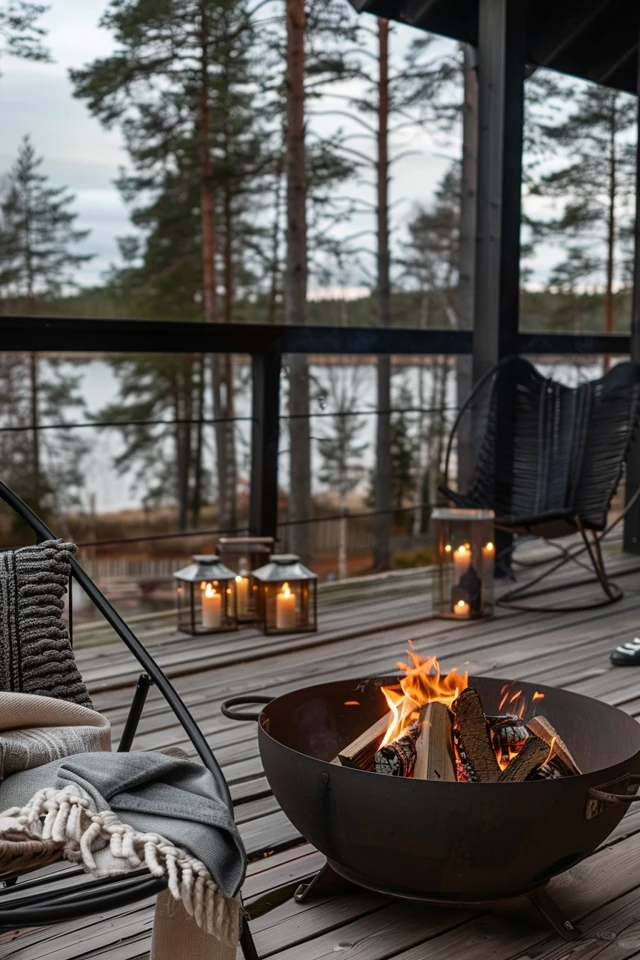
Cozy Deck Ideas with Firepit Inspirations
There is something primal and undeniably inviting about gathering around a fire. In my years of designing outdoor living spaces, I have found that adding a fire element is the single most effective way to extend the use of a deck. It transforms a summer-only space into a three-season retreat where conversations linger long after the sun goes down.
However, bringing fire onto a wooden or composite deck requires careful planning. You have to balance the cozy aesthetic with strict safety parameters and functional layout rules. It is not quite as simple as dropping a fire bowl in the center of the patio and calling it a day.
In this guide, I will walk you through the professional approach to creating a warm, safe, and stylish deck lounge. For visual inspiration, don’t miss the curated Picture Gallery at the end of this post to see these concepts in action.
1. Choosing the Right Fire Feature for Deck Safety
The most critical decision you will make is the fuel source. Unlike a stone patio on the ground, a deck is combustible. Your choice here dictates your layout, your budget, and your safety requirements.
Propane and Natural Gas
For 90% of my clients with decks, I recommend propane or natural gas tables. They burn clean, do not pop sparks, and offer instant ambiance with the turn of a key.
- Convenience: Gas pits are heavy, stable, and often double as a coffee table when covered.
- Heat Output: Look for a unit that produces at least 40,000 to 50,000 BTUs. Anything less is purely decorative and won’t keep you warm in October.
- Tank Hiding: If you choose propane, ensure the unit holds the tank internally. If it uses an external tank, you will need a side table to hide it and a specialized hose cover to prevent tripping hazards.
Bioethanol Burners
If you are a renter or have a very small balcony, bioethanol is a fantastic alternative. These are freestanding units that burn liquid fuel. They produce real flame and decent heat but require no plumbing and very little clearance.
Wood Burning (Proceed with Caution)
I rarely recommend wood-burning pits for elevated decks unless specific precautions are taken. If you are set on the crackle of real wood, you must use a “spark arrestor” (a mesh screen) at all times. You also need a significantly larger non-combustible footprint underneath the unit.
Designer’s Note on Weight Load:
Always verify your deck’s structural integrity before buying a heavy stone or concrete fire table. A 300-pound fire pit plus six adults and heavy furniture can stress an older deck. If you are unsure, consult a contractor to check the joist span and support posts.
2. Mastering Layout and Clearances
The difference between a cramped deck and a luxurious lounge lies in the spacing. In interior design, we talk about “circulation paths.” This is simply the empty space you need to walk around comfortably without shimmying sideways.
The Golden Rules of Spacing
Safety codes usually dictate a minimum distance from the fire to the house, often 10 to 20 feet for wood burning. Gas units generally have more lenient manufacturer guidelines, sometimes as little as 36 inches from walls, but you must check the manual.
Furniture Proximity
You want to be close enough to feel the heat, but not so close that the wicker melts or your knees overheat.
- Distance to Fire: Place seat edges 18 to 24 inches from the edge of the firepit.
- Walkways: Leave a clear 30 to 36 inches behind the chairs for traffic flow.
- Railings: Do not back furniture right up against the railing if possible. Leaving a small 6-inch gap creates a feeling of spaciousness.
Shape Coordination
The shape of your fire feature should speak to the shape of your seating.
- Round Pits: These work best with curved sectionals or individual Adirondack chairs arranged in a circle. It encourages group conversation.
- Rectangular/Linear Pits: These are ideal for modern decks. Pair them with a long sofa on one side and two club chairs on the other. This mirrors the geometry of the fire table.
3. Layering Textures for Maximum Coziness
Once the layout is set, we move to the fun part: styling. A firepit alone is stark; textiles make it a room. The goal is to bring indoor comfort to the outdoors using materials that can withstand the elements.
The Foundation: Outdoor Rugs
An outdoor rug anchors the seating area. Without it, your furniture feels like it is floating aimlessly on the deck boards.
- Material: Choose 100% polypropylene. It resists mold, hoses off easily, and dries quickly.
- Sizing: Use the “front legs” rule. At a minimum, the front legs of all your seating should sit on the rug. This visually connects the chairs to the firepit.
- Texture: Look for a flatweave with a tight loop. High-pile outdoor rugs tend to trap debris and moisture, which can damage wood decking underneath.
Soft Goods: Pillows and Throws
You cannot have a cozy deck without blankets. However, damp fabric is the enemy.
- Performance Fabric: Invest in cushions upholstered in solution-dyed acrylic fabrics (like Sunbrella or similar high-end brands). They resist fading and water.
- Storage Solutions: I always incorporate a watertight deck box or a storage bench nearby. Realistically, you will not haul cushions inside every night. having storage within arm’s reach ensures you actually use the blankets.
- The “Heft” Test: For outdoor throws, choose heavy wool or thick fleece. Lightweight cotton throws will blow around in the wind and don’t provide enough insulation against the night chill.
4. Lighting Strategies Beyond the Flames
Fire provides a beautiful glow, but it is rarely enough light to navigate the deck safely or see your drink. You need to layer your lighting just like you would in a living room.
Overhead Ambience
Bistro string lights are a classic for a reason. They provide a soft, overhead wash of light that doesn’t glare.
- Installation: Zig-zag them overhead if you have a pergola. If you have an open deck, use heavy-duty poles attached to the railing to create a canopy effect.
- Color Temperature: Always buy “warm white” bulbs (2700K). Anything higher (3000K-5000K) will look blue and clinical, killing the mood set by the fire.
Low-Level Lighting
Lighting at the floor level increases the feeling of safety and intimacy.
- Lanterns: Place oversized lanterns with battery-operated LED candles in the corners of the deck. This expands the visual space at night.
- Step Lights: If your deck has stairs, small solar recessed lights on the risers are non-negotiable for safety.
Common Mistakes + Fixes
Mistake: Relying on a single floodlight from the house.
Fix: Turn off the harsh security light. Use warm, dimmable layered lighting to create a glow that matches the intensity of the fire.
5. Essential Deck Protection
Heat and wood decks have a complicated relationship. Even if you are using a gas fire table, heat can transfer downwards and damage the finish of your deck.
Composite Decking Warning
Composite decking (like Trex) is essentially plastic and wood fibers. It can soften, warp, or discolor if exposed to high heat.
- The Solution: Never place a wood-burning pit directly on composite. For gas pits, ensure there is plenty of airflow underneath the burner pan.
- Heat Mats: I highly recommend using a deck protector pad or heat mat under your fire pit. They come in neutral colors and act as a thermal shield.
Wind Guards
A glass wind guard is an essential accessory for gas fire pits. It is a tempered glass fence that sits around the flame.
- Function: It prevents the wind from blowing the flame sideways, which is a major safety hazard for nearby fabrics or curious pets.
- Efficiency: It also keeps the heat focused in the center rather than letting it dissipate instantly in a breeze.
What I’d Do: A Real Project Mini-Checklist
If I were designing your deck today, here is the exact workflow I would follow to ensure success:
- Check the Code: I would call your local municipality or HOA first. Some areas ban open flames on combustible structures entirely.
- Tape it Out: I would use blue painter’s tape to outline the firepit and furniture on the deck floor. This proves if you actually have enough walking room.
- Select Dual-Purpose: I would choose a fire table with a wide rim or a hard cover. When the fire isn’t lit, it needs to function as a usable coffee table for drinks and snacks.
- Plan the Gas Line: If you are renovating, I would run a natural gas line under the deck to avoid propane tanks. If that’s not possible, I’d buy a side table that doubles as a tank hideaway.
Final Checklist for a Cozy Deck
Before you invite guests over, run through this final summary to ensure your space is ready.
- Fuel Check: Do you have a backup propane tank? Running out mid-party is a mood killer.
- Seating Comfort: Are the cushions dry? Do you have enough heavy blankets for every seat?
- Safety Gear: Is the fire extinguisher nearby and unexpired? Is the glass wind guard clean?
- Lighting: Are the string lights plugged in and working? Do you have batteries for the lanterns?
- Surface Space: Do guests have a place to set a drink within easy reach of every chair?
FAQs
Can I put a fire pit on a covered deck?
Generally, no, unless it is a gas unit and you have significant overhead clearance and ventilation. Smoke from wood fires will get trapped, staining your ceiling and creating a breathing hazard. Always check the manufacturer’s requirements for “overhead clearance,” which is often 80 inches or more.
What is the best material for outdoor furniture near a fire?
Aluminum is excellent because it doesn’t rust and is lightweight. Teak is beautiful but heavy and requires maintenance. Avoid cheap plastic or resin close to the heat source, as it can warp. High-density polyethylene (HDPE) is durable but can retain heat, so be mindful of hot armrests.
How do I keep my fire pit clean?
Cover it when not in use. Rainwater mixed with ash (in wood pits) creates a caustic sludge that rots metal. For gas pits, keep the burner ports clear of debris and spiders, which love to nest in gas lines.
Is a round or square fire pit better?
It depends on your deck shape. If you have a square deck, a square or round pit works well. If you have a narrow, rectangular deck, a long linear fire table is the only choice that preserves your walking path.
Conclusion
Creating a cozy deck with a firepit is about more than just purchasing a product; it is about curating an experience. By respecting the scale of your furniture, prioritizing safety, and layering in warm textures and lighting, you can build an outdoor extension of your home that draws family together.
Whether you are sipping coffee on a crisp autumn morning or hosting a summer evening cocktail hour, the fire will always be the heart of the space. Take the time to plan your layout properly, protect your decking, and invest in quality textiles. The result will be a haven you can enjoy for years to come.
Picture Gallery


