
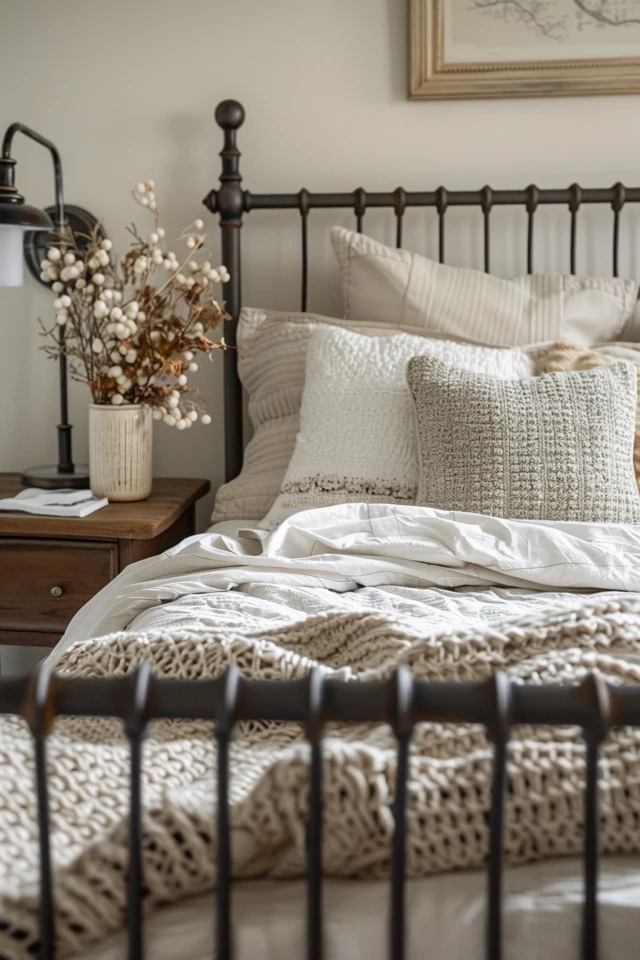
Cozy Farmhouse Bedrooms: Tips & Inspiration
There is something undeniably grounding about a well-executed farmhouse bedroom. It strikes a balance that few other design styles can manage: it feels curated and intentional, yet entirely unpretentious. I remember working on a project in upstate New York where the goal was to make a brand-new build feel like it had been there for a century. The secret wasn’t in buying expensive antiques, but in the layering of honest materials and getting the scale exactly right. To help you visualize these concepts, I have curated a comprehensive Picture Gallery at the end of this blog post.
Many people mistake farmhouse design for simply putting shiplap on every wall and buying furniture with chipped paint. True farmhouse style is actually about utility, comfort, and a connection to natural elements. It is a style that welcomes you in, handles the wear and tear of daily life, and looks better with age.
In this guide, I want to walk you through the specific formulas I use to create these spaces. We will cover everything from the math behind rug sizing to the specific way to layer bedding for that fluffy, inviting look. Whether you are in a city apartment or a rural cottage, these principles will help you build a sanctuary that feels like home.
1. Defining the Palette and Materials
The foundation of any farmhouse bedroom is a neutral palette, but “neutral” does not mean boring. The biggest mistake I see is using a stark, clinical white that makes the room feel like a hospital. You want warm whites, creams, soft grays, and earthy browns.
The 60-30-10 Rule
I always stick to this classic ratio to keep the room cohesive.
- 60% Main Color: This is your wall color and large furniture pieces. Think warm white (like Benjamin Moore White Dove) or a soft greige.
- 30% Secondary Color: This usually comes from your wood tones (flooring, bed frame) or natural fibers like jute and wool.
- 10% Accent Color: This is where you bring in muted colors like sage green, slate blue, or charcoal through throw pillows, art, or a throw blanket.
Mixing Wood Tones
A common question I get is whether wood furniture needs to match. The answer is a hard no. In fact, matching sets often look too “catalog.”
In a farmhouse bedroom, you want the room to feel collected over time. You might pair a walnut bed frame with painted white nightstands, or a reclaimed oak dresser with a metal bed. The key is to keep the undertones similar. If your floors have warm, yellow undertones, try to stick to furniture that also leans warm, rather than cool, gray-washed woods.
Designer’s Note: Texture Over Color
When you remove bright colors, you must replace them with texture to prevent the room from feeling flat. I look for at least three different textures in every bedroom.
- Rough: A woven jute rug, a wicker basket, or a raw wood bench.
- Soft: Velvet pillows, a chunky knit wool throw, or upholstered headboards.
- Smooth: Glass lamp bases, metal hardware, or polished wood surfaces.
2. The Bed: The Anchor of the Room
The bed is the largest piece of furniture in the room, so it dictates the style direction immediately. In farmhouse design, we typically lean toward two extremes: a substantial upholstered frame or a vintage-inspired metal or wood frame.
Choosing the Frame
If your room is small (under 12×12 feet), I recommend an iron bed frame. The open slats allow visual pass-through, making the room feel larger and airier.
For larger master suites, a tall upholstered headboard or a heavy timber frame works beautifully. It grounds the space and provides a solid focal point. If you have pets or kids, look for “performance fabrics” on upholstered beds. These resist stains and are easy to clean with a damp cloth.
The Bedding Formula
Achieving that fluffy, sink-into-it look requires layers. Here is the exact layering formula I use for client installs:
- Sheets: Crisp percale for a cool feel, or linen for a softer, lived-in look. Linen is pricey but durable and temperature-regulating.
- Coverlet or Quilt: This goes over the sheets and gets tucked in tight. It provides a clean base.
- Duvet: Fold this in thirds at the foot of the bed. It adds volume. Pro tip: Buy a duvet insert one size larger than your cover (e.g., a King insert inside a Queen cover) for maximum fluffiness.
- Sleeping Pillows: Stack these flat or prop them up against the headboard.
- Euro Shams: These are the large square pillows (26×26 inches). You need 3 for a King bed and 2 for a Queen/Full bed. They hide the sleeping pillows and add height.
- Decorative Pillows: One long lumbar pillow or two 20-inch square pillows in front of the Euros finish the look.
Common Mistake: The “Flat” Bed
Many people buy a “bed in a bag” set and wonder why it looks limp. These sets usually lack the variety of textures and the volume needed for a luxury look. Build your bedding piece by piece instead.
3. Walls and Architectural Details
Farmhouse style is famous for its wall treatments. This is where you can add significant value and character to a plain drywall box. However, moderation is key.
Shiplap vs. Board and Batten
Shiplap had a massive moment, but it can feel dated if overused. I rarely wrap an entire room in shiplap anymore unless it is a true historic renovation.
Instead, I prefer vertical board and batten or tongue-and-groove paneling. Vertical lines draw the eye up, making standard 8-foot ceilings feel higher. A grid pattern board and batten wall behind the headboard creates a stunning focal point without overwhelming the space.
Paint Finishes Matter
The sheen of your paint affects how the room feels.
- Walls: Matte or Eggshell. Matte hides imperfections in older walls, while eggshell is easier to wipe down.
- Trim and Millwork: Satin or Semi-Gloss. This highlights the architectural details and makes them durable against scuffs and vacuum cleaners.
- Ceiling: Flat white. This reflects light best. However, if you have wood beams, leave them natural or stain them to contrast with the white ceiling.
The Renter-Friendly Approach
If you cannot install wood paneling, use paint or wallpaper to create a focal wall. There are incredible peel-and-stick wallpapers available now that mimic grasscloth or subtle floral patterns.
If you are painting a rental, painting the bottom two-thirds of the wall a darker shade and the top third white can mimic the look of wainscoting without the construction dust.
4. Lighting: Function Meets Ambiance
Bedroom lighting needs to be versatile. You need bright light for cleaning or finding clothes, and soft light for reading and relaxing.
The “Big Light” Problem
Avoid relying solely on a ceiling fan light or recessed cans. Overhead lighting casts harsh shadows and is not conducive to sleep. If you have recessed lights, install a dimmer switch immediately. It is the cheapest upgrade with the highest impact.
Sconces vs. Table Lamps
I love wall sconces in farmhouse bedrooms. They free up valuable real estate on your nightstands.
- Placement Rule: If hardwiring sconces, the junction box should typically be 60 to 66 inches from the finished floor. If the sconces are adjustable arms, you can go slightly lower.
- Plug-in Option: If you don’t want to hire an electrician, use plug-in sconces. You can hide the cord with a cord cover painted the same color as the wall.
If you prefer table lamps, scale is everything. A common error is buying lamps that are too small. For a King bed, your lamps should be substantial—at least 28 to 30 inches tall. A tiny lamp looks lost next to a large headboard.
Bulb Temperature
Never overlook the light bulbs. For a cozy bedroom, buy bulbs labeled “Soft White” or look for a Kelvin rating of 2700K to 3000K. Anything above 3500K will look blue and clinical, killing the cozy vibe instantly.
5. Rugs, Layout, and Spacing
The rug is often the most expensive soft furnishing in the room, so you want to get it right the first time. The rug anchors the furniture and adds warmth underfoot, which is essential if you have hardwood or tile floors.
Rug Sizing Rules
A rug that is too small makes the room look cheap and disjointed.
- King Bed: You need a 9×12 rug. An 8×10 can work in a pinch, but a 9×12 allows ample room on the sides.
- Queen Bed: An 8×10 rug is ideal. A 6×9 is usually too small unless the room is very tight.
- Placement: Do not push the rug all the way against the wall behind the headboard. The rug should start about 6 to 8 inches in front of the nightstands. This ensures that when you step out of bed, your feet land on the rug, not the cold floor.
Nightstand Dimensions
Your nightstands do not need to be huge, but they must be proportional to the bed.
- Height: The top of the nightstand should be level with the top of your mattress, or up to 3 inches higher. Never lower—it makes reaching for a glass of water awkward.
- Width: For a King bed, look for nightstands at least 24 to 30 inches wide. For a Queen, 20 to 24 inches is standard.
The “Bench” Rule
If you have the space, a bench at the foot of the bed adds a hotel-like finish. The bench should be about two-thirds the width of the bed. If it extends past the edges of the bed frame, it is too big and will obstruct traffic flow.
Final Checklist: What I’d Do in a Real Project
If I were designing your farmhouse bedroom tomorrow, here is the checklist I would run through to ensure success:
1. Check the Flow
Ensure you have at least 30 inches of walking space on both sides of the bed. If you don’t, downsize the bed from a King to a Queen. Comfort in movement is more important than mattress size.
2. Layer the Windows
Install bamboo or woven wood shades for texture and privacy. Layer floor-to-ceiling curtains over them. Hang the curtain rod 4 to 6 inches above the window frame (or just below the crown molding) to make the ceilings look taller.
3. Add “Life”
Every room needs something organic. A faux olive tree in the corner, a small fern on the nightstand, or a vase of dried eucalyptus. Greenery breaks up the neutrals and adds energy.
4. Edit the Decor
Farmhouse style can easily get cluttered with “knick-knacks.” Follow the rule of three when styling surfaces. Group items in threes (e.g., a lamp, a picture frame, and a small bowl). If in doubt, remove one item.
5. Personalize Art
Avoid generic “word art” (signs that say “Sleep” or “Farmhouse”). Instead, frame black and white family photos, vintage landscape prints, or botanical sketches. This makes the space feel authentic to you.
FAQs
How do I make a farmhouse bedroom look modern, not old-fashioned?
Focus on clean lines. Avoid furniture with excessive turning, carving, or heavy distressing. Use black metal hardware for a sharp, modern contrast against white walls. Keep the color palette high-contrast (black and white) rather than muddy browns and creams.
Can I do farmhouse style with carpet?
Absolutely. While hardwood is traditional, carpet is cozy. If you have wall-to-wall carpet, you can still layer a large area rug over it to define the bed area. Just make sure the rug is thick enough so it doesn’t ripple over the carpet.
What if my room is too small for a bench or armchair?
Focus on the walls. Use hooks or a peg rail to hang hats, bags, or a robe. This adds the functional, rustic aesthetic of farmhouse design without taking up floor space. You can also use under-bed storage baskets made of wicker or rattan to add texture.
Is shiplap out of style?
Horizontal shiplap has become less trendy, but it is a classic material that won’t look “bad” if done right. However, for a more current look, try vertical V-groove paneling or simple box molding. These offer the same texture but feel more tailored and timeless.
Conclusion
Creating a cozy farmhouse bedroom is about more than just buying the right furniture. It is about creating a feeling of ease. It is a space where nothing is too precious to be touched, where the lighting makes you want to unwind, and where the materials connect you to nature.
By following the rules of scale, prioritizing texture over clutter, and investing in quality bedding and lighting, you can transform your bedroom into a retreat that feels both stylish and deeply personal. Remember, the best interiors take time to collect and curate, so don’t rush the process. Start with the bones—the layout, the rug, and the bed—and let the rest follow naturally.
Picture Gallery


