
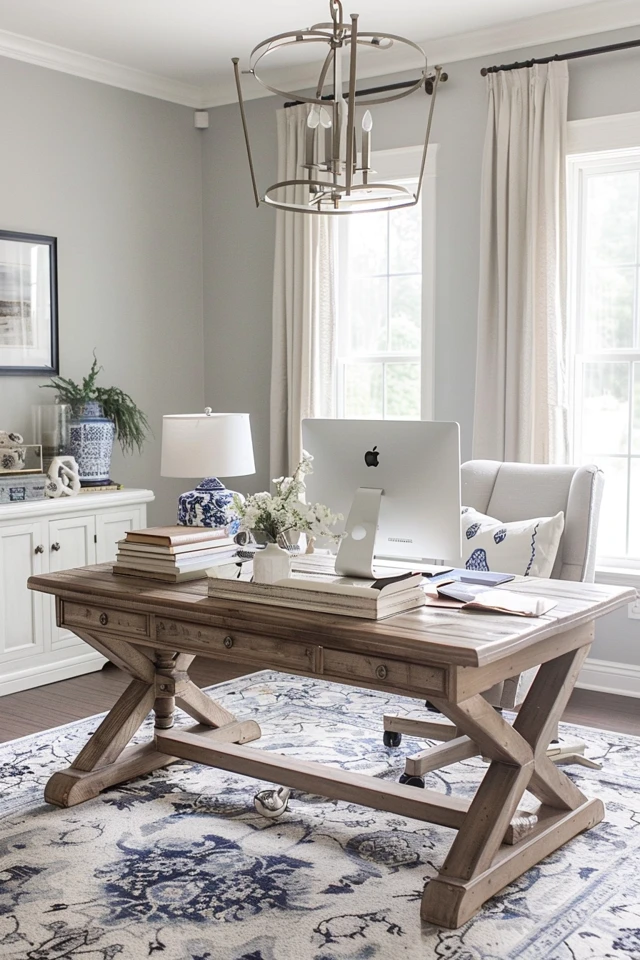
Cozy Farmhouse Home Office Ideas for Your Space
Creating a workspace that feels productive yet relaxing is the ultimate goal of modern interior design. Farmhouse style is particularly suited for home offices because it inherently blends utility with comfort. It relies on honest materials, neutral palettes, and a sense of history that can make even a Tuesday afternoon full of spreadsheets feel a little more grounded.
However, achieving this look requires more than just buying a sign that says “Office” in a script font. It requires a careful balance of texture, lighting, and scale to ensure the room doesn’t feel cluttered or kitschy. For a comprehensive look at how these elements come together, be sure to check out the Picture Gallery at the end of this blog post.
In this guide, we will walk through the architectural bones, furniture selection, and styling nuances that create a professional yet cozy farmhouse aesthetic. Whether you are renovating a spare bedroom or carving out a corner in your living room, these principles apply.
1. Setting the Foundation: Walls and Floors
The envelope of the room dictates the farmhouse feel before you bring in a single piece of furniture. In professional design, we look at the “shell” first. For a farmhouse office, you want a backdrop that reflects light but feels warm.
Paint Colors and Finishes
Avoid sterile, hospital-grade whites. You want warm whites or soft “greiges” (gray-beige hybrids). My go-to recommendation for clients is often a white with a Light Reflectance Value (LRV) between 70 and 82. This ensures the room feels bright but not blinding.
If you want to add character without architectural renovation, paint is your best tool. A moody charcoal or deep forest green on wainscoting can ground the space. This is often referred to as “Modern Farmhouse,” which relies on higher contrast than the traditional shabby-chic style.
Texture on the Walls
Shiplap is the obvious choice, but application matters. Horizontal boards widen a room, while vertical tongue-and-groove paneling draws the eye up, making low ceilings feel higher.
Designer’s Note: The 60-30-10 Rule
I use this rule to keep farmhouse rooms from looking boring. 60% of the room should be a dominant color (usually your warm white walls), 30% should be a secondary color (wood tones from the floor or desk), and 10% should be an accent (black metal hardware or green plants). If you skip the 10%, the room will wash out.
Flooring Considerations
Wide-plank wood flooring is the gold standard here. If you are working with existing carpet or generic tile, you will need to rely heavily on area rugs to cover the ground and introduce that natural texture.
2. The Desk: Selecting the Centerpiece
The desk is the workhorse of the room. In farmhouse design, the desk often mimics a dining table or a workbench. It should feel substantial and tactile.
Material Selection
Look for solid wood. Reclaimed wood is excellent because it hides dents and scratches, making it durable for daily use. A “Parsons” style desk with thick legs works well, as does a trestle table base.
Measurements and Ergonomics
This is where many DIYers make mistakes. A dining table looks great as a desk, but the apron (the wood piece connecting the legs beneath the tabletop) is often too low for an office chair.
- Standard Desk Height: Aim for 29 to 30 inches.
- Leg Clearance: Ensure you have at least 25 inches of clearance from the floor to the bottom of the desk apron. If you have a high-profile ergonomic chair, you might need 26 or 27 inches.
- Depth: For computer work, a desk depth of 24 inches is the absolute minimum. I prefer 30 inches so you can push your monitor back. This prevents eye strain and leaves room for a notebook.
Common Mistake: The “Floating” Desk
Many people push their desk directly against a wall. While this saves space, it’s not always the most commanding layout. If you have the square footage (at least 10×10 feet), try “floating” the desk in the center of the room or facing the door. This allows you to anchor the desk with a rug and utilize the wall behind you for a Zoom-ready background.
3. Storage: The Art of Organized Clutter
Farmhouse design is unique because it celebrates “open” storage. We aren’t trying to hide everything behind glossy lacquer doors. We want to see the books, the paper, and the tools—provided they are organized.
The Power of the Hutch
A vintage hutch or a tall cabinet with glass doors is a perfect substitute for standard metal filing cabinets. It adds vertical height to the room and provides a mix of display and concealed storage.
Baskets and Bins
To keep open shelving from looking messy, you need uniform containers.
- Wire Baskets: Good for items that are visually pleasing, like notebooks or fabric swatches.
- Woven Seagrass or Hyacinth: Essential for hiding ugly items like charging cables, printer paper, and staplers.
- Galvanized Metal: Use sparingly. Too much galvanized metal pushes the look into “barn” territory rather than “home office.”
What I’d Do in a Real Project:
- Install two rows of open wood shelving above the desk (12 inches deep).
- Place heavier items (books, printer) on the lower shelf.
- Place decorative items (plants, framed art) on the top shelf to draw the eye up.
- Use a vintage crock to hold pens and scissors rather than a plastic cup.
4. Lighting: Layering for Warmth and Function
Lighting in a farmhouse office must serve two purposes: task lighting for work and ambient lighting for mood. Overhead “boob lights” are the enemy of cozy design.
The Triangle of Light
Try to create a triangle of light sources in the room. This balances the shadows and reduces eye strain.
- Point 1: A floor lamp in the corner (perhaps near a reading chair).
- Point 2: A desk lamp for focused work. An architect-style task lamp in matte black or antique brass is a classic choice.
- Point 3: Ambient light, such as a ceiling fixture or sconces on the wall.
Color Temperature
This is critical. For a cozy farmhouse vibe, you want bulbs that are 2700K to 3000K (Kelvin).
- 2700K: Very warm, almost candlelight. Good for lamps.
- 3000K: Soft white. Best for overhead lighting and task lamps.
- 4000K+: Too blue and clinical. Avoid this unless you are doing color-correcting work.
5. Textiles and Rugs: Softening the Edges
Because this style uses a lot of wood and metal, the room can feel hard and echoey without textiles. Fabric absorbs sound, which is crucial for phone calls and focus.
Rug Sizing Rules
The most common error I see is a rug that is too small (the “postage stamp” effect).
- Floating Desk: The rug should be large enough that the desk and the chair sit completely on it, even when the chair is pulled out. usually, an 8×10 is the minimum for this layout.
- Wall Desk: At least the front legs of the desk and the entire chair should be on the rug.
- Texture: Jute or sisal rugs are staples of farmhouse design. However, they can be scratchy. A pro trick is to layer a smaller, softer vintage-style rug over a large jute base rug. This gives you coverage and comfort.
Window Treatments
Skip the cheap plastic blinds. Go for bamboo shades to add wood tones, or hang linen curtains.
Designer Rule: Hang your curtain rod 4 to 6 inches above the window frame (or all the way to the ceiling molding) to make the window look taller. The curtains should kiss the floor, not flood it.
Final Checklist: bringing It All Together
Before you call the project done, run through this list to ensure the space functions as well as it looks.
- Outlet Check: Do you have access to power without stringing extension cords across the walkway?
- Chair Test: Can you sit comfortably for 4 hours? If you use a wooden dining chair, add a seat cushion and a lumbar pillow.
- Monitor Height: Is the center of your screen at eye level? Use a stack of vintage hardcover books to raise it if necessary.
- Greenery: Do you have at least one live plant? A snake plant or ZZ plant fits the aesthetic and requires very low light.
- Personal Touch: Do you have art that isn’t generic? Frame a handwritten letter or a black-and-white family photo.
Frequently Asked Questions
Can I do farmhouse style in a small apartment rental?
Absolutely. Use peel-and-stick wallpaper that mimics shiplap or brick for an accent wall. Focus on a great wooden desk and a comfortable rug. Since you cannot change the flooring, a large rug is your best friend to hide generic apartment carpet.
How do I hide tech clutter in a rustic room?
Technology is the antithesis of old-world farmhouse charm. I recommend managing cords with Velcro ties and running them down the back of desk legs. You can also use a hollowed-out vintage book to hide a router or a modem.
Is “Farmhouse” going out of style?
“Kitsch” farmhouse (signs that say EAT or WORK, overly distressed white paint) is fading. However, “Modern Farmhouse” or “Organic Modern,” which focuses on natural wood, linen, warm neutrals, and quality craftsmanship, is timeless. It is shifting toward a more European, collected look rather than a barn look.
What if I have to share the office space?
If two people are working, a long T-shaped desk setup works well. Alternatively, position two desks on opposite walls with a shared lounge area in the middle. Ensure you buy matching lamps and chairs to maintain visual cohesion, even if the desks are messy in different ways.
Conclusion
Designing a cozy farmhouse home office is about more than just aesthetics; it is about creating an environment that lowers your stress levels while raising your productivity. By focusing on warm lighting, substantial materials, and organized storage, you build a space that invites you to sit down and get to work.
Remember that a home office should evolve. Start with the major pieces—the desk, the chair, and the rug—and layer in the decor over time. The best farmhouse rooms look like they were collected over years, not bought in a single afternoon.
Picture Gallery


