
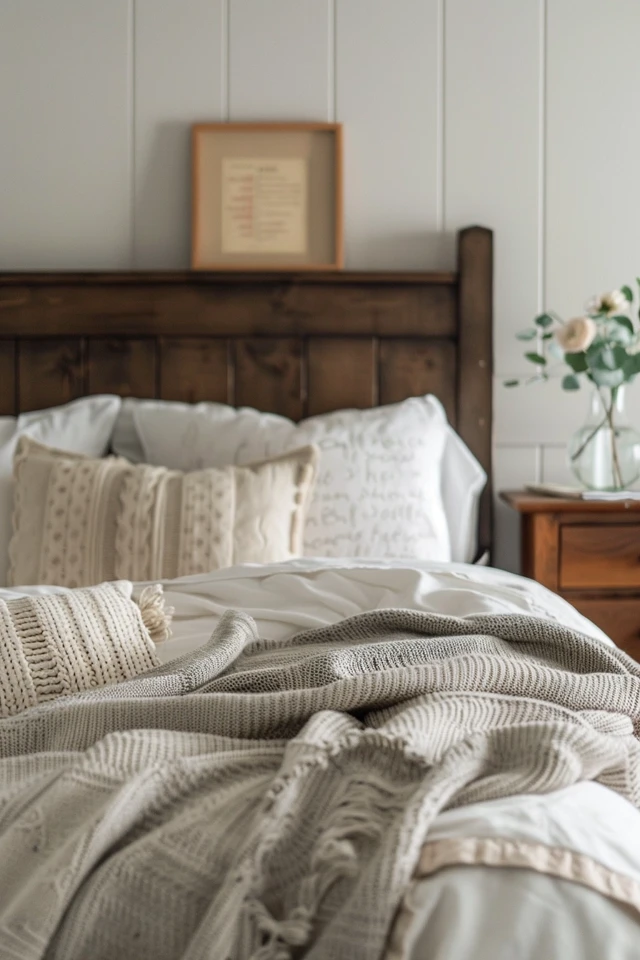
Cozy Gray Farmhouse Bedroom Makeovers I Adore
Introduction
Gray has held the interior design crown for over a decade, but the way we use it has shifted dramatically. In the early 2010s, we saw a lot of cool, flat grays paired with stark white furniture, which often resulted in spaces that felt more like clinical showrooms than places to rest. If you are looking for visual inspiration, you can skip straight to the Picture Gallery at the end of this blog post.
I remember a specific project where a client told me she loved the farmhouse look but hated how “cold” her previous gray bedroom felt. The issue wasn’t the color itself, but the lack of texture and the wrong undertones. By switching to a warm “greige” paint and introducing raw wood elements, we completely transformed the vibe without abandoning the palette she loved.
The makeovers I am sharing today focus on that specific balance. We are moving away from kitschy décor and leaning into a sophisticated, layered aesthetic that feels timeless. This is about creating a sanctuary that feels lived-in, warm, and expertly curated.
1. Mastering the Gray Palette: Undertones and Lighting
The biggest mistake DIYers make with gray bedrooms is ignoring undertones. Gray is rarely just black and white; it usually carries secret hints of blue, green, or violet.
If your room faces north, the light will naturally be cooler and bluer. Using a cool gray paint here will make the room feel icy and uninviting. For north-facing rooms, I always specify warm grays or greiges (gray-beige) to counteract the natural light.
Conversely, south-facing rooms get warm, golden light throughout the day. You have more freedom here to use cooler grays without the room feeling sterile.
Designer’s Note: The “Paper Test”
I never let a client approve a paint color based on a digital swatch or a small chip. To see the true undertone, paint a large sample board and hold it against a sheet of pure white printer paper. The white paper tricks your eye into seeing the true colors hiding in the gray, whether it is a subtle purple or a hidden green.
Common Paint Mistakes + Fixes
- The Mistake: Picking a paint color in the hardware store.
- The Fix: Store lighting is industrial fluorescent, which ruins color accuracy. Always test samples in your actual bedroom at three different times of day: morning, noon, and night.
- The Mistake: Ignoring the Light Reflectance Value (LRV).
- The Fix: Look at the LRV number on the back of the swatch. For a cozy bedroom, I prefer an LRV between 40 and 60. Anything higher might feel too bright; anything lower creates a moody, cave-like vibe (which can be great, but you must commit to it).
2. The Foundation: Flooring and Rug Sizing
In a farmhouse bedroom, the flooring usually sets the stage. Wide-plank engineered hardwood in a white oak finish is the gold standard for this look. It provides a natural warmth that cuts through gray walls.
However, comfort is key in a bedroom. You need a rug to ground the space and provide softness underfoot. The texture of the rug matters just as much as the size.
For a cozy gray aesthetic, avoid flat-weave synthetic rugs. Look for wool blends, chunky loops, or vintage-style hand-knotted rugs with distressed patterns. These introduce necessary friction to the design so it doesn’t look too “slick.”
Rug Sizing Rules of Thumb
- King Bed: You need a 9×12 rug. This allows for ample space on both sides of the bed and at the foot.
- Queen Bed: An 8×10 rug is usually perfect.
- Placement: Do not push the rug all the way to the wall behind the headboard. Stop the rug about 6 to 12 inches in front of your nightstands.
- The 18-Inch Rule: Ideally, you want at least 18 to 24 inches of rug extending from the sides of the bed. This ensures your feet land on soft fabric when you wake up, not cold wood.
What I’d Do in a Real Project
If the budget is tight, I prioritize the rug over expensive nightstands. A high-quality wool rug can last 20 years and creates the “luxury” feeling of the room. I often layer a smaller, vintage faux-hide or sheepskin rug at the side of the bed for extra texture.
3. Texture Over Clutter: The “Cozy” Factor
The modern farmhouse style often falls victim to clutter—too many signs, too many galvanized buckets, and too many trinkets. A truly cozy bedroom relies on architectural and textile texture rather than decor knick-knacks.
Start with the bed. To make a gray room feel warm, you must layer your bedding. A single comforter looks flat and uninspired.
I recommend a “lasagna” approach to bedding. Start with crisp white sheets, add a waffle-weave cotton blanket, then a heavy duvet, and finally a chunky knit throw at the foot of the bed.
Mixing Materials
- Wood: Introduce natural wood tones through your dresser or nightstands. If your floors are gray (which I usually advise against, but it happens), you need warm walnut or stained oak furniture to prevent the room from looking like a black-and-white photo.
- Metal: Mix your metals. If your curtain rods are matte black, try antique brass for your lighting or drawer pulls. This adds depth and history to the room.
- Woven Elements: A rattan basket for extra pillows or a woven bench at the foot of the bed adds organic warmth that gray paint lacks.
Rental & Budget Constraints
If you are renting or on a budget, you cannot always change the flooring or install beams. Instead, focus on large-scale art. A large canvas with warm tones (browns, creams, rusts) can dominate the visual field and distract from generic apartment finishes.
4. Lighting: The Jewelry of the Room
Lighting can make or break a gray room. If you use cool-toned lightbulbs (4000K or higher) in a gray room, it will look like a dentist’s office.
You must strictly use bulbs in the 2700K to 3000K range. This “soft white” temperature warms up the gray walls and makes the skin look better.
For a farmhouse look, I love using wall sconces instead of table lamps. This frees up precious surface area on your nightstand for books and water.
Sconce Placement Standards
- Height: Mount bedside sconces so the bulb is approximately 60 to 66 inches from the floor.
- Spacing: The fixture should be roughly 6 to 12 inches outward from the edge of the headboard.
- Switching: Ensure the switch is reachable from the bed. If you are hardwiring, put a switch near the headboard. If you are using plug-in sconces, look for ones with a switch on the cord or fixture base.
Designer’s Note: The “Big Light”
Avoid using the ceiling fan light or the main overhead flush mount as your primary light source. It flattens the room. I always install a dimmer switch on the main light. In the evening, rely on your bedside lamps and perhaps a floor lamp in the corner to create pools of light.
5. Window Treatments: Height and Fabric
Window treatments in a farmhouse bedroom should feel breezy but substantial. This is not the place for aluminum blinds.
I almost always layer window treatments. Start with a woven wood shade (like bamboo) mounted inside the window frame. This adds that crucial wood tone we discussed earlier.
On top of that, layer floor-length curtains. For a gray room, I love using a creamy off-white linen or a subtle ticking stripe. Pure white curtains can sometimes look too stark against certain gray paints.
Curtain Hanging Rules
- High and Wide: Do not hang the curtain rod directly above the window frame. Mount it 4 to 6 inches below the ceiling crown molding (or ceiling line). This tricks the eye into thinking the ceilings are taller.
- Rod Width: Extend the rod 8 to 12 inches past the window casing on both sides. When the curtains are open, they should frame the window without blocking the glass. This maximizes natural light.
- Length: The curtains should “kiss” the floor. They should not hover two inches above it (which looks like high-water pants), nor should they puddle excessively unless you are going for a very romantic, high-maintenance look.
Final Checklist: The Designer’s Audit
Before you call your makeover complete, run through this mental checklist. These are the details I check before photographing a project.
- The Undertone Check: Does the gray paint clash with the flooring? If yes, can a larger rug hide the conflict?
- The Bulb Audit: Are all lightbulbs 2700K or 3000K? Are there any rogue daylight bulbs making the room feel cold?
- Texture Balance: Do you have at least three different textures (e.g., wood, linen, metal)?
- Greenery: Have you added one living element? A faux olive tree or a real snake plant adds life to gray spaces.
- Art Scale: Is the art above the bed properly scaled? It should span about 60% to 75% of the headboard’s width.
- Nightstand Styling: Follow the rule of three: a light source, a vertical object (like a vase or photo frame), and a horizontal object (a stack of books).
FAQs
Is gray farmhouse style totally out of style?
The “kitschy” version (heavy distressing, word art, buffalo check everywhere) is dated. However, the modern farmhouse aesthetic—which blends clean lines, warm grays, natural woods, and vintage textiles—is a classic look that isn’t going anywhere. It is evolving into a more refined, European-inspired country style.
How do I stop my gray room from feeling sad or gloomy?
It comes down to lighting and wood tones. If a room has only gray and white, it lacks life. Add warm wood furniture, brass accents, and ensuring your light bulbs are “soft white.” Also, ensure you aren’t using a gray with heavy blue undertones in a north-facing room.
Can I mix beige and gray?
Absolutely. In fact, I encourage it. We call this “greige.” Mixing warm oatmeal, cream, and beige tones with gray creates a sophisticated, high-end palette. It adds dimension that a monochrome gray room lacks.
What is the best finish for bedroom furniture in a gray room?
I prefer natural wood tones like white oak, walnut, or even a deep charcoal. Avoid matching bedroom sets where the bed, dresser, and nightstands are all the same gray painted wood. It looks too manufactured.
Conclusion
Creating a cozy gray farmhouse bedroom is about balance. It requires looking past the paint chip and considering how light, texture, and scale interact in the space. By ignoring the “fast fashion” version of farmhouse style and focusing on timeless materials like linen, iron, and wood, you can build a room that outlasts trends.
Remember that a bedroom is a functional sanctuary first. Prioritize the touch of the rug, the warmth of the lighting, and the comfort of the bedding. When those functional elements are in place, the aesthetic naturally follows.
Take your time selecting the right shade of gray, and don’t be afraid to test multiple samples. The result will be a restful retreat that feels both modern and historically rooted.
Picture Gallery


