
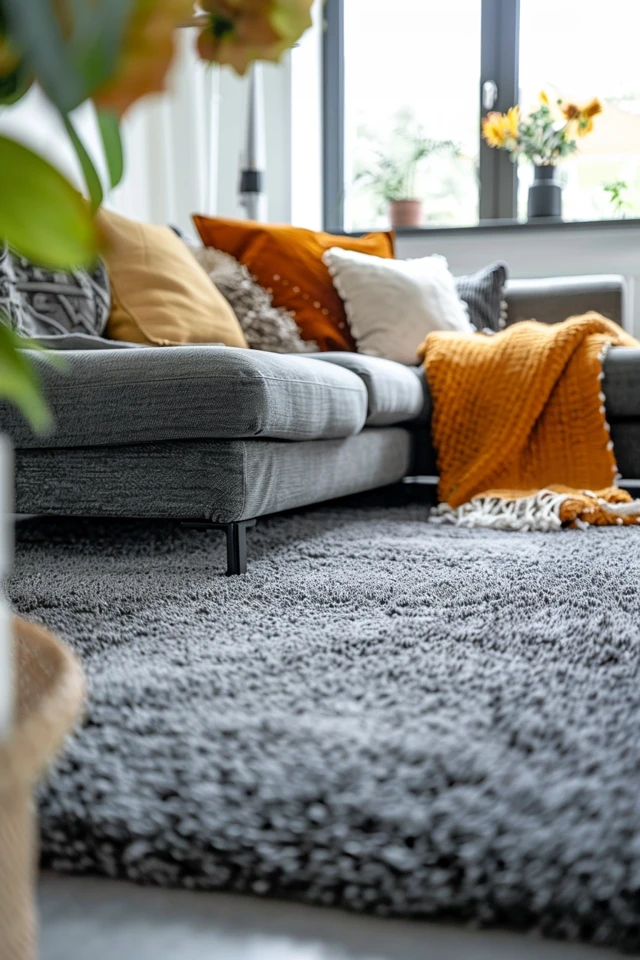
Cozy Grey Carpet Living Room Styles & Tips
Introduction
Grey carpet often gets a bad reputation as being safe, boring, or strictly for rental apartments. However, when treated as a foundational element rather than an afterthought, it is actually one of the most versatile flooring choices available. It provides a soft, acoustic-dampening layer that makes a living room feel immediately grounded and intimate.
I have designed dozens of living spaces where the client initially wanted to rip out the existing grey carpet, only to fall in love with it after we adjusted the lighting and furniture layout. For a visual breakdown of how these elements come together, be sure to check out the curated Picture Gallery at the end of the blog post.
The secret lies in understanding undertones and texture. Grey is rarely just “grey”; it is a spectrum ranging from cool, icy blues to warm, taupe-heavy greiges. By identifying which grey you have, you can build a color palette that makes the room feel intentional and sophisticated rather than drab.
Understanding Your Grey: Undertones and Texture
Before you buy a single piece of furniture, you must identify the “temperature” of your floor. This is the step most homeowners skip, leading to clashes that feel “off” without obvious reason.
The Daylight Test
To find the undertone, turn off all artificial lights and look at the carpet in natural daylight. Place a piece of pure white printer paper on the floor. If the carpet looks blue or lavender next to the paper, you have a cool grey. If it looks beige, brown, or green, you have a warm grey.
Texture is Your Best Friend
Flat, loop-pile commercial grey carpet can feel cold and industrial. Plush, cut-pile, or frieze styles add depth and shadow. If you are installing new carpet, always opt for a texture that has some variation in the fiber height.
Designer’s Note: The “Dirt” Factor
In my projects, I always advise against solid, single-color grey for high-traffic family rooms. A “heathered” grey—which is a mix of light and dark fibers—is significantly more forgiving. It hides lint, pet hair, and traffic patterns much better than a solid slate grey ever will.
Layering Rugs over Carpet
One of the most frequent questions I get is, “Can I put a rug on top of carpet?” The answer is a resounding yes. In fact, for a cozy grey living room, it is often necessary.
Layering a rug helps define zones, specifically in open-concept spaces. It creates a focal point and adds a layer of pattern that a wall-to-wall carpet lacks. This technique is particularly useful for renters who cannot change the flooring but hate the texture or condition of the existing carpet.
The Rules of Layering
When layering rug-on-carpet, texture contrast is vital. If your grey carpet is a low-pile loop (like Berber), choose a thick, high-pile Moroccan rug or a shag. If your carpet is plush and thick, choose a flat-weave or a natural fiber rug like jute or sisal to provide stability.
Sizing and Anchoring
A common mistake is buying a rug that is too small, looking like a “postage stamp” floating in the room.
- Front Legs Rule: At minimum, the front feet of your sofa and accent chairs should sit on the area rug.
- The Border Rule: Aim to leave about 12 to 18 inches of the grey carpet visible between the edge of the rug and the wall, though this matters less when layering than when placing a rug on hardwood.
- Safety First: You must use a “carpet-to-carpet” rug pad. Standard rubber pads will shift and creep on top of carpet. You need a specialized grip pad that adheres to the carpet fibers without damaging them.
Color Palettes that Warm Up Grey
The “all grey everything” trend of the early 2010s is over. To make a grey carpeted room feel current and cozy, you need to introduce warmth through your color palette.
The “Greige” Bridge
If your carpet is a cool, steel grey, you need to bridge the gap to warmer tones. Use “greige” (grey-beige) on the walls or in upholstery. This acts as a middle ground that allows you to introduce warmer wood tones like walnut or white oak without them clashing with the floor.
Accent Colors for Cool Grey Floors
- Navy and Indigo: These deepen the cool tones, making the room feel moody and sophisticated.
- Mustard and Ochre: These provide a striking contrast. The yellow warms up the space instantly.
- Crisp White: High-contrast white walls with cool grey floors create a clean, modern gallery look.
Accent Colors for Warm Grey Floors
- Olive and Sage Green: These earth tones blend seamlessly with warm grey/taupe carpets.
- Rust and Terracotta: These pull out the brown undertones in the carpet, creating a very cozy, autumnal vibe.
- Cream and Ivory: Avoid stark white; creamy tones soften the look.
Common Mistake: The Wood Clash
Be careful with wood furniture. Red-toned woods (like cherry or mahogany) can look dated and intense against cool grey carpet. Stick to ash, walnut, or black-stained wood for a more cohesive modern aesthetic.
Lighting Strategies for Grey Floors
Grey carpet absorbs light. Unlike hardwood or tile, which reflects light back into the room, carpet fibers trap it. This means a grey room requires more lumens to feel bright and welcoming.
Kelvin Temperature Matters
The “temperature” of your light bulbs can completely change the color of your carpet.
- 3000K (Soft White): This is usually the sweet spot for living rooms. It is warm enough to be cozy but neutral enough not to turn your grey carpet yellow or muddy.
- 2700K (Warm White): This can cast a yellow glow. If you have a cool blue-grey carpet, this light might make the floor look greenish. Test your bulbs before committing.
- 4000K (Cool White): Avoid this in living rooms. It creates a clinical, office-like atmosphere that makes grey carpet look industrial.
Layering Light Sources
Relying on a single overhead ceiling fan or recessed can lights will create harsh shadows. You need eye-level lighting to create coziness.
My “Triangle of Light” Rule
Place at least three light sources in a triangle formation around the seating area. This usually consists of one floor lamp and two table lamps (or one table lamp and a wall sconce). This washes the walls and furniture in light, drawing the eye up and away from the floor.
Furniture Selection and Layout
Because the floor is a solid block of color, your furniture needs to provide visual relief. This is where we talk about “leggy” furniture versus “block” furniture.
Visual Weight and Balance
If your grey carpet is dark (charcoal or slate), avoid heavy, skirted sofas that go all the way to the floor. The dark furniture will disappear into the dark floor. Instead, choose a sofa with exposed wooden or metal legs. This creates negative space and makes the room feel airier.
Conversely, if your carpet is a very light silver, you can afford to use heavier, blockier furniture pieces to ground the space.
Texture Mapping
Since the floor is soft, you need hard and sleek surfaces to prevent the room from feeling “stuffy.”
- Coffee Tables: Opt for glass, marble, or polished wood. Avoid upholstered ottomans as coffee tables unless you use a large wooden tray on top to break up the fabric-on-fabric look.
- Accent Chairs: Leather is an excellent choice here. A cognac leather chair against a grey carpet is a classic, high-end combination that adds instant warmth.
Real-World Measurements
When laying out furniture on carpet, spacing is key to flow.
- Coffee Table Distance: Keep 14 to 18 inches between the edge of the sofa and the coffee table. This is close enough to reach a drink but far enough to walk through.
- Walkways: Leave 30 to 36 inches of clear walking path between furniture groupings.
- Curtains: Mount your curtain rod at least 4 to 6 inches above the window frame (or all the way to the ceiling) to draw the eye up. Ensure the curtains “kiss” the carpet. They should not pool excessively (hard to vacuum) nor hang inches above the floor (looks cheap).
Final Checklist: What I’d Do in a Real Project
If I were walking into your home today to style a living room with grey carpet, this is the exact mental checklist I would run through.
1. Check the Undertone
Is the grey warm (brown-leaning) or cool (blue-leaning)? I would carry a paint swatch deck to verify this immediately.
2. Establish the focal point
Since the floor is neutral, the eye needs somewhere to land. I would focus on a fireplace, a large piece of art, or a statement sofa.
3. Add Organic Elements
Grey carpet is synthetic by nature. I would immediately add a large indoor plant (like a Ficus or Monstera) in a ceramic pot. The green life breathes energy into the grey backdrop.
4. Break up the Texture
I would add a leather element (pouf or chair) and a metallic element (brass lamp or chrome table legs).
5. Dress the Windows
I would install floor-to-ceiling drapes in a fabric that has a slight weave, like linen or heavy cotton. I would avoid grey curtains; instead, I’d choose oatmeal, white, or a subtle pattern to break up the wall-to-floor transition.
FAQs
How do I keep grey carpet looking clean in high-traffic areas?
Vacuum frequently, at least twice a week, to prevent dirt from grinding into the fibers. For high-traffic lanes, use a runner rug. If you are buying new carpet, look for nylon fibers, which are generally more durable and resilient than polyester.
Can I paint my walls grey if I have grey carpet?
Yes, but you must create contrast. Do not try to match the carpet exactly. Go significantly lighter (off-white/pale grey) or significantly darker (charcoal/slate) on the walls. If the values are too similar, the room will look like a fuzzy box.
What metal finishes look best with grey carpet?
Matte black is very modern and grounding. Brushed brass or gold adds necessary warmth and luxury. Chrome or silver can look good but may feel a bit chilly if you don’t have other warm elements in the room.
My rental carpet is ugly and matted. What can I do?
Distract the eye. Use a very large area rug to cover the main seating area. Use bold artwork on the walls and bright throw pillows. If the eye is drawn to eye-level décor, the floor becomes less noticeable.
Conclusion
Grey carpet is far more than a builder-grade default; it is a chameleon that can adapt to almost any design style. Whether you are aiming for a moody, monochromatic lounge or a bright, Scandinavian-inspired family room, the key lies in managing contrast and texture.
By layering appropriate lighting, mixing warm wood tones, and ensuring your furniture floats above the fibers rather than sinking into them, you can create a space that feels curated and high-end. Remember, the floor is just the canvas—what you paint on top of it defines the home.
Picture Gallery


