Industrial Living Room Decor – Cozy Design Essentials
Discover how to blend comfort with cool, urban aesthetics to create your dream cozy industrial living room. Perfect for a warm, stylish home!
Industrial design often gets a bad reputation for being cold, sterile, or overly masculine. Many people imagine an abandoned warehouse with uncomfortable metal chairs and drafty windows when they hear the term. However, the modern iteration of this style is actually about celebrating raw materials while layering in deep comfort.
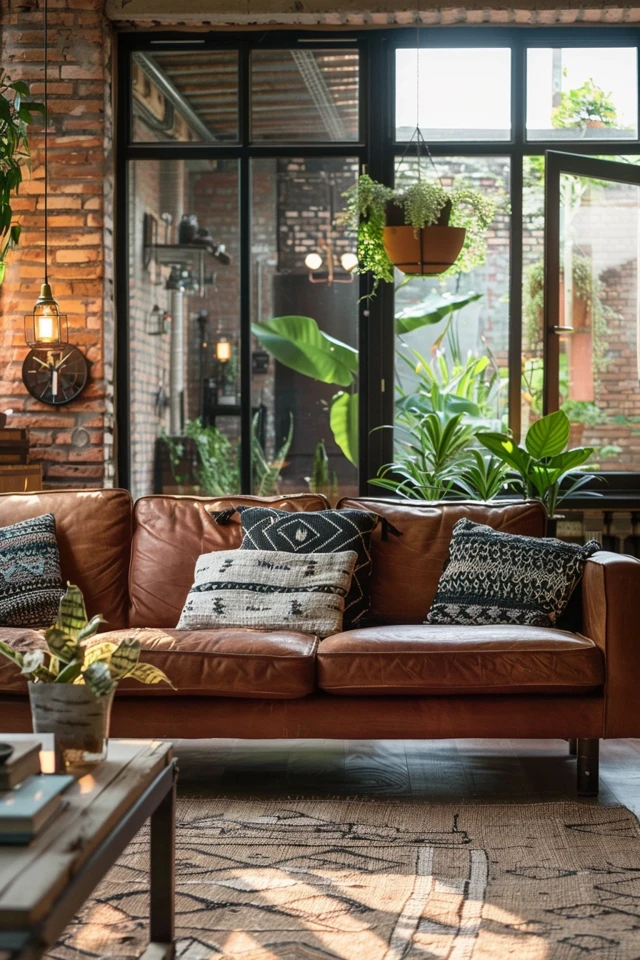
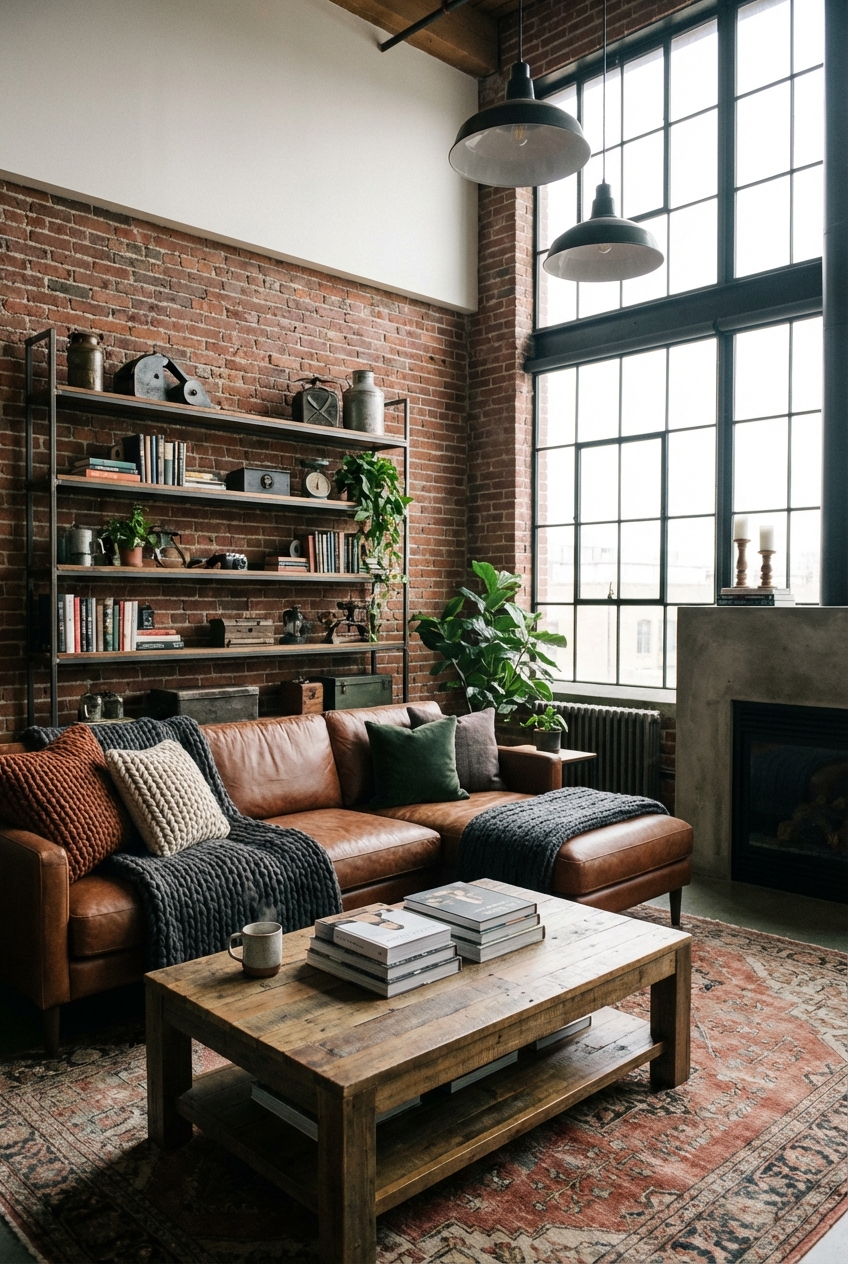
I remember walking into a client’s converted loft in downtown Chicago a few years ago; the bones were incredible, featuring exposed brick and twenty-foot ceilings, but it felt like an echo chamber. Our goal wasn’t to hide the industrial elements but to soften them enough to make the space livable for a family with a Golden Retriever. To see exactly how these elements come together, check out the Picture Gallery at the end of the blog post.
The secret lies in the contrast between the hard, structural “shell” of the room and the soft, tactile furnishings you place inside it. You do not need to live in a repurposed factory to achieve this aesthetic. By balancing raw finishes with cozy textiles and smart lighting, you can bring this sophisticated, urban look into a suburban home or a standard apartment.
1. Establishing the Foundation: Walls and Floors
The defining characteristic of industrial design is the architectural shell. In a true loft, you have existing exposed brick, concrete floors, or visible ductwork. If you have these features, your job is simply to clean and seal them so they don’t dust or crumble.
If you are in a standard drywall box, you have to fake the funk without making it look like a stage set. I often recommend high-quality limewash paint instead of faux brick wallpaper. Limewash adds texture and depth that mimics plaster or concrete, giving walls a “lived-in” patina that flat latex paint cannot achieve.
For flooring, concrete is the gold standard, but it is hard on the knees and cold in the winter. Engineered wide-plank oak in a matte, distressed finish is a fantastic alternative. It provides the visual weight needed to ground the space but offers much more warmth and acoustic dampening than stone or concrete.
The Fix: If you have hard industrial surfaces, you must cover at least 40% of the floor with area rugs. You also need soft window treatments. Velvet drapes are excellent for sound absorption in these spaces.
2. Selecting Furniture with Visual Weight
Industrial furniture needs to feel substantial. Delicate, spindly furniture often gets lost in an industrial scheme, especially if you have high ceilings. You want pieces that feel anchored to the ground.
Start with the sofa, which is usually the largest investment in the room. A leather sofa is the classic choice here, specifically in cognac, tobacco, or distressed graphite tones. Leather ages beautifully and handles the “rough around the edges” vibe perfectly.
However, if you have pets that scratch, a high-performance velvet in a deep jewel tone like navy or forest green is a durable alternative. It adds a necessary touch of luxury against raw walls.
Scale and Dimensions
When selecting armchairs or side tables, pay attention to the “visual weight.”
- Sofa Depth: Aim for a deep seat, ideally 40 to 44 inches. This invites lounging and matches the casual nature of the style.
- Leg Styles: Avoid skirted furniture. Look for legs made of iron, blackened steel, or block wood.
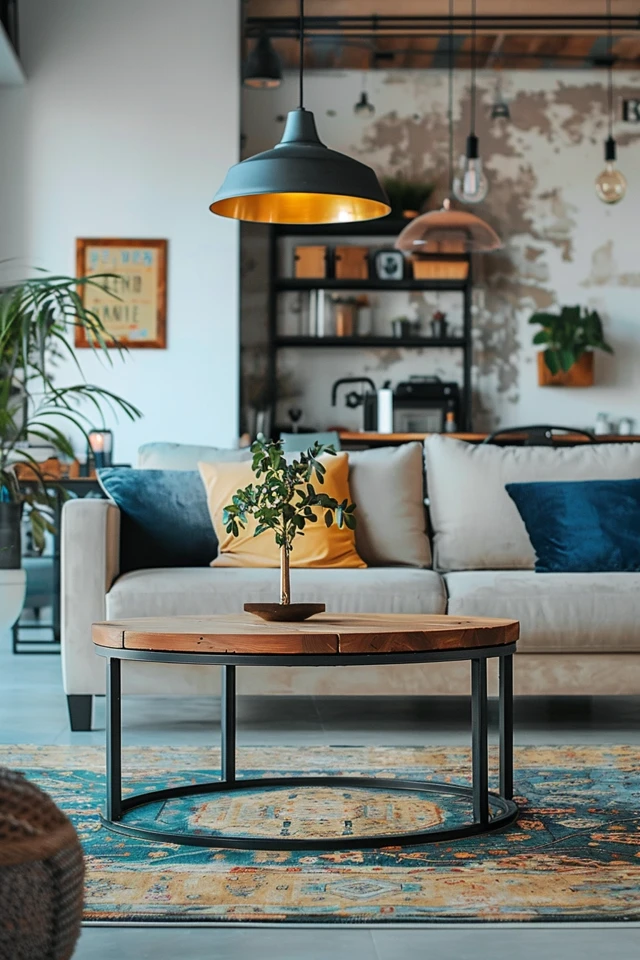
- Coffee Tables: Use large, solid surfaces. A reclaimed wood factory cart or a concrete slab table works well. Ensure the table is roughly two-thirds the length of your sofa.
3. Softening the Look with Textiles
This is where the “cozy” part of the title comes into play. Without textiles, an industrial room is just a garage. You must layer fabrics to break up the vast expanses of wood, metal, and brick.
Start with the rug. I almost always layer rugs in industrial living rooms to add physical padding and visual interest. A large, natural jute or sisal rug works well as a base layer because it is durable and neutral.
On top of that base, place a smaller, softer rug. A vintage Turkish kilim or a faux cowhide adds pattern and softness where your feet actually rest. This layering technique prevents the furniture from floating on a concrete island.
Throw Pillow Strategy
Don’t use the matching pillows that came with your sofa. Mix textures aggressively.
- Wool and Bouclé: Nubby fabrics add warmth.
- Leather accents: If your sofa is fabric, use a leather pillow.
- Canvas or Linen: These natural fibers fit the utilitarian aesthetic.
4. Lighting: The Maker or Breaker of Atmosphere
Lighting is the most critical element in making an industrial space feel cozy rather than interrogation-room harsh. The mistake most people make is relying on a single overhead fixture or recessed “can” lights.
You need warm, ambient light at eye level. This is achieved through floor lamps and table lamps. Look for fixtures that feature mixed materials, such as a glass shade on a brass arm or a mesh metal cage.
The Bulb Temperature Rule
In industrial design, you often see exposed bulbs. This makes the color temperature of the bulb incredibly important.
- Avoid: Anything over 3000K (Kelvin). Daylight bulbs (5000K) will make your brick look orange and your space feel like a hospital.
- Choose: Warm white bulbs between 2200K and 2700K. Vintage-style LED “Edison” bulbs are perfect because they give that glowing filament look without the heat or energy cost.
Common Mistakes + Fixes
Mistake: Using only track lighting on the ceiling.
Fix: Create a “triangle of light” by placing floor or table lamps in three corners of the room. This washes the walls in warmth and eliminates dark, scary corners.
5. Incorporating Organic Elements and Greenery
Industrial spaces are defined by man-made materials: brick, steel, glass. To make a human feel comfortable, you must reintroduce nature. Plants are not just decoration here; they are essential to balancing the energy of the room.
Large-scale plants work best to stand up against heavy furniture. A Fiddle Leaf Fig or a Rubber Tree (Ficus elastica) has the height and dark, glossy leaves that complement leather and wood tones.
If you have exposed beams or tall shelves, use trailing plants like Pothos. The organic, chaotic lines of the vines help soften the rigid, straight lines of brick mortar and metal window frames.
Pottery and Planters
Do not put these plants in plastic pots. The container is part of the decor.
- Materials: Terracotta, cement, or galvanized metal buckets.
- Scale: Oversized planters look expensive and intentional. Tiny pots look like clutter.
Final Checklist: What I’d Do in a Real Project
If I were designing your living room tomorrow, here is the cheat sheet I would bring to the site visit.
Layout & Flow
Material Mix
- Limit “cold” metals (chrome, stainless steel) to kitchen areas. Use “warm” metals (brass, copper, matte black) in the living room.
- Include at least one piece of vintage wood. It adds a history that new furniture cannot replicate.
The “Cozy” Factor
- Install dimmer switches on every single light fixture. This is non-negotiable for mood.
- Add a throw blanket with a heavy texture (chunky knit or faux fur) to the arm of the sofa.
- Curtains should hang high and wide. Mount the rod 6 inches above the window frame and let the fabric extend 10 inches past the frame on each side.
FAQs
- Can I do industrial design in a small apartment?
- Absolutely. In fact, industrial design works well in small spaces because it favors functional, streamlined furniture. Look for “apartment scale” sofas that have thinner arms but deep seats. Use mirrors with metal frames to reflect light and fake the appearance of a warehouse window.
- Is industrial decor expensive to achieve?
- It is actually one of the most budget-friendly styles because it celebrates imperfection. You can source amazing pieces from thrift stores, flea markets, and salvage yards. A scratched coffee table or a faded rug fits the aesthetic perfectly, whereas those items would look ruined in a “Traditional” or “Glam” design.
- How do I keep it from looking too masculine?
- This is a common concern. The fix is in the color palette and textures. Introduce softer colors like sage green, terracotta, or dusty rose through throw pillows and art. Use round mirrors and circular coffee tables to break up the square, masculine lines of the architecture.
- What is the best wall color if I don’t have brick?
- If you aren’t doing limewash, stick to warm neutrals. “Greige” (gray-beige) is better than cool gray. Dark, moody walls also work exceptionally well in industrial spaces. A charcoal or deep navy accent wall can simulate the depth of an industrial shadow.
Conclusion
Creating a cozy industrial living room is an exercise in balance. It requires you to be brave with rough materials while being thoughtful with comfort. It is about proving that a space can be durable and rugged while still being the most comfortable room in the house.
Don’t be afraid to mix eras and finishes. The most successful industrial rooms look like they evolved over time, rather than being purchased out of a catalog all at once. Start with a solid foundation, prioritize warm lighting, and layer in textiles until the echo is gone and the warmth remains.
Picture Gallery
Five photographs · drag or swipe