
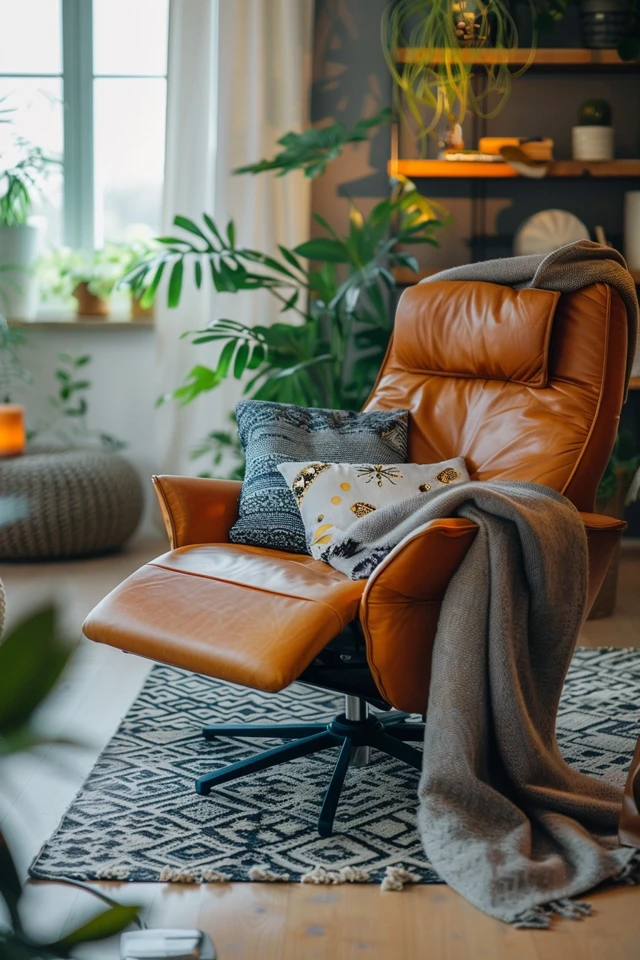
Cozy Living Room Ideas with Recliners for Style
There was a time when the word “recliner” made interior designers cringe. We immediately pictured overstuffed, bulky chairs in shiny brown leather that dominated the room and ruined the flow. Fortunately, furniture design has evolved dramatically in the last decade.
Today, you can have the best of both worlds: high-end aesthetics and the ultimate comfort of putting your feet up. The secret lies in selecting the right silhouette and integrating it into your living room layout intentionally. It is about treating the recliner as a piece of architectural furniture rather than just a comfort object.
I have convinced many hesitant clients to embrace recliners by focusing on modern mechanisms and performance fabrics. For a huge dose of inspiration, make sure to check out the curated Picture Gallery at the end of this blog post.
Choosing the Right Chair: Silhouette and Scale
The biggest mistake homeowners make is buying a chair that is too large for the room. A recliner visually expands when it is fully open, so you must account for its “footprint” in both the upright and reclined positions.
If you have a smaller living room or an apartment, look for a “high-leg” recliner. These look like standard armchairs because the mechanical hardware is hidden, and you can see the floor beneath the seat. Seeing the floor creates an optical illusion of more space.
For larger rooms, you can opt for a “club chair” style with a skirt or a solid base. However, ensure the back of the chair isn’t so high that it blocks sightlines across the room.
Designer’s Note: The Mechanism Matters
In my projects, I always ask clients how they plan to operate the chair. This changes the layout planning significantly.
- Push-back recliners: These have no lever. You physically push back to recline. They look the sleekest but require some core strength to operate.
- Power recliners: These offer the most custom comfort but require a power source. If you choose this, you must plan for floor outlets or battery packs. Never run a cord across a walkway.
Common Mistake + Fix
Mistake: Buying a “wall hugger” assuming it takes up zero space.
Fix: Even wall huggers need 3 to 5 inches of clearance from the wall to operate without scuffing the paint. Standard recliners often need 12 to 18 inches. Measure this gap before you buy.
Layouts That Flow: Spacing and Clearance
Integrating a recliner into a cozy living room requires precise spacing. Unlike a stationary armchair, a recliner is dynamic. Its shape changes.
You need to create a “clearance zone” around the footrest. When the footrest is extended, there should still be enough room for someone to walk by without having to shimmy sideways.
Aim for a minimum of 30 inches of walking path around the extended footrest. If your room is tight, position the recliner in a corner where traffic flow is naturally lower.
The Coffee Table Dilemma
The relationship between a recliner and a coffee table is tricky. If the table is close enough to reach a drink, the footrest will hit it. If it is far enough for the footrest, you can’t reach your coffee.
What I’d do in a real project:
- Skip the large central coffee table if the room is narrow.
- Use a nesting table or a “C-table” that slides over the arm of the recliner.
- If you keep a central table, choose a round shape. Curved edges are more forgiving on shins and allow for easier navigation around the extended footrest.
Rug Sizing Rules
A recliner should always feel anchored. The front legs of the chair (at minimum) should sit on your area rug. If the chair is floating off the rug completely, it will look like an afterthought.
For a standard living room, an 8×10 rug usually allows the sofa and the recliner to share the space cohesively. If the recliner is a swivel model, ensure the edge of the rug doesn’t get caught in the base when you turn.
Texture and Layering for Maximum Coziness
Once the layout is set, we need to focus on styling. A leather recliner can feel cold to the touch, while a tailored fabric chair might feel a bit stiff. Layering is the solution.
Start with a throw blanket. However, styling a throw on a recliner is different than on a sofa. You don’t want the blanket getting caught in the gears.
I prefer to drape a throw vertically over one side of the backrest or neatly folded over the arm. Avoid tossing it casually over the footrest, as it will slide off the moment you sit down.
Pillows on Recliners
Most people get this wrong. Large 22-inch square pillows push you too far forward in a recliner, ruining the ergonomic design. You end up throwing the pillow on the floor every time you sit.
Instead, use a lumbar pillow (typically 12×20 inches). It provides lower back support without shortening the seat depth. Look for down-filled inserts rather than poly-fill; they mold to your body better and stay in place.
Mixing Materials
Contrast creates coziness. If you have a fabric sofa (like linen or velvet), a leather recliner adds warmth and sophistication. The leather will patina over time, adding character.
If your sofa is leather, go for a recliner in a heavy weave, like bouclé or a chunky chenille. This tactile difference makes the room feel curated rather than purchased as a matching set from a showroom.
Lighting Schemes for Reading and Relaxing
A cozy reading nook is the natural habitat of the recliner. However, overhead lighting kills the cozy vibe. You need dedicated task lighting.
The placement of the floor lamp is critical. It should be placed behind the shoulder of the seated person, on the opposite side of their dominant hand. This reduces shadows on your book or tablet.
Height and Adjustability
Because you change your vertical height when you recline, a static floor lamp might shine directly in your eyes when you lean back. This is a common annoyance that ruins the relaxation experience.
I always recommend an articulating floor lamp or a “pharmacy style” lamp. These allow you to pivot the shade up or down depending on whether you are sitting upright or lying back.
Designer’s Note: Bulb Temperature
The “temperature” of your light bulb dictates the mood. For a cozy living room, avoid “Daylight” bulbs (5000K), which look blue and clinical.
Stick to 2700K (warm white) or 3000K (soft white). This warmer light mimics candlelight and sunset, which signals your brain that it is time to relax.
Durability for Real Life (Pets, Kids, and Spills)
A recliner is a high-traffic item. It is the chair everyone fights over. Therefore, durability is just as important as style.
If you have pets, be wary of loose-weave fabrics like tweed. Cat claws can easily pull the threads. Tight weaves like microfiber or velvet are surprisingly pet-friendly because there are no loops to snag.
Performance Fabrics
For families with kids, I insist on performance fabrics. Brands like Crypton or Sunbrella offer indoor fabrics that resist stains and odors. Liquids bead up on the surface rather than soaking in.
Performance velvet is one of my secret weapons. It looks luxurious and expensive, but it is incredibly tough. You can wipe off mud or chocolate with a damp cloth, and it doesn’t pill easily.
Leather Maintenance
If you choose leather, know the difference between “top grain” and “corrected grain.”
- Top Grain / Full Aniline: Very soft and natural. It will scratch and fade. This is a look for people who appreciate a “lived-in” aesthetic.
- Pigmented / Protected Leather: Has a coating that resists scratches and spills. It looks more uniform and stays looking new longer. This is better for households with heavy wear and tear.
Final Checklist: Designing Your Recliner Zone
Before you finalize your purchase or rearrange your living room, run through this checklist to ensure you haven’t missed a critical detail.
- Measure the “Full Recline” length: Do you have at least 30 inches of walking space past the extended footrest?
- Check the Wall Clearance: Does the chair need to be 4 inches or 14 inches from the wall?
- Power Source: If it’s a power recliner, is there an outlet nearby, or do you need a battery pack?
- Side Table Height: Is your side table roughly 1-2 inches lower than the recliner arm for easy reach?
- Rug Placement: Are the front legs of the recliner firmly on the rug?
- Light Test: Can you adjust the floor lamp so it doesn’t blind you when you are fully reclined?
- Fabric Suitability: Have you ordered a swatch to test against pet hair and spills?
FAQs
Can I mix a recliner with a stationary sofa?
Absolutely. In fact, I prefer it. Matching sets often look dated. Mixing a stationary sofa with a distinct recliner makes the room feel designed. Just ensure the seat heights are similar (within 1-2 inches) so no one sits significantly lower than anyone else.
What is the best recliner for a small apartment?
Look for a “push-back” recliner with narrow arms. Bulky rolled arms waste precious inches. A mid-century modern silhouette usually offers the smallest footprint while still providing great comfort.
How do I hide the cord on a power recliner in the middle of the room?
If you cannot install a floor outlet, purchase a rechargeable battery pack specifically for furniture. They hide underneath the chair and can last for weeks on a single charge. Never use a rug to hide a cord; it is a fire hazard.
My recliner looks lonely in the corner. How do I fix it?
Anchor it. Add a floor lamp, a small side table, and a plant nearby. This creates a “vignette” or a dedicated zone. If it’s still floating, consider angling the chair slightly toward the center of the room rather than placing it square against the walls.
Conclusion
Creating a cozy living room with a recliner is no longer a compromise between style and comfort. By paying attention to scale, traffic flow, and lighting, you can design a space that looks magazine-ready but lives like a dream.
Remember that the goal is to facilitate relaxation. Whether you choose a buttery leather power recliner or a sleek fabric push-back, the best chair is the one that invites you to stay awhile.
Use the guidelines on clearance and layering to ensure the chair integrates seamlessly with your other furniture. With the right planning, your recliner will become the best seat in the house.
Picture Gallery


