
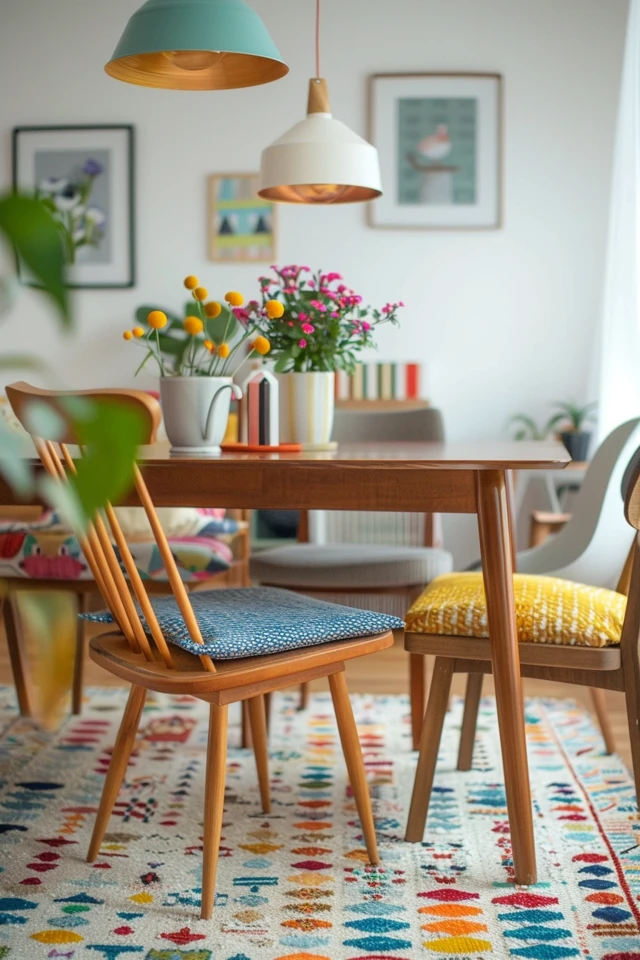
Cozy Scandinavian Dining Room Ideas for Your Home
Scandinavian design is often misunderstood as strictly cold, white, and minimalist. While it certainly champions simplicity, the true heart of Nordic interiors lies in the concept of “hygge”—a feeling of cozy contentment and well-being. In a dining room, this translates to a space that feels airy and organized, yet warm enough to encourage guests to linger for hours after the meal is finished.
Years ago, I worked with a client who loved the look of Danish modern furniture but was terrified her dining room would end up looking like a sterile showroom. We bridged that gap by focusing heavily on texture and ambient lighting rather than just buying iconic furniture shapes. For a dose of visual inspiration, don’t miss our curated Picture Gallery at the end of this post.
In this guide, I will walk you through the practical steps of building a Scandinavian dining space that functions for real life. We will cover layout, lighting layers, material selection, and the specific measurements you need to make the room flow correctly.
1. The Foundation: Warm Palette and Natural Materials
The biggest misconception about Scandinavian style is that you must paint everything stark white. In reality, successful Scandi interiors rely on warm neutrals, creams, greys, and muted earth tones to reflect light without feeling clinical.
If you choose white paint, pay close attention to the Light Reflectance Value (LRV) and the undertones. A white with a blue undertone will feel chilly in a north-facing room, whereas a creamy white with a subtle yellow or red base will counteract the grey light of winter.
Wood is the neutral
In these spaces, wood is not just a material; it is the primary color in your palette. Light woods like white oak, ash, birch, and beech are staples because they keep the room feeling bright.
Designer’s Note: You do not need to match your wood tones perfectly. In fact, I prefer it when they don’t match. However, you must match the undertones. If your floors are a warm honey oak, avoid a dining table with cool, grey-washed tones. Keep warm with warm and cool with cool to maintain visual harmony.
Flooring considerations
Ideally, wall-to-wall carpeting is avoided in dining areas for cleanliness and aesthetic reasons. Wide-plank engineered hardwood or bleached wood floors are the gold standard.
If you are renting or stuck with dark floors, a large, flat-weave rug in a light wool or jute can brighten the ground plane significantly. This acts as a reflector, bouncing light back up into the room.
2. Selecting the Dining Table
The dining table is the anchor of the room. In Scandinavian design, function comes first, so the shape of your table should be dictated by the shape of your room and the flow of traffic.
Rectangular vs. Round
For square rooms or tighter breakfast nooks, a round table creates better flow. It removes sharp corners that you might bump into and encourages communal conversation. A pedestal base is often better for legroom in small spaces.
For rectangular rooms, a long farmhouse-style table or a sleek mid-century modern teak table works best. The lines draw the eye through the room, emphasizing the sense of space.
Measurements that matter
Clearance: You need at least 36 inches of clearance between the edge of your table and the nearest wall or piece of furniture. Ideally, aim for 42 to 48 inches if you want people to walk behind seated guests comfortably.
Width: A table that is too wide creates a disconnect between guests. I prefer tables between 36 and 40 inches wide. Anything over 42 inches wide makes it difficult to pass dishes and kills the intimacy of the setting.
Common Mistakes + Fixes
Mistake: Buying a table with a fragile finish for a family home.
Fix: If you have kids, look for solid wood with a soap finish or a high-quality matte polyurethane. Avoid delicate veneers that chip easily. A “soap finish” is a traditional Danish technique that leaves wood looking raw and natural but provides a surprising amount of stain resistance against wine and oil.
3. Seating: Mixing, Matching, and Comfort
One of the defining characteristics of a cozy Scandi dining room is the chair selection. The “Wishbone” chair is the most recognizable icon, but there are countless spindle-back and woven-seat options that fit the bill.
The “Mix and Match” strategy
To keep the room from looking like a catalog, consider mixing your seating. A common approach is to use identical side chairs along the length of the table and two different, slightly more substantial armchairs at the heads of the table.
Alternatively, you can use a bench on one side. This is excellent for families with children or narrow rooms where you need to tuck the seating under the table when not in use.
Comfort is key
Wooden chairs are beautiful, but they can be hard on the body during long dinner parties. To up the “hygge” factor, add texture and comfort simultaneously.
- Sheepskins: Draping a genuine or faux sheepskin over the back of a hard wooden chair instantly softens the look and adds warmth.
- Seat Pads: Thin leather or felt seat pads are very common in Nordic design. They protect the chair and provide just enough cushion without adding bulk.
Scale and visual weight
Scandinavian furniture often features “leggy” designs. This means you can see underneath the furniture, which makes the room feel larger. However, if you have a large, heavy table, ensure your chairs have enough visual weight to stand up to it. Spindle-back chairs are great for airy spaces, while upholstered chairs ground a larger room.
4. Lighting: The Secret to Atmosphere
If you take only one thing from this guide, let it be lighting. In Scandinavia, where winters are long and dark, lighting is an art form. You cannot rely on a single grid of recessed can lights to create a cozy atmosphere.
The temperature rule
Always check the Kelvin temperature of your bulbs. For a dining room, you want 2700K (warm white). Anything above 3000K will look like a dentist’s office and kill the mood instantly.
Layering light sources
You need at least three layers of light in a dining room:
- The Pendant: This hangs low over the table. The bottom of the fixture should be 30 to 36 inches above the table surface. This creates an intimate pool of light for dining.
- Ambient Light: Floor lamps or table lamps on a sideboard help illuminate the corners of the room, pushing back the shadows and making the space feel larger.
- Candlelight: This is non-negotiable for the style. Real candles or realistic LED tapers add a flickering dynamic movement that static bulbs cannot replicate.
Dimmer switches
Every light fixture in a dining room should be on a dimmer. Being able to lower the light levels as the evening progresses is essential for transitioning from a functional meal to relaxed conversation.
5. Textiles: Rugs and Window Treatments
Textiles are the vehicle for softness. They absorb sound, which is crucial in a room with hard floors and wooden furniture, preventing the “echo chamber” effect.
The rug dilemma
Many traditional Scandinavian homes skip rugs under the dining table to show off the wood floors. However, for a cozy vibe, a rug is helpful.
- Material: Choose wool or a high-quality synthetic blend. Jute is beautiful but stains easily and can be rough on bare feet. Polypropylene is great for messy families as it can be hosed down.
- Sizing: The rug must be large enough that when a guest pulls their chair back to stand up, the back legs stay on the rug. The rule of thumb is to add 24 inches to each side of your table dimensions.
Window treatments
Natural light is precious, so heavy drapes are rarely used. Instead, opt for semi-sheer linen curtains in white, oatmeal, or light grey.
Mount the curtain rod as high as possible—ideally halfway between the window frame and the ceiling, or even directly below the crown molding. This draws the eye up and emphasizes the height of the room.
Designer’s Note: Ensure your curtain panels are wide enough. They should be 2 to 2.5 times the width of the window so they look full and luxurious when closed, rather than like a flat sheet.
6. Styling and Accessories
The final layer is where you inject personality. The goal is “curated,” not “cluttered.” Every item should have a purpose or bring immense joy.
The centerpiece
Keep it simple. A cluster of three ceramic vases in varying heights, a low bowl with seasonal fruit, or a clear glass vase with a single branch of greenery is often enough.
Avoid tall, massive floral arrangements that block eye contact across the table.
Wall decor
Large-scale abstract art or photography works well. A gallery wall can also work, but keep the frames consistent (e.g., all thin black frames or all light oak frames) to maintain the clean aesthetic. Mirrors are fantastic for bouncing light around the room, especially if placed opposite a window.
Practical storage
A sideboard or buffet is essential if space allows. Look for pieces with clean lines and no ornate hardware. This hides the clutter of placemats, extra candles, and serving ware, keeping the visible surfaces clean.
What I’d Do in a Real Project: A Mini Checklist
If I were designing your dining room today, here is the exact mental checklist I would run through to ensure success:
1. Check the acoustics.
Does the room echo? If yes, I immediately add a wool rug and linen drapery. Acoustic comfort is part of luxury.
2. Verify the bulb temperature.
I would replace every bulb in the room with a 2700K LED on a dimmer. This is the cheapest renovation you can do.
3. Add a “black accent.”
A room full of beige and wood can float away. I always add a touch of black—whether it’s a picture frame, a matte black light fixture, or the legs of the chairs—to ground the space and provide contrast.
4. Test the chair height.
Not all chairs fit all tables. I measure the drop (the distance from the seat to the tabletop). You want 10 to 12 inches. Less than that, and your guests’ thighs will scrape the table.
Final Checklist for Your Scandi Dining Room
Ready to start styling? Use this summary to stay on track:
- Palette: Stick to warm whites, woods, and greys.
- Floors: Light wood or light rugs; avoid dark wall-to-wall carpet.
- Table: Allow 36 inches of clearance on all sides.
- Lighting: Hang pendants 30-36 inches above the table; use warm bulbs.
- Texture: Incorporate sheepskins, linen, and ceramics.
- Contrast: Use small hits of black or charcoal to anchor the room.
- Nature: Always include a natural element, like fresh branches or wood grain.
Frequently Asked Questions
Can I do Scandinavian design with kids and pets?
Absolutely. Scandinavian design is rooted in functionality. Choose a solid wood table that looks better with dents and scratches (patina). Use wipeable leather seat pads or plastic molded chairs (like the Eames style) that can be easily cleaned. Avoid high-pile rugs; stick to flat-weaves that are easy to vacuum.
My dining room is small. How do I make it look Scandi?
Use a round table to maximize flow. Use a large mirror to double the visual space. Keep the color palette very light to blur the corners of the room. Use chairs with open backs (spindles) rather than solid backs so you can see through them.
Is it okay to mix wood tones?
Yes, but be careful. Try to keep the undertones consistent (warm with warm, cool with cool). A good rule is to have one dominant wood tone (usually the floor) and one secondary tone (furniture). If you have too many different woods, try to tie them together with a rug that contains colors from both.
Does Scandi style have to be expensive?
Not at all. While famous Danish chairs are pricey, the principles are free. Decluttering, painting walls a warm white, bringing in branches from outside, and using candlelight are all low-cost ways to achieve the look. Ikea is also a fantastic resource for this aesthetic if you choose their solid wood or natural fiber products.
Conclusion
Creating a cozy Scandinavian dining room is about more than just buying the right chairs. It is about creating an environment that feels safe, warm, and inviting. It focuses on how the room feels when you are sitting in it, not just how it looks in a photograph.
By prioritizing lighting, natural materials, and functional flow, you can build a space that handles the chaos of breakfast on Tuesday morning just as beautifully as it handles a dinner party on Saturday night. Start with the lighting, clear out the clutter, and let the warmth of the wood do the rest.
Picture Gallery


